
A True Loss For the Music Industry
The music industry lost one of its most influential architects on June 22, 2026, when legendary record executive and producer Clive Davis died at the age of 94 at his home in Manhattan. For more than six decades, Davis shaped the sound of popular music, discovering and nurturing some of the biggest stars in history and helping define the modern record business. From rock and pop to R&B, country, disco, and hip-hop, there are few corners of the music world that were not touched by his influence.
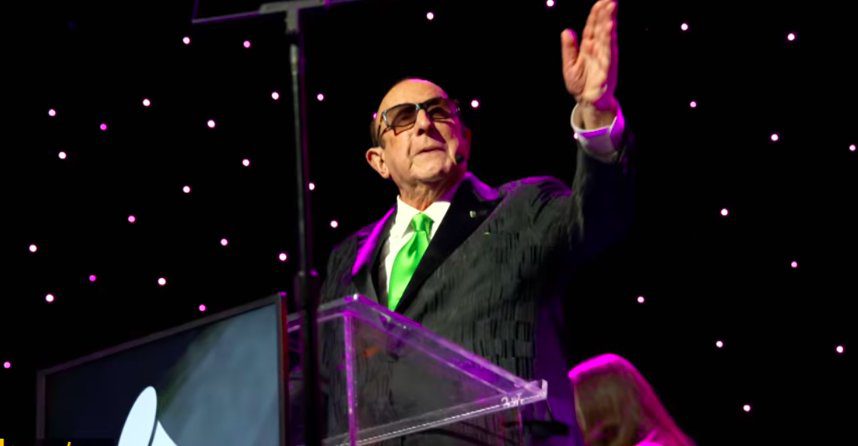
Born Clive Jay Davis on April 4, 1932, in Brooklyn, New York, Davis did not grow up dreaming of becoming a music mogul. His father was an electrician and salesman, and his mother died when he was still a teenager. A year later, his father also passed away, leaving Davis and his siblings orphaned at a young age. Despite the hardship, Davis excelled academically. He graduated magna cum laude from New York University and earned a full scholarship to Harvard Law School, where he received his law degree in 1956.
His entrance into the music business was almost accidental. After working as an attorney in New York, Davis joined Columbia Records in 1960 as an assistant counsel in the company’s legal department. He knew little about the music industry and famously admitted that he couldn’t play an instrument and had no formal musical training. Yet his intelligence and instincts quickly propelled him through the ranks. By 1967, at just 35 years old, he had become president of Columbia Records.
A Musical Journey Begins
At Columbia, Davis changed the direction of the label and, in many ways, the entire industry. He attended the legendary Monterey Pop Festival in 1967 and suddenly understood that rock music represented the future. He began aggressively signing artists that would become household names, including Bruce Springsteen, Janis Joplin, Santana, Chicago, Aerosmith, Billy Joel, Pink Floyd, and Blood, Sweat & Tears. He also helped retain and promote established stars such as Bob Dylan and Barbra Streisand. The industry soon nicknamed him “The Man With the Golden Ear” because of his uncanny ability to identify talent and commercial hits.
However, Davis’ career nearly came crashing down in 1973. He was fired by CBS after allegations that he had improperly used company funds for personal expenses, including renovations to his apartment and his son’s bar mitzvah. The scandal became intertwined with wider federal investigations into payola and alleged industry corruption, leading to sensational headlines about “drugola.” Davis denied wrongdoing and insisted he had been made a scapegoat. Although he was never charged with payola, he later pleaded guilty to a tax-related charge involving unreported expenses and paid a fine. The controversy temporarily tarnished his reputation but ultimately did little to derail his career.
Most executives would have disappeared after such a scandal. Clive Davis instead engineered one of the greatest comebacks in entertainment history.
Davis Launches Arista Records
In 1974, with the backing of Columbia Pictures, he founded Arista Records. The company was named after the Arista honor society that Davis had belonged to as a student in New York. Arista would become one of the most successful record labels in history and a launching pad for generations of artists.
At Arista, Davis assembled a roster that was almost unbelievable in hindsight. He signed and developed Barry Manilow, Dionne Warwick, Patti Smith, Kenny G, Air Supply, Taylor Dayne, Ace of Base, Exposé, and numerous others. He revived the careers of legendary performers such as Aretha Franklin and helped guide the Grateful Dead to commercial success. He also founded Arista Nashville, which became home to country superstars including Alan Jackson, Brooks & Dunn, and Brad Paisley.
Yet if Clive Davis is remembered for discovering one artist above all others, it is undoubtedly Whitney Houston. Davis first heard Houston perform in the early 1980s and immediately recognized her extraordinary talent. He signed her to Arista and became her mentor, helping transform her into one of the biggest recording artists of all time. Their partnership produced some of the most successful albums in history and made Houston a global superstar. Davis would later say that discovering Whitney Houston was among the defining moments of his life.
Davis’ influence extended well beyond Arista itself. Under his leadership, the label developed relationships and partnerships with several influential imprints, including LaFace Records, founded by L.A. Reid and Babyface, and Bad Boy Records, launched by Sean “Diddy” Combs. Through these relationships, Davis helped bring artists like TLC, Toni Braxton, OutKast, The Notorious B.I.G., Faith Evans, and Usher to mainstream audiences.
Life After Arista
Never content to rest on past successes, Davis launched J Records in 2000 after leaving Arista. Once again, he demonstrated his remarkable instincts by signing and developing Alicia Keys, whose debut album became one of the defining releases of the early 2000s. J Records also became home to artists such as Luther Vandross and eventually, Carrie Underwood. Later, Davis served as chairman and CEO of the RCA Music Group and remained a major creative force at Sony Music well into his 90s.
Throughout his career, Davis was credited with discovering or helping launch an extraordinary list of artists, including Whitney Houston, Alicia Keys, Bruce Springsteen, Janis Joplin, Santana, Barry Manilow, Patti Smith, Kenny G, Earth, Wind & Fire, Dionne Warwick, TLC, Toni Braxton, OutKast, The Notorious B.I.G., Faith Evans, and many others. Few executives in any industry have had such an extensive impact on popular culture.
The Personal Side of Clive Davis
Davis also became known for his legendary pre-Grammy parties, which evolved into one of the most exclusive and important events in the entertainment world. Politicians, movie stars, billionaires, and musicians all wanted an invitation. The event became symbolic of Davis’ extraordinary reach and influence across the entertainment industry.
His personal life remained relatively private for much of his career. Davis married twice and had four children. Then, in 2013, at the age of 80, he surprised many by revealing in his memoir, “The Soundtrack of My Life,” that he was bisexual and had been involved in serious relationships with both women and men. He said that being open about his sexuality brought him happiness and peace. His announcement was widely praised and made him one of the most prominent entertainment executives to publicly discuss bisexuality later in life.
As with many powerful executives, Davis was not without controversy. Critics accused him of exerting too much control over artists and pushing commercial considerations above artistic expression. Others questioned the contracts and business arrangements that some performers entered under his watch. In recent years, his name also surfaced in various conspiracy theories and unproven allegations related to industry misconduct, though no criminal charges ever emerged from those claims. His earlier tax and expense controversies from the 1970s remained the most significant legal blemishes on an otherwise remarkable career.
By the time of his death, Clive Davis had won five Grammy Awards, been inducted into the Rock and Roll Hall of Fame, and established the Clive Davis Institute of Recorded Music at New York University to help train future generations of music executives and artists. He remained active in the industry almost until the very end of his life.
It is difficult to imagine modern music without Clive Davis. He didn’t simply discover artists; he changed the course of American popular culture. The records he helped create sold hundreds of millions of copies, launched countless careers, and provided the soundtrack for generations of listeners.
At 94, the man with the golden ear is gone, but his fingerprints remain on virtually every corner of the music business. From Whitney Houston’s soaring vocals to Alicia Keys’ piano ballads, from Bruce Springsteen’s heartland rock to the rise of Bad Boy and LaFace Records, Clive Davis leaves behind one of the most extraordinary legacies in entertainment history.



















































Want to join the conversation?
Create an account or sign in to share your thoughts, vote,
and reply to other readers.
Showing 0 of 0 comments
Don't have an account?
Already have an account?