

I Play Rocky: The Incredible True Story Behind Sylvester Stallone, Rocky Balboa and Hollywood’s Greatest Underdog Story
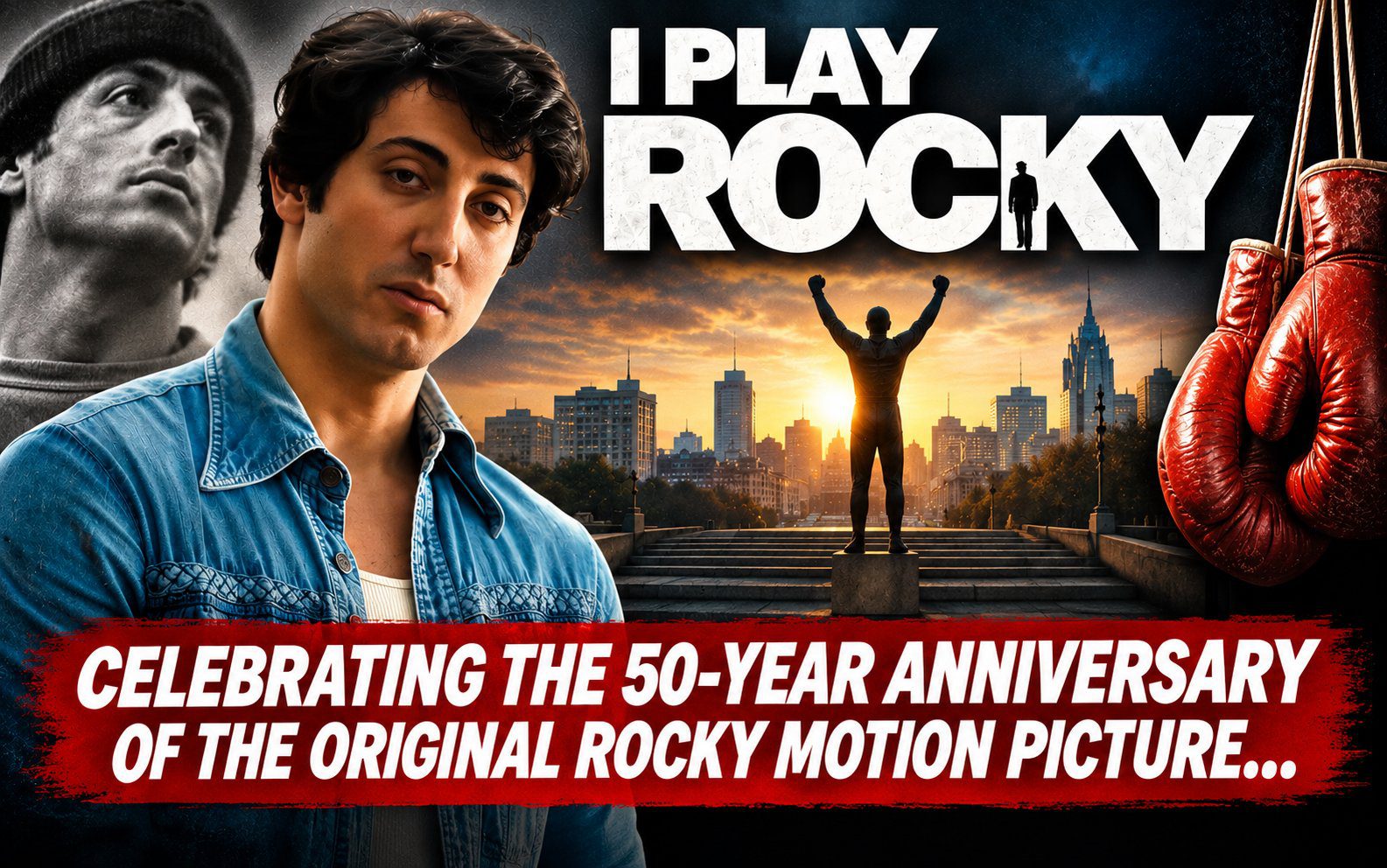
Nearly 50 years after Rocky first hit movie theaters, Hollywood is going back to where it all began. I Play Rocky tells the remarkable true story of a struggling actor who refused to sell his screenplay unless he was allowed to play the lead role. That actor was Sylvester Stallone, and his gamble would eventually create one of the most successful movie franchises in Hollywood history.
There are plenty of sports movies about underdogs fighting their way to the top, but few stories are as unbelievable as the one that actually happened behind the scenes of the original Rocky. Now, just in time for the 50th anniversary of the legendary 1976 film, Amazon MGM Studios is bringing that story to the big screen with ‘I Play Rocky’, a biographical drama about the young Sylvester Stallone and his seemingly impossible mission to get his movie made.
Directed by Academy Award winning filmmaker Peter Farrelly, best known for Green Book, ‘I Play Rocky’ stars Anthony Ippolito as a young Stallone. The film follows the actor’s struggles before becoming a household name, when he was broke, largely unknown in Hollywood, and determined to convince movie executives that he was the only person who could properly portray the character he had created.
The film is already playing in select theaters, with a nationwide theatrical release scheduled for November 20th, 2026. The timing is particularly appropriate considering the original Rocky debuted in November 1976, making this the franchise’s 50th anniversary celebration. This one is going to do very well. The trailer looks amazing and uplifting. Ippolito is ROCKY. Personally speaking, I think this movie is going to do very well.
What Is ‘I Play Rocky’ About?
‘I Play Rocky’ takes audiences back to the early 1970s, when Stallone was a struggling actor trying to find his place in an industry that wasn’t exactly lining up to offer him leading roles. Stallone had a screenplay for a boxing movie about a small time Philadelphia fighter who gets an unexpected opportunity to compete against the heavyweight champion of the world. The character was Rocky Balboa, a working class guy with little money, little recognition, and practically no chance of winning. Sound familiar?
The interesting part was that Stallone didn’t simply want to sell the screenplay. He wanted to play Rocky himself. Hollywood executives weren’t convinced. Stallone wasn’t a major star, and studio executives believed the film needed a recognizable leading man to attract audiences. Names such as Ryan O’Neal, Burt Reynolds and James Caan were among the established actors considered for the role.
Stallone was reportedly offered substantial money to sell his screenplay and walk away from the starring role. At one point, the offers were far beyond anything the struggling actor could reasonably expect to earn at the time. But he refused.
Stallone believed in the character, believed in the story, and believed that he was Rocky. He was willing to walk away from a potentially life changing payday rather than watch someone else portray the character he had created. Eventually, producers Robert Chartoff and Irwin Winkler helped make the project happen with a dramatically reduced budget and Stallone in the starring role. The original Rocky was produced for approximately $1 million. The rest is Hollywood history.
Who Is Playing Sylvester Stallone?
The responsibility of portraying a young Sylvester Stallone falls to Anthony Ippolito, a 27 year old actor who has already demonstrated an ability to portray some pretty recognizable Hollywood personalities. Ippolito previously portrayed legendary actor Al Pacino in the 2022 Paramount+ miniseries The Offer, which explored the complicated production of Francis Ford Coppola’s The Godfather. That experience should come in handy when portraying another larger than life Hollywood figure.
For ‘I Play Rocky’, Ippolito reportedly spent considerable time studying Stallone’s early interviews, mannerisms, voice and physical characteristics. He also worked on transforming his physique, gaining approximately 40 pounds to better resemble the young actor and aspiring bodybuilder.
Interestingly, Ippolito was so determined to land the part that he recorded audition videos in his grandmother’s basement on Long Island, performing scenes from Rocky in hopes of getting director Peter Farrelly’s attention. His efforts paid off. The supporting cast includes AnnaSophia Robb as Sasha Czack, Stallone’s first wife, who played an important role during his difficult early years. Matt Dillon portrays Stallone’s father, Frank Stallone Sr. Stephan James plays Carl Weathers, the actor who famously portrayed Apollo Creed in the original Rocky.
Other cast members include Toby Kebbell as producer Robert Chartoff, P.J. Byrne as producer Irwin Winkler, Jay Duplass as director John G. Avildsen, Kiki Seto as Talia Shire, Scot Teller as Burt Young, and Robert Morgan as Burgess Meredith. The movie also features Tracy Letts and several other supporting performers who help recreate the Hollywood environment surrounding the production of the original film.
Sylvester Stallone: From Struggling Actor to Hollywood Superstar
To understand why ‘I Play Rocky’ is an interesting story, it helps to understand just how difficult things were for Stallone before Rocky became a phenomenon. Born on July 6th, 1946, in New York City, Sylvester Stallone had a difficult childhood. Complications during his birth resulted in partial facial paralysis, affecting his lower lip, tongue and chin. That distinctive facial appearance and speech pattern would eventually become part of his recognizable screen persona.
Stallone was interested in acting from a young age and studied drama before pursuing a career in Hollywood. But success didn’t come easily. He appeared in several smaller productions, including The Lords of Flatbush in 1974, but he was nowhere near becoming the superstar audiences would eventually recognize.
His financial situation became increasingly desperate. Stallone has discussed periods when he struggled to afford basic necessities and even had to sell his beloved dog, Butkus, because he couldn’t afford to take care of him. He also accepted a role in the low-budget adult film The Party at Kitty and Stud’s, later known as The Italian Stallion, simply because he needed the money. By the time Rocky came along, Stallone was hardly the type of actor Hollywood executives were looking to build a major motion picture around. But he had something else going for him: a story he believed in and a willingness to take an enormous risk.
The Real Story Behind Writing Rocky
One of the most fascinating parts of the Rocky story is how quickly Stallone wrote the original screenplay. After watching heavyweight champion Muhammad Ali fight underdog boxer Chuck Wepner in March 1975, Stallone became inspired by the idea of an ordinary fighter getting an opportunity to compete against an almost unbeatable opponent.
Wepner shocked many observers by taking Ali into the 15th round before eventually losing by technical knockout. Stallone reportedly wrote the initial Rocky screenplay in approximately three and a half days. The story was fictional, but the inspiration was rooted in the idea that an unknown fighter could earn respect simply by refusing to quit.
There was even a legal controversy surrounding the similarities between the Wepner / Ali fight and the fictional story. Wepner eventually sued Stallone over the alleged use of his life story, and the dispute was settled out of court. However, the bigger battle was getting the movie produced with Stallone playing the lead.
The producers and studio executives recognized the potential of the screenplay but were concerned about casting an unknown actor. Stallone reportedly had approximately $106 in his bank account at one point and was being offered money that could have changed his financial circumstances overnight.
He continued to refuse. Eventually, the producers agreed to move forward with Stallone as Rocky, although the film would be made on an extremely tight budget. The production lasted approximately 28 days, and the finished movie would go on to become one of the most celebrated sports dramas ever made.
The Rocky Phenomenon: Six Movies and a Franchise Worth Billions
When Rocky premiered in 1976, nobody could have reasonably predicted the cultural phenomenon it would become. The movie follows Rocky Balboa, a small time Philadelphia boxer who gets an unexpected opportunity to fight heavyweight champion Apollo Creed, played by Carl Weathers. Rocky isn’t necessarily expected to win. His goal is simply to prove that he belongs in the ring and can go the distance against the best fighter in the world.
The film connected with audiences because its message extended well beyond boxing. It was about perseverance, self-respect, determination and the possibility that an ordinary person could accomplish something extraordinary. Made for approximately $1 million, Rocky went on to earn roughly $225 million worldwide. At the 1977 Academy Awards, it received 10 nominations and won three Oscars, including Best Picture, Best Director for John G. Avildsen, and Best Film Editing. Stallone himself received nominations for Best Actor and Best Original Screenplay.
The movie also launched Stallone into international superstardom. And Hollywood wasn’t finished with Rocky Balboa. The franchise eventually expanded into six Rocky films and three Creed movies, with the story continuing through a new generation of fighters.Here is the complete theatrical film lineup:
The Original Rocky Series
- Rocky (1976): The original underdog story introduces Rocky Balboa and his unlikely championship opportunity against Apollo Creed.
- Rocky II (1979): Rocky gets another opportunity to fight Apollo Creed, this time with the heavyweight championship on the line.
- Rocky III (1982): Rocky faces the intimidating Clubber Lang, played by Mr. T, while dealing with the pressures of becoming a champion.
- Rocky IV (1985): Rocky travels to the Soviet Union to face Ivan Drago, played by Dolph Lundgren, following the tragic death of his friend Apollo Creed.
- Rocky V (1990): Financial problems force Rocky back to Philadelphia, where he attempts to mentor a young fighter while dealing with his own personal struggles.
- Rocky Balboa (2006): A 60 year old Stallone returns to the character for another shot at proving himself, demonstrating that age doesn’t necessarily mean the end of the fight.
The Creed Spin-Off Series
- Creed (2015): Michael B. Jordan stars as Adonis Creed, the son of Apollo Creed, who seeks Rocky’s help to become a professional boxer. Stallone received an Academy Award nomination for Best Supporting Actor.
- Creed II (2018): Adonis faces Viktor Drago, the son of Ivan Drago, bringing the rivalry established in Rocky IV into a new generation.
- Creed III (2023): Michael B. Jordan returns as Adonis Creed, making his directorial debut while facing a former friend from his past.
Together, the Rocky and Creed films have generated nearly $2 billion in worldwide box office revenue, according to Paramount’s 2026 franchise announcement. That’s an extraordinary accomplishment for a franchise that began with a struggling actor, a screenplay and a movie made for approximately $1 million.
The Controversy: Stallone Wrote Rocky, But Did He Actually Own Rocky?
There is another interesting chapter to the Rocky story that makes ‘I Play Rocky’ particularly relevant today. Although Stallone created the character, wrote the original screenplay and portrayed Rocky Balboa throughout the franchise, he has repeatedly expressed frustration over the fact that he doesn’t own the underlying Rocky intellectual property. The primary source of that frustration has been longtime producer Irwin Winkler.
Stallone publicly criticized Winkler in 2022, arguing that after decades of building the franchise, he deserved a meaningful ownership stake that could eventually be passed down to his children. Stallone has said that he owns none of the Rocky franchise rights, despite having created the character and helped turn it into a multibillion dollar entertainment property. Winkler and representatives associated with the franchise have disputed aspects of Stallone’s complaints, pointing to the substantial compensation and profit participation he received over the years.
The disagreement highlights one of Hollywood’s oldest problems: the difference between creating something enormously successful and actually owning the rights to it. Stallone helped create one of the most recognizable fictional characters in movie history, but the ownership arrangements made decades ago left him without the equity stake he believes he should have received.
There is also an important distinction regarding the new movie. Stallone did not write I Play Rocky. The screenplay was written by Peter Gamble, with Peter Farrelly directing. Stallone is an executive producer and reportedly approved the screenplay and casting, although he did not participate directly in the production. So while the new movie celebrates Stallone’s original writing achievement, it also arrives against the backdrop of a complicated history involving his relationship with the people who control the franchise.
Was I Play Rocky Made Specifically for the 50th Anniversary?
The timing is certainly not accidental. The original Rocky was released in November 1976, and its 50th anniversary falls on November 21, 2026. ‘I Play Rocky’ arrives during that anniversary window, with a nationwide release scheduled for November 20, almost exactly 50 years after audiences first met Rocky Balboa.
The anniversary has also prompted renewed interest in the original films, with the entire six-film Rocky collection and three Creed movies being made available through Paramount+ and Pluto TV as part of the celebration. The new film offers something different from simply re-releasing the original. Instead of revisiting Rocky’s fight against Apollo Creed, audiences get to see the fight Stallone had to win before the cameras ever started rolling.

Loading comments…