
Flagler Village Deserves Better: How a Broken Park Deal, Political Missteps, and Over Development Led to a Potential Sewage Facility on Our Front Lawns
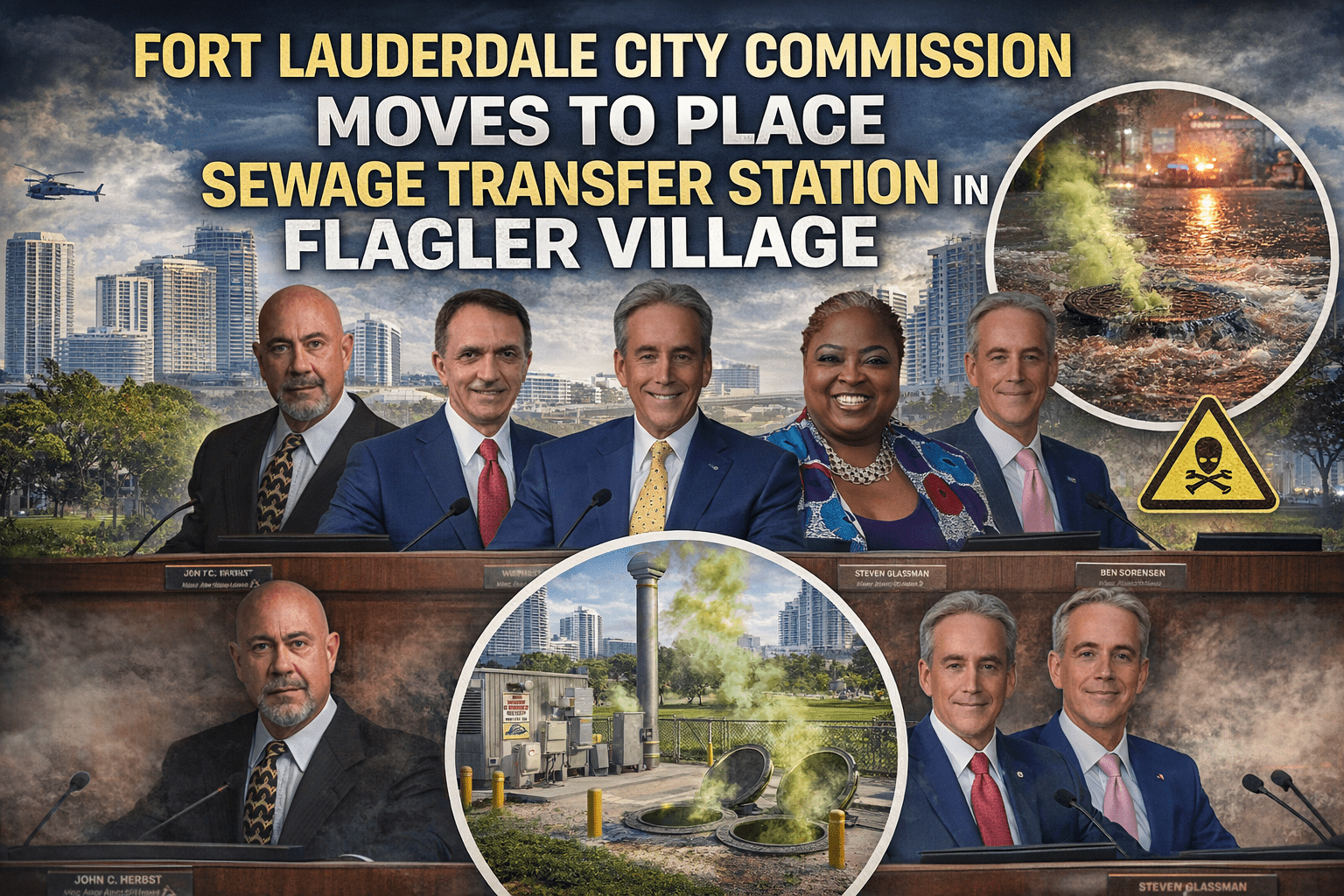
FORT LAUDERDALE — What is now being framed as a “necessary infrastructure improvement” in Flagler Village did not emerge in a vacuum. The proposal to place a sewage transfer facility marketed euphemistically as a discreet underground station near homes is the direct outcome of years of failed planning, questionable political priorities, and unchecked development approvals that pushed this neighborhood beyond its limits. Residents were promised green space, culture, and thoughtful urban planning. What they are now being offered is a utility solution to problems City Hall helped create.
The Poop Park and Cultural Center That Never Happened
For years, city leaders promoted plans for a public park and cultural center in Flagler Village. The vision was sold as a civic anchor green space paired with arts programming to balance density and improve quality of life in a rapidly growing neighborhood. That vision collapsed not because residents opposed it, but because the city failed to enforce basic business and financing standards. The development partner could not verify funding or demonstrate viable financial parameters. After years of delays, extensions, and wasted time, the deal unraveled. No park. No cultural center. Just an empty promise and a site now being repurposed for infrastructure. This wasn’t bad luck. It was bad governance.
A City Hall Distracted by Scandals and Side Shows
The park failure unfolded alongside a troubling pattern at City Hall. While residents waited for progress, Fort Lauderdale’s political leadership became mired in controversy and distraction. The administration led by Dean Trantalis has been dogged by ethics questions, public disputes, and personal controversies that repeatedly overshadowed substantive policy work. Time and political capital were burned on symbolic fights, such as the push to rename Broward County while core issues like infrastructure planning, zoning discipline, and neighborhood protections went neglected. The result has been a city government perceived by many residents as reactive, not strategic, lurching from one self-inflicted problem to the next.
Questionable Deals and Planning Failures Pile Up
Flagler Village residents are not imagining a pattern. It exists.
• Public land sold for paddle and pickleball courts at a fraction of market value
• A police headquarters project plagued by delays, cost overruns, and planning failures
• Condo approvals issued at breakneck speed, with little regard for absorption rates or infrastructure capacity
The data now tells the story city planners ignored. Fort Lauderdale is sitting on roughly a 10-month oversupply of condominiums, an imbalance that has already pushed prices downward and weakened homeowner equity across dense urban neighborhoods, Flagler Village chief among them. This oversupply didn’t happen naturally. It was approved.
Over Development Created the Problem Now Residents Pay the Price
City officials now argue the sewage transfer station is “necessary” to support growth. That growth, however, was not organic or inevitable. It was the direct result of over-approval. Flagler Village a compact neighborhood was saturated with high-density projects without proportional investment in utilities, parks, or resilience. The same officials who green lit this wave of development are now pointing to capacity strain as justification for placing industrial infrastructure next to homes. This is not responsible planning. It is essentially cleanup after mismanagement.
This Isn’t Hypothetical: It’s Already Happened Nearby
Residents don’t have to speculate about what this looks like. A similar sewage-related facility was recently placed near another neighborhood park off Northeast 3rd Avenue.
The pattern is clear: public space quietly converted into utility space once scrutiny fades, Flagler Village is next.
The Truth About Sewage Transfer Stations
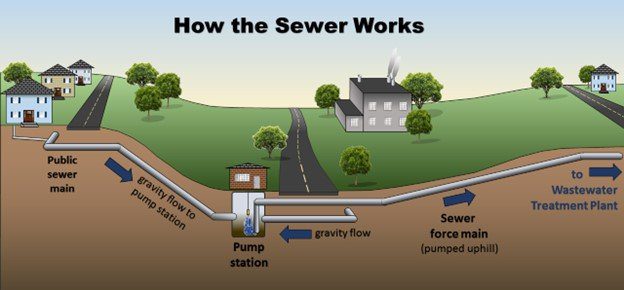
Despite reassurances, sewage transfer or lift stations are not invisible, odorless, or risk-free.
They require:
• Venting systems
• Access hatches and control buildings
• Regular maintenance and emergency servicing
• Backup generators that must be tested
Odors, typically hydrogen sulfide, occur intermittently especially in heat, humidity, power outages, heavy rain, or system malfunctions. These are not rare conditions in South Florida. The facilities are industrial by nature, regardless of landscaping or marketing language.
Worst-Case Scenarios the City Rarely Emphasizes
In hurricane prone, flood-vulnerable South Florida, worst-case scenarios are not abstract.
They include:
• Raw sewage overflows during power or pump failure
• Sewage backing up into streets or nearby properties
• Prolonged odor events after storms
• Emergency bypass discharges into canals or storm drains
• Public health risks from bacterial exposure
These outcomes have occurred repeatedly across Florida during hurricanes and extreme rain events.
This Has Happened Before In Florida
Sewage system failures tied to storms are documented across the state. Lift stations and treatment facilities have lost power, flooded, or failed during hurricanes and severe weather, releasing untreated wastewater into neighborhoods and waterways. These incidents are not anomalies. They are the predictable failure modes of aging, over stressed infrastructure operating in extreme conditions.
Why Flagler Is Being Asked to Absorb This Nightmare
The uncomfortable truth is that Flagler Village is paying for mistakes made elsewhere at the approval table.
Instead of:
• Requiring developers to fund infrastructure up front
• Distributing utility facilities away from dense residential cores
• Preserving promised green space
City leaders are defaulting to the path of least resistance: placing a sewage facility where residents have the least leverage after years of construction fatigue.
What a Serious Opposition Must Demand
Any professional, good-faith opposition to this plan must insist on:
• Full disclosure of alternative sites considered and rejected
• Independent odor, noise, and flood-risk studies
• Binding guarantees on setbacks, enclosure, and mitigation
• Transparent accounting of why infrastructure was not addressed before approvals
• A halt to further density increases until capacity is resolved
Most importantly, residents must reject the false framing that this is inevitable. Flagler Village was promised parks and culture. Instead, it got over development, declining home values, and now a sewage facility to compensate for City Hall’s failures. This is not progress. It is the cost of poor planning shifted onto the people who live here. And if this decision stands, it will not be remembered as an infrastructure upgrade. It will be remembered as the moment Fort Lauderdale chose convenience over community.
Meet The Poop Park Five
These are the Fort Lauderdale City Commissioners responsible for this crazy idea.
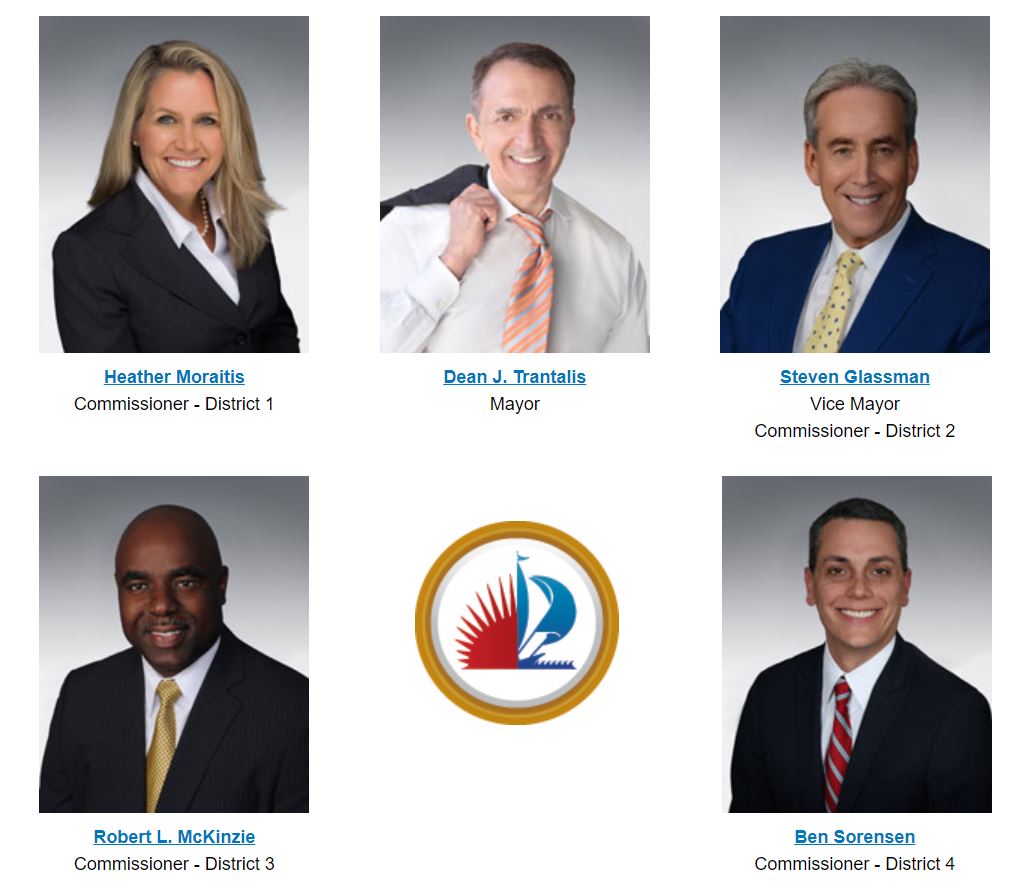
The placement of a sewage transfer station in or near Flagler Village is not a staff-only action or a technical inevitability. It is a policy decision that ultimately rests with the elected officials below. These are the people with the authority to approve budgets, land use, infrastructure siting, and capital projects, including sewer facilities.
These Are the Fort Lauderdale City Commissioners Responsible for This Decision
The placement of a sewage transfer station in or near Flagler Village is not a staff only action or a technical inevitability. It is a policy decision that ultimately rests with the elected officials below. These are the people with the authority to approve budgets, land use, infrastructure siting, and capital projects, including sewer facilities.
Fort Lauderdale City Commission
Mayor (At-Large)
Dean Trantalis
City Hall, 1 E. Broward Blvd., Fort Lauderdale, FL 33301
Phone: 954-828-5314
Email: [email protected]
Commissioner – District 1
John C. Herbst
Phone: 954-828-5008
Email: [email protected]
Commissioner – District 2
Steven Glassman
Phone: 954-828-5009
Email: [email protected]
Commissioner – District 3
Pamela Beasley-Pittman
Phone: 954-828-5007
Email: [email protected]
Commissioner – District 4
Ben Sorensen
Phone: 954-828-5006
Email: [email protected]
City Commission Office (Administrative)
Office of the Mayor & City Commission
City Hall, Suite 444
Phone: 954-828-5004
Why This List Matters
These officials collectively make up the Fort Lauderdale City Commission.
They are responsible for:
• Approving sewer and wastewater capital projects
• Deciding where infrastructure is located
• Approving or rejecting land-use changes
• Allowing overdevelopment without matching infrastructure
• Letting a park and cultural center deal collapse after years of delay
• Choosing residential neighborhoods to absorb the consequences
This project did not happen automatically.
It did not come from Tallahassee or Washington.
It did not bypass elected officials.
It moved forward because a majority of this body allowed it to.

















































Want to join the conversation?
Create an account or sign in to share your thoughts, vote,
and reply to other readers.
Showing 0 of 0 comments
Don't have an account?
Already have an account?