
Fort Lauderdale’s Housing Fallout: How Developer Dollars Built a City of Condos, Not Homes
A City Built on Developer Donations and Agendas
Fort Lauderdale is now facing a housing reckoning decades in the making. A balanced urban vision one that would have prioritized single-family homes, affordable neighborhoods, and long-term stability was sidelined in favor of high-density condo towers. These were quick-profit plays for developers and campaign-dollar generators for city leaders. This is not just a story of market cycles or construction booms it’s a story of political choices, financial influence, and leadership that failed to prioritize the people who live and work here. Now, residents are stuck in a broken market: a glut of overpriced condos, soaring HOA fees, collapsing resale values, and shrinking supply of real homes for families.
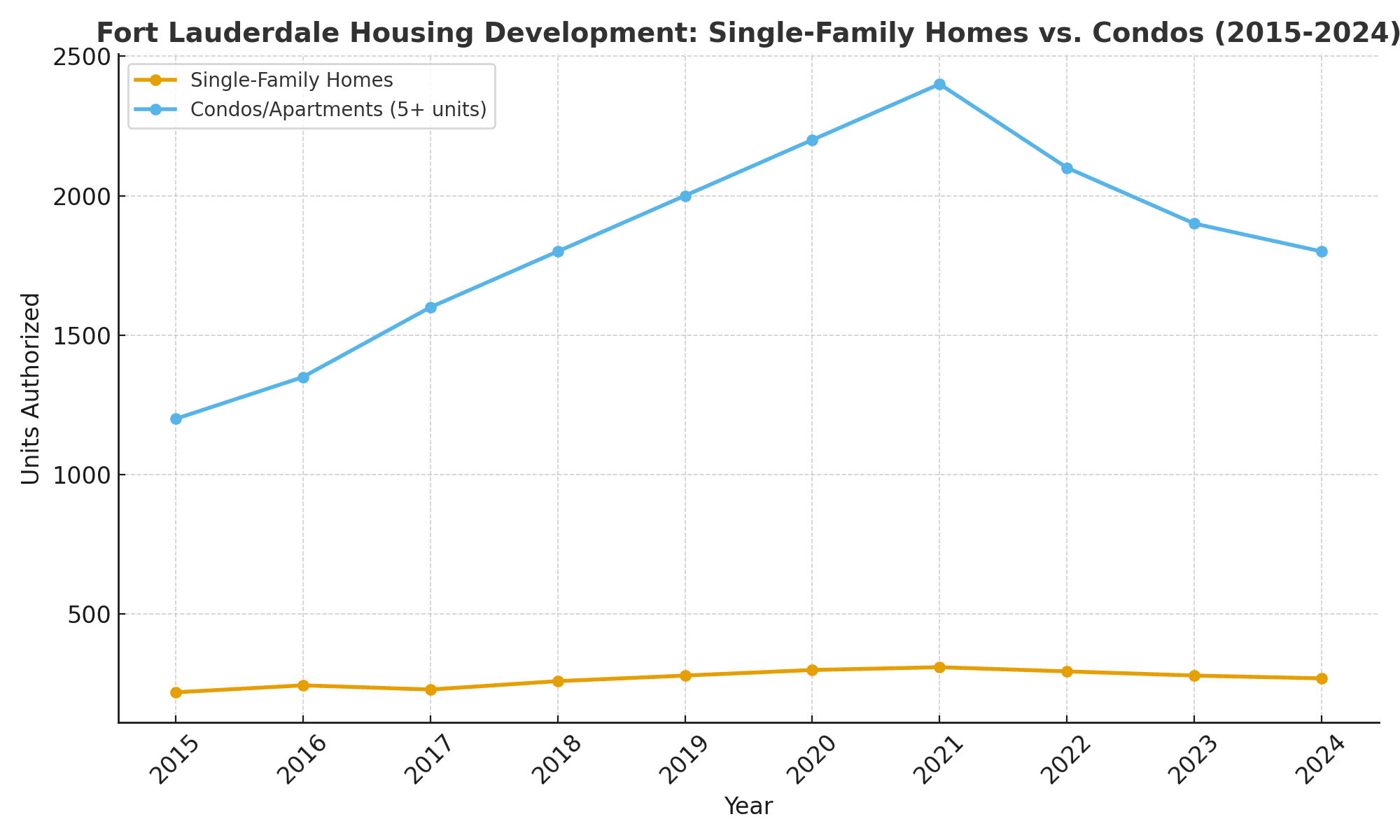
The Data: Condos Flood the Market While Homes Remain Scarce
As of July 2025, Broward condominium listings sit at roughly 12.0 months of inventory a sharp rise from 8.0 months a year earlier with active listings up about 26%, and median prices down 2.8% year-over-year. Median days-to-contract have elongated to 71 days, and days-to-sale to 108 days. Meanwhile, single-family homes have approximately 6.0 months of supply, up from 4.4, with inventory rising 31%, and prices essentially flat at –0.8% year-over-year.
These numbers tell a clear story: Fort Lauderdale has overbuilt for speculative investments in condos, while the actual homes families need remain in short supply.
The Money Trail, Developer Donations Shaping Policy
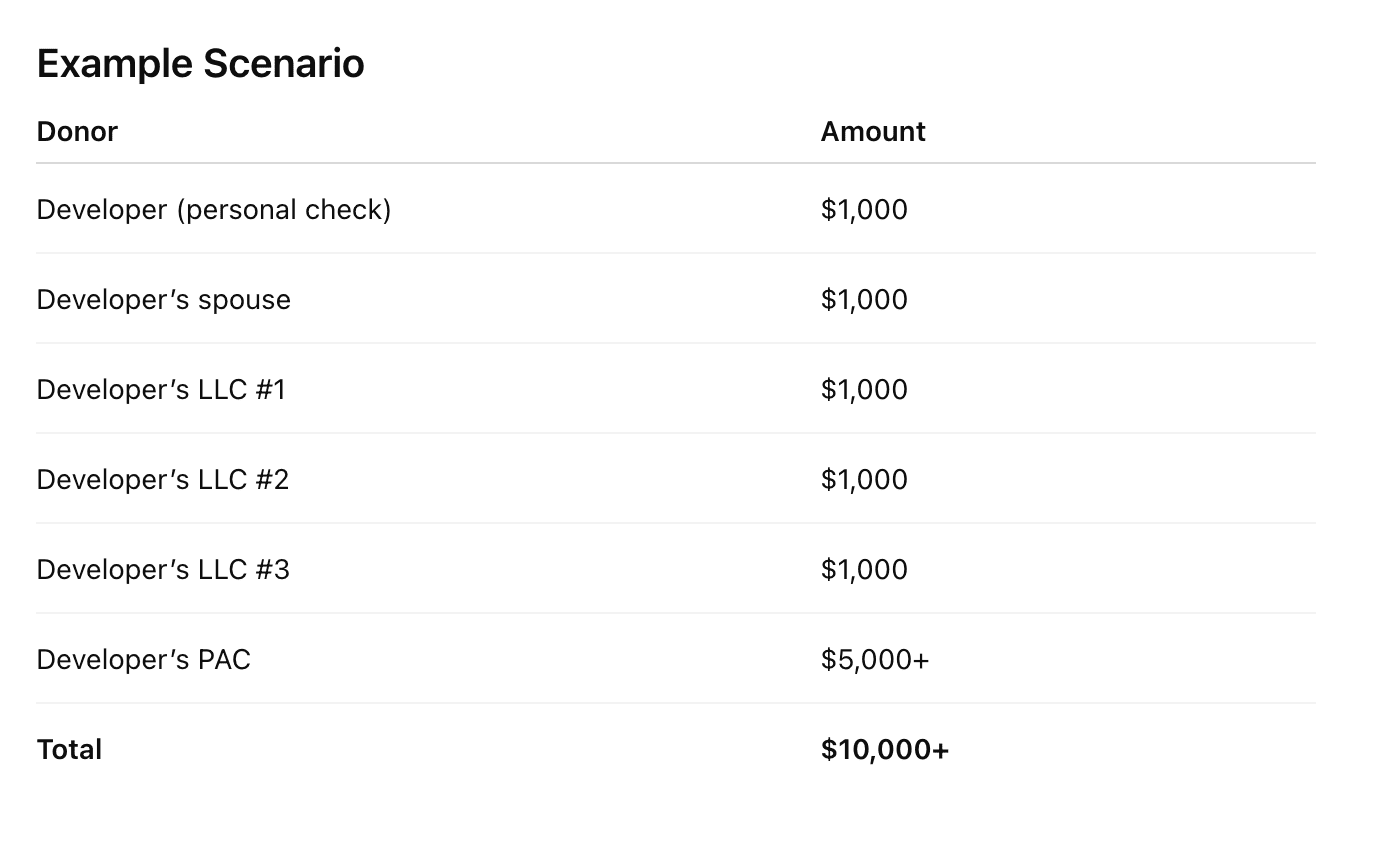
Florida caps individual local-candidate donations at $1,000 per election, but the law defines a “person” to include LLCs and corporations.
That loophole lets developers and their networks of spouses, relatives, employees, and a web of affiliated LLCs to stack contributions in plain sight. On paper, they’re separate donors; in reality, it’s a coordinated cash dump engineered to multiply their influence. Political committees can also accept unlimited contributions and spend independently to boost favored candidates, further extending developer reach.
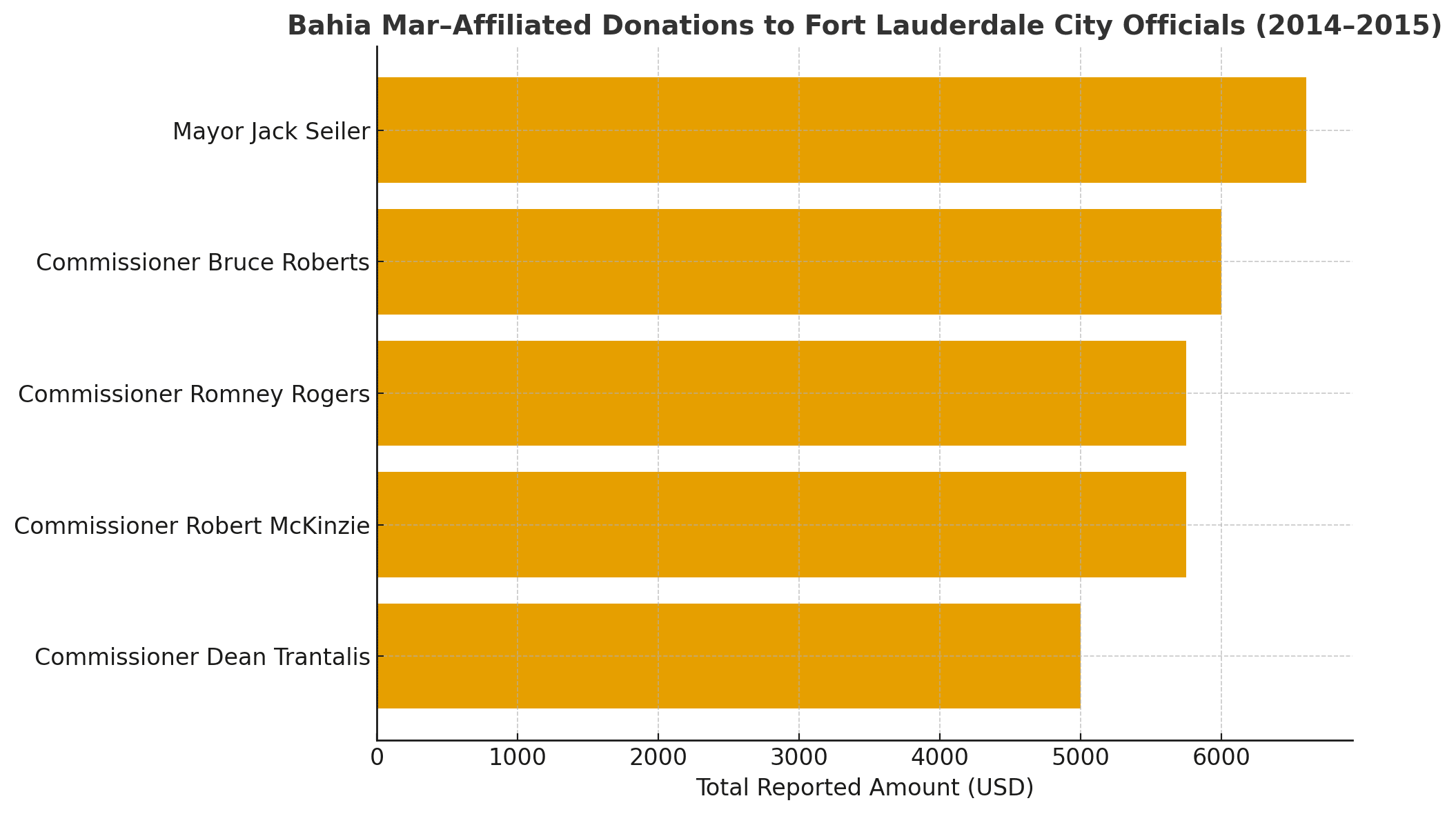
In 2016, during critical Bahia Mar zoning negotiations, every Fort Lauderdale city commissioner including then-Commissioner Dean Trantalis received between $5,000 and $6,600 in combined contributions from entities tied to the Bahia Mar development team. Many of those checks were cut on the same day, a textbook example of donation bundling that raises serious ethical concerns, even if it skirts the edges of the law.
This isn’t bribery in the strict legal sense, but it is pay-to-play politics. It’s influence dressed up as legality, with developer leverage baked into the very policies and zoning decisions that have reshaped Fort Lauderdale’s skyline.
Power and Oversight: The Commission and Planning Boards
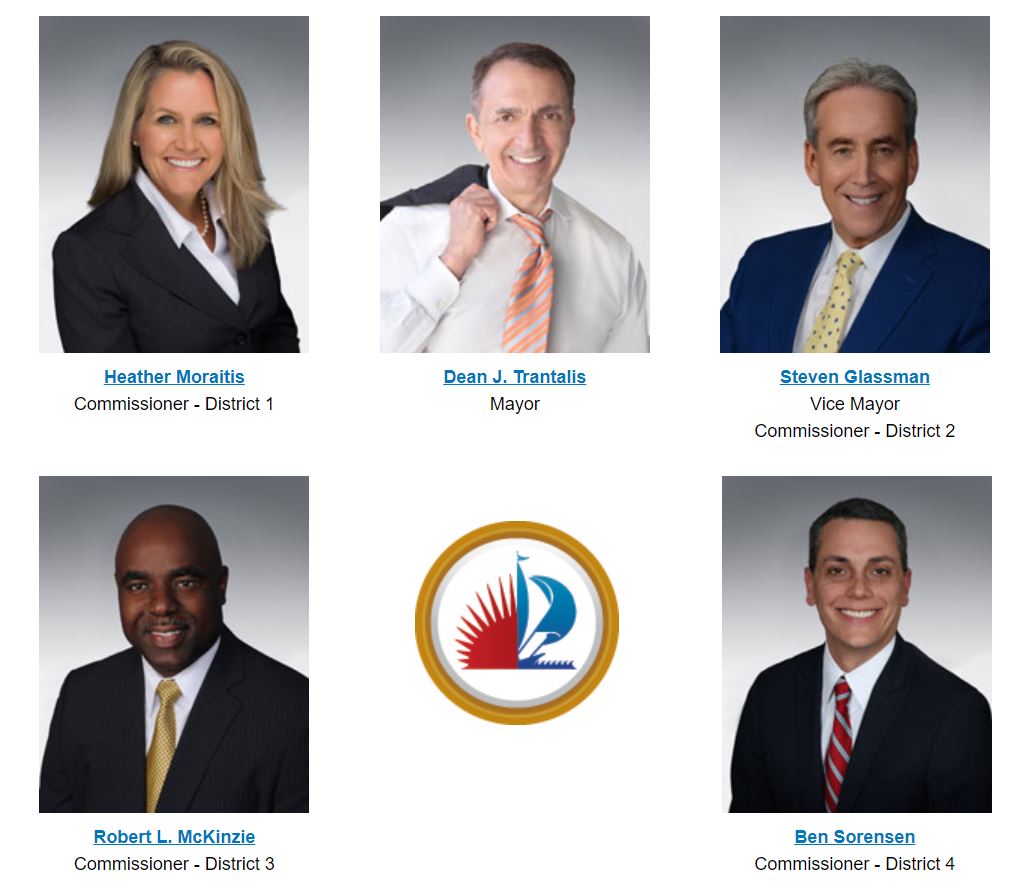
The five-member City Commission holds the ultimate authority over development in Fort Lauderdale. Mayor Dean J. Trantalis, who has led the commission since 2018, presides over a board that includes Vice Mayor John C. Herbst (District 1), Commissioner Steven Glassman (District 2), Commissioner Pamela Beasley-Pittman (District 3), and Commissioner Ben Sorensen (District 4). This group’s votes and policy direction have consistently favored high-density projects over balanced growth. In addition, the commission appoints the nine-member Planning and Zoning Board, extending its influence over key decisions on zoning, development fees, and long-term land-use strategies that continue to shape the city’s housing future.
A Condo Market in Free Fall
Condo prices are now declining, active listings are piling up, and units linger on the market far longer than they used to. New towers are still going vertical even as demand softens and financing tightens. Meanwhile, single-family homes remain scarce, which props up prices and squeezes working families out of ownership. The result: a fragmented market of surplus investment condos and undersupplied homes for residents.
The Assessment Crisis, Retirees and Fixed-Income Owners Face Devastating Costs
After the Surfside collapse, Florida passed sweeping requirements (SB 4-D and SB 154) mandating milestone safety inspections and fully funded reserve accounts for condo structural maintenance. In 2025, House Bill 913 adjusted timelines and funding mechanisms but left many older Broward buildings, and the residents within them, on the hook. As a result, thousands of condo owners, particularly retirees, are now hit with six-figure special assessments to shore up aging buildings. Many cannot afford these sudden costs. Monthly HOA fees are skyrocketing, squeezing fixed-income households. The result is a housing class crisis: owners trapped in buildings they can’t afford to maintain or leave.
A City at a Crossroads
Fort Lauderdale has been shaped, and in many ways warped, by shortsighted, developer-driven policy. The skyline is crowded with glass-and-steel towers, some brand new and gleaming, others decades old and struggling with costly repairs. While the newer projects have attracted waves of investors and second-home buyers, they’ve done little to address the city’s real housing needs. Aging mid-rise condos face skyrocketing assessments, while even the newest buildings carry inflated HOA fees and price tags far beyond the reach of working families.
This imbalance is destabilizing the housing market and threatening the city’s economic future. Developers have already made their money and moved on, but residents, owners, renters, and small businesses alike are left to navigate a market defined by oversupply at the top, shrinking affordability at the bottom, and growing uncertainty in between. Unless Fort Lauderdale shifts toward balanced, resident-focused growth, the fallout from these policies will reverberate for decades.
Fixing this means:
Zoning reforms that prioritize single-family homes and mixed-income neighborhoods.
Stronger campaign finance transparency to limit developer influence.
Real incentives for affordable and workforce housing to rebuild a balanced, sustainable market.
Because until these vital reforms are enacted, Fort Lauderdale will remain a city of empty towers and struggling families, a cautionary tale of what happens when short-term profits dictate long-term policy. Developers have mastered the art of gaming the system, stacking donations, bundling LLC checks, and leveraging political access to push through one high-density approval after another. They’re not building for balance; they’re building for their bottom line.
This is Where Leadership Matters
It takes a commission willing to stand up for families, to demand that every new project contributes to a healthier, more balanced housing profile, to break this cycle. When the commission and the developers are on the same team, you don’t get a city planned for its people; you get a condo city, a fragile market propped up by speculative cash and vulnerable to every economic shock. And a condo city is just one step above a mobile-home city, shiny on the surface, unstable underneath, and built on a foundation of bad math and worse politics.
Fort Lauderdale still has a chance to course-correct but only if its leaders finally put residents ahead of developer interests. Without that shift, the skyline will keep climbing, the affordability crisis will keep tightening its grip, and the damage from these shortsighted decisions will outlive every new tower they rubber-stamp along the waterfront.


















































Want to join the conversation?
Create an account or sign in to share your thoughts, vote,
and reply to other readers.
Showing 0 of 0 comments
Don't have an account?
Already have an account?