
Florida Democrats Are a Complete Mess, Trump May Give Them a Chance to Win Anyway…
Florida Democrats have spent years being told their state is gone. Too red. Too Trump. Too expensive to contest. National Democrats increasingly treated Florida as an electoral money pit while Republicans consolidated power, overtook Democrats in voter registration and transformed what was once America’s most important swing state into a reliable Republican prize.
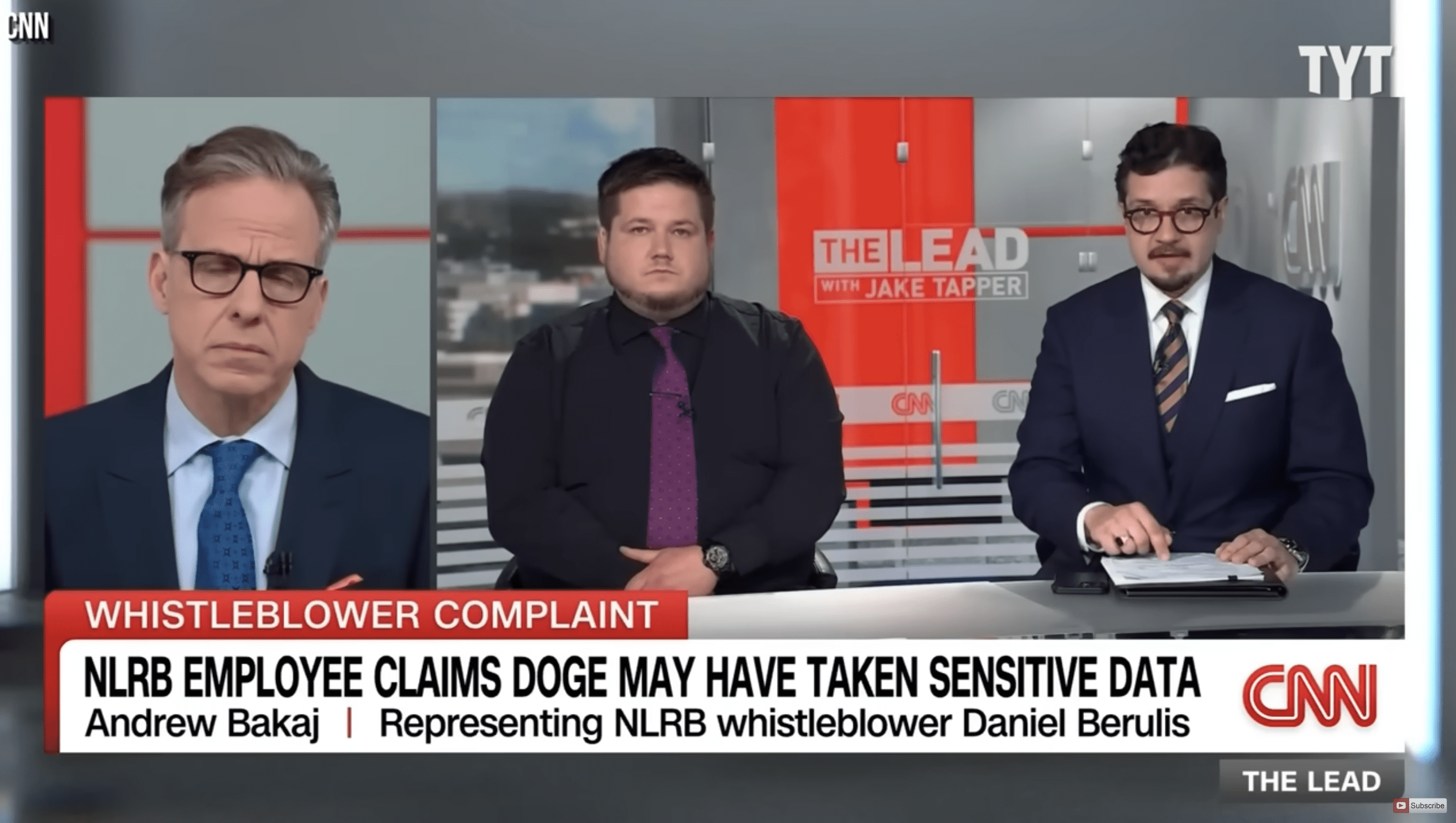
That conventional wisdom has become so entrenched that a recent MS NOW segment examining former Republican Congressman David Jolly’s Democratic campaign for governor framed the central question almost as a political curiosity: Can a Democrat actually win what the network described as a “ruby red” Florida?
There is an uncomfortable amount of evidence supporting that description. But there is also growing evidence that declaring Florida permanently Republican may be just as shortsighted as Democrats pretending nothing went wrong here in the first place.
Florida Democrats have enormous structural problems. The party has hemorrhaged registered voters. Its traditional South Florida firewall has weakened dramatically. Republicans possess a staggering registration advantage. Democratic grassroots infrastructure remains uneven and underfunded. Broward County no longer produces anything close to the Democratic margins it once did. And the party now appears prepared to put its hopes behind Jolly, a former Republican congressman, rather than a candidate who actually rose through Florida’s Democratic political bench.
Yet Democrats may still have a legitimate opening in 2026 for one extraordinary reason: Donald Trump.
The backlash surrounding Trump, combined with Florida’s punishing affordability crisis and signs of Democratic overperformance in recent special elections, could create an environment where actual voter behavior becomes considerably more competitive than the state’s party registration numbers suggest. Florida hasn’t suddenly turned blue. It isn’t even clear that it has returned to purple. But the state may be considerably more politically volatile than the national narrative suggests.
David Jolly Bets Florida Is Ready for Something Different
Jolly, who represented Florida in Congress as a Republican before leaving the GOP, becoming an independent and eventually joining the Democratic Party, is making a straightforward argument: Floridians are exhausted.
In his MS NOW interview, Jolly argued that the election will ultimately be decided less by party labels than by the everyday economic problems confronting Florida families, particularly housing, healthcare and education. That may be the strongest argument Democrats have. Jolly is presenting himself as a Democrat capable of communicating with voters who don’t necessarily identify with the Democratic Party. He points to hundreds of town halls across red, blue and purple communities and describes himself not as a reluctant convert but as a “proud Florida Democrat.” The strategy makes political sense. Whether Florida Democrats should have reached the point where their potential standard-bearer is a former Republican is another question entirely.
The Democratic Party has millions of registered voters in Florida, decades of institutional history, major elected officials and one of America’s largest and most diverse populations from which to recruit candidates. Yet its leading gubernatorial candidate is a man who previously served in Congress as a Republican. That should trigger some serious introspection regardless of whether Jolly ultimately proves to be a strong candidate.
Still, his political history may become an asset in the general election. Jolly can plausibly speak to moderate Republicans, independents and suburban voters who dislike Trump without asking them to make the psychological leap directly from lifelong Republican voter to conventional Democratic partisan. That crossover coalition is essentially his entire theory of the case.
First, Let’s Be Clear: Florida Really Has Become Much Redder
Anyone arguing that Florida’s Republican transformation is purely a media invention is ignoring the numbers. According to the Florida Division of Elections, as of June 30, 2026, Florida had approximately 5.57 million active registered Republicans, 4.04 million active registered Democrats and 3.32 million voters registered with no party affiliation. That gives Republicans an advantage of approximately 1.53 million active registered voters over Democrats.
The historical reversal is remarkable. In 2020, Democrats still held a narrow registration advantage, with approximately 5.32 million Democrats compared with 5.22 million Republicans. Six years later, Republicans lead by more than 1.5 million. That isn’t media spin. That’s an electoral earthquake.
Florida also backed Trump in three consecutive presidential elections, while Gov. Ron DeSantis won reelection by nearly 20 percentage points in 2022. The Associated Press has described Jolly’s gubernatorial effort as a “mission improbable,” noting both Florida’s Republican transformation and the enormous financial advantage enjoyed by Trump-backed Republican Congressman Byron Donalds. Democrats should not insult voters’ intelligence by pretending Florida hasn’t moved right. It has. The more interesting question is whether that movement is permanent.
Broward County Shows Exactly What Went Wrong
For decades, Broward County was one of the engines powering Democratic statewide campaigns. Democrats didn’t merely need to win Broward. They needed to crush Republicans there by margins large enough to offset Republican advantages elsewhere in Florida. That engine has badly deteriorated.
The decline becomes painfully obvious when comparing presidential election results. In 2020, Joe Biden received 618,752 votes in Broward County compared with Donald Trump’s 333,409. Biden’s advantage was more than 285,000 votes. Four years later, Kamala Harris received 507,328 votes while Trump climbed to 358,952. The Democratic presidential margin in Broward collapsed to approximately 148,000 votes.
In other words, Democrats’ presidential advantage in one of their most important counties shrank by roughly 137,000 votes in only four years. That matters enormously in a statewide election. Winning Broward isn’t enough. Democrats have to run up the score in Broward, and lately they haven’t. The registration numbers demonstrate that Broward remains Democratic territory. As of June 30, the county had approximately 465,000 active Democrats, 269,000 Republicans and 315,000 voters with no party affiliation.
So Broward’s Democratic electorate hasn’t disappeared. What has disappeared is much of the overwhelming electoral advantage Democrats once extracted from it. That’s an important distinction.
South Florida Democrats Have an Infrastructure Problem
This is where national political coverage often misses what people working inside South Florida politics can see on the ground. There is no shortage of Democratic organizations, caucuses, clubs, elected officials and activists. But existence is not the same thing as political power.
Organizations that once represented important pieces of South Florida’s Democratic coalition are operating in an environment where Republicans have built a massive statewide voter-registration advantage and Democrats desperately need stronger local organizing, fundraising, candidate development, digital communications and turnout operations.
Consider the Dolphin Democrats, Florida’s oldest LGBTQ+ political organization and historically an important institution in Broward Democratic politics. The organization remains active and continues endorsing candidates across Broward, but its own fundraising material offers a revealing glimpse into the scale of resources available at the grassroots level.
The organization says it spent more than $19,000 on get out the vote efforts in 2024, including 40,000 palm cards and advertising in newspapers and on social media. That is meaningful volunteer political work. But in a county with more than one million active registered voters, it also illustrates the enormous mismatch between grassroots resources and the scale of the electorate Democrats need to mobilize. And this problem is much bigger than any single Democratic club.
Florida Democrats need a political ecosystem capable of operating year round, not organizations that suddenly awaken several months before Election Day, endorse the same familiar candidates, print palm cards and hope presidential-year turnout does the rest. That model has already failed.
The National Democratic Party Helped Create This Problem
There is another piece of the story Democrats cannot ignore: national strategic abandonment. For years, Democratic strategists increasingly treated Florida as an expensive state with diminishing returns while money, organizers and national attention migrated toward states considered more immediately competitive.
Florida Democrats insist they are now rebuilding. In August 2025, the Florida Democratic Party announced expanded statewide and regional staffing and described the effort as a significant investment in year-round organizing ahead of the 2026 election. That deserves acknowledgment. But rebuilding political infrastructure after it has already deteriorated is not the same thing as maintaining that infrastructure in the first place.
Florida is exactly the type of state Democrats should think twice about surrendering. It is one of the largest states in America. It carries 30 electoral votes. It contains enormous Black, Latino, Caribbean, LGBTQ+, immigrant, suburban and working class constituencies. It includes some of America’s largest and most expensive media markets.
Walking away from Florida because it became difficult created a self reinforcing political cycle. Democrats lost elections. National investment declined. Infrastructure weakened. Republicans organized aggressively. Democrats lost by even larger margins. Those larger losses were then cited as evidence that investing in Florida was pointless. Eventually, the prediction becomes reality.
Then Something Interesting Happened in 2026
This is the part of the Florida story Republicans should not ignore. Democrats started winning elections they weren’t necessarily supposed to win. On March 24, Democrat Brian Nathan defeated Republican Josie Tomkow in Florida Senate District 14, winning 50.26% to 49.74%, according to official Florida election results. Democrat Emily Gregory also defeated Republican Jon Maples in Florida House District 87, taking approximately 51.2% of the vote in a district that includes territory in Miami-Dade County. These were special elections, not statewide general elections, and nobody should extrapolate too much from relatively low-turnout contests. But they matter.
They demonstrate something Jolly emphasized during the MS NOW interview: party registration does not automatically determine election outcomes. Registered Republicans still have to vote Republican. Registered Democrats still have to show up. Independents still have to choose. And voters can cross party lines, stay home or reject candidates associated with a national political environment they dislike.
In at least two significant Florida special elections this year, enough voters departed from expected partisan behavior to produce Democratic victories. That is the crack in the Republican wall Democrats are trying to widen.
Donald Trump Could Become the Republican Party’s Biggest Florida Problem
Then there is Trump himself. Nationally, economic dissatisfaction has become a serious political problem for the president. An August Financial Times/Focaldata survey found 53% of registered voters said they were financially worse off since Trump returned to office, while 64% disapproved of his handling of inflation and 55% disapproved of his presidency overall. Florida is not identical to the national electorate. But Floridians live in the same economy, with several uniquely Floridian affordability problems piled on top.
Housing costs remain punishing. Homeowners insurance has become a defining political issue. Condo owners have faced rising assessments and reserve requirements. Healthcare costs remain substantial. Teachers and public schools remain trapped in Florida’s seemingly endless political warfare over education. Those issues become considerably harder to explain away with another speech about culture wars. After years of Trump dominating Republican politics, there is a plausible scenario in which some Florida voters simply become exhausted. Not necessarily liberal. Not necessarily Democratic. Just exhausted. That distinction could determine the election.
Byron Donalds Has the Money, Lots of It
None of this means Jolly should be considered the favorite. He shouldn’t. Donalds enters the race with enormous advantages. He has Trump’s endorsement, a national conservative fundraising network, Florida’s Republican registration advantage and dramatically more money.
The Associated Press reported that Donalds and aligned political operations had raised more than $100 million, compared with roughly $10 million for Jolly. That is an extraordinary disparity. Money buys television advertising. It buys digital campaigns. It builds voter files. It pays organizers. It funds opposition research. Most importantly, it allows a candidate to define his opponent before the opponent has enough resources to define himself. Florida’s enormous geography and multiple expensive television markets make that financial disparity particularly dangerous for Democrats. Jolly’s response is essentially that Donalds becomes less attractive as voters learn more about him. Maybe. But introducing millions of Floridians to your opponent costs money.
Jolly’s Former Republican Status Is Both Ridiculous and Potentially Useful
There is an obvious irony here. Florida Democrats have become so institutionally weakened that their best chance of winning the governor’s mansion may be nominating a former Republican to convince Republicans not to vote Republican. That is not exactly a ringing endorsement of Democratic candidate development.
Jolly’s Republican history creates legitimate questions for progressives about what he believes, how his positions have evolved and whether Democratic voters should trust someone who once represented the other party in Congress. But elections are ultimately arithmetic. And the same political biography that makes Jolly’s candidacy frustrating for Democrats could make him uniquely dangerous to Republicans.
His Republican history gives him an opening with anti-Trump conservatives, independents, suburban moderates and former Republican voters who may never identify as Democrats but could be willing to vote for one candidate with whom they feel culturally and politically comfortable. The very thing that makes his candidacy strange could make him competitive.
Florida Isn’t Blue, But “Ruby Red” Doesn’t Tell the Whole Story
Calling Florida “ruby red” is defensible if the phrase describes recent election results and voter registration. Calling Florida permanently Republican is something else entirely. Political coalitions change. Florida itself proves that. Twenty years ago, Republicans would have loved to possess the registration advantage Democrats once enjoyed. Today, Republicans dominate registration. That transformation didn’t happen because millions of Floridians disappeared and were replaced overnight. Coalitions moved. Voters changed. Parties organized differently. Turnout changed. Candidates changed. Demographics changed. Political environments changed. They can change again. The more accurate description of Florida in 2026 may therefore be this:
Florida is a Republican-leaning state with an unusually large pool of independent voters, weakened Democratic infrastructure, serious affordability problems and an electorate that could become increasingly affected by exhaustion with Washington, Trump and permanent culture war politics.
That doesn’t make Jolly the favorite. It makes Florida worth contesting.
The Democratic Party’s Biggest Enemy May Still Be Itself
The maddening part for Florida Democrats is that Republicans may be providing them with an opportunity at precisely the moment Democrats are least institutionally prepared to exploit it. Trump’s national numbers are vulnerable. Florida families remain furious about affordability. Democrats have demonstrated an ability to win some recent special elections. Donalds is closely identified with Trump. And more than 3.3 million active Florida voters aren’t registered with either major party.
Yet Democrats enter that environment after years of organizational deterioration, shrinking registration, declining margins in Broward and a national political establishment that repeatedly questioned whether Florida was worth serious investment. That is political malpractice bordering on self-parody. Florida Democrats do not need another committee explaining why Florida became Republican.
They need organizers. They need candidates. They need modern digital operations. They need serious fundraising. They need Spanish-language and Caribbean outreach that exists every year rather than materializing weeks before an election. They need younger leadership. They need LGBTQ+ organizations, Black political organizations, labor groups, local Democratic clubs and progressive organizations equipped with actual resources rather than ceremonial influence. Most importantly, Democrats need to stop treating losing elections as evidence that trying to win them was pointless.
Florida Democrats Could Win Despite Themselves
The 2026 Florida governor’s race is becoming a fascinating political experiment. Republicans have virtually every structural advantage. They control state government. They dominate voter registration. They have dramatically more campaign money. They have won Florida repeatedly. And their leading gubernatorial candidate has Trump’s endorsement.
Democrats have weaker infrastructure, declining registration, deteriorated margins in Broward and a leading gubernatorial candidate who used to belong to the other party. On paper, this shouldn’t be close.
And yet Democrats are winning some elections. Trump’s political standing has weakened nationally. Affordability remains brutal. Millions of Florida voters belong to neither party. And Jolly is betting that enough Floridians are tired of the political circus to choose something different. Maybe he’s wrong. Maybe Florida really has become ruby red. But if Democrats somehow win the governor’s mansion in November after years of underinvestment, organizational decay and political neglect, the lesson should not be that their strategy worked.
The lesson will be considerably more embarrassing:
Florida Democrats may have had a winnable state sitting in front of them the entire time and it took Donald Trump becoming unpopular enough to give them another chance.
Sources
MS NOW — David Jolly Interview
https://www.youtube.com/watch?v=0XqghPOAX74
Florida Division of Elections — Voter Registration by Party Affiliation
https://dos.fl.gov/elections/data-statistics/voter-registration-statistics/voter-registration-reports/voter-registration-by-party-affiliation/
Florida Division of Elections — Voter Registration by County and Party
https://dos.fl.gov/elections/data-statistics/voter-registration-statistics/voter-registration-reports/voter-registration-by-county-and-party/
Florida Division of Elections — 2024 Presidential Election Results
https://results.elections.myflorida.com/
Florida Division of Elections — 2020 Presidential Election Results
https://results.elections.myflorida.com/
Florida Election Watch — 2026 Special Election Results
https://floridaelectionwatch.gov/
Associated Press — Coverage of David Jolly’s 2026 Campaign
https://apnews.com/
Florida Democratic Party — Year-Round Organizing Expansion
https://floridadems.org/
Dolphin Democrats — Organization and GOTV Information
https://www.dolphindems.org/
Financial Times — U.S. Voter Economic Sentiment and Trump Approval
https://www.ft.com/

















































Want to join the conversation?
Create an account or sign in to share your thoughts, vote,
and reply to other readers.
Showing 0 of 0 comments
Don't have an account?
Already have an account?