
Do You Own a Pair of Smart Glasses?… Do You Want To?
For years, smart glasses seemed like a futuristic gadget straight out of science fiction. Today, they are quickly becoming an everyday reality, and many privacy experts warn that these devices may pose one of the greatest threats to personal privacy since the invention of the smartphone. What once looked like an odd experiment has evolved into stylish, AI-powered eyewear capable of recording video, taking photographs, listening to conversations, and even identifying people in real time. The question is no longer whether smart glasses will become mainstream; it is whether society is prepared for the consequences.
The smart glasses revolution began more than a decade ago when Google unveiled the now-infamous Google Glass in 2013. The device was marketed as a groundbreaking wearable computer that could display information directly in the wearer’s field of vision. However, consumers and privacy advocates immediately pushed back. People were uncomfortable with the idea of someone wearing a device capable of secretly recording them at any moment. The backlash became so intense that some establishments banned the glasses outright, and users of the device were mockingly dubbed “Glassholes.” Eventually, Google discontinued the consumer version of the product.
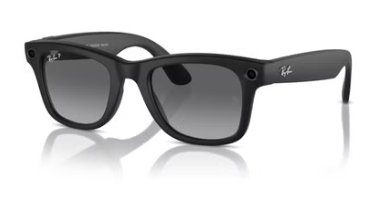
Many believed the idea had died. Instead, Big Tech simply waited for the technology to improve and for consumers to become more accepting of constant surveillance. Over the past several years, companies such as Meta Platforms, Snap Inc., and even rumored entrants like Apple Inc. have poured billions of dollars into wearable artificial intelligence. Modern smart glasses now look almost identical to ordinary sunglasses, making them nearly impossible to distinguish from regular eyewear. Hidden inside these fashionable frames are cameras, microphones, speakers, AI assistants, and internet connectivity.
This is Where the Privacy Nightmare Begins
Unlike smartphones, which require someone to physically hold up a device before recording, smart glasses remove that social cue entirely. A person can record video, capture audio, livestream an event, or photograph someone without anyone nearby realizing it is happening. Privacy experts say this invisible surveillance fundamentally changes the nature of public interactions. People may be unknowingly recorded during private conversations, medical appointments, social gatherings, or while simply walking down the street.
The situation becomes even more alarming when artificial intelligence is added to the mix. Next-generation glasses are increasingly capable of analyzing what they see. Some systems can recognize objects, translate languages in real time, and identify landmarks. Reports have also surfaced that facial recognition capabilities are quietly being integrated into certain smart-glasses ecosystems, potentially allowing users to identify strangers simply by looking at them. Privacy advocates fear such technology could create a world where anonymity in public spaces effectively disappears.
Critics also worry about what happens to all of the data these devices collect. Smart glasses don’t simply record videos; they capture highly detailed information about a person’s surroundings, habits, relationships, and routines. This data can potentially be uploaded to company servers, analyzed by artificial intelligence systems, and used to build detailed behavioral profiles. In an era when technology companies already know what people search for, where they shop, and what they buy, wearable cameras could provide an unprecedented level of insight into people’s daily lives.
There are also serious concerns regarding bystanders who never consented to be recorded in the first place. If someone wearing smart glasses enters a restaurant, an office, or a classroom, everyone in that environment may suddenly become part of a digital recording without their knowledge. Researchers studying wearable cameras have found significant differences between what users believe is acceptable and what bystanders consider an invasion of privacy. In sensitive settings, many people would actively take steps to avoid being recorded if they knew a camera-equipped individual was present.
Women and young people, in particular, have expressed growing concerns about the technology. Reports have emerged of individuals being secretly recorded and then finding videos of themselves posted online without permission. In some cases, victims reportedly had little legal recourse because public photography laws were written long before wearable AI cameras existed. The law has simply not kept pace with the technology.
This is a Very Slippery Slope, and Businesses are Taking Notice
Businesses are beginning to take notice as well. Companies worry that employees wearing smart glasses could accidentally or intentionally record confidential meetings, proprietary information, customer data, or sensitive documents. Privacy experts have warned that these devices could create compliance nightmares involving medical records, financial information, and trade secrets. Some organizations are already considering outright bans in certain environments.
Supporters of smart glasses argue that society already lives in a world filled with surveillance cameras, smartphones, and doorbell cameras. They claim these devices merely represent the next step in technological evolution. However, critics counter that smart glasses are fundamentally different because they make surveillance nearly invisible and socially acceptable. What was once obvious—a person pointing a camera at you—can now happen silently and continuously through something as ordinary as a pair of sunglasses.
The future of smart glasses appears inevitable. Major technology companies see them as the next computing platform after smartphones, and billions of dollars are being invested to ensure their success. But the convenience of having artificial intelligence sitting directly on your face comes with an enormous tradeoff. Every advancement in wearable technology raises difficult questions about consent, surveillance, and the right to exist in public without being constantly monitored.
The Leaders of the Industry
The most recognizable smart glasses on the market today are the Ray-Ban Meta glasses, a partnership between Facebook parent company Meta and eyewear giant EssilorLuxottica, the owner of the Ray-Ban brand. Their popularity stems from the fact that they look almost identical to ordinary sunglasses while hiding cameras, microphones, speakers, and artificial intelligence capabilities inside the frames.
But Meta is only the beginning. Google, Samsung, Snap, Xiaomi, and several other technology companies are investing billions of dollars in smart eyewear because they believe glasses will eventually replace smartphones as the primary way people interact with technology. The problem, critics say, is that every pair of AI glasses effectively places a networked camera and microphone on someone’s face, turning everyday social interactions into potential surveillance opportunities. As these devices become more common and harder to detect, concerns over privacy, consent, and constant monitoring are likely to intensify.
As smart glasses become smaller, smarter, and more fashionable, society may soon discover that the real cost of this technology isn’t measured in dollars. It may be measured in something far more valuable: the gradual disappearance of personal privacy itself.



















































Want to join the conversation?
Create an account or sign in to share your thoughts, vote,
and reply to other readers.
Showing 0 of 0 comments
Don't have an account?
Already have an account?