
Tulsi Gabbard, a Secretive Spiritual Movement, and the Questions That Continue to Follow Her Political Rise
For more than two decades, one of the most persistent and controversial stories surrounding Director of National Intelligence designate Tulsi Gabbard has had little to do with foreign policy, military service, or partisan politics.
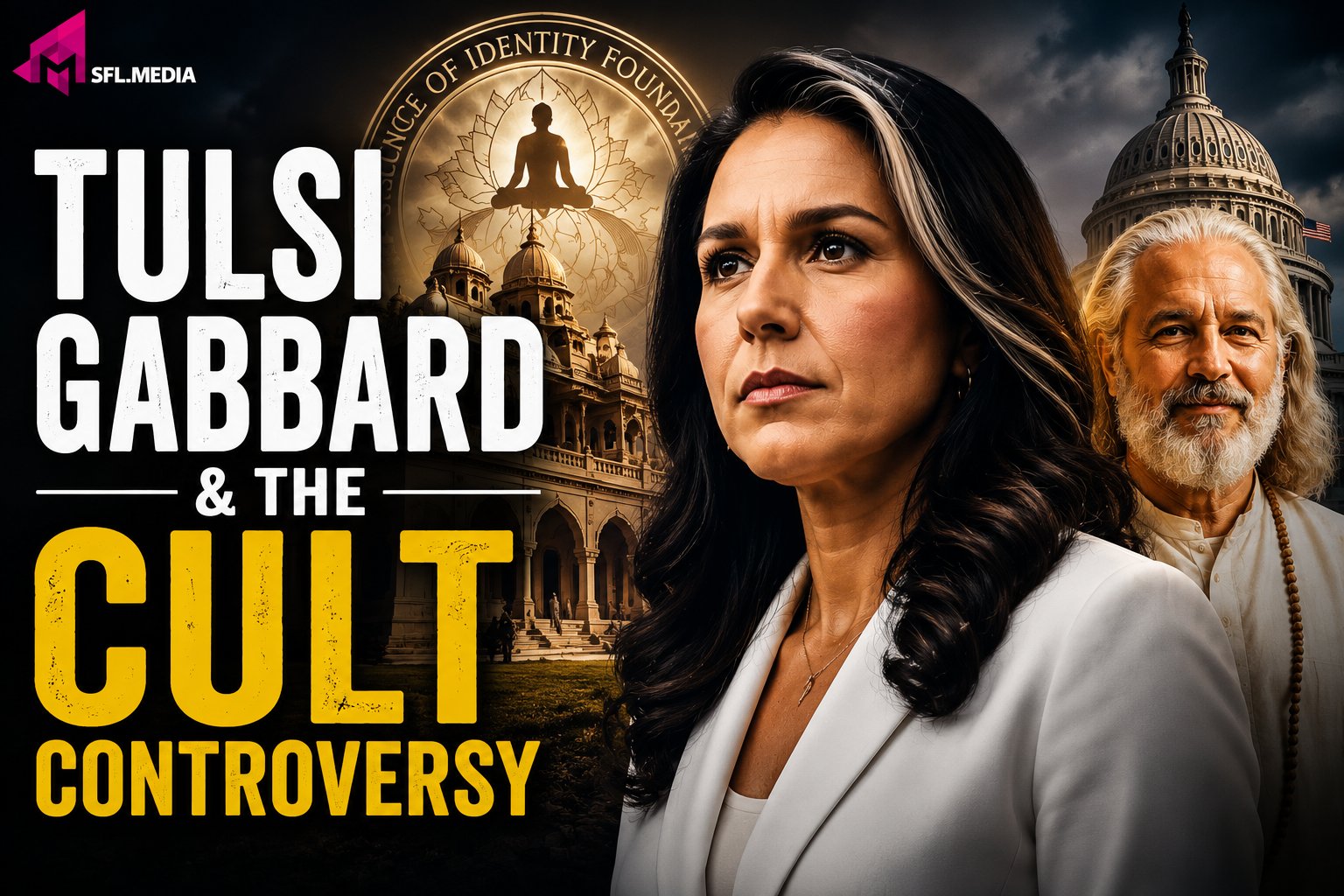
Instead, it centers on allegations that Gabbard and members of her family maintain deep ties to a secretive Hawaii based religious organization known as the Science of Identity Foundation, a movement critics have described as cult-like and authoritarian while supporters characterize it as a legitimate spiritual community rooted in Hindu teachings.
As Gabbard’s national profile has grown, from Hawaii state politics to Congress, a presidential campaign, and ultimately one of the most powerful intelligence positions in the federal government, questions about the role the organization may have played in shaping her worldview have followed closely behind.
The Origins of the Controversy
The Science of Identity Foundation was founded in the 1970s by Chris Butler, a former Hare Krishna leader who broke away from the International Society for Krishna Consciousness to establish his own spiritual movement. The organization teaches a form of Gaudiya Vaishnavism, a branch of Hinduism focused on devotion to Krishna. Followers are encouraged to practice vegetarianism, meditation, and abstinence from alcohol and other intoxicants.
Supporters describe Butler as a spiritual teacher and mentor. Former members, however, have painted a dramatically different picture. Over the years, defectors have alleged that Butler exercises extraordinary control over followers’ lives, discourages dissent, and creates an environment where questioning leadership can lead to social isolation or ostracism. Those allegations have led critics, former members, and some researchers to characterize the movement as a cult, though the organization itself rejects such descriptions.
A Family Deeply Connected to the Movement
Unlike many politicians who join religious communities later in life, Gabbard was born into the movement. Her parents, Mike and Carol Gabbard, have long been associated with Butler and the Science of Identity Foundation. Her father became a prominent figure in Hawaii politics, serving in the state legislature while maintaining ties to the community. Gabbard’s husband, Abraham Williams, also reportedly grew up in a family closely connected to the organization. As a result, critics argue that the movement’s influence on Gabbard cannot be separated from her upbringing and political development.
Allegations of Political Influence
The most serious accusations extend beyond religious affiliation and into questions of political influence. Investigative reporting over the years has documented how numerous individuals associated with the Science of Identity Foundation have worked on Gabbard’s campaigns, served on her staff, donated to political committees supporting her, and participated in her political operations.
Former members have alleged that Butler and senior figures within the movement viewed politics as a vehicle for expanding influence and advancing strategic goals. Investigative reports have pointed to internal communications and organizational networks that allegedly demonstrate coordination between political activities and members of the spiritual community. Critics argue that the pattern raises legitimate questions about whether political decisions were ever influenced by individuals outside the formal governmental structure. Some former disciples have gone so far as to warn lawmakers that Butler’s influence extends far beyond spiritual guidance and into political strategy.
The Evidence and the Limits of the Claims
Despite years of reporting, no public evidence has emerged showing that Chris Butler directly controlled Gabbard’s congressional office or exercised formal authority over her political decision making. The allegations instead rely largely on circumstantial connections, former member testimony, staffing patterns, donor networks, and documented relationships between individuals associated with the movement. That distinction remains important.
While critics view the extensive overlap between Gabbard’s political circle and Butler’s followers as evidence of influence, supporters argue that shared religious backgrounds do not automatically establish political control. Many politicians, they note, surround themselves with trusted friends, family members, and long time associates who share common beliefs and experiences.
Gabbard Pushes Back
Throughout her political career, Gabbard has consistently denied allegations that she serves as a proxy for any religious leader. When questioned about the Science of Identity Foundation, she and her representatives have repeatedly dismissed claims of cult involvement as politically motivated attacks. During high profile political battles, including scrutiny surrounding her nomination to senior government positions, Gabbard accused critics of engaging in religious discrimination and anti-Hindu prejudice. She has emphasized that she is a practicing Hindu whose political decisions are guided by her personal conscience, faith, and commitment to the Constitution. Under oath and in public statements, Gabbard has repeatedly rejected suggestions that she takes direction from Butler or any outside religious authority.
Why the Story Continues to Matter
The debate surrounding Gabbard and the Science of Identity Foundation reflects broader questions about religion, political power, and transparency in American government. Politicians routinely draw inspiration from faith traditions, spiritual advisers, and religious communities. What makes the Gabbard story unusual is the combination of a relatively secretive organization, allegations from former members, and decades of documented personal relationships connecting key figures in her political and private life.
For critics, those connections raise concerns about undisclosed influence operating behind the scenes. For supporters, the controversy represents an unfair attempt to stigmatize a politician because of her religious upbringing and beliefs.
An Unresolved Political Mystery
Years of investigations, media reports, congressional scrutiny, and public debate have produced a mountain of allegations but few definitive answers. What remains undisputed is that Tulsi Gabbard was raised within a community founded by Chris Butler, that numerous people associated with the Science of Identity Foundation have played roles in her political career, and that former members continue to describe the organization in deeply troubling terms. What remains disputed is whether those connections amount to ordinary religious and personal relationships or evidence of a more coordinated effort to influence American politics through one of the nation’s most recognizable political figures. As Gabbard continues to occupy an increasingly prominent role on the national stage, those questions are unlikely to disappear anytime soon.



















































Want to join the conversation?
Create an account or sign in to share your thoughts, vote,
and reply to other readers.
Showing 0 of 0 comments
Don't have an account?
Already have an account?