
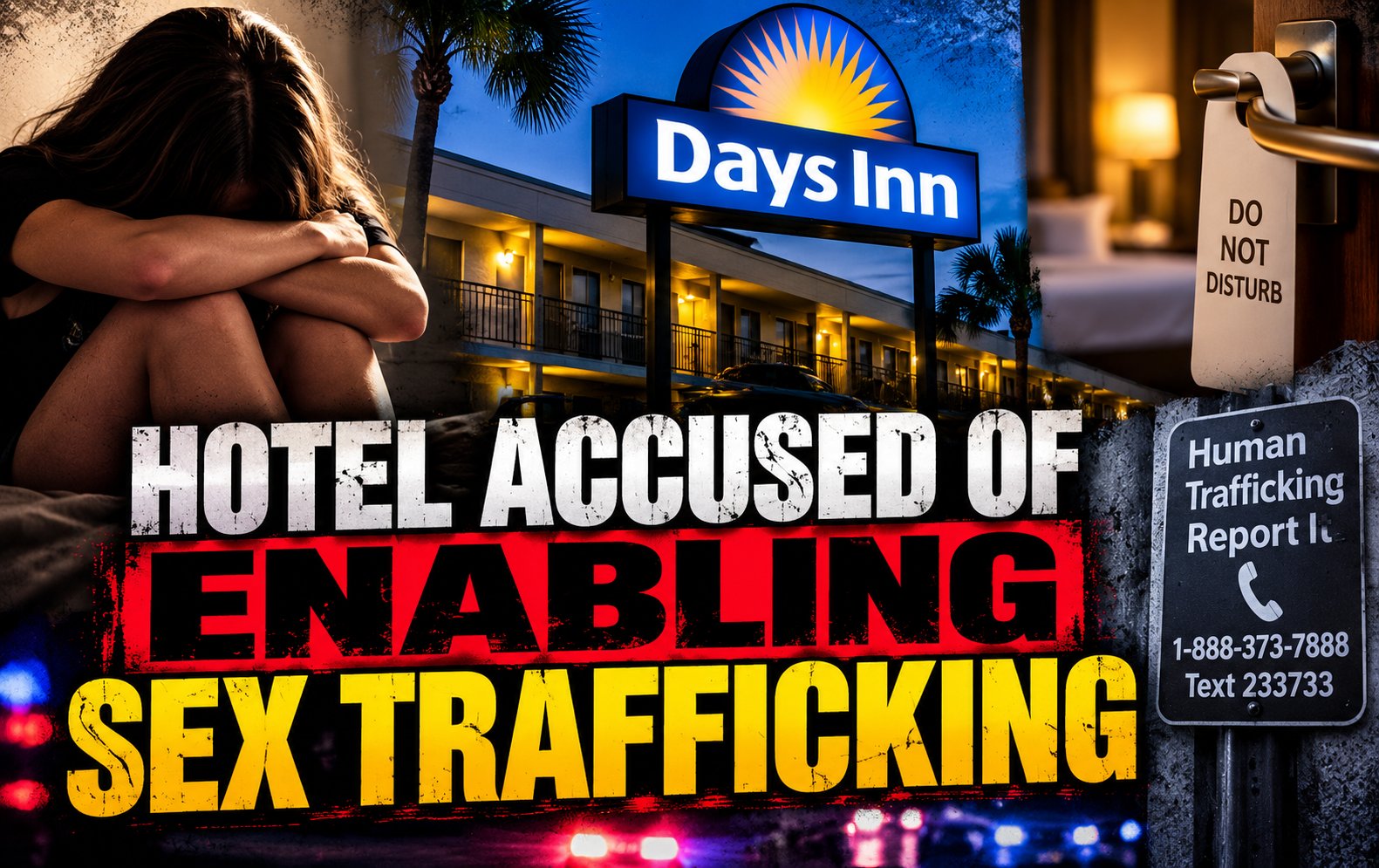
Two Women Sue Orlando Days Inn Operator, Alleging Hotel Enabled Years of Sex Trafficking
ORLANDO — Two women who say they were abducted, drugged, beaten and forced into commercial sex for years have filed a federal lawsuit against the operator of a Days Inn in Orlando, alleging the company knowingly provided their trafficker with a reliable location to exploit them while continuing to profit from repeated room rentals.
The women, identified in court records by the initials J.G. and A.M., allege they were trafficked at the Days Inn at 3300 South Orange Blossom Trail, near Interstate 4, between 2015 and 2022. According to reporting by WKMG News 6, the women estimate their trafficker brought them to the property between 500 and 600 times during that seven year period.
The lawsuit names Capital Investment Orlando Inc., the company associated with the property, as a defendant. Florida corporate records identify Capital Investment Orlando as an active Florida corporation, while state licensing records connect the company to the Days Inn property at 3300 S. Orange Blossom Trail. Wyndham Hotels & Resorts, whose Days Inn brand operates through franchises, is not named as a defendant in the lawsuit.
At the center of the case is a question increasingly appearing in human trafficking litigation around the country: when does a hotel cross the line from unknowingly renting a room where a crime occurs to knowingly benefiting from a trafficking operation taking place repeatedly on its property?
Women Allege They Were Trafficked at Hotel Hundreds of Times
According to the lawsuit and News 6’s investigation, J.G. and A.M. allege their trafficker repeatedly brought them to the Orlando Days Inn, where they were forced to perform commercial sex acts. Their allegations describe an extended pattern rather than isolated visits, with the women claiming they were brought to the property approximately 500 to 600 times between 2015 and 2022. The women allege they had been abducted, drugged and physically abused as part of the trafficking operation and contend hotel employees and management either knew or should have recognized what was occurring because of the frequency of the visits, conditions at the property and other signs of prostitution and trafficking.
The allegations have not been proven in court, and Capital Investment Orlando denies wrongdoing. Attorney Anthony Ciarello, who represents the women, argues that the repeated room rentals benefited the hotel financially and effectively provided the alleged trafficker with what he characterized as a dependable “safe space” in which to operate.
That allegation is central to the plaintiffs’ case. Their argument is not simply that trafficking happened inside a hotel room without management’s knowledge. They contend the frequency and visibility of the alleged activity became so significant that the operator should have recognized what was happening and intervened rather than continuing to rent rooms and collect revenue.
Online Reviews Could Become Important Evidence
Among the more unusual pieces of evidence cited by the plaintiffs are public reviews allegedly posted by previous hotel guests. According to News 6, the lawsuit points to reviews complaining openly about apparent prostitution at the property, including one stating that the hotel was “full of prostitute activity” and another warning guests about “stowaway prostitutes.”
The plaintiffs argue those reviews are important because hotel management responded to customer feedback, potentially demonstrating that complaints involving suspected prostitution were reaching people responsible for the property. The lawsuit alleges that despite those warnings, management failed to take sufficient action to prevent trafficking or prostitution from continuing.
The existence of complaints about prostitution does not by itself establish that hotel management knew the two plaintiffs were trafficking victims. That distinction is likely to become important as the litigation develops, with the plaintiffs seeking to establish that the operator knew or, under the applicable legal standard, should have known that trafficking was occurring and financially benefited from its relationship with the alleged venture.
Hotel Operator Denies Knowing About Trafficking
Capital Investment Orlando has denied the allegations. According to News 6, the company said in court filings that it had no knowledge of the alleged human trafficking occurring at the property. The operator’s defense also contends that, if the incidents described by the women occurred, the plaintiffs failed to use available means to seek assistance, including operational telephones in hotel rooms that could have been used to contact emergency services.
That argument could become one of the more contentious elements of the litigation because trafficking victims can be prevented from seeking assistance through violence, threats, drugs, psychological coercion and other forms of control. The plaintiffs in this case specifically allege abduction, drugging and physical abuse, circumstances they contend prevented them from acting as ordinary hotel guests would. Those competing claims will ultimately have to be evaluated through evidence rather than the allegations contained in either side’s pleadings.
Wyndham Is Not Being Sued in This Case
Another important distinction involves the Days Inn name displayed on the property. The lawsuit targets Capital Investment Orlando Inc., not Wyndham Hotels & Resorts. Days Inn is a Wyndham brand, but individual hotels can be independently owned and operated under franchise agreements.
According to News 6, Wyndham said its franchisees are required to comply with applicable laws and that the company provides human-trafficking awareness and prevention training. The distinction between a hotel brand and the independent company operating a particular property is significant because responsibility for day-to-day operations can rest with the franchisee rather than the corporation whose name appears on the sign. Florida state records independently identify Capital Investment Orlando Inc. at the South Orange Blossom Trail property, with state corporate and licensing records connecting the company to the location.
Sheriff’s Office Posts Human Trafficking Warning Outside Hotel
The Orange County Sheriff’s Office has placed a public-awareness sign outside the Days Inn containing information about recognizing and reporting human trafficking, according to News 6. The presence of the sign does not establish that the Sheriff’s Office has concluded the hotel participated in trafficking, but it underscores broader law-enforcement efforts to identify trafficking at hotels and other businesses where victims may repeatedly come into contact with employees or members of the public.
Hotels have become an important focus of anti-trafficking efforts because traffickers can use short-term lodging to move victims, arrange commercial sex encounters and avoid maintaining permanent locations. The hospitality industry’s potential role has consequently become a significant subject of civil litigation, employee training and law-enforcement outreach.
The Lawsuit Is About More Than Whether Trafficking Occurred Inside a Hotel
The legal question facing Capital Investment Orlando is substantially different from simply determining whether trafficking occurred at the property. A hotel is not automatically legally responsible because a trafficker secretly uses one of its rooms. The plaintiffs instead allege a much broader pattern involving hundreds of visits spanning approximately seven years, visible indications of prostitution, public complaints from guests and repeated revenue generated from rooms allegedly connected to the trafficking operation. Their attorneys argue those circumstances should have made the activity recognizable to the hotel’s operator, while Capital Investment Orlando disputes that account and denies having knowledge of trafficking.
That disagreement could place substantial importance on records showing what hotel employees actually observed and knew, including reservation histories, payment information, any preserved surveillance footage, internal communications, complaints, incident reports, employee testimony and contacts with law enforcement during the period covered by the lawsuit. If the plaintiffs can substantiate hundreds of stays connected to the same alleged trafficking operation, those records could become particularly important in determining whether the hotel was merely an unwitting location where crimes occurred or whether warning signs accumulated to a level that should have prompted intervention.
Attorney Says Other Orlando Hotels Are Also Facing Lawsuits
The Days Inn case is not the only litigation being pursued on behalf of J.G. and A.M. Ciarello told News 6 that he is pursuing cases against several other Orlando area hotels where the women allege they were trafficked. That broader litigation could potentially provide additional evidence about how the alleged trafficking operation functioned, including how frequently victims were moved between properties and whether similar warning signs appeared at multiple hotels.
Each hotel and operator would nevertheless have to be evaluated independently. Allegations involving one property do not establish knowledge or liability at another, and none of the claims against Capital Investment Orlando has been proven in court.
Hundreds of Alleged Visits Put Hotel’s Knowledge at Center of Case
The most consequential allegation in the Orlando lawsuit may ultimately be its scale. The plaintiffs are not describing a trafficker secretly renting a room on one or two occasions; they allege they were taken to the same property as many as 500 to 600 times over seven years while public reviews were simultaneously warning of apparent prostitution at the hotel. Capital Investment Orlando maintains it did not know human trafficking was taking place, while the women contend the activity became too frequent and too visible for the operator not to recognize warning signs.
The court will ultimately have to determine what the evidence establishes. For now, the lawsuit raises a question extending far beyond a single Days Inn on South Orange Blossom Trail: when a hotel repeatedly earns money from rooms allegedly used to exploit trafficking victims, how many warning signs can accumulate before the business has a legal responsibility to recognize what is happening behind its doors?

Sources & Further Reading
WKMG News 6 — Lawsuit Accuses Orlando Hotel Operator of Enabling Sex Trafficking
https://www.clickorlando.com/video/news/2026/09/23/lawsuit-accuses-orlando-hotel-operator-of-enabling-sex-trafficking/
WKMG News 6 / YouTube — Lawsuit Accuses Orlando Hotel Operator of Enabling Sex Trafficking
https://www.youtube.com/watch?v=zVxb91oZVUg
Florida Department of State — Division of Corporations
https://search.sunbiz.org/
Florida Department of Business & Professional Regulation — License Search
https://www.myfloridalicense.com/




















































Want to join the conversation?
Create an account or sign in to share your thoughts, vote,
and reply to other readers.
Showing 0 of 0 comments
Don't have an account?
Already have an account?