
The Numbers Are In, and Americans Are Split
Artificial intelligence may be the hottest technology on the planet right now, but a growing number of Americans aren’t buying into the hype.
According to a new survey from the Pew Research Center, nearly half of Americans believe artificial intelligence will ultimately have a negative impact on society. The findings reveal a striking disconnect between the rapid adoption of AI tools and the public’s confidence in where the technology is leading us.
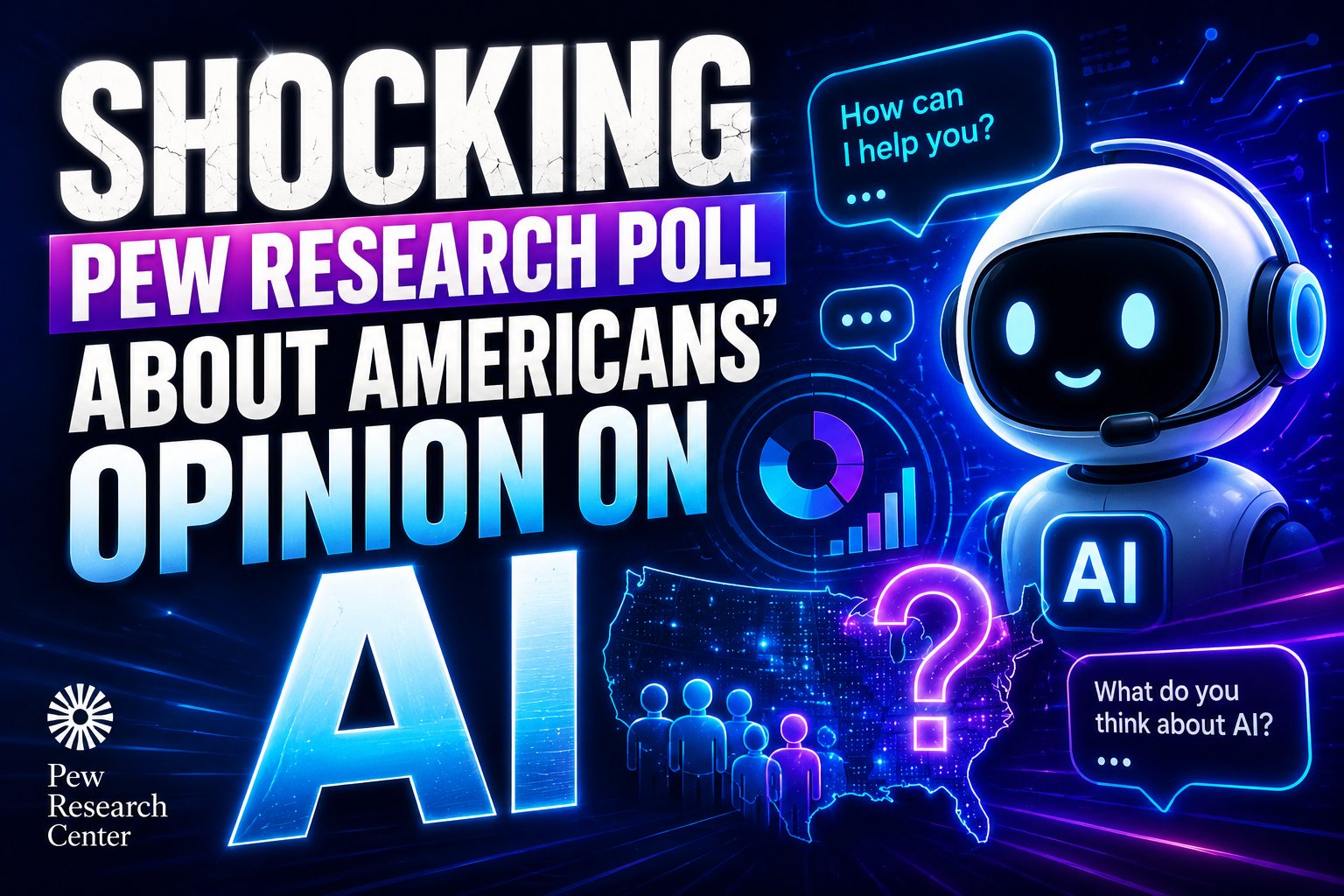
The survey found that only 16% of Americans believe AI will have a positive effect on society in the long run, while approximately 40% expect the impact to be negative. Even as AI chatbots like ChatGPT become increasingly common in workplaces, schools, and everyday life, skepticism remains widespread.
What’s particularly interesting is that Americans are using AI more than ever before. Pew found that nearly half of all adults have used AI chatbots, a dramatic increase from just a few years ago. Yet increased familiarity with the technology has not translated into increased trust. In fact, many users seem to be embracing AI as a useful tool while simultaneously worrying about its long-term consequences.
The Concerns aren’t Difficult to Understand.
For years, technology leaders have promised that artificial intelligence would improve productivity, accelerate scientific discoveries, and make daily life easier. While AI has undoubtedly delivered some impressive capabilities, it has also introduced a new set of fears. Americans are increasingly worried about job displacement, misinformation, deepfake technology, privacy violations, and the possibility that humans could become overly dependent on machines.
One of the biggest concerns highlighted by Pew is the belief that AI may erode essential human skills. More than half of Americans say AI will make people less creative, while many also worry that it could weaken meaningful human relationships. These concerns strike at something deeper than economics. They suggest that many people fear AI could fundamentally alter what it means to be human.
Ironically, younger Americans, who use AI more frequently than any other age group, are among the most skeptical. According to recent findings, Americans under 30 are heavy users of AI chatbots, yet many still believe the technology could have an overall negative impact on society. This suggests firsthand experience with AI may actually be fueling some of the concerns rather than reducing them.
There is a Lack of Trust Between the Public and Those Creating the AI
The survey also highlights a growing trust gap between the public and the people building AI systems. While many AI experts remain optimistic about the technology’s future, ordinary Americans are far more cautious. Pew previously found that AI researchers are significantly more likely to believe AI will benefit society over the next two decades than the general public. At the same time, both groups agree on one thing: they want more control over how AI is used in their lives.
Beyond concerns about automation and misinformation, Americans are becoming increasingly uneasy about the physical infrastructure powering the AI boom. Massive data centers are being constructed across the country to support AI development, and many communities are pushing back. Recent polling has shown widespread concerns over energy consumption, water usage, rising utility costs, and environmental impacts associated with these facilities.
Despite the skepticism, AI isn’t going away.
Businesses continue to invest billions of dollars in AI development. Governments view the technology as a strategic priority, particularly as competition with China intensifies. Meanwhile, consumers are steadily integrating AI into their daily routines for research, writing, coding, customer service, and productivity tasks.
That creates a fascinating contradiction. Americans may be worried about AI’s future, but they are also increasingly relying on it in the present. The Pew survey ultimately paints a picture of a nation caught between curiosity and caution. People see the benefits. They use the tools. But they remain unconvinced that the long-term outcome will be positive.
As artificial intelligence becomes more deeply embedded in every aspect of society, the challenge for technology companies may no longer be proving what AI can do. Instead, it may be convincing the public that what AI can do is actually good for humanity.
And based on the latest numbers, they still have a lot of work to do.















































Want to join the conversation?
Create an account or sign in to share your thoughts, vote,
and reply to other readers.
Showing 0 of 0 comments
Don't have an account?
Already have an account?