
Historic Cattle Shortage Forces Beef Business Shakeup
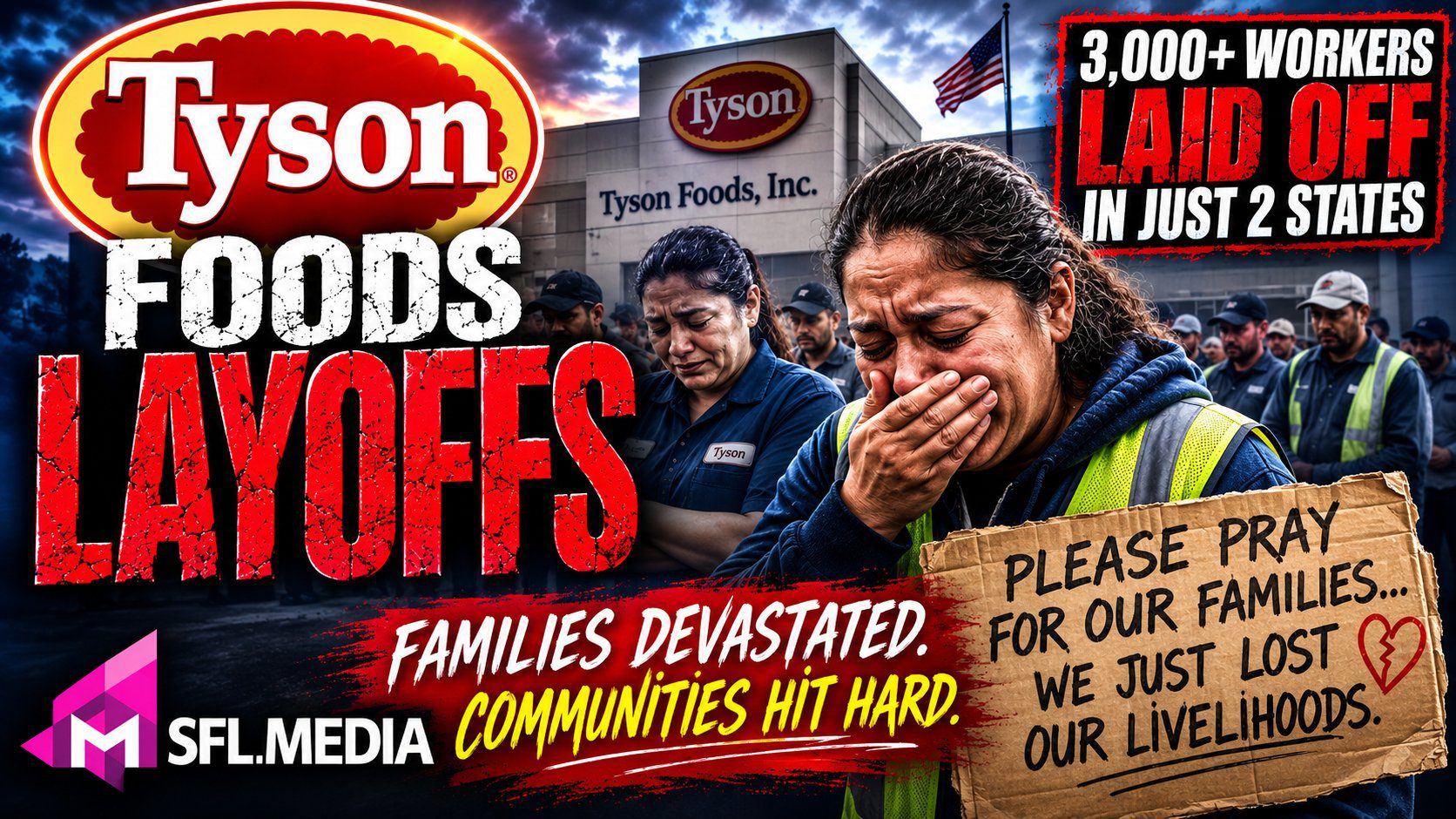
Tyson Foods is cutting thousands of jobs as the nation’s largest meatpacker restructures its beef operations, with more than 3,200 workers in two states expected to be affected (let go aka fired) by the latest plant closures. The company announced the changes saying it will shut down its beef facility in Joslin, Illinois, and its case-ready beef facility in Eagle Mountain, Utah. Tyson is also trying to sell another beef plant in Pasco, Washington.
The numbers are ugly. The Joslin, Illinois, facility employs roughly 2,500 people, while the Eagle Mountain, Utah, operation has about 700 workers. Combined, the two closures affect more than 3,200 jobs. Tyson has not publicly provided an exact final layoff number, and the Pasco facility is currently being offered for sale rather than immediately shut down. So the widely reported “3,000-plus layoffs in two states” figure refers to the Illinois and Utah facilities, not all three locations.
And this isn’t Tyson simply deciding that it has too many people sitting around eating company chicken sandwiches. The problem is much bigger and is hitting the entire beef industry.
A Historic Cattle Shortage
The United States is dealing with a historic cattle shortage. The nation’s cattle inventory has fallen to its lowest level in roughly 75 years, leaving meat processors fighting over a shrinking supply of animals. At the same time, cattle prices have surged, making it increasingly expensive for companies like Tyson to keep beef-processing plants operating at previous levels.
Tyson says it wants to consolidate its beef operations around three strategically located facilities: Dakota City, Nebraska; Holcomb, Kansas; and Amarillo, Texas. Production from the Illinois and Utah facilities will be shifted to other plants with available capacity. Tyson says the restructuring should allow it to maintain a similar overall level of cattle slaughter while operating a smaller and more efficient network.
The company also says it intends to bring a second shift back to its Amarillo, Texas, operation as cattle become available. That is an important detail because Tyson isn’t simply abandoning beef processing. It is moving the business around in response to the lack of cattle.
Still, for the thousands of people working in Joslin and Eagle Mountain, corporate restructuring is a rather sterile phrase for something that translates into a paycheck disappearing.
Tyson is Offering Jobs Very Far Away
Tyson says it will help affected employees apply for available jobs at other Tyson facilities. The problem, naturally, is that “there are other jobs somewhere else” isn’t particularly comforting if moving hundreds of miles isn’t an option. A factory job is often more than a job in these communities. It supports restaurants, gas stations, grocery stores, landlords, contractors and other businesses that depend on thousands of workers spending money locally.
And Tyson’s latest announcement comes only months after another massive shutdown.
In January, Tyson closed its huge beef-processing plant in Lexington, Nebraska, eliminating roughly 3,200 jobs. The company also reduced operations at its Amarillo facility, affecting about 1,700 workers.
That means the latest announcement isn’t some isolated corporate cost-cutting exercise. Tyson’s beef business has been under serious pressure for quite some time.
The company’s financial numbers explain why. Tyson has warned that its beef division could lose between $500 million and $650 million during fiscal 2026, an even worse forecast than the $350 million to $500 million loss it previously expected.
What Has Happened with Beef and Cattle Prices and the Shortage?
Beef prices for consumers, meanwhile, have been moving in the opposite direction. The average retail price for a pound of lean or extra-lean ground beef reached a record $8.65 in June, according to federal data cited by Reuters. So consumers are paying more for beef while the company processing that beef is losing money. That is the sort of economic math that makes everyone unhappy at the same time, which is traditionally how you know you’re dealing with a serious problem.
Several factors have contributed to the cattle shortage, including years of drought that damaged grazing land and reduced herds. Restrictions on cattle imports from Mexico have also complicated the supply situation because of concerns over New World screwworm, a livestock parasite that has been moving north through Central America and was detected in the United States this year.
Tyson says the current conditions are among the most severe cattle shortages the United States has experienced and that the company has to adjust its footprint accordingly. The company’s strategy is essentially to process roughly the same amount of cattle through fewer, larger and strategically located facilities instead of continuing to operate plants that are becoming increasingly expensive to keep supplied.
The restructuring also illustrates a strange problem developing in America’s food system. Consumers still want beef, and they’re willing to pay historically high prices for it. But the supply of cattle available to turn into steaks, burgers and ground beef has fallen dramatically.
That creates a brutal squeeze for meat processors. They pay more for cattle, consumers pay more for beef, and yet the processor can still lose hundreds of millions of dollars.
The People Affected are Shocked
For workers, however, the corporate explanation doesn’t change the immediate reality. More than 3,000 people in Illinois and Utah are now facing the loss of jobs tied to Tyson’s beef operations, while workers at the Washington facility face uncertainty as the company searches for a buyer.
The numbers surrounding Tyson Foods’ latest restructuring are staggering, but numbers don’t cry. People do. One particular Tyson employee stated, “People started fighting, people were yelling, people were crying.”
And according to workers at Tyson’s Joslin, Illinois, beef facility, there were plenty of tears when employees were suddenly informed that the plant was closing and their jobs were disappearing. At the Joslin plant, employees were directed to the cafeteria when they arrived for work and were handed letters informing them that the facility was shutting down. One worker described the reaction inside the plant as chaotic.
That reaction becomes easier to understand when you realize that some of these employees had spent 30 years or more working at the facility. Others had only been there a few days. Regardless of how long they had been wearing the Tyson badge, the news came with remarkably little time to prepare.
That’s the part of mass layoffs that tends to disappear when everything gets translated into corporate language. “Network restructuring” sounds neat and efficient. “Strategic changes to the beef business” sounds like something typed by twelve executives in a conference room.
For a worker with a mortgage, children and medical bills, it sounds considerably different.
In Eagle Mountain, the mood has been similarly grim.
Workers there described the situation as frightening, particularly because many had no other job lined up. Josh Austin, a Tyson employee, told media that he has a mortgage, bills and children to support and that not having another job waiting was “scary.” Another employee said he watched coworkers worrying about unemployment and whether they would be able to find work elsewhere.
And the timing couldn’t be much worse for some families.
With the school year beginning, workers and their spouses are suddenly worrying about mortgages, bills, school clothes, daycare and basic household expenses. One employee’s wife said the uncertainty had her wondering whether she would have to return to work and whether they would need to put their children in daycare.
Then there is the sheer shock of it. Some employees reportedly believed they were going to receive a five-year bonus. Instead, hundreds learned that their jobs were going away. That’s a particularly brutal emotional whiplash.
And the anger isn’t limited to Tyson employees. The closure is already creating anxiety among local businesses and cattle producers who depend on the plant. Local farmers have warned that losing such a major buyer could ripple through the regional cattle industry and potentially affect cattle prices.
The emotional response is therefore about more than losing a job. These plants have become economic anchors for their communities. When they disappear, the damage spreads outward.
Restaurants lose customers. Gas stations lose customers. Stores lose customers. Landlords lose tenants. Families cut spending. Local governments lose economic activity.
That’s why the images and accounts of workers crying are so powerful. They put a human face on what otherwise becomes another headline about corporate restructuring.
At Joslin, workers learned the plant was closing and were told their jobs were ending almost immediately. A Chicago law firm has since announced an investigation into whether Tyson complied with federal WARN Act requirements concerning advance notice of mass layoffs and plant closures.
So the anger is understandable. For Tyson executives, this is a restructuring of an underperforming business. For the workers who walked out of those plants, it is their lives being restructured without their permission.
And that is a very different thing.
Until then, America’s beef shortage isn’t just showing up at the grocery-store meat counter. It is now showing up on factory floors, in company balance sheets and, for thousands of American workers, potentially in the unemployment line.



















































Want to join the conversation?
Create an account or sign in to share your thoughts, vote,
and reply to other readers.
Showing 0 of 0 comments
Don't have an account?
Already have an account?