
CamelPhat Deliver a Two Hour House and Techno Journey in Mixmag Lab London
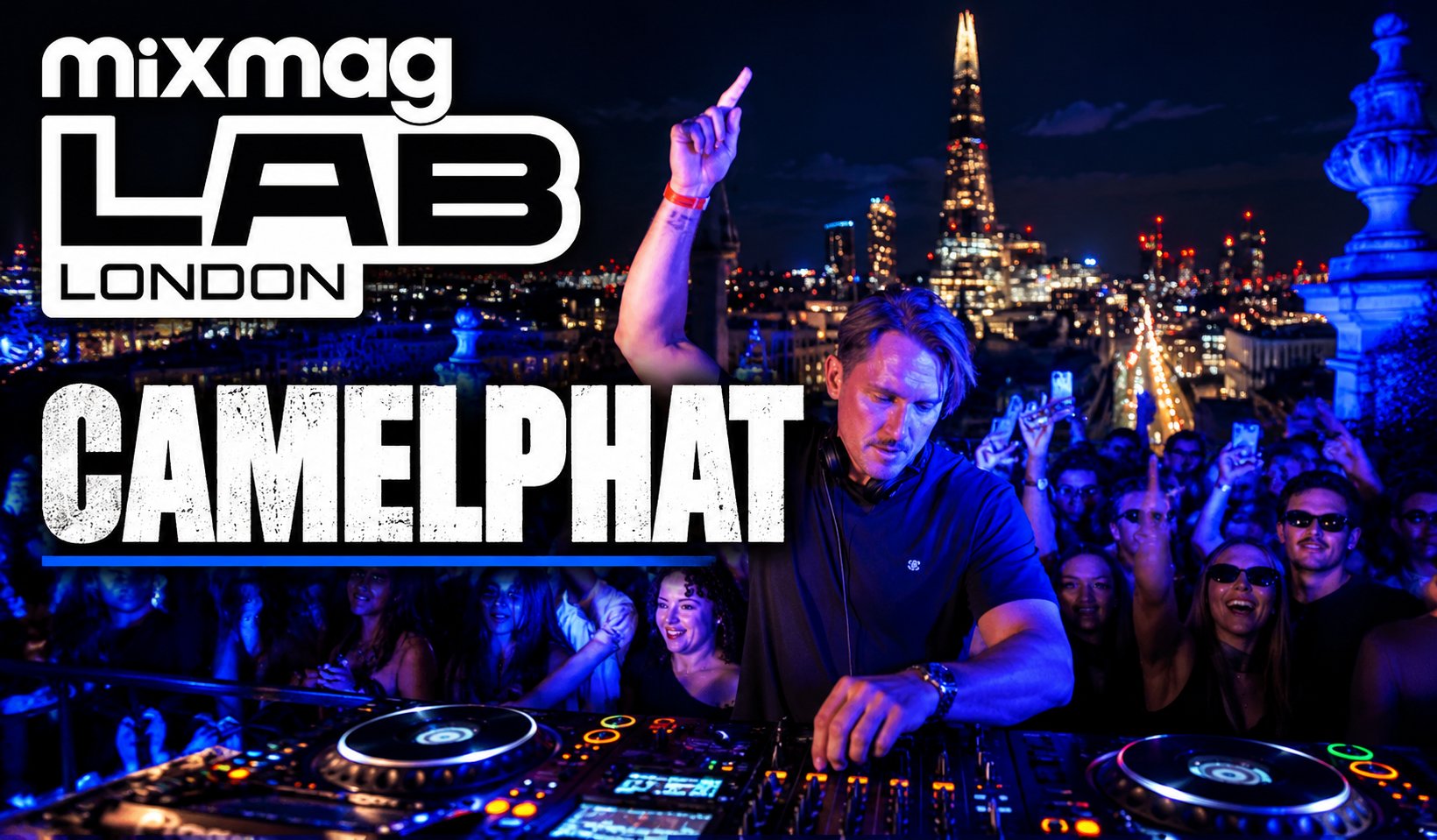
CamelPhat’s latest Mixmag Lab London session stretches beyond two hours, moving through vocal house, rolling tech house grooves, darker club records and melodic territory. Rather than treating the appearance as a collection of individual tracks, the Liverpool duo construct a long form club set that steadily changes character while maintaining the hypnotic low end sound that has become central to their identity.
CamelPhat returned to the decks for a marathon Mixmag Lab London performance released September 29, 2026, delivering a two hour session that moves through house, tech house and melodic electronic music without becoming locked into any single corner of the genre. Running approximately two hours and one minute, the set develops gradually, beginning with warmer vocal driven selections before becoming progressively heavier, darker and more percussive as the session unfolds.
The performance also demonstrates the value of the long form DJ set at a time when electronic music is increasingly consumed through short clips, festival highlights and individual tracks optimized for social media. CamelPhat use the additional space to establish a groove rather than immediately chase a peak, allowing records to breathe and transitions to develop across several minutes. The result feels considerably closer to an extended club session than a tightly compressed festival performance.
CamelPhat Start With the Vocals and Let the Set Build
The opening portion establishes the emotional side of the mix almost immediately. After Mixmag’s introduction, CamelPhat move into a vocal-heavy opening record centered on ideas of searching, desire and finding what is needed internally. That atmosphere carries into the following selections, where house percussion and increasingly prominent basslines begin pulling the set away from its atmospheric introduction and toward the dance floor.
Around eight minutes into the performance, the musical progression briefly gives way to a spoken-word passage about relationships and giving yourself completely to someone who genuinely reciprocates that commitment. Rather than functioning as a conventional vocal hook, the passage becomes part of the atmosphere of the record, creating a reflective interruption before the groove returns. A soulful female vocal follows several minutes later, keeping the first section rooted in classic house traditions even as the production underneath it becomes more contemporary.
By the 20-minute mark, the character of the performance begins to shift. Repeated vocal fragments become shorter and more rhythmic, the bass becomes more dominant and the records increasingly rely on percussion rather than traditional songwriting to propel the room. It is a gradual transition rather than a dramatic genre change, but it establishes the structure that CamelPhat follow for much of the next hour.
The Middle of the Set Gets Heavier
CamelPhat begin applying considerably more pressure as the performance moves through the 30 to 50 minute range. Melodic vocals remain present, but they increasingly sit over tougher drums, darker synthesizers and heavier low end production. The contrast allows the duo to maintain an emotional element without sacrificing the momentum that has developed since the opening records.
A particularly aggressive vocal arrives around the 38 minute mark before the set swings back toward a more melodic hook several minutes later. That push and pull becomes one of the strongest characteristics of the session. CamelPhat repeatedly introduce something recognizable or emotionally accessible and then use the next transition to pull the mix back toward a darker club sound.
The approach is especially effective because the performance never feels as though it is changing direction simply for the sake of variety. The individual records serve a larger progression. Vocals disappear for stretches and then return when the set needs another emotional lift, while heavier records are allowed enough time to establish themselves before CamelPhat move toward another musical idea.
An Anti-Algorithm Moment Lands in the Middle of the Mix
One of the most interesting moments arrives at approximately 57 minutes, when a vocal built around frustration with the modern content economy enters the mix. The spoken message rejects the pressure to become a constant “content creator” and instead focuses on the simple desire to make music, spend late nights in the studio and create without worrying about posts, algorithms or the machinery surrounding contemporary online promotion.
In the context of a DJ set being recorded specifically for one of electronic music’s largest digital platforms, the moment carries an obvious irony. Dance music has become deeply intertwined with social media, with DJs increasingly expected to function simultaneously as producers, performers, personalities and content creators. A record pushing against that culture therefore lands differently inside a professionally filmed Mixmag performance than it might during an anonymous club night.
CamelPhat do not linger on the statement. The message gives way to another bass-heavy house record, and the performance quickly returns to the dance floor. But it provides a memorable midpoint and one of the clearest examples of how vocal samples are used throughout the set as more than decorative hooks.
“We Need the Bass”
Shortly after the one-hour mark, the set returns decisively to its physical foundation with a spoken house sample built around a simple declaration about the importance of bass. The sentiment could almost serve as a description of the entire middle section of the performance, where CamelPhat increasingly rely on thick basslines, repetitive vocal loops and tightly controlled percussion rather than elaborate melodic arrangements.
The following records continue pushing in that direction, incorporating hip house and rap influenced vocals over increasingly muscular club production. At approximately 1:14, however, CamelPhat interrupt the momentum again with another extended spoken passage, this time carrying a preacher like or philosophical quality. The record asks broader questions about ego and humanity before resolving into a message about replacing hardened attitudes with compassion.
That transition demonstrates how CamelPhat are constructing the set beyond simple tempo management. Spoken passages repeatedly operate as separators between sections of the performance, giving the audience a moment of narrative or emotional focus before the drums take control again.
The Final 40 Minutes Turn Toward Classic House Energy
The final third begins with a more direct jackin’ house groove around the 1:25 mark, followed by a record explicitly demanding that the energy be raised. By this point, the patient opening has been replaced by a much more immediate club atmosphere. CamelPhat are no longer introducing the room to the set; they are driving it.
One of the biggest recognizable moments arrives at approximately 1:34, when the unmistakable vocal from Ultra Naté’s “Free” emerges in the mix. Originally released in 1997, “Free” became one of the defining vocal-house records of its era, and its appearance gives the performance a direct connection to the history of the genre. Rather than sounding disconnected from the contemporary production surrounding it, the vocal demonstrates how effectively classic house songwriting can still function inside a modern club set.
The moment also provides an emotional release after more than 90 minutes of increasingly dense electronic production. CamelPhat allow the familiar vocal to carry the room before gradually returning to darker material, including a late set record centered around a more nocturnal narrative. The sequence prevents the performance from peaking too early and leaves enough space for one final melodic movement.
CamelPhat Save Another Emotional Shift for the Closing Stretch
As the performance approaches the two-hour mark, CamelPhat begin easing away from the harder rhythmic material that dominates much of the middle section. A melodic vocal near 1:53 introduces a more reflective atmosphere, creating the feeling of a closing chapter rather than simply another peak-time transition.
The final record continues that movement with a vocal centered on dance as a shared experience, bringing the session back toward the communal house-music themes that appeared near the beginning. Mixmag’s host returns as the performance reaches approximately two hours and one minute, closing the session to applause from the crowd.
The ending completes a structure that becomes much clearer when the performance is considered as a complete mix. CamelPhat begin with emotion and vocals, gradually increase the rhythmic pressure, spend much of the middle section exploring heavier club territory and then reintroduce melody and recognizable house elements as the set approaches its conclusion.
CamelPhat Continue to Blur the Lines Between House and Melodic Techno
CamelPhat’s ability to operate between different sections of electronic music has been central to their career. The Liverpool duo of Dave Whelan and Mike Di Scala achieved enormous international recognition through records including “Cola,” but their subsequent development has increasingly placed them between traditional house, progressive sounds and the darker melodic production commonly associated with large clubs and festival stages.
The Mixmag session reflects that range without turning into a showcase of disconnected genres. There are clear traces of soulful house, tech house, hip house, melodic techno and classic vocal house throughout the performance, but the transitions are handled in a way that makes those influences feel like different stages of the same journey.
That is ultimately what makes the two hour format work. CamelPhat are given enough time to move beyond the immediate payoff demanded by shorter festival sets and social media clips. Records can develop, spoken passages can temporarily interrupt the rhythm, familiar vocals can emerge without dominating the performance and darker sections can run long enough to establish genuine tension before the next release.
For listeners accustomed to CamelPhat’s biggest records, the Mixmag Lab performance provides a broader look at the music surrounding those productions and the influences informing their DJ sets. For house and techno listeners, it is simply two hours of carefully controlled club music from a duo that understands that an extended set does not need to remain in one place to maintain its identity.


















































Want to join the conversation?
Create an account or sign in to share your thoughts, vote,
and reply to other readers.
Showing 0 of 0 comments
Don't have an account?
Already have an account?