
Tucker Carlson Sits Down With NPR and Opens Up About Trump, Iran, Israel, Faith and AI
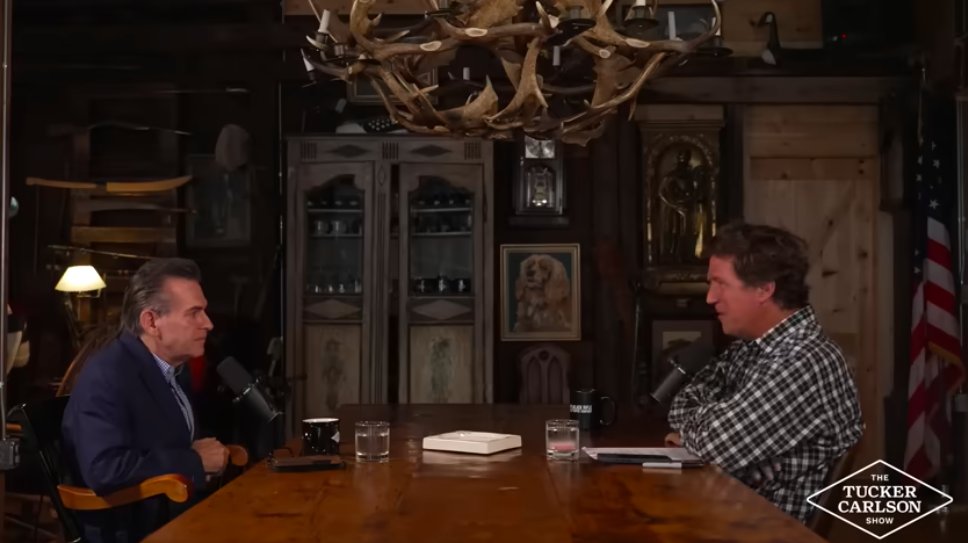
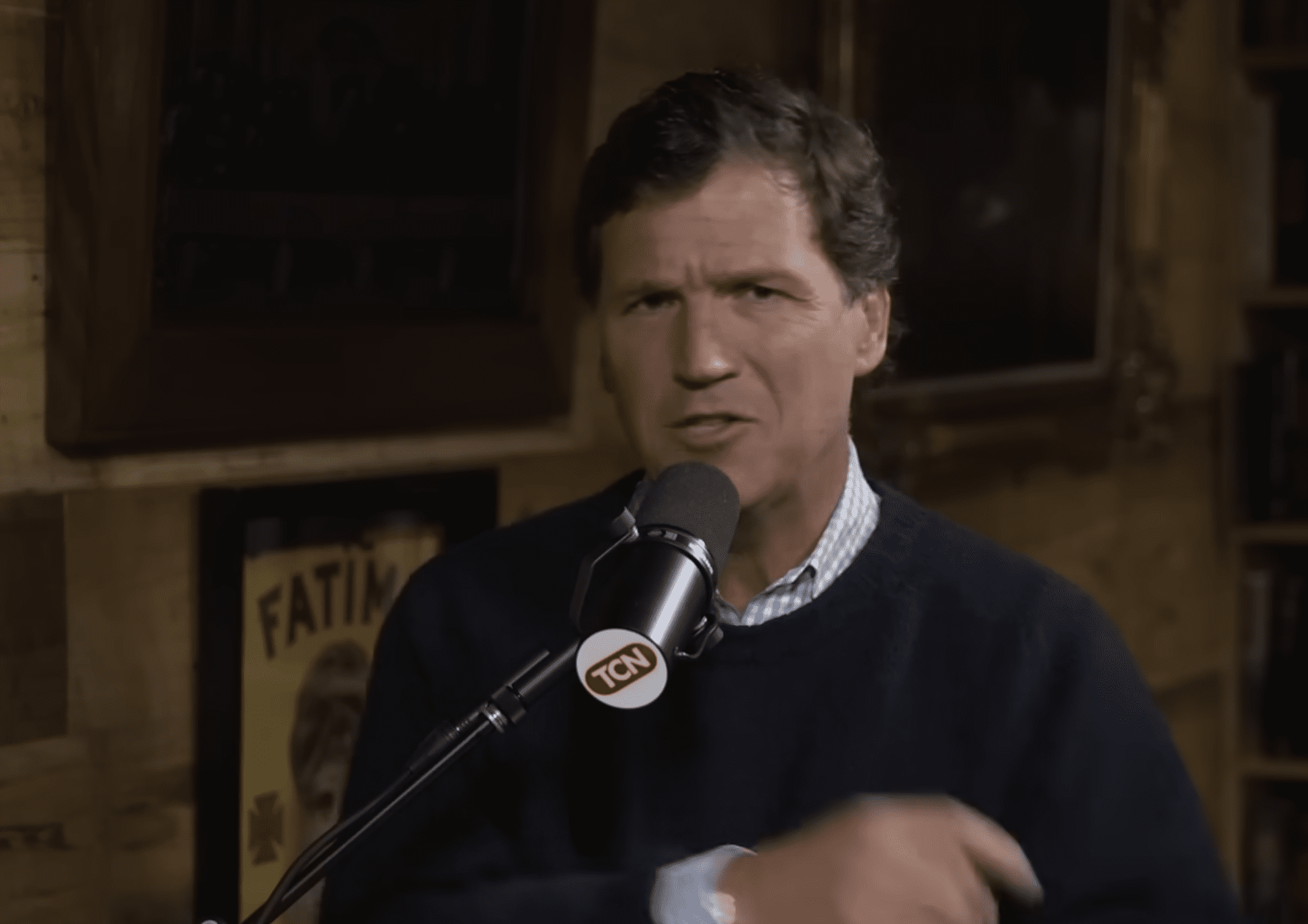
Tucker Carlson has never been particularly difficult to find. The former Fox News star has spent years building an enormous audience around provocative political commentary, first on television and now through his independent media operation. But his recent conversation with NPR’s Steve Inskeep was something different.
In a nearly hour-long interview for NPR’s Newsmakers, Carlson sat down for an unusually wide-ranging discussion about his dramatic break with President Donald Trump, the war with Iran, Israel’s influence in American foreign policy, the Republican Party, his own years as a partisan television personality, his faith, Jeffrey Epstein, the possibility of a third political party and, perhaps surprisingly, artificial intelligence. And buried inside all of that was one extraordinary allegation from Carlson about a private conversation he says he had with Trump in the Oval Office shortly before the Iran war began.
The Trump Breakup
The obvious starting point was Carlson’s increasingly public break with Trump. Carlson was once one of Trump’s most prominent media allies. He spoke at the 2024 Republican National Convention and was deeply associated with the MAGA movement. In the NPR interview, however, he described Trump’s decision to enter the Iran conflict in dramatically different terms.
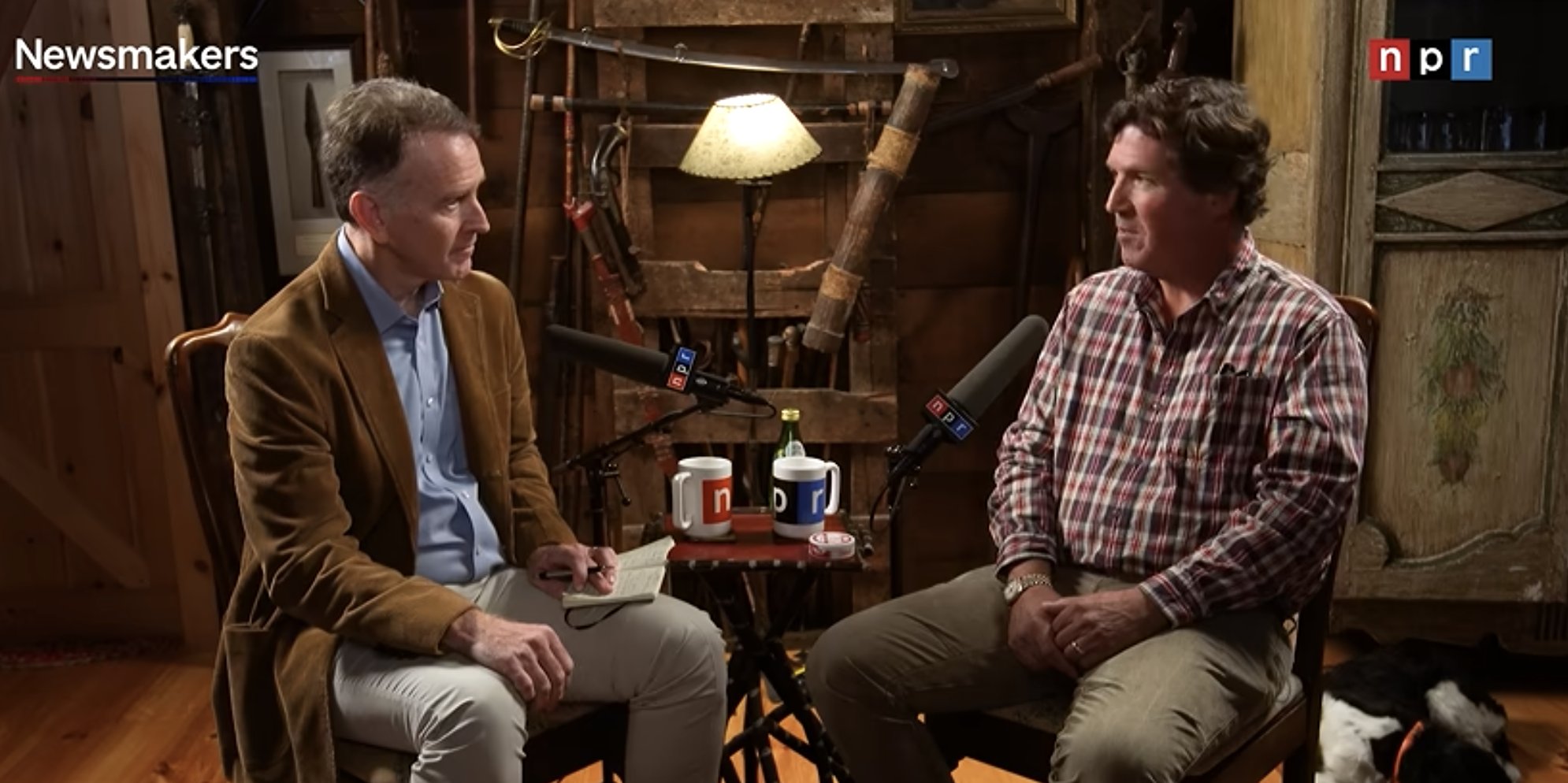
Carlson told Inskeep that he believes Trump was pressured by a foreign country into making the decision and argued that Trump did not have the freedom to make the decision entirely on his own. He went as far as saying Trump should have been removed from office after threatening nuclear action. Carlson specifically referenced the 25th Amendment and argued that Trump’s cabinet should have acted.
That is a remarkable position for someone who was campaigning for Trump less than two years earlier. But Carlson’s explanation for his change of heart was perhaps more interesting than the criticism itself. He said he feels sorry for Trump rather than personally angry with him, portraying the president as someone who allowed himself to be pushed into a disastrous foreign-policy decision.
The “We All Die Anyway” Conversation
The most explosive moment of the interview came when Inskeep pressed Carlson about his description of Trump’s thinking before the war. Carlson claimed that he had returned from Israel and then met privately with Trump in the Oval Office several days before the conflict began.
According to Carlson, he told Trump that the coming war was not really about Iran’s nuclear program and argued that Israel was pushing the United States toward war.
Carlson says Trump responded, “Yes, you’re right. But in the end, we all die anyway. So it doesn’t matter.”
That claim has not been independently verified. NPR says it asked the White House about the allegation, but the White House did not specifically address the alleged conversation. Instead, it referred NPR to a social-media post from Trump attacking Carlson and others who opposed his Iran policy. Carlson described the alleged comment as “nihilism” and said it represented the opposite of what he believes a national leader should display.
That exchange may ultimately become the single most discussed portion of the interview because it involves a private presidential conversation that, if accurately described, would offer an extraordinary glimpse into Trump’s thinking before the war. For now, however, it remains Carlson’s account of a private meeting.
Israel, Iran and the “Uniparty”
The interview then moved into considerably more controversial territory. Carlson argued that Israel exerted enormous influence over American foreign policy and claimed that both major American political parties ultimately support many of the same foreign-policy objectives.
He repeatedly used the term “uniparty” to describe what he sees as an establishment consensus that transcends the Democratic and Republican labels. Inskeep challenged that argument directly.
The NPR host pointed out that Democratic administrations under Barack Obama and Joe Biden pursued nuclear diplomacy with Iran rather than launching a regime-change war. Carlson acknowledged that distinction but argued that the broader American approach toward Iran remained fundamentally hostile.
This was one of the more interesting aspects of the interview because Inskeep did not simply allow Carlson to make the argument without challenge. He presented a specific counterexample and forced Carlson to explain how it fit into his broader theory.
The Antisemitism Question
Because Carlson’s criticism of Israel has become increasingly central to his political commentary, Inskeep also confronted him with accusations that some of his rhetoric could be interpreted as antisemitic. Carlson rejected that characterization.
He argued that criticism of Israel and American foreign policy should not automatically be treated as criticism of Jewish people. Inskeep, however, raised the possibility that discussions about dual loyalties, foreign influence and political control can overlap with longstanding antisemitic conspiracy theories.
Carlson said he rejects antisemitism and argued that he is talking about political influence rather than ethnicity or religion. The exchange was notable because neither man simply ignored the controversy. Inskeep explicitly raised the question, and Carlson was forced to explain where he believes the distinction lies. That distinction will undoubtedly remain controversial, but the interview gives viewers a chance to hear Carlson make the argument in his own words rather than through a clipped social-media video.
Carlson Admits He Was Part of the Political Machine
One of the more revealing portions of the interview had little to do with Trump or Israel. Carlson reflected on his own career in cable news and admitted that he spent years participating in the partisan political media system he now criticizes. He told Inskeep that he had been “part of the machinery” of cable news for nearly three decades and said he had become caught up in what he now considers a partisan distraction.
Carlson specifically mentioned issues such as transgender rights and immigration. His argument was not that those issues are completely meaningless, but that the constant partisan fight over them can distract Americans from other questions, particularly economics and the structure of the tax system. That self-criticism was one of the more fascinating moments of the conversation.
Carlson was essentially arguing that he helped build the machine he now believes has distracted the public. It is not every day a television personality admits that perhaps the television personality business has some problems. Humanity survives another day.
What About a Third Party?
Carlson has increasingly talked about the possibility of a political movement outside the traditional Republican Democratic structure. Inskeep asked him about that possibility. Carlson’s answer was surprisingly self-deprecating. He said he was not the person to organize such a movement and joked that he probably could not even organize someone’s birthday party.
He said his skills are rhetorical rather than organizational. That distinction matters because Carlson has enormous influence as a media personality, but influence and political organization are very different things.
The interview therefore did not amount to Carlson announcing a third-party presidential campaign. Instead, he described the political system as increasingly disconnected from many Americans while distancing himself from the idea that he personally would be the person to build a new party.
Epstein Comes Up
The conversation also touched on Jeffrey Epstein and Trump’s handling of the Epstein controversy. Carlson described conversations he says he had regarding Trump’s concerns that releasing information about Epstein could be used politically against him.
According to Carlson, Trump told him that he had broken off his friendship with Epstein years earlier and believed that further discussion of Epstein could be used to associate Trump with Epstein’s crimes. Carlson said Trump described Epstein as a “creep” and said he had nothing to do with his crimes.
Again, these are Carlson’s descriptions of conversations and should be understood as such. They are not independently established facts simply because they were said during an NPR interview.
Carlson’s View of Trump’s Faith
The interview also took an unexpectedly personal turn. Inskeep asked Carlson about his previous statement that he never believed Trump was a Christian, despite Trump’s public statements identifying himself as a Christian. Carlson said he does not want to judge another person’s religious faith, but he explained that he values people who recognize a higher authority beyond themselves.
The conversation then turned toward Carlson’s own religious development. Carlson described himself as culturally Episcopalian but said his faith has changed dramatically in recent years. He spoke about Christianity in terms of humility and recognizing one’s own shortcomings rather than believing oneself to be morally superior.
He described genuine religious faith as producing an awareness of one’s own inadequacy rather than self righteousness. That was another departure from the political Carlson viewers normally see.
Then Comes AI
Perhaps the most unexpected part of the entire interview was Carlson’s discussion of artificial intelligence. Inskeep connected Carlson’s views on technology to his religious beliefs and asked whether AI could bring humanity closer to understanding God. Carlson’s answer was essentially the opposite.
He argued that humanity moves closer to God through humility, not by creating increasingly powerful machines. Carlson also expressed skepticism about how much AI developers actually understand about the technology they are creating.
He claimed that even engineers working on the largest AI systems cannot completely explain why large language models behave the way they do. He also raised concerns about the amount of energy required by AI computing and argued that the industry does not yet have a precise understanding of how large future energy demands could become.
His broader argument was that society should slow down and understand the technology before racing ahead with it. For someone who now makes a substantial portion of his living through the internet, that criticism carries an interesting contradiction. Carlson is deeply embedded in the same technological ecosystem he is warning about.
The Bigger Story
The most interesting thing about the NPR interview may not be any individual statement. It is the picture of Carlson himself.
The conversation showed a political commentator who appears to be reassessing several assumptions that defined much of his career. He criticized Trump while still discussing his continued relationship with Vice President JD Vance. He criticized both political parties. He questioned the foreign policy establishment. He revisited his own role in partisan cable news. He discussed religion at length. And he expressed serious reservations about the direction of artificial intelligence.
In other words, this was not simply a “Tucker Carlson attacks Trump” interview. It was Carlson attempting to explain how his worldview has changed. The most consequential claims, particularly his account of Trump’s alleged “we all die anyway” remark and his assertions about foreign influence over U.S. policy, remain Carlson’s claims and should be treated accordingly. NPR explicitly sought a response from the White House, and the White House did not specifically address the alleged Oval Office conversation.
But the interview is significant precisely because Carlson was given nearly an hour to explain himself rather than being reduced to a 30 second clip. And for anyone trying to understand where one of the most influential voices on the American right is heading after his break with Trump, there is considerably more going on here than another political shouting match.
Sometimes the most interesting interview is the one where everybody actually sits down and lets the person finish a sentence. A revolutionary concept, apparently.












































Want to join the conversation?
Create an account or sign in to share your thoughts, vote,
and reply to other readers.
Showing 0 of 0 comments
Don't have an account?
Already have an account?