
Patrick Clancy Opens Up About Losing His Three Children, Forgiving Lindsay Clancy and Finding a Way to Live Again
In an extended 60 Minutes interview, Patrick Clancy describes the night that destroyed his family, his decision to forgive his former wife, the trauma therapy that helped him survive, the social-media speculation that followed him and the new family he is building while preserving the memory of Cora, Dawson and Callan.
Patrick Clancy has spent more than three years confronting an almost impossible question: how does someone continue living after losing all three of his children in a single night?
In an extended 60 Minutes interview released September 22, 2026, Clancy speaks at length about the January 2023 deaths of his children in Duxbury, Massachusetts, and the years of grief, trauma, criminal proceedings and public scrutiny that followed. His former wife, Lindsay Clancy, was charged with killing 5 year old Cora, 3 year old Dawson and 8 month old Callan before attempting to take her own life. Her defense argued at trial that she was suffering from postpartum psychosis and was not criminally responsible for the killings, while prosecutors maintained that she understood her actions and deliberately killed the children. Her 2026 trial ended in a mistrial after jurors were unable to reach a unanimous verdict.
Patrick’s interview with correspondent Ross Douthat is not primarily an examination of the prosecution’s case against Lindsay. Instead, it is an unusually intimate account of what happened to the family before the killings, what Patrick experienced afterward and why he believes the tragedy should prompt a much larger conversation about perinatal mental health, trauma and the ability of families to recognize and obtain treatment for severe psychiatric illness after childbirth.
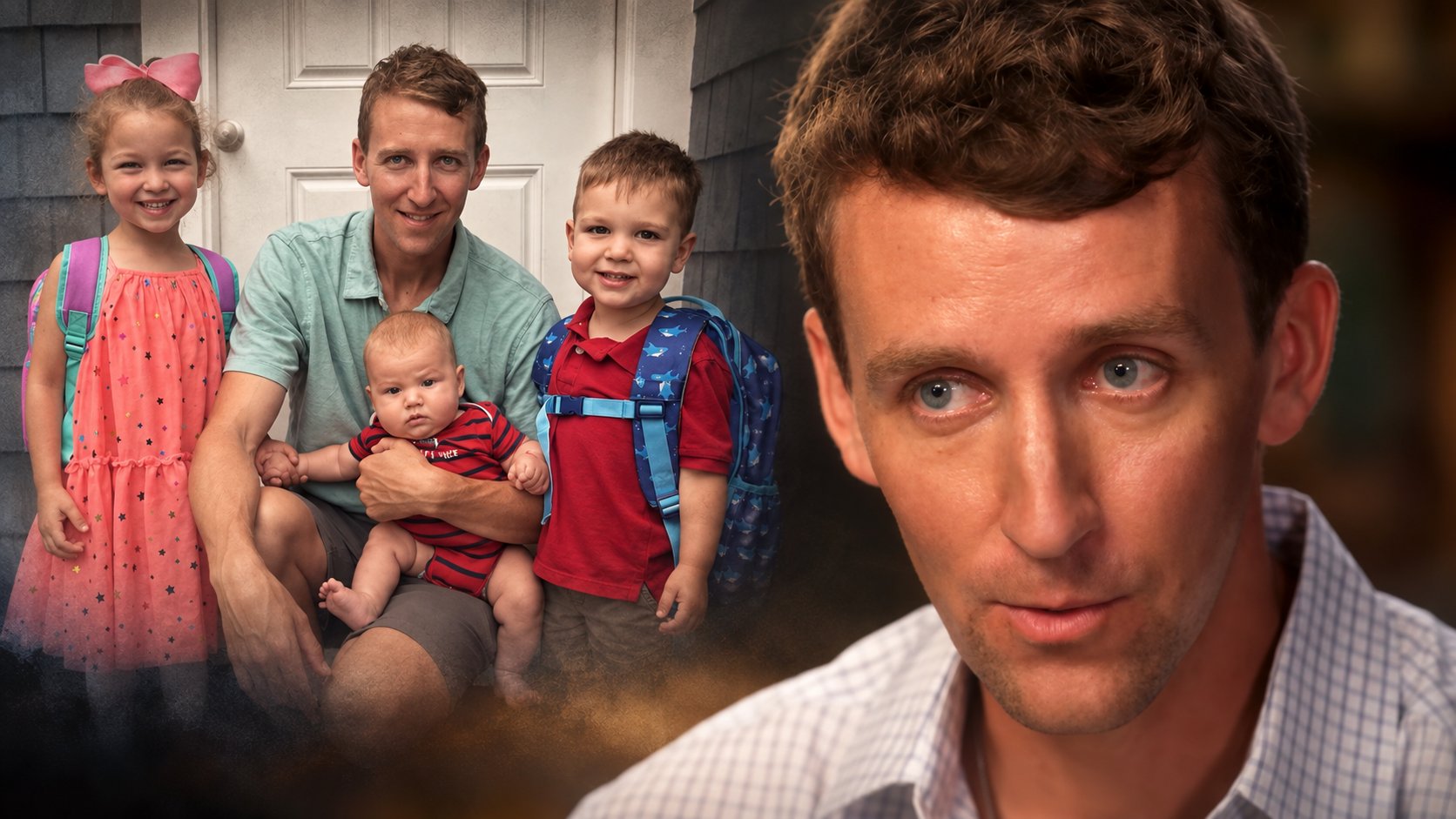
The Months Before the Killings
Patrick told 60 Minutes that he met Lindsay in Boston during the summer of 2013. The relationship progressed into an engagement and marriage, and the couple eventually settled in Duxbury, where they were raising Cora, Dawson and Callan. By Patrick’s account, their lives changed dramatically during the months after Callan was born in May 2022, when Lindsay began experiencing serious problems with sleep, depression and anxiety.
Roughly five months after Callan’s birth, Patrick said Lindsay told him she had gone several nights without sleeping. Her symptoms escalated into repeated medical and psychiatric visits, including emergency-room treatment and participation in a program for postpartum depression. On New Year’s Eve 2022, less than a month before the children’s deaths, Lindsay admitted herself to McLean Hospital for psychiatric treatment.
That medical history became one of the central issues in Lindsay’s murder trial. Her defense argued that she had developed postpartum psychosis and that her psychiatric condition, combined with the complicated series of medications she had been prescribed, left her incapable of appreciating the criminality of her actions. Prosecutors did not dispute that Lindsay experienced significant mental-health problems, but they presented a fundamentally different interpretation of her condition and argued that the evidence showed she was capable of planning and understanding what she did.
The distinction remains critical because the central legal dispute is not simply whether Lindsay killed the children. The criminal case has focused heavily on whether she was legally responsible for her actions under Massachusetts law at the time of the killings.
January 24, 2023
On January 24, 2023, Patrick left the family’s Duxbury home to pick up dinner and medication. When he returned, he encountered a catastrophic scene. Lindsay had fallen from a second story window after attempting to take her own life, and the couple’s three children were found inside the home after being strangled.
Cora and Dawson died that night. Callan remained alive and was transported to Boston Children’s Hospital, where doctors attempted to save him. Patrick stayed with his youngest child for several days before Callan died, describing to 60 Minutes the experience of holding his son during those final days while simultaneously beginning to comprehend that his two older children were already gone.
The night became the dividing line of Patrick’s life, separating everything that existed before January 24 from everything he has attempted to rebuild since. It also transformed what had been a private family mental health crisis into a nationally followed criminal case in which medical records, psychiatric treatment, prescription medications, marital communications and the family’s final days together would eventually be examined in court.
Patrick Says He Forgave Lindsay
One of the most striking elements of Patrick’s response has been his decision to forgive his former wife. He told 60 Minutes that he did not want anger toward Lindsay to consume the remainder of his life and said he believes severe mental illness played a central role in what happened. His position does not eliminate questions of legal accountability, but Patrick has consistently argued that understanding the psychiatric circumstances surrounding the killings is essential if another family is to be prevented from experiencing a similar tragedy.
Patrick said he eventually asked Lindsay what she remembered about the killings. According to his account, she described the experience as being “like a dream.” Patrick has said that holding onto hatred would have destroyed him internally and that forgiveness became part of his own effort to survive the aftermath of the children’s deaths.
His personal decision to forgive Lindsay is separate from the legal determination courts are being asked to make. Forgiveness by a victim’s family member does not determine criminal responsibility, and prosecutors have maintained that Lindsay’s actions were deliberate. Patrick’s argument is instead that society should be capable of confronting the deaths of his children while also examining whether better recognition and treatment of severe perinatal psychiatric illness could prevent another catastrophe.
For Patrick, the larger objective is prevention: recognizing dangerous symptoms earlier, reducing the stigma surrounding women seeking psychiatric treatment after childbirth and creating systems capable of intervening before a mental-health crisis becomes an emergency.
A Murder Trial Ends Without a Verdict
Lindsay Clancy’s murder trial became one of Massachusetts’ most closely watched criminal proceedings of 2026, with more than 70 witnesses testifying as prosecutors and defense attorneys presented sharply different interpretations of her mental state and actions. The defense sought a verdict of not guilty by reason of insanity, while prosecutors argued that Lindsay remained legally responsible for killing the children.
The jury ultimately failed to reach a unanimous verdict. A mistrial was declared September 4 after jurors deadlocked, reportedly 11-1, over whether Lindsay should be found not guilty by reason of insanity. The unresolved case subsequently returned to court, where the defense sought to prevent another trial while prosecutors defended the sufficiency of the evidence presented against her. As of late September, no retrial date had been set, leaving the central question of Lindsay’s criminal responsibility unresolved.
Patrick’s own testimony during the trial became part of the intense public scrutiny surrounding the case. Some online commentators interpreted his restrained appearance on the witness stand as evidence that he was insufficiently emotional, an assumption he strongly rejected during his 60 Minutes interview. Patrick explained that his outward composure concealed severe psychological distress and said he suffered a major panic attack before the courtroom playback of the 911 call he made on the night his children were found.
His experience illustrates one of the dangers of attempting to interpret trauma through someone’s visible demeanor. What appeared to strangers as stoicism, Patrick said, revealed almost nothing about the panic and grief he was experiencing internally.
The Internet Built Its Own Version of the Case
As the Clancy case spread across TikTok and other social-media platforms, amateur investigators began developing theories about Patrick himself. Some questioned his actions on the night of the killings, his behavior afterward and eventually his relationship with his current wife, Dr. Rachel Danis. Patrick has described those accusations as deeply damaging, particularly because he believes they distract from his children’s lives and from the discussion about perinatal mental health that he hopes will emerge from their deaths.
Patrick told 60 Minutes that the online speculation has been harmful to the legacy of Cora, Dawson and Callan. Instead of allowing the children to be remembered for their personalities and lives, he believes the constant cycle of internet theories risks reducing them to characters in an online true-crime narrative.
The experience also illustrates how dramatically public criminal cases have changed in the social-media era. Courtroom testimony now unfolds alongside TikTok videos, podcasts, Reddit discussions and amateur investigations in which fragments of evidence, facial expressions and observations about a witness’s demeanor can rapidly become elaborate theories circulated to enormous audiences. For Patrick, that meant grieving his three children while simultaneously watching strangers attempt to interpret his marriage, personality, testimony and private life.
EMDR Therapy Helped Patrick Confront the Trauma
Patrick also described the severe psychological consequences he experienced after the killings, including recurring nightmares and periods when the trauma became almost impossible to manage. He told CBS there was a time when he did not expect to live to see his 35th birthday and had reached a point where he was comfortable with that possibility.
One treatment became particularly important in his recovery: Eye Movement Desensitization and Reprocessing, commonly known as EMDR. The psychotherapy is used in the treatment of trauma and post-traumatic stress disorder and involves recalling traumatic memories while engaging in bilateral stimulation, frequently guided eye movements. The objective is not to erase traumatic memories but to help patients process them in a way that can reduce the overwhelming psychological response associated with recalling the event.
Patrick described EMDR as transformative and said the treatment dramatically reduced the nightmares and episodes in which he would awaken screaming. Therapy did not eliminate his grief, and he continues to experience periods when memories of the night replay in his mind and the weight of losing his children leaves him quiet. Instead, treatment appears to have helped him live alongside the trauma without allowing it to control every aspect of his life.
Leaving Duxbury and Starting Again in New York
Patrick eventually left Massachusetts and moved to New York City, searching for some degree of anonymity and the possibility of constructing a life beyond the constant physical reminders of what happened in Duxbury. The move represented a geographical break from the tragedy, but not an attempt to leave his children behind.
Patrick keeps reminders of Cora, Dawson and Callan in his home and told 60 Minutes that he continues speaking to them. When Douthat asked what he says, Patrick explained that he sometimes asks his children for help. Believing they can somehow hear him, he said, provides a way of maintaining a connection with them as he continues navigating his grief.
Their memory has also been preserved publicly in Duxbury. Patrick helped construct a memorial playground incorporating elements dedicated to each child, creating a physical place intended to remember who Cora, Dawson and Callan were rather than allowing their identities to become permanently defined by the circumstances of their deaths.
That distinction runs throughout Patrick’s interview. He repeatedly returns to his children as individuals with personalities, relationships and lives, rather than simply the three victims at the center of a nationally known murder case.
Patrick Finds Love Again
In January 2024, Patrick met Dr. Rachel Danis, a reproductive endocrinologist and fertility specialist, through a running club in New York. Their relationship developed gradually as Patrick continued processing the loss of his children and rebuilding his life under extraordinary circumstances. Danis has described a moment during the New York City Half Marathon in March 2024 as particularly important in the development of their relationship. Watching Patrick interact warmly with her sister, who has Down syndrome, changed how she viewed their connection and helped her imagine building a future with him.
For both of them, the relationship came with unusual emotional and public complications. Patrick was attempting to build another life after losing his entire immediate family, while Rachel was entering a relationship that remained connected to a nationally followed criminal case and would eventually become part of the online discussion surrounding Lindsay’s trial.
Patrick and Rachel married in Central Park in April 2026 at the location where they had first met. They are now preparing to welcome a child together, beginning another chapter in Patrick’s life while making clear that the family he is building will not replace the children he lost.
Cora, Dawson and Callan will remain part of the family’s story. Patrick and Rachel have said they intend to ensure that their new child grows up knowing about his or her older siblings and understanding the place they continue to occupy in Patrick’s life.
Turning Three Children’s Deaths Into a Mission to Prevent Another Tragedy
Patrick’s advocacy has increasingly focused on perinatal mental health and the gaps families can encounter when serious psychiatric symptoms develop during pregnancy or after childbirth. He and Rachel have become involved with the Heard Foundation, an organization working toward establishing a dedicated postpartum treatment center in Massachusetts.
Postpartum psychosis is distinct from the much more common “baby blues” and from postpartum depression. It is a rare psychiatric emergency that can involve delusions, hallucinations, severe confusion, paranoia, dramatic mood disturbances and rapidly changing behavior. Because impaired reality testing can create serious risks to both mother and child, suspected postpartum psychosis requires immediate medical evaluation and treatment.
The existence of postpartum psychosis, however, does not by itself resolve the legal questions surrounding Lindsay Clancy. Her mental condition at the time of the killings was heavily contested during the trial, and determining whether she met Massachusetts’ legal standard for criminal responsibility remains a matter for the courts. Patrick’s position is that regardless of the ultimate legal outcome, the medical system and the public should examine what happened before his family reached January 24, 2023, and determine whether earlier intervention could help prevent another family from reaching a similar crisis.
That may ultimately be the most consequential part of Patrick’s decision to speak publicly. He cannot change what happened to Cora, Dawson and Callan, and he cannot determine what another jury or judge may eventually decide about Lindsay. What he can do is attempt to separate the lives of his children from the internet spectacle that has developed around their deaths while directing attention toward the psychiatric crisis he believes preceded them.
Patrick’s 60 Minutes interview is therefore less a story about “moving on” than about learning how to continue living with something that cannot be repaired. He has undergone intensive therapy, moved to another city, remarried, begun advocating for improvements in postpartum mental-health treatment and is preparing to become a father again. None of those developments erase what happened in Duxbury or diminish the place Cora, Dawson and Callan continue to occupy in his life.
For Patrick Clancy, building another life does not mean leaving his first family behind. It means finding a way to carry them forward.

Sources & Further Reading
- 60 Minutes — Extended Interview: Patrick Clancy
- CBS News — Patrick Clancy Opens Up About Grief, His Children and Moving Forward
- CBS News — Patrick Clancy in His Own Words
- Reuters — Lindsay Clancy Case Returns to Court Following Mistrial
- WBUR / Associated Press — Patrick Clancy Speaks Following Lindsay Clancy Mistrial
- Boston.com — Patrick Clancy Interview and Perinatal Mental Health
- CT Insider — Patrick Clancy Discusses EMDR Therapy and Trauma



















































Want to join the conversation?
Create an account or sign in to share your thoughts, vote,
and reply to other readers.
Showing 0 of 0 comments
Don't have an account?
Already have an account?