
A stunning international betting controversy has rocked Thoroughbred racing after five long shot horses connected to Maryland’s Fair Hill Training Center produced a remarkable string of results on Aug. 9, 2026, sending bettors and regulators scrambling to determine whether the performances represented an extraordinary betting coup or something far more serious.
Four of the five horses won races at Monmouth Park and Saratoga, while substantial wagers were reportedly placed on the runners in British betting shops before the races. Estimates of bookmaker exposure have reached hundreds of thousands of dollars, turning what initially looked like a series of improbable long-shot victories into an international integrity investigation.
The horses, now widely referred to as the “Fair Hill Five,” had relatively little recent form to suggest they were about to dominate their respective races. Several were returning from lengthy layoffs and had previously struggled to produce competitive results.
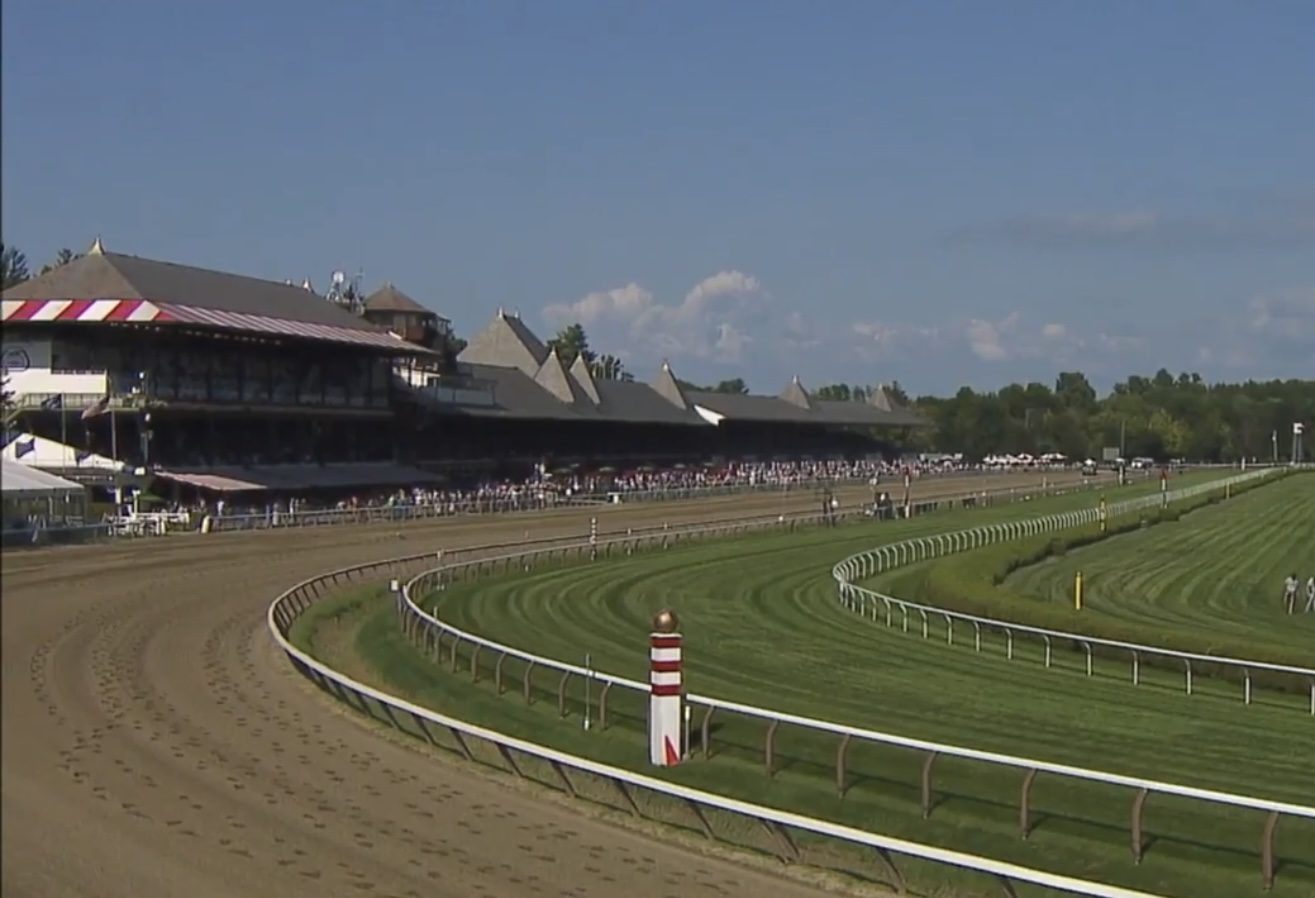
At Monmouth Park, The Great Amira stunned bettors by winning at a huge price before Tepeyac, another horse linked to trainer Angel Quiroz, followed with a victory. At Saratoga, Classic Rock and M BS Melanie Cares also won, while Scootaloo, another Quiroz linked runner, finished fourth.
What made the results even more remarkable was the betting activity occurring thousands of miles away.
British bookmakers reportedly accepted coordinated, in-person cash wagers on the Fair Hill connected horses at multiple London betting shops. The bets were structured primarily as singles, doubles and trebles, with bettors reportedly using multiple shops.
Industry estimates have placed the potential bookmaker liability in the neighborhood of £600,000 to £800,000, although the exact amount remains under investigation. Because the bets were made with British fixed-odds bookmakers rather than through American pari-mutuel pools, the wagers did not directly alter the American win odds.
That distinction is important. A successful betting coup is not automatically evidence of race fixing. Bettors can legally identify horses they believe are undervalued and place large wagers accordingly. The central question for investigators is how the bettors knew what they knew.
If the horses simply represented a group of well prepared runners that the public overlooked, the episode could ultimately be remembered as one of the most successful handicapping operations in recent racing history.
If, however, investigators discover that bettors possessed undisclosed information about training, medication, ownership or race tactics, the consequences could be much more severe.
The most conspicuous domestic betting anomaly came at Monmouth Park. The Great Amira won at a long price, followed immediately by Tepeyac. Yet the Daily Double combining the two horses paid dramatically less than many racing observers expected based on their individual win odds.
That unusually low combination payout suggested that significant money had been concentrated on the exact sequence.
An analysis cited by industry reports found the Fair Hill Daily Double to be an extraordinary statistical outlier compared with historical Daily Double results. The relatively small size of the pool also meant that a comparatively concentrated wager could have a major effect on the final payout.
The unusual American betting pattern, combined with the simultaneous British wagers, helped transform the story from an ordinary collection of long-shot victories into a matter for racing regulators.
The five horses were not all under the same trainer when they raced. Quiroz had trained several of the horses before some were transferred or privately sold to other connections, including trainer Ernesto Ochoa. Investigators are examining whether those changes in trainers and ownership obscured continuing relationships between the horses and their previous connections.
All five had ties to Maryland’s Fair Hill Training Center, a major Thoroughbred facility located in northeastern Maryland. Fair Hill is home to numerous trainers and horses, meaning that simply having a workout or training connection to the facility does not establish wrongdoing.
That distinction is critical as the investigation proceeds. There has been no public finding that the Aug. 9 races were fixed, and investigators have not established that the horses were illegally enhanced. Authorities are instead examining whether any undisclosed advantage could explain the extraordinary performances and betting patterns.
The controversy has triggered investigations involving multiple racing and integrity organizations, including the Horseracing Integrity and Safety Authority (HISA), the Horseracing Integrity & Welfare Unit (HIWU), the Thoroughbred Racing Protective Bureau (TRPB), the New York Racing Association and racing regulators in New Jersey.
HISA said it was aware of concerns surrounding the Aug. 9 races and was actively investigating. The winning horses were selected for post-race testing as authorities began examining possible medication, ownership and wagering issues.
Additional scrutiny followed when horses connected to Quiroz that were scheduled to race at other tracks were scratched as regulators increased their examination of the operation.
The betting investigation has also unfolded alongside an unrelated disciplinary case involving Quiroz. HIWU charged Quiroz after Bonita Rough tested positive for the banned bronchodilator albuterol following a July workout at Fair Hill. Bonita Rough had not raced since June 2025 and was working to come off a veterinarian’s list.
That case does not by itself establish a connection to the Fair Hill Five, and regulators have not publicly concluded that albuterol played any role in the Aug. 9 performances.
Quiroz also has a previous HIWU medication violation involving another horse, Beautiful Astray, dating to 2024. HIWU’s final decision resulted in a violation for use or attempted use of a controlled medication during the race period.
Those past and separate matters, however, are likely to receive additional attention as investigators scrutinize every aspect of the Fair Hill operation. The Fair Hill Five controversy has exposed a vulnerability at the intersection of modern horse racing and international sports betting.
American racing operates primarily through pari-mutuel wagering, while British bookmakers offer fixed odds. A bettor with reliable information can potentially exploit differences between those markets, particularly when an American long shot is available at substantially larger odds than its fixed-odds price overseas.
That does not make the wagering illegal. But if investigators determine that the betting syndicate was supplied with confidential information, benefited from prohibited medication, concealed ownership relationships or otherwise manipulated a race, the scandal could become one of the most significant integrity cases in American racing in years.
For now, the biggest mystery remains unanswered: How did a group of horses with seemingly modest form suddenly become some of the most heavily targeted runners by bettors across the Atlantic on the same weekend?
The answer will depend on drug-test results, financial records, betting-shop surveillance, ownership documentation, training records and interviews with the people connected to the horses.
Until those pieces are assembled, the Fair Hill Five remains exactly that a remarkable and deeply suspicious betting anomaly, not a proven race-fixing scandal.
But with regulators on both sides of the Atlantic digging deeper, the racing world is waiting to find out whether the extraordinary weekend was simply the greatest handicapping coup of 2026 or the opening chapter of a much larger integrity scandal.
















































Want to join the conversation?
Create an account or sign in to share your thoughts, vote,
and reply to other readers.
Showing 0 of 0 comments
Don't have an account?
Already have an account?