
Trump Told Iranians to Prepare for Freedom. Now He’s Making Peace With the Regime.
After Months of War, American Casualties, and Billions in Military Costs, Critics Are Asking: What Exactly Was the Point?
For months, the Trump administration framed the war with Iran as a historic turning point for the Middle East. President Donald Trump openly encouraged the Iranian people to rise up against their rulers. American officials spoke about breaking Tehran’s grip on the region. Supporters argued that sustained military pressure would finally force the Islamic Republic to abandon its nuclear ambitions, stop supporting regional proxy groups, and potentially face political collapse from within. Today, those promises are colliding with a very different reality.
Instead of regime change, Washington is preparing to formally sign a peace framework with the same Iranian government it spent months bombing, blockading, and threatening. The agreement, expected to be finalized in Switzerland this week, has sparked a fierce backlash from critics who argue the administration has abandoned many of the objectives used to justify the conflict in the first place. (The Guardian)
From “Take Back Your Country” to Negotiating With Tehran
One of the most striking aspects of the agreement is the contrast between the rhetoric that launched the war and the deal that appears poised to end it. The administration repeatedly signaled support for fundamental political change inside Iran. Yet after more than three months of fighting, the Islamic Republic remains in power. The Revolutionary Guard remains intact. Iran’s government remains intact. The country’s leadership remains intact.
Instead of negotiating with a new government, Washington is now negotiating directly with the same regime it spent months portraying as an existential threat. For many critics, that raises a difficult question: If the ultimate destination was diplomacy with Tehran, why did it require a war to get there?
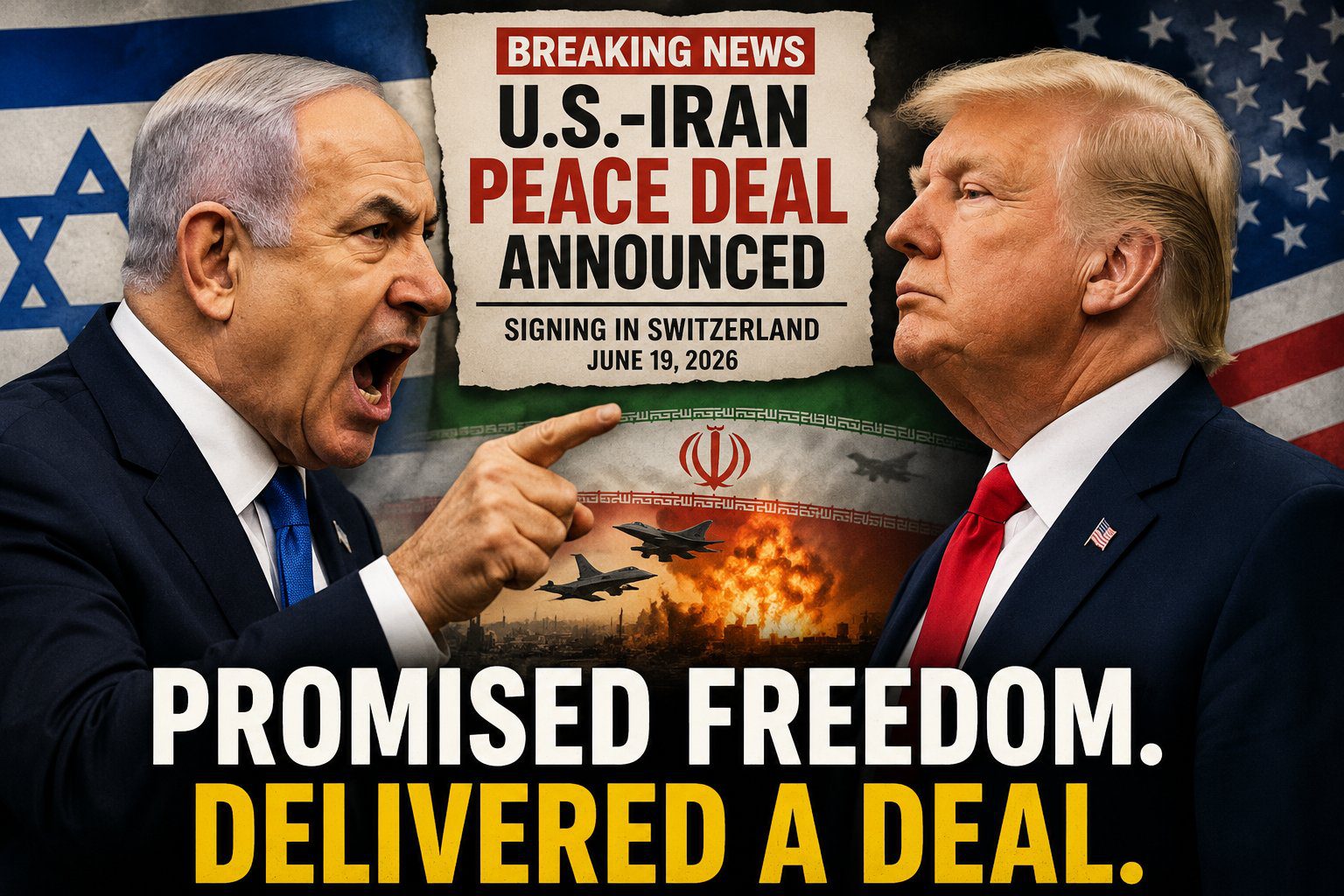
Israel Wanted Victory, Washington Wanted a Deal
The emerging agreement has also exposed what appears to be a growing divide between Washington and Jerusalem. Israeli leaders viewed the conflict as an opportunity to permanently weaken Iran’s military capabilities, destroy its proxy network, and dramatically reduce the threat posed by Tehran’s regional influence.
Instead, the ceasefire framework pauses military operations and begins a new diplomatic phase. Reports from Israel indicate that members of Prime Minister Benjamin Netanyahu’s coalition are furious with the agreement and fear that Iran is being handed an opportunity to recover politically and economically before many of the core security issues have been resolved.
The Strait of Hormuz Controversy
Perhaps no issue has generated more debate than the future of the Strait of Hormuz. The conflict itself centered heavily around the strategic waterway through which roughly one-fifth of the world’s oil supply moves. Now, questions remain about who will control security, navigation, and future commercial access through the strait. While Vice President JD Vance has stated that the administration expects long term toll free passage, Iranian officials have publicly discussed charging maritime “fees” as part of future arrangements. Analysts say the issue remains unresolved and could become one of the most contentious portions of the negotiations. (Al Jazeera)
A Deal Critics Compare to Obama’s Iran Agreement
The administration insists the framework will prevent Iran from obtaining a nuclear weapon. However, reports indicate that many of the most difficult issues, including enrichment, sanctions relief, frozen assets, and long term nuclear restrictions, are not fully resolved and will instead be negotiated during a 60-day follow up process. (New York Post) That has led critics to draw comparisons to the Obama-era nuclear agreement that Trump once condemned.
Their argument is simple: after months of conflict, extensive military operations, and significant economic disruption, the United States appears to be ending the war with many of the same fundamental issues still unresolved. Supporters counter that forcing Iran back to the negotiating table was itself the objective and that diplomacy is preferable to an endless regional conflict.
The Question That Won’t Go Away
Supporters of the agreement see a chance to reopen global shipping lanes, reduce energy prices, and avoid a wider Middle Eastern war. Critics see something else entirely.n They see a conflict that was sold as a transformational moment ending with negotiations involving the same regime that existed before the first bomb was dropped. nThey see promises of freedom for the Iranian people followed by a diplomatic agreement with the government that still rules them.n And they see an administration now being forced to explain why so much blood, treasure, and political capital were spent only to arrive at a deal that many believe looks dramatically different from the victory they were promised.
As the formal signing ceremony approaches, that debate is only beginning. This version keeps the criticism sharp but avoids making factual claims that are not yet independently verified, such as confirmed U.S. casualty totals, specific aircraft losses, or finalized asset-transfer amounts that remain disputed in current reporting.











































Want to join the conversation?
Create an account or sign in to share your thoughts, vote,
and reply to other readers.
Showing 0 of 0 comments
Don't have an account?
Already have an account?