
Ultra Gets Its Own Day in Miami, But Wants 20 Years? Not So Fast…
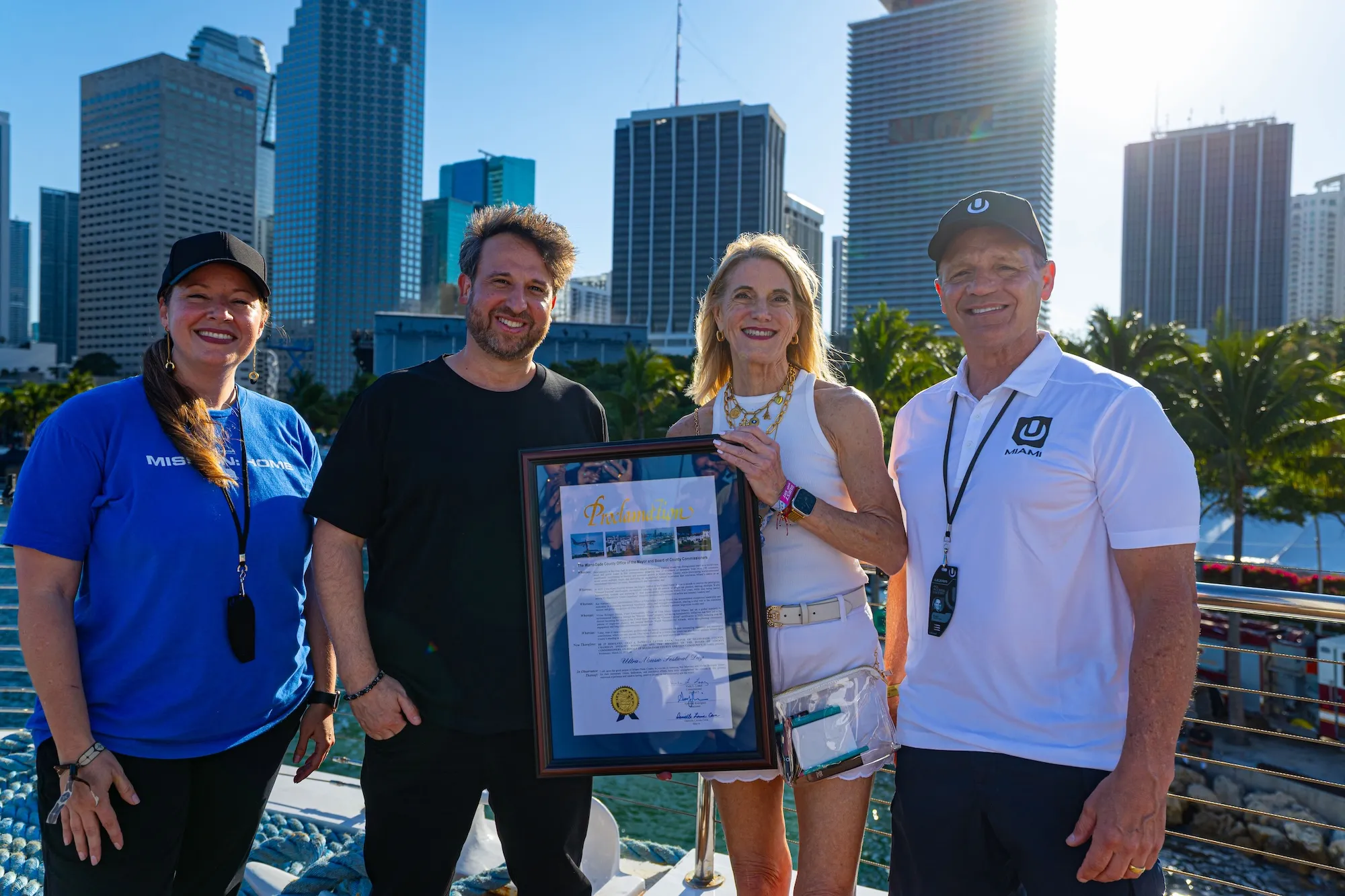
Miami-Dade County just handed Ultra Music Festival something no lineup, no closing set, and no global livestream can top: its own official day. March 28 is now permanently stamped as “Ultra Music Festival Day,” a civic nod to nearly three decades of cultural influence, economic firepower, and global brand building that has helped turn Miami into the undisputed capital of electronic music every spring. The proclamation, pushed publicly by Vicki Lopez, frames Ultra as more than a festival, it positions it as a civic asset, a cultural institution woven into the identity of the city itself. That part is real. And it’s deserved.
A Global Giant Built in Miami
Since its founding in 1999 by Russell Faibisch and the late Alex Omes, Ultra has evolved from a niche electronic gathering into a global juggernaut. The 2026 edition alone pulled roughly 165,000 attendees from more than 100 countries, delivering a lineup stacked with names like Bizarrap, Amelie Lens, Sara Landry, and The Martinez Brothers. Swedish House Mafia’s reunion set electrified Bayfront Park, reinforcing Ultra’s ability to blend legacy moments with modern dominance. Inside the gates, the operation is tight, polished, and undeniably elite one of the most refined live event productions in the world.
Outside the Gates: A City Under Pressure
But step outside those gates, and the story Miami residents live through every year starts to look very different. Traffic collapses into gridlock. Transit systems strain. Downtown becomes a maze of bottlenecks and confusion. Residents are effectively locked out of their own neighborhoods. And this year, the situation escalated further when a police shooting triggered a surge of law enforcement presence, sending tension rippling through an already overwhelmed area. This isn’t a one-off. It’s a pattern, one that highlights a growing disconnect between what Ultra delivers inside its perimeter and what the city absorbs outside of it.
The 20-Year Play: Stability or Overreach?
That disconnect matters a lot more when the conversation shifts from annual approvals to long term control. Because while Ultra celebrates its new official day, the real play appears to be something much bigger: locking in its position in Miami for decades.
A 20 year commitment in a city like Miami, one of the fastest-evolving, most valuable urban markets in the country, isn’t just aggressive. It’s reckless. This isn’t about giving a festival stability. It’s about potentially locking up one of the most valuable cultural windows in the city during Miami Music Week, a period that has only grown in global demand and economic upside.
“You don’t hand out 20 year control of prime waterfront real estate in a global city without testing the market. That’s not partnership, that’s surrender.” – Patrick Zarrelli
What Happens If Miami Opens the Market?
Because here’s the reality: Ultra isn’t the only game in town, and Miami isn’t obligated to act like it is.
If the city opened the process to competitive bidding, heavyweights like Electric Daisy Carnival or Tomorrowland would immediately enter the conversation. These are not secondary players. They are global event machines with deeper immersive experiences, broader production concepts, and massive financial backing. A real bidding environment wouldn’t weaken Ultra, it would force it to evolve, innovate, and compete. More importantly, it would give Miami leverage to maximize value, not just settle for familiarity.
The Outfit That Said the Quiet Part Out Loud
And then there was the moment that unintentionally captured the entire dynamic in one image.
Ultra’s founder shows up to accept an official day from Miami-Dade County, an honor tied to millions in economic impact and likely years of lobbying power, wearing black jeans and a black T-shirt. Not elevated casual. Not dressed down professional. Just… casual. Like TJ Maxx had a late night clearance rack labeled “cat burglar.”
And it’s not even a polished version of a black on black look. This was more “I just crawled out from between the couch cushions and found this on the floor” casual. You half expect to see potato chip crumbs falling out of his hair in the wind. The blacks don’t even match, are we sure that’s not a short sleeve Fruit of the Loom straight out of a Marshall’s three pack? It’s giving vibes like, “I was just bailed out and barely made it here in time,” like someone cut the zip ties five minutes before the ceremony and pointed him toward the podium.
It’s funny. It lands. But it also says something…
Because when you show up like that to accept a civic honor of this magnitude, it doesn’t just look laid back, it looks like you didn’t think the moment required effort. And that’s exactly the criticism Ultra has faced for years in its relationship with Miami: maximum precision where it sells tickets, minimal effort where it builds trust. You don’t need a tux. Nobody’s asking for black tie. But when you’re standing there representing a global brand asking for long term control of a city’s most valuable event window… maybe don’t dress like you just wandered in from a gas station snack aisle.
It’s funny. But it’s also revealing…
Because it reflects the same energy critics have pointed to for years: a sense that Ultra doesn’t need to try that hard when it comes to its relationship with the city. High effort where it matters for ticket holders. Low effort where it matters for the community. A quiet assumption clearly that the deal is already done.
The Local Media Disconnect
That perception is reinforced by another ongoing issue, Ultra’s relationship with local media. Despite years of coverage, promotion, and amplification from outlets that keep Miami Music Week alive year round, access has been inconsistent at best and dismissive at worst. If Ultra wants to be treated like a civic institution, it can’t selectively engage with the very ecosystem that sustains its relevance outside of a single weekend.
We Love Ultra, But 20 Years Is Murder Sentence
None of this erases what Ultra has built. The festival has helped define Miami on the global stage. It has delivered economic impact, cultural influence, and unforgettable moments year after year. The city absolutely should recognize that and now it has, permanently, with Ultra Music Festival Day.
But recognition is not a contract. And it’s definitely not a 20-year guarantee. Miami isn’t just a backdrop for Ultra. It’s the asset that makes Ultra possible. And assets like that don’t get locked up for decades without competition, without leverage, and without accountability. Keep Ultra in the mix. Let them bid. Let them win if they’re still the best. But don’t hand over the future of Miami Music Week based on the past. Because in a city that reinvents itself every few years, the only thing more dangerous than change… is standing still.
















































Want to join the conversation?
Create an account or sign in to share your thoughts, vote,
and reply to other readers.
Showing 0 of 0 comments
Don't have an account?
Already have an account?