
Inside Tehran: Fear, Hope, and Uncertainty as U.S. Israel Strikes Shake Iran’s Capital
TEHRAN — When the first explosions hit Tehran on the morning of Feb. 28, many residents of Iran’s capital were just beginning their workweek. Schools had opened, businesses were starting the day, and parents had just dropped their children off at class. Within minutes, air raid sirens and distant blasts sent panic through the city. Parents rushed back toward schools. Families flooded the streets. People stood at windows listening for the next explosion as U.S. and Israeli airstrikes began hitting targets across Iran.
“When Trump said help was on the way, all of us felt joy and hope,” said Somayeh, a 25-year-old architecture student in Tehran. “But as time went on, we worried that maybe the regime would survive.”
The attack marked the start of the most dramatic military confrontation between the United States and Iran in decades, a campaign that has already killed hundreds and plunged the country into uncertainty. Because Iran remains one of the most tightly controlled and censored countries in the world, journalists are rarely able to report freely from inside the country. For safety reasons, people interviewed in Tehran spoke only on condition that their first names be used.
Explosions, Smoke, and Streets Filled With Fear
The initial wave of strikes began around 8:15 a.m. local time, catching many residents by surprise. Witnesses described explosions echoing across the capital as smoke rose from several locations. Internet service and communications were disrupted shortly after the strikes began. Residents said the city quickly shifted into survival mode. Shops closed across large parts of Tehran. Streets emptied as people tried to stay indoors. Long lines formed at gas stations and bakeries as families attempted to stock up on basic necessities.
“People kept going to the window to listen for bombs,” Somayeh said.
Ali, a shop owner in the capital, said most businesses remained closed the following day as the bombing campaign continued.
Iran and Israel Exchange Strikes Across the Region
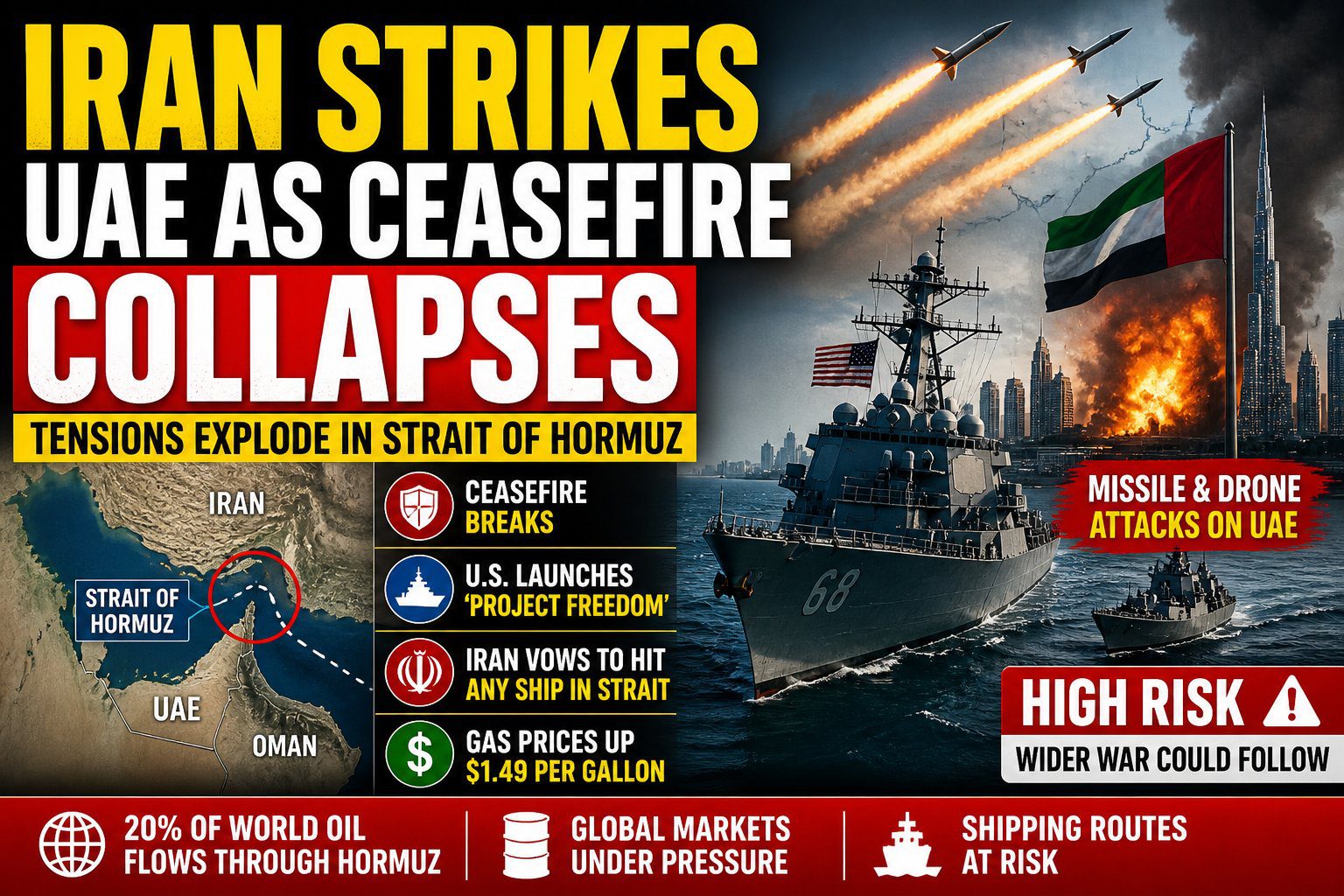
While American and Israeli aircraft continued to target Iranian military infrastructure, Tehran retaliated by launching missiles toward Israel and several Persian Gulf countries. Missile alerts were reported in Israel as well as in the United Arab Emirates, Qatar, Bahrain, and Kuwait, widening the scope of the conflict. The Pentagon has confirmed that several U.S. service members have been killed during the fighting as Iranian retaliation struck American positions in the region.
Inside Iran, humanitarian officials say casualties continue to climb. The Iranian Red Crescent reported that at least 201 people have been killed and 747 injured in the airstrikes since the start of the operation. Iranian authorities also claimed that 153 people were killed when a missile struck a school in southern Iran, though those figures have not been independently verified.
Celebration and Mourning After Khamenei’s Death
The conflict reached a turning point when Iranian Supreme Leader Ayatollah Ali Khamenei was killed during the initial strikes targeting leadership compounds in Tehran. For many Iranians who have long opposed the country’s theocratic government, the news sparked spontaneous celebrations.
“When we heard he was dead, we jumped like our football team had just scored,” Somayeh said.
Ehsan, a 32-year-old bank employee in Tehran, said he ran to the roof of his apartment building after hearing the reports.
“It was excitement, fear, and hope all at once,” he said.
Residents reported hearing cheers, music, and chants of “Javid Shah, Long live the Shah,” a slogan referencing Iran’s monarchy that was overthrown during the 1979 Islamic Revolution. Some people blasted celebratory music from apartment windows, while others shouted slogans into the streets. But even those celebrating said they were cautious.
“We were afraid it might be a lie,” Ehsan said. “We didn’t want to believe it until we knew it was real.”
A Divided Public Reaction
Despite pockets of celebration, the reaction inside Iran has been deeply divided. The day after the strikes began, pro-government demonstrations appeared in parts of Tehran, where mourners carried photos of Khamenei and gathered for rallies honoring the late leader. In other parts of the country, unrest erupted.
In the southwestern town of Galleh Dar, crowds toppled a monument dedicated to Ayatollah Ruhollah Khomeini, the founder of the Islamic Republic. The contrasting scenes reflect the country’s complex political reality. While surveys suggest the Islamic Republic has grown increasingly unpopular, many Iranians remain wary of chaos, foreign intervention, or the possibility of civil conflict.
Fear of Retaliation From Security Forces
Even those who celebrated the strikes say they fear retaliation from the powerful Islamic Revolutionary Guard Corps (IRGC) and the country’s security apparatus. The IRGC maintains deep control over Iranian society, with influence stretching across politics, business, and daily life. Recent history has shown how brutally the regime responds to dissent. During anti-government protests earlier this year, Iranian officials reportedly killed thousands of demonstrators in a crackdown that shocked the country. That memory now hangs over Tehran.
“We hope this is the end of the regime,” said Reza, a Tehran resident. “But we are also afraid of what comes next.”
A Regime Determined to Survive
Iran’s interim leadership has vowed to remain in power despite the strikes and the death of the supreme leader. Officials have promised retaliation against both Israel and the United States while urging citizens to unite against foreign aggression. Meanwhile, President Donald Trump has called on the Iranian people to rise up against the government. But analysts say whether a popular uprising will occur remains uncertain. Many Iranians who oppose the regime fear that instability could bring economic collapse or violent power struggles. The reality on the streets of Tehran reflects that tension: hope for change mixed with anxiety about what the future may bring. The bombing campaign continues, the smell of smoke lingers across the capital, and the question facing millions of Iranians remains unresolved. Will the war end the Islamic Republic or plunge the country into something even more unpredictable?















































Want to join the conversation?
Create an account or sign in to share your thoughts, vote,
and reply to other readers.
Showing 0 of 0 comments
Don't have an account?
Already have an account?