
Hardwell’s Latest Set Signals a Hard Pivot and a Statement About Where EDM Is Headed
For more than a decade, Hardwell has been one of the defining architects of modern festival EDM. His rise paralleled the explosion of big room house — massive drops, stadium-sized hooks, and a sound engineered to move crowds of 50,000 at once.
This latest set makes one thing unmistakably clear: Hardwell is no longer interested in repeating that chapter.
Instead, what unfolds is a deliberate, disciplined shift into darker, heavier territory, a fusion of big room techno, modern trance textures, and hard-edged sound design that feels more European warehouse than Vegas main stage. It’s not nostalgic. It’s not crowd-pleasing in the traditional sense. And that’s precisely the point.
A Set Built on Control, Not Comfort
From the opening minutes, the structure of the set rejects the old formula. Drops are longer and more restrained. Builds lean on tension rather than instant payoff. Melodies are minimal, sometimes almost absent, replaced by rolling basslines, industrial percussion, and razor-sharp synth stabs. This is Hardwell performing as a conductor, not a hitmaker. The pacing is intentional. Instead of sprinting from anthem to anthem, the set unfolds in chapters, pressure, release, recalibration. It demands attention rather than instant gratification, and it rewards listeners willing to stay inside the groove.
Why This Sound and Why Now
Hardwell’s evolution didn’t happen overnight. Since his return to touring, his productions have steadily moved away from classic big room toward harder, more modular sounds influenced by techno, future rave, and harder trance. This set feels like the clearest articulation yet of that identity.
The timing matters. Festival EDM has fractured. Audiences are more genre-literate, more demanding, and less interested in recycled drops. Artists who survive this phase aren’t the ones chasing trends, they’re the ones shaping lanes they can actually defend. Hardwell is staking his claim.
Fan Reaction: Polarized by Design
The response has been predictably split and that’s not a failure. It’s evidence of risk. Longtime fans who came for “Spaceman”-era fireworks may feel disoriented. This is not a greatest-hits performance. There are no obvious nostalgia cues, no easy sing-along moments engineered for social clips.
But for others, the shift lands hard in the best way. The set feels modern, aggressive, and confident a veteran artist refusing to become a legacy act. In an industry obsessed with algorithmic approval, that restraint reads as maturity.
Production Over Flash
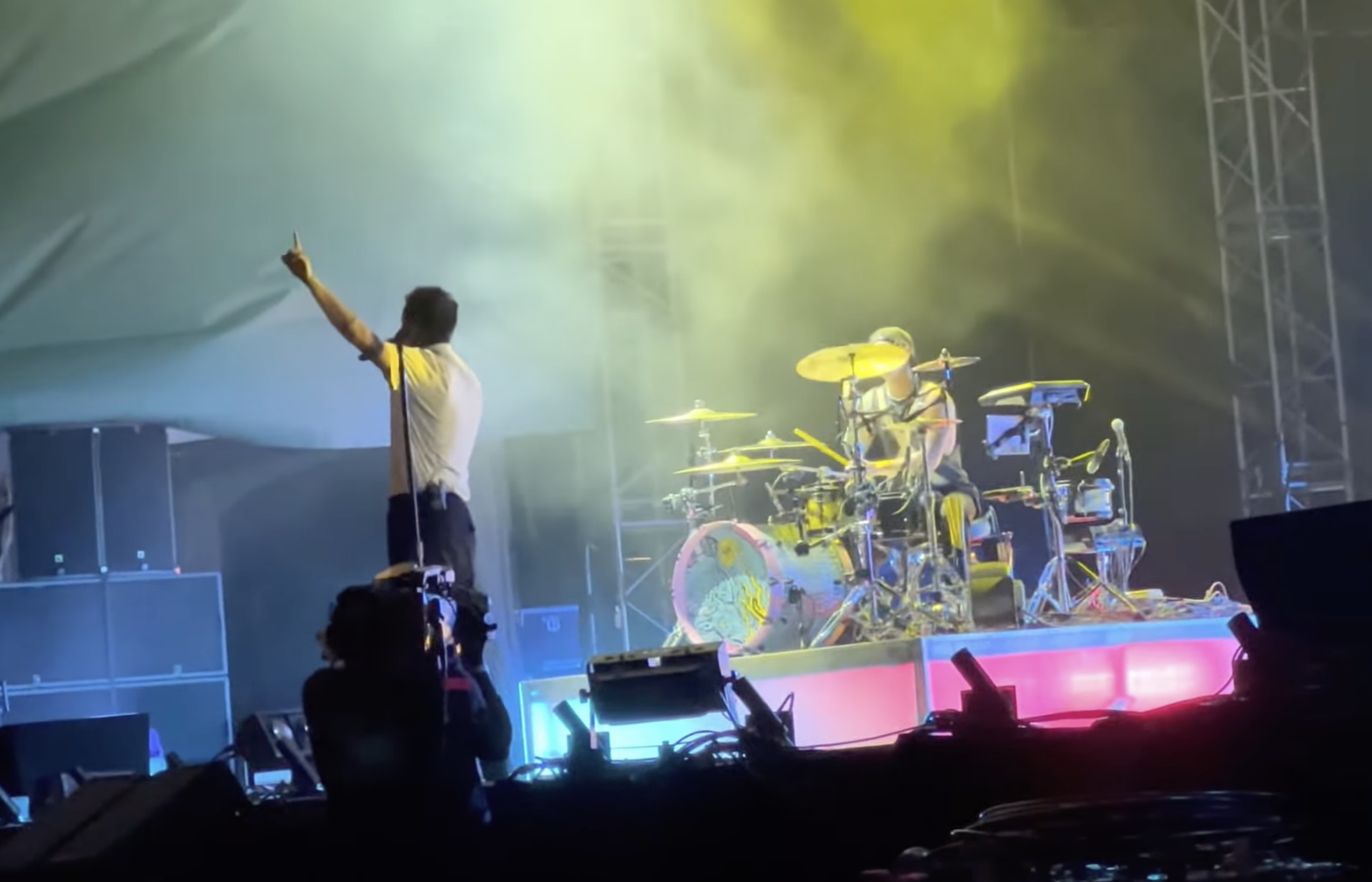
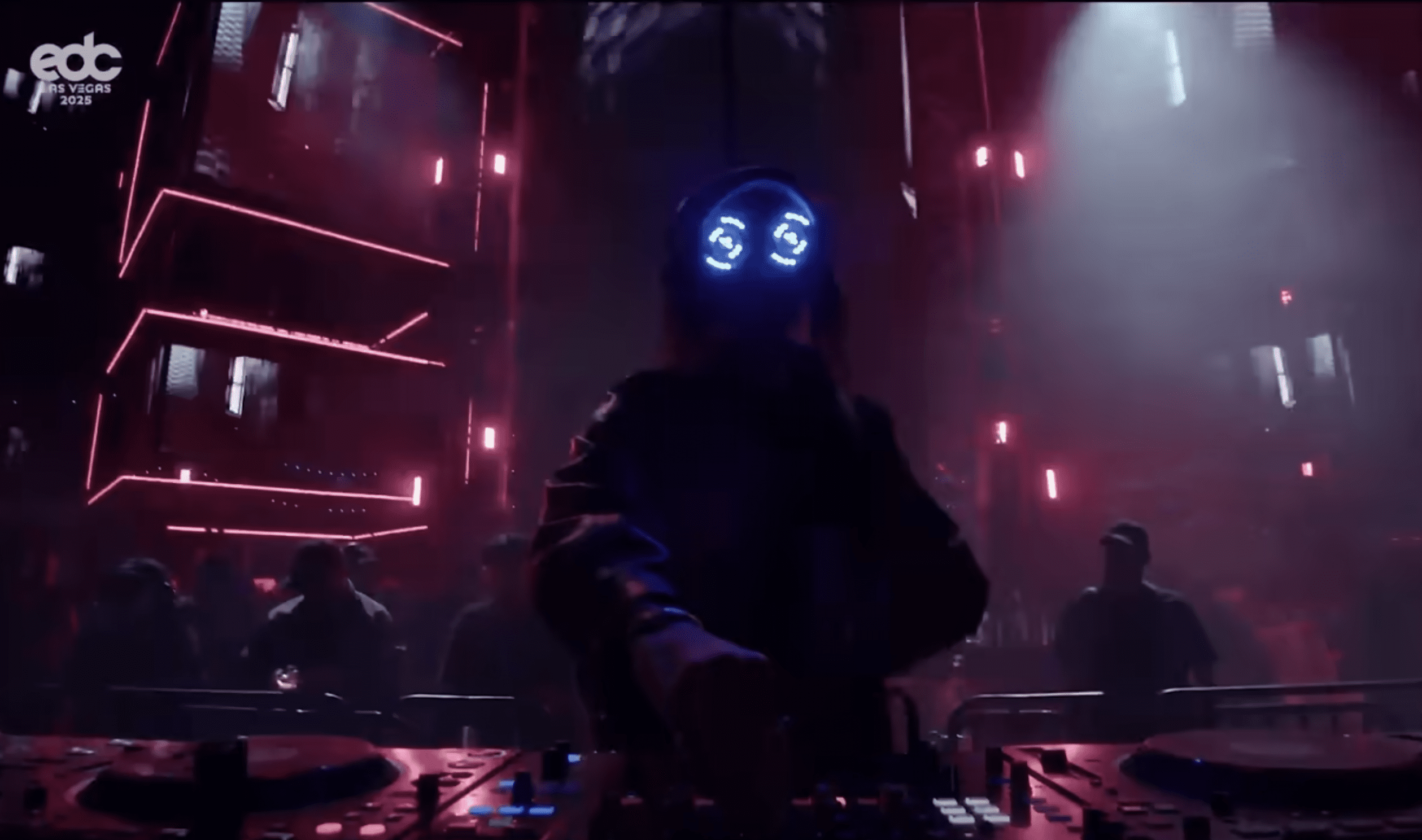
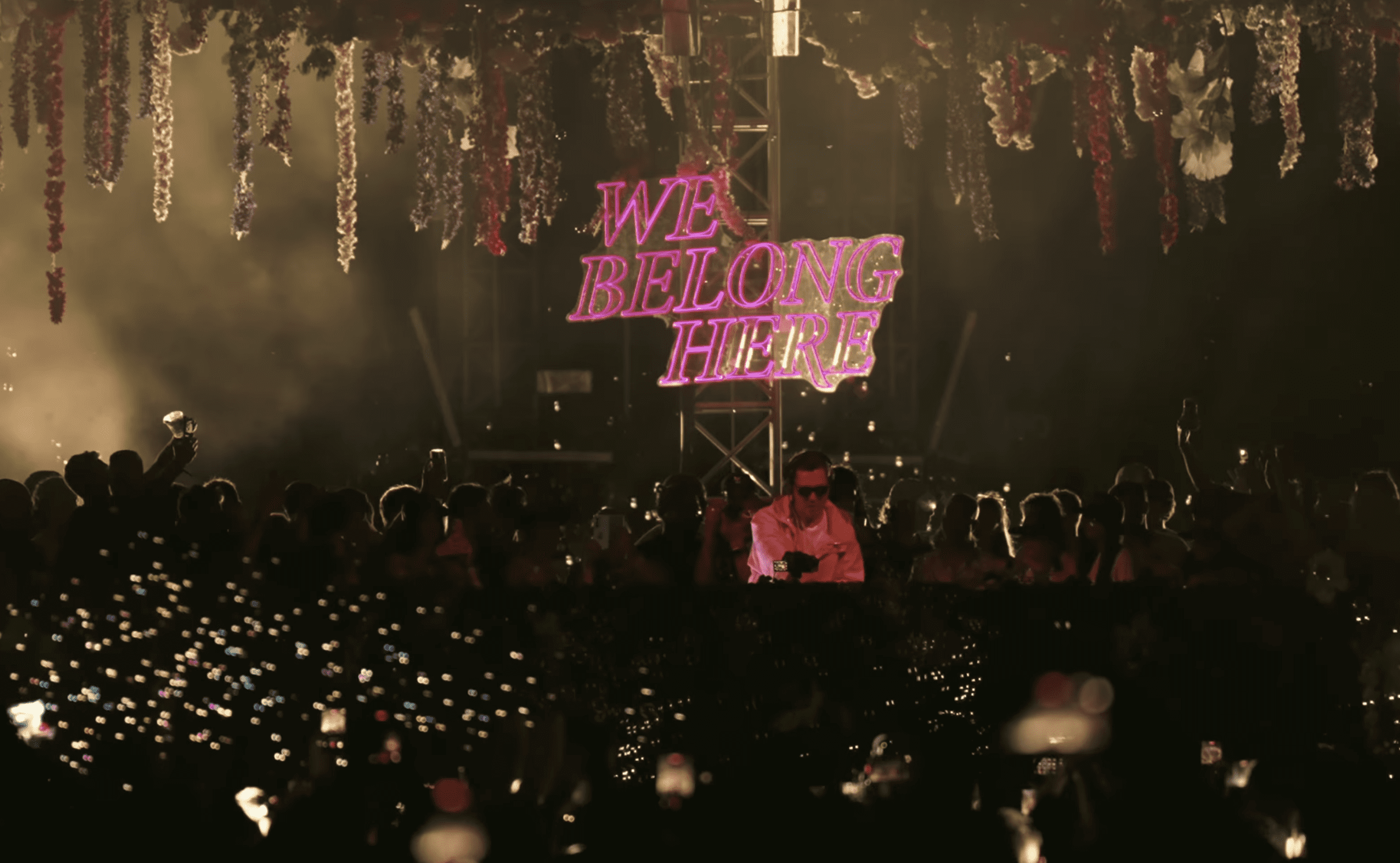
Visually, the set mirrors the sound. Instead of hyperactive graphics, the production leans into darker palettes, strobing light patterns, and controlled bursts of intensity. Nothing feels wasted. Every visual accent supports the music rather than overpowering it. It’s a reminder that scale doesn’t require chaos, it requires precision.
What This Means for Hardwell’s Legacy
This set won’t be universally loved. It was never meant to be.
But it does something more important: it repositions Hardwell as an artist still in conversation with the future of electronic music, not just its past. Many DJs from his era have chosen comfort, nostalgia, and predictable festival cycles. Hardwell is choosing friction. That choice may cost him some casual fans. It will almost certainly earn him credibility in spaces that value evolution over repetition.
In a scene crowded with safe plays and recycled formulas, Hardwell’s latest set is a reminder that relevance isn’t about being liked by everyone, it’s about having something to say. And this time, he said it loud, dark, and unapologetically forward.















































Want to join the conversation?
Create an account or sign in to share your thoughts, vote,
and reply to other readers.
Showing 0 of 0 comments
Don't have an account?
Already have an account?