
Pete Hegseth Built His Pentagon Around the “Warrior Ethos.” The USS Abraham Lincoln Is Testing What That Really Means.
Defense Secretary Pete Hegseth has spent his tenure at the Pentagon selling a straightforward vision of the American military: fewer ideological distractions, higher standards, tougher troops and an unapologetic return to what he calls the “warrior ethos.” Now, roughly 5,000 sailors and Marines aboard the USS Abraham Lincoln have provided a far more consequential test of what supporting America’s warriors actually requires.
The San Diego based aircraft carrier departed Naval Base San Diego in November 2025 for what was expected to be a conventional deployment. Instead, the Lincoln remained deployed for more than 250 days, including more than 200 consecutive days without a port call, while supporting sustained U.S. military operations in the Middle East. By August, accounts from military families, members of Congress and multiple news organizations described sailors dealing with shortages of food and basic supplies, plumbing and water problems, mold in showers, disrupted mail, grueling work schedules and mounting psychological strain.
Hegseth has pushed back aggressively, saying reports about conditions aboard the carrier were “completely misrepresented” and insisting the Pentagon was doing everything possible to support the crew. But the controversy has transformed what might otherwise have remained a Navy logistics story into a much larger test of Hegseth’s leadership philosophy. Warrior culture is easy to sell from a podium. Keeping thousands of warriors fed, supplied, rested, psychologically functional and capable of fighting after months at sea is the considerably harder part of running the world’s most powerful military.
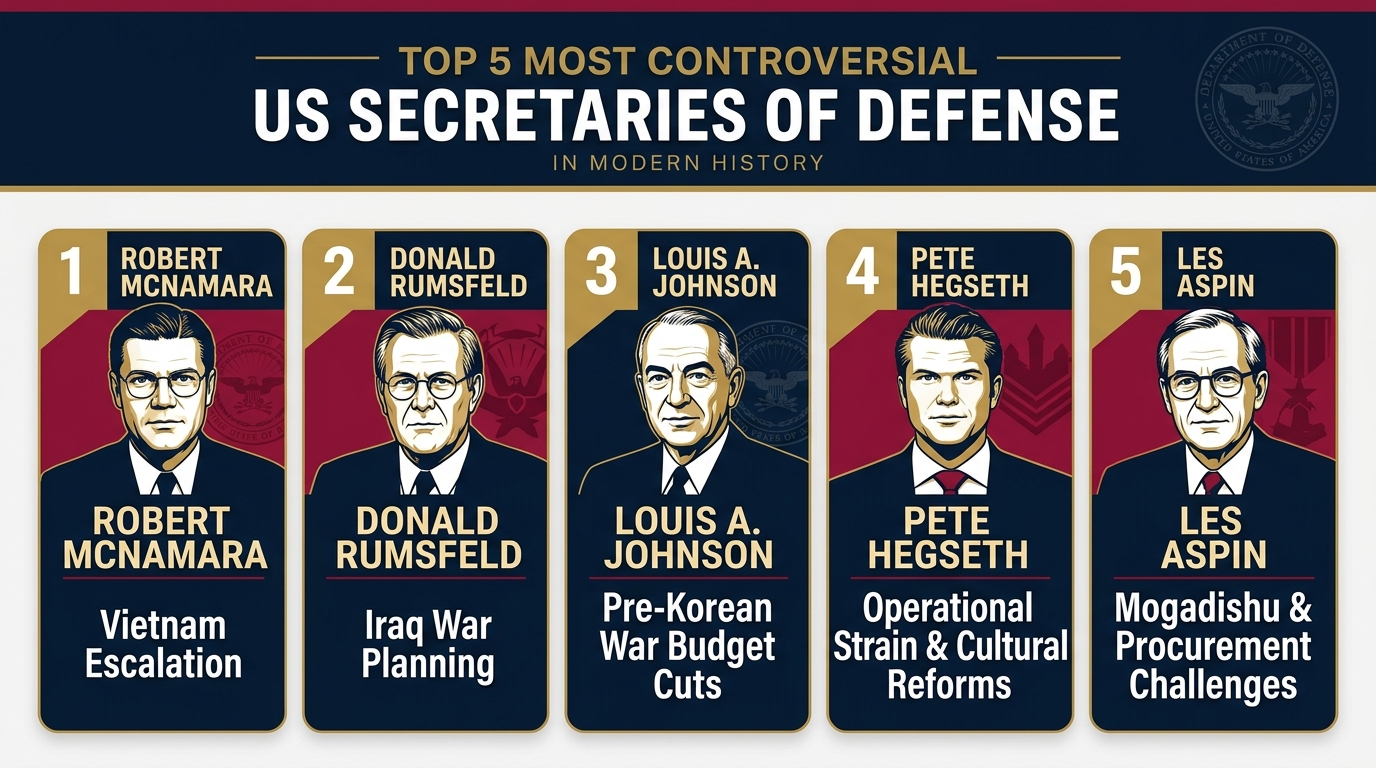
Hegseth Made the “Warrior Ethos” His Pentagon Brand
Hegseth arrived at the Pentagon with an unusually political public profile for a defense secretary. An Army National Guard veteran who served in Iraq, Afghanistan and Guantanamo Bay before becoming a television personality, he presented himself as someone who understood the military from the perspective of the people actually sent to fight America’s wars. His agenda has consequently focused heavily on military culture: physical fitness, grooming and appearance standards, eliminating diversity initiatives and pushing the armed forces away from what the administration considers ideological distractions.
The underlying argument is that America’s military exists primarily to fight and win wars, a proposition that is hardly controversial on its own. The harder question is what “warrior first” means when those warriors have been deployed for nine months, have gone more than 200 days without setting foot in port and are operating one of the most complicated weapons systems ever constructed while supporting active military operations. That is where rhetoric collides with logistics, because combat effectiveness is ultimately determined by considerably more than physical standards and cultural messaging.
The USS Abraham Lincoln Became a Floating Stress Test
The USS Abraham Lincoln is not simply a ship. A Nimitz class aircraft carrier is essentially a nuclear powered floating air base carrying thousands of sailors and Marines, dozens of aircraft and an enormous industrial ecosystem required to keep flight operations running around the clock. Maintaining that system requires food, clean water, functioning toilets and showers, replacement parts, medical services, mail, communications and enough sleep for personnel working around aircraft, weapons, jet fuel, heavy machinery and two nuclear reactors.
It also requires an extraordinary supply chain capable of delivering those resources thousands of miles from the United States. The Lincoln’s prolonged deployment increasingly tested that system, prompting Sen. Richard Blumenthal to write Hegseth and Acting Navy Secretary Hung Cao on August 12 demanding answers about reports involving shortages of basic supplies, water contamination, plumbing problems, deteriorating mental health, deck-safety concerns and disruptions to mail delivery. Blumenthal’s inquiry raised a broader strategic question beyond the immediate conditions aboard one carrier: whether the Navy can continue generating deployments of this duration without damaging personnel, maintenance schedules and the fleet’s ability to respond to the next crisis.
That is fundamentally a readiness question. It has very little to do with partisan culture wars and everything to do with whether the Pentagon can sustainably support the people and equipment it sends into combat.
Military Families Say Food and Basic Supplies Became Scarce
Some of the most troubling accounts came not from politicians but from the families of sailors aboard the carrier. Nicole Conrad, whose son serves aboard the Lincoln, told NBC that food had become scarce enough that at one point he described eating only half a cup of rice and two tortillas. Other families described shortages of hygiene products, deteriorating plumbing, mold in showers and difficulties receiving packages and mail from home.
Task & Purpose similarly reported accounts from military families describing food shortages, moldy showers and declining morale as the deployment stretched into its ninth month. Those reports eventually prompted dozens of members of Congress to demand answers from the Pentagon, citing the extraordinary number of consecutive days the crew had spent at sea without a port call and questioning whether the Navy was adequately protecting sailors’ health and welfare.
The Pentagon disputes portrayals suggesting the carrier’s crew was systematically deprived of necessities, and the precise severity, frequency and duration of individual shortages remain contested. That distinction matters. But the controversy can no longer be dismissed as a single anonymous social media complaint. Multiple military families, lawmakers and news organizations have independently raised overlapping concerns about conditions aboard the carrier, creating legitimate questions that can ultimately be answered with internal Navy records.
Mental Health Became the Most Serious Concern
The most consequential allegations involve the psychological condition of sailors aboard the Lincoln. The Washington Post reported accounts from sailors’ families that two men had attempted to jump overboard during the extended deployment, including one case in which a sailor’s wife attributed her husband’s alleged attempt to severe burnout. The Navy has not publicly confirmed the broader characterization that the carrier experienced a wave of suicide attempts, meaning individual claims must be treated carefully until official records establish precisely what occurred.
What is not controversial is the extraordinary psychological pressure created by prolonged carrier operations. Sailors can work extremely long shifts in dangerous environments with limited privacy, disrupted communication with their families and few opportunities to escape the confines of the ship. Port calls are therefore more than recreational stops; they provide psychological separation from an intensely controlled workplace and living environment. The Lincoln’s crew went more than 200 consecutive days without one while operating under the additional pressure of an active Middle East mission.
That matters because mental health is not separate from combat readiness. On an aircraft carrier, fatigue, depression, sleep deprivation and psychological deterioration can become operational safety problems. Sailors are working around jet engines, aircraft launches, weapons, high voltage equipment, industrial machinery and nuclear propulsion systems. The Pentagon does not protect readiness by pretending those human limitations disappear simply because personnel are expected to be resilient.
Hegseth Says the Story Has Been Misrepresented
Hegseth has rejected the emerging portrayal of a carrier in crisis, saying reports about conditions aboard the Lincoln were “completely misrepresented.” He has maintained that military leadership provides deployed crews with everything possible while emphasizing that combat deployments are inherently demanding. At the same time, Hegseth acknowledged that the Lincoln’s deployment had been difficult, praised sailors serving under austere conditions and said he wanted personnel rotated home as quickly as operational requirements allowed.
That position is more nuanced than claiming nothing went wrong. The Pentagon’s argument is essentially that war is difficult, extended deployments sometimes become strategically necessary and hardships aboard a combat-deployed aircraft carrier should not automatically be interpreted as institutional failure. There is truth in that argument. No serious military can guarantee comfort during wartime, and military service necessarily involves sacrifice.
But that does not settle the controversy. There is an enormous difference between unavoidable wartime hardship and preventable logistical failure. Determining which category the Lincoln’s reported problems fall into requires evidence, not slogans from either side.
Toughness Is Not a Substitute for Logistics
This is where the debate surrounding Hegseth becomes considerably more consequential than mold in a shower or the size of an individual meal. Military readiness is built on logistics. The United States became a global military superpower not simply because American troops were brave, but because the country developed an extraordinary ability to move fuel, ammunition, food, replacement parts, aircraft, medicine and personnel across the planet while sustaining operations thousands of miles from home.
A hungry sailor is not more lethal because leadership calls him a warrior. An exhausted flight deck crew does not become safer because physical standards are tougher. A technician working around dangerous machinery does not need less sleep because the Pentagon eliminated a diversity program. And a sailor suffering a psychological crisis does not become combat-ready through rhetoric about resilience.
That does not mean Hegseth’s emphasis on fitness, discipline and combat standards is inherently incompatible with military readiness. Those things matter. But standards are only one component of readiness, and arguably the easier component for political leadership to advertise. A serious warrior culture also requires a serious support system capable of sustaining those warriors after the speeches are finished and the cameras leave.

The Carrier Itself Pays a Price for Extended Deployments
The human consequences represent only half of the problem. Nuclear powered aircraft carriers require enormous amounts of maintenance, and months of continuous operations place additional wear on aircraft, catapults, arresting systems, elevators, engines, electrical systems and thousands of other components. Every additional month spent deployed can eventually create maintenance requirements that must be addressed when the carrier returns home.
Former Navy commanders and defense analysts have warned that exceptionally long deployments can create maintenance backlogs while simultaneously exhausting sailors. The underlying fleet mathematics are unforgiving. The United States maintains 11 aircraft carriers, but at any given moment some are undergoing maintenance, refueling, repairs, training or preparation for future deployments. Washington is simultaneously trying to maintain credible naval power in the Middle East, Europe and the Indo Pacific while deterring China and remaining prepared for unexpected crises elsewhere.
That can create a vicious cycle. Carriers remain deployed longer because replacement carriers are unavailable. Maintenance is delayed or compressed because ships remain deployed. Longer maintenance periods then reduce the number of carriers available for the next rotation, increasing pressure on the ships that remain operational. Eventually, toughness cannot solve the math.
Trump Went Further Than Hegseth
President Donald Trump intensified the controversy when he was asked about the Lincoln’s extended deployment and responded that it was “not nearly long enough.” The remark immediately drew criticism from military families and lawmakers who viewed it as dismissive of sailors who had already spent months at sea.
There is an important distinction between Trump’s response and Hegseth’s. Hegseth has disputed the characterization of conditions aboard the ship but has at least acknowledged the difficulty of the deployment and expressed a desire to bring the crew home. Trump’s remark instead reinforced the perception among critics that political leadership was treating concerns about deployment length primarily as complaints about toughness rather than warnings about readiness.
Sailors, however, are not interchangeable parts, and neither are aircraft carriers. There is a point at which extending a deployment no longer demonstrates strength and instead begins consuming the force the country will need for the next emergency.
Congress Wants Hard Answers From the Pentagon
The controversy has now moved into formal congressional oversight. Blumenthal demanded information about fatigue, morale, deployment planning, maintenance and the Navy’s ability to sustainably generate carrier forces, while dozens of House members separately requested answers about conditions aboard the Lincoln. Lawmakers have specifically raised concerns about food availability, water and plumbing problems, psychological strain and reports involving sailors attempting to harm themselves.
Those inquiries could eventually provide something largely missing from the public debate: hard internal data. Congress can demand records showing whether meals were reduced or modified, how frequently potable-water systems experienced problems, how many plumbing systems became unavailable, how many mental-health interventions occurred, whether crew fatigue exceeded normal deployment levels, how frequently replenishment operations were delayed and how conditions compared with other recent carrier deployments.
Those answers matter because they can separate genuinely systemic failures from the inevitable hardships of an exceptionally long deployment. If the Pentagon is correct and reporting has significantly exaggerated the problems, Navy records should demonstrate that. If military families and lawmakers are correct that serious problems persisted while senior leadership minimized them, those records should reveal that as well.
The USS George Washington Finally Arrives to Relieve the Lincoln
On August 20, the USS George Washington carrier strike group arrived in the region to relieve the Abraham Lincoln, allowing the Lincoln and its approximately 5,000 sailors and Marines to begin the long journey home after one of the most demanding carrier deployments in the modern Navy.
Even the relief operation, however, illustrates the larger strategic problem. The George Washington is normally forward-deployed in Japan, making it a critical component of America’s military posture in the Western Pacific. Moving that carrier toward the Middle East demonstrates the extraordinary pressure created when Washington attempts to maintain simultaneous military commitments across multiple theaters with a finite number of ships, sailors and maintenance facilities.
The problem therefore extends far beyond one exhausted crew. The United States wants persistent military power in the Middle East while maintaining deterrence against China in the Indo Pacific, supporting European allies and preserving enough reserve capacity to respond to an unexpected crisis. Eventually, something has to absorb that pressure. For much of 2026, that something was the USS Abraham Lincoln and the thousands of Americans serving aboard it.
The Real Meaning of Being “Pro-Soldier”
Hegseth built his public identity around being different from the bureaucrats who traditionally run Washington’s national-security establishment. He is a veteran. He talks constantly about warriors, emphasizes lethality and argues that the Pentagon should prioritize the people who actually fight America’s wars. The Lincoln controversy presents a brutally practical test of that philosophy because supporting troops involves considerably more than demanding that they remain physically fit, eliminating programs political leaders dislike or praising their toughness in public appearances.
Being genuinely pro-soldier means making the logistical system work when nobody is watching. It means getting adequate food onto a carrier thousands of miles from home, maintaining clean water, fixing toilets and showers, delivering mail, maintaining aircraft and machinery, recognizing when exhaustion becomes a safety problem and providing mental-health resources before a struggling sailor reaches a breaking point. None of those responsibilities are glamorous, but collectively they are what allow a military to remain lethal.
The sailors aboard the USS Abraham Lincoln unquestionably demonstrated resilience. They remained on station through an extraordinary deployment and continued performing their mission under enormous operational pressure. The unresolved question is whether Pentagon leadership demonstrated the same level of competence in supporting them.
The arrival of the George Washington means the Lincoln is finally being relieved. It should not end the investigation into what happened aboard the ship. Congress now has an opportunity to determine whether the reports represented isolated problems exaggerated by media coverage, unavoidable consequences of an extraordinary wartime deployment or warning signs of a Navy being pushed beyond what its current fleet and personnel structure can sustainably support.
That answer matters far beyond Pete Hegseth or one aircraft carrier. If America’s strategy requires sailors and ships to operate at this tempo repeatedly, then the United States does not simply have a morale problem. It has a force-generation problem. And no amount of “warrior ethos” can substitute for fixing it.
Sources
Reuters — Hegseth Says Reports About Poor Conditions Aboard USS Abraham Lincoln Are Misrepresented
Reuters — Trump Says USS Abraham Lincoln Deployment Was “Not Nearly Long Enough”
Sen. Richard Blumenthal — Letter to Defense Secretary Pete Hegseth Regarding USS Abraham Lincoln
Stars and Stripes — USS George Washington Arrives to Relieve USS Abraham Lincoln
The Guardian — USS George Washington Relieves Lincoln After Extended Middle East Deployment
Business Insider — New Carrier Strike Group Arrives as Questions Swirl Around USS Abraham Lincoln



















































Want to join the conversation?
Create an account or sign in to share your thoughts, vote,
and reply to other readers.
Showing 0 of 0 comments
Don't have an account?
Already have an account?