

Epstein Files Expose Decades of Government Failures, Billionaire Connections and Financial Red Flags as Congress Demands New Investigations
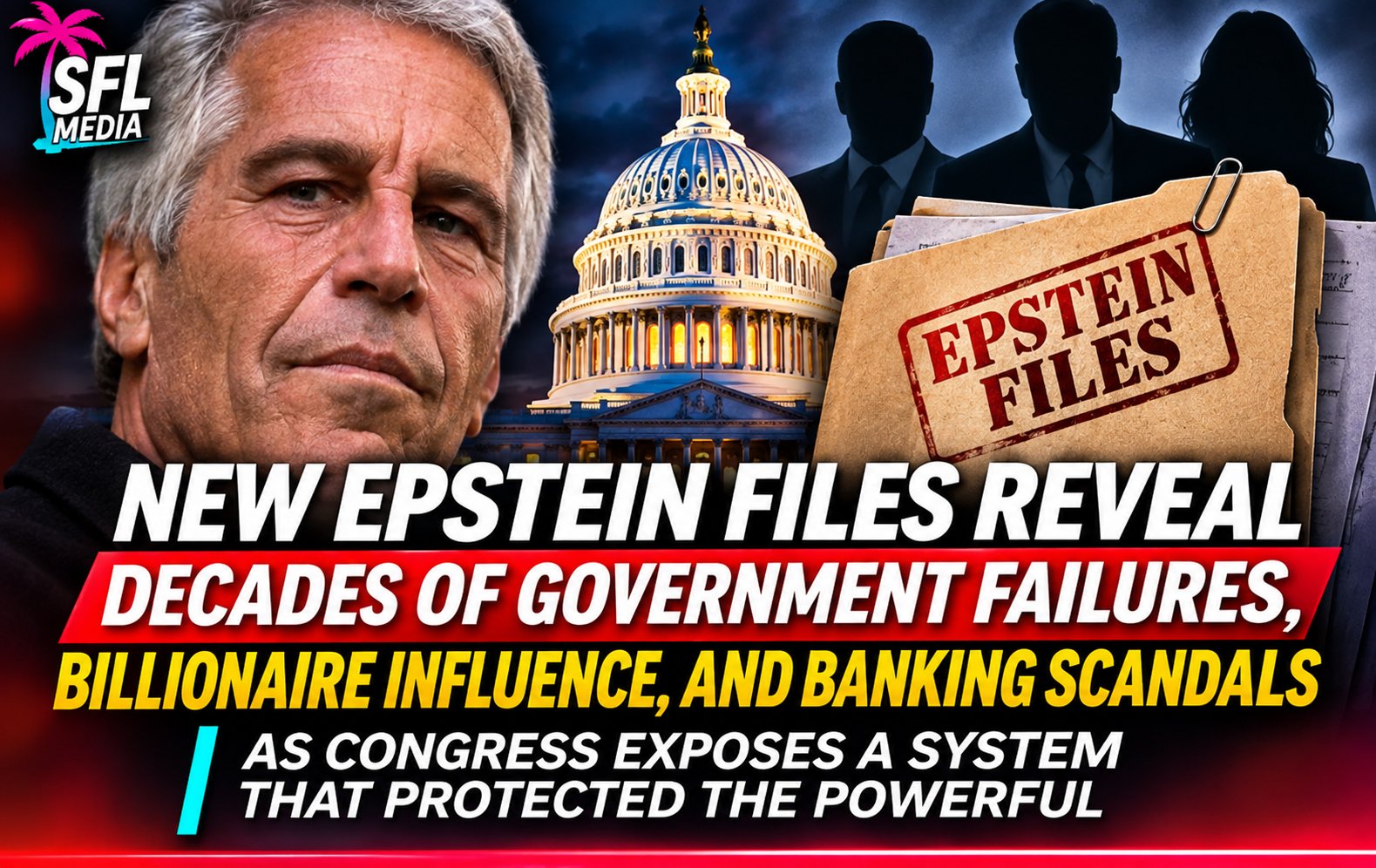
A 137-page House Oversight report details how Jeffrey Epstein maintained access to powerful figures and major financial institutions despite his criminal history, while federal prosecutors, prison officials and government agencies repeatedly failed the women and girls he abused.
WASHINGTON, D.C. — A sweeping congressional investigation into Jeffrey Epstein has exposed decades of government failures, questionable financial relationships and institutional negligence that allowed the convicted sex offender to maintain extraordinary wealth, influence and access to vulnerable women and girls long after authorities became aware of his crimes.
The 137 page report, released November 10 by Republicans on the House Oversight and Government Reform Committee, examines the federal government’s handling of Epstein and his longtime associate Ghislaine Maxwell, the wealthy individuals who maintained relationships with him, and the financial institutions that continued providing services despite warning signs involving potential human trafficking and other suspicious activity.
The investigation, conducted over 15 months, included 19 witness interviews and depositions, subpoenas for records from the Justice Department and Epstein’s estate, and an extensive review of financial documents involving major banking institutions. Its findings have intensified demands for additional federal investigations and raised new questions about whether influential individuals and institutions escaped meaningful scrutiny because of Epstein’s wealth and connections.
House Oversight Committee Chairman James Comer, a Kentucky Republican, described the findings as evidence of systemic failures extending across multiple presidential administrations, arguing that the government repeatedly missed opportunities to stop Epstein’s abuse and hold those responsible accountable.
“The federal government has failed the survivors of Jeffrey Epstein and Ghislaine Maxwell’s horrific crimes for decades.”
The report’s central conclusion is that Epstein’s continued exploitation of vulnerable women and girls was not simply the result of one criminal avoiding detection. Congressional investigators identified failures involving federal prosecutors, financial institutions, correctional officers and individuals within Epstein’s professional network who maintained relationships with him despite his documented criminal history.
The report is a Republican majority staff document, however, rather than a bipartisan finding or a judicial determination. Democrats on the committee have challenged its scope and accused Republicans of conducting an incomplete investigation, particularly concerning President Donald Trump and the Justice Department’s handling of records.
The 2008 Plea Deal That Allowed Epstein to Avoid Federal Prosecution
One of the investigation’s most consequential findings concerns the controversial agreement federal prosecutors negotiated with Epstein in South Florida in 2007, despite substantial evidence that he had sexually exploited underage girls.
The U.S. Attorney’s Office for the Southern District of Florida, then led by Alexander Acosta, entered into a non-prosecution agreement that allowed Epstein to avoid federal charges in exchange for pleading guilty to lesser offenses in Florida state court. In 2008, Epstein pleaded guilty to two prostitution related charges, including soliciting prostitution from a person under 18, and received an 18 month jail sentence.
The arrangement became notorious for the extraordinary privileges Epstein received while serving his sentence at the Palm Beach County stockade. Rather than remaining continuously incarcerated, he was permitted to leave for work for substantial portions of the day, allowing him to maintain access to his office, business operations and outside associates. He ultimately served approximately 13 months before being released.
The committee concluded that Epstein continued abusing women during the period when he was supposed to be under correctional supervision. According to the report, survivors described misconduct occurring at his South Florida office and Palm Beach residence, while other allegations involved communications with Epstein during his incarceration.
The investigation also revisited the federal government’s failure to notify victims about the non-prosecution agreement before it was finalized. That secrecy prevented survivors from meaningfully participating in the process and became the subject of years of litigation over the government’s obligations under the Crime Victims’ Rights Act.
Congressional investigators concluded that failures by federal authorities in South Florida and Washington helped create circumstances in which additional abuse could occur. The report also raised questions about potential conflicts of interest involving attorneys connected to the original prosecution, although suspicions about improper influence or intelligence relationships should not be confused with proven criminal misconduct.
Billionaires, Financial Advisers and the Wealth That Sustained Epstein’s Influence
Epstein’s ability to maintain relationships with some of the world’s wealthiest individuals remains one of the most troubling aspects of the scandal. Despite his 2008 conviction, he continued operating within elite financial and social circles, presenting himself as an adviser capable of handling complicated tax arrangements, estate planning, investments and introductions to powerful individuals.
The congressional investigation examined testimony from prominent business figures, including Leslie Wexner, Leon Black, Bill Gates and Commerce Secretary Howard Lutnick. The witnesses denied knowing about Epstein’s sexual crimes, but investigators questioned whether those explanations adequately accounted for their continued associations with him after his criminal conduct became public.
Wexner, the billionaire retail executive whose business empire included Victoria’s Secret, maintained one of Epstein’s most significant financial relationships. Epstein exercised extraordinary authority over aspects of Wexner’s financial affairs, a relationship that later became the subject of allegations that Epstein had misappropriated substantial sums. Wexner has maintained that he was deceived and did not know about Epstein’s sexual abuse.
Leon Black, the billionaire co-founder of Apollo Global Management, also came under scrutiny because of the substantial payments he made to Epstein for tax and estate-planning services after the 2008 conviction. Black has denied involvement in Epstein’s sexual crimes, and the existence of financial transactions does not establish that he knowingly facilitated abuse.
The committee’s investigation included a June 2026 interview with Black and a subsequent deposition dispute after he failed to appear for additional questioning in September. The dispute further intensified congressional scrutiny of his financial relationship with Epstein, although a failure to appear for a deposition should not be described as a criminal conviction.
The broader concern identified by investigators was what they characterized as a pattern of willful ignorance among people who continued interacting with Epstein despite warning signs. The report questioned whether some associates were willing to overlook troubling information because of his financial resources, connections and ability to facilitate lucrative opportunities.
Those findings raise important questions about professional judgment and institutional accountability, but they do not establish that every wealthy person associated with Epstein participated in, knew about or enabled his sex trafficking crimes.
Former White House Lawyer Kathryn Ruemmler and Epstein’s Political Connections
The investigation also examined Kathryn Ruemmler, who served as White House counsel under President Barack Obama and later developed a relationship with Epstein. Her communications and reported receipt of expensive gifts attracted scrutiny because of her prominent legal career and access to influential political and business figures.
During congressional questioning, Ruemmler maintained that she understood Epstein’s earlier criminal case had been resolved and denied knowing about ongoing sexual abuse. Her testimony became part of the committee’s broader examination of how Epstein maintained credibility among influential attorneys, financial professionals and political figures after his conviction.
Former President Bill Clinton’s relationship with Epstein also received attention. Clinton traveled aboard Epstein’s aircraft on multiple occasions and moved within some of the same social and philanthropic circles, circumstances that have generated years of public scrutiny. Clinton has denied knowledge of Epstein’s crimes, and the existence of flight records or social contacts does not independently establish criminal conduct.
The committee questioned other prominent individuals about their dealings with Epstein, including their understanding of his criminal history and the reasons they continued interacting with him. Investigators concluded that some witnesses offered explanations they considered inadequate, particularly when their associations continued long after Epstein’s conviction became public knowledge.
That distinction is essential to responsible reporting. A person’s appearance in Epstein’s correspondence, flight logs, financial records or social network may establish a relationship, but it does not automatically demonstrate participation in criminal activity. The relevant questions are what each person knew, when they knew it and whether reliable evidence establishes that they knowingly facilitated or concealed abuse.
JPMorgan Chase, Deutsche Bank and the Financial Warning Signs
The investigation’s findings concerning major financial institutions raise serious questions about the banking industry’s ability and willingness to detect suspicious activity involving wealthy clients.
JPMorgan Chase and Deutsche Bank maintained financial relationships with Epstein at different periods, despite information concerning his criminal history and transactions that presented potential compliance risks. Congressional investigators reviewed financial records and questioned whether internal warnings were adequately investigated, escalated or reported to authorities.
JPMorgan continued providing banking services to Epstein for years after his 2008 conviction. Previous litigation and investigative disclosures revealed concerns about suspicious transfers and financial activities involving individuals associated with his network, raising questions about the bank’s compliance practices and the effectiveness of its internal oversight.
In 2023, JPMorgan agreed to pay $290 million to settle claims brought on behalf of Epstein’s victims and another $75 million to resolve litigation filed by the U.S. Virgin Islands. Deutsche Bank separately agreed to a $75 million settlement with Epstein accusers. Those settlements were civil resolutions rather than criminal convictions, but they demonstrated the substantial legal and financial consequences of the institutions’ relationships with Epstein.
The congressional report also examined the role of American Express, alleging that company agents facilitated travel arrangements involving decoy flights, refundable reservations and dummy itineraries used to move foreign women across international borders. Investigators identified these practices as potential indicators of human trafficking and immigration fraud that should have prompted additional scrutiny.
The committee recommended that the Treasury Department and the Financial Crimes Enforcement Network review whether financial institutions are complying with their obligations to detect and report suspicious transactions. The findings underscore the importance of examining not only the individuals who committed abuse but also the financial and administrative systems that allowed their operations to continue.
Foreign Intelligence Questions and Epstein’s International Network
Epstein’s relationships with foreign political leaders, international financiers and influential business executives have generated years of speculation about whether his activities extended beyond financial consulting and sexual exploitation into intelligence gathering or blackmail.
The congressional investigation examined some of those international connections, including Epstein’s relationship with former Israeli Prime Minister Ehud Barak, who acknowledged visiting Epstein’s Manhattan residence and maintaining contact with him. Barak has denied witnessing or participating in sexual misconduct, and his association with Epstein does not establish involvement in criminal activity.
Investigators also reviewed correspondence involving Sultan Ahmed bin Sulayem, the prominent Dubai ports executive whose communications with Epstein included a disturbing reference to a purported torture video. The exchange attracted scrutiny because of its content and the international influence of those involved, but the existence of the correspondence does not independently establish that bin Sulayem produced, possessed or participated in any criminal act depicted in such material.
Former Secretary of State Hillary Clinton was questioned during the investigation about Epstein’s international connections and whether his behavior suggested possible involvement with foreign intelligence services. The inquiry reflected longstanding suspicions about Epstein’s ability to cultivate influential contacts, gather sensitive information and maintain unusual access to powerful individuals.
However, the available evidence does not conclusively establish that Epstein operated as an agent of Israel, Russia, the United States or any other intelligence service. His international relationships and opaque financial arrangements warrant scrutiny, but allegations of intelligence operations require independently verifiable evidence.
The distinction is particularly important because Epstein’s documented crimes were already extraordinarily serious. Speculation about intelligence involvement should not overshadow the established record of sexual exploitation, institutional negligence and failures to protect victims.
Epstein’s Death: Missed Prison Checks, Surveillance Problems and Serious Security Failures
The report also revisits the circumstances surrounding Epstein’s death on August 10, 2019, while he was awaiting trial on federal sex-trafficking charges at the Metropolitan Correctional Center in Manhattan. The New York City medical examiner ruled Epstein’s death a suicide by hanging. A subsequent Justice Department inspector general investigation documented extensive failures in prison supervision, staffing, recordkeeping and surveillance procedures but found no evidence contradicting the FBI’s determination that his death was not the result of a criminal act.
The congressional investigation examined testimony from correctional officer Tova Noel and other evidence concerning the final hours before Epstein was discovered dead. According to the committee, correctional officers missed at least 12 required rounds and three inmate counts, leaving Epstein and other prisoners without adequate supervision for nearly eight hours.
Those failures were compounded by falsified prison records, staffing shortages and surveillance equipment problems that complicated the reconstruction of events. Questions about an indistinct figure appearing in security footage near a staircase have also attracted public attention, although the image does not independently establish that an unauthorized person entered Epstein’s housing unit or participated in his death.
The evidence supports serious criticism of the Bureau of Prisons for failing to carry out fundamental responsibilities involving a high-profile federal detainee. It does not establish that Epstein was murdered, and unresolved questions about prison procedures should not be presented as proof of a homicide.
The committee’s findings reinforce the conclusion that understaffing and systemic dysfunction created dangerous conditions inside the facility. The failures were especially consequential because Epstein died before his federal trafficking charges could be adjudicated, denying survivors the opportunity to see him face trial on those allegations.
Donald Trump, Congressional Republicans and the Fight Over the Epstein Files
The political implications of the investigation have become increasingly contentious, particularly regarding President Donald Trump’s past relationship with Epstein and the extent to which congressional investigators examined the president’s conduct.
The Republican majority report states that witnesses questioned by the committee did not identify Trump as a participant in Epstein’s or Maxwell’s crimes. Investigators also reported finding no documents among the materials they reviewed that implicated Trump in criminal activity connected to the pair.
Those findings are relevant, but their scope must be accurately understood. The report describes the evidence examined by Republican investigators and the knowledge of witnesses who testified. It does not represent a judicial finding resolving every allegation or establish that all potentially relevant records have been reviewed.
Trump and Epstein were socially acquainted during the 1990s and early 2000s, and their past association has been documented through photographs, public comments and other records. Trump has denied involvement in Epstein’s crimes and has said their relationship ended years before Epstein’s 2019 arrest.
Democrats on the House Oversight Committee criticized the Republican report as incomplete and politically selective. Representative Robert Garcia of California, the committee’s ranking Democrat, argued that investigators had not conducted public hearings and had failed to resolve significant questions about the Justice Department’s handling of records and testimony.
Garcia also raised concerns about the transfer of Ghislaine Maxwell to a minimum-security federal facility following an interview with Todd Blanche, who was deputy attorney general at the time and subsequently became attorney general. Democrats have demanded additional scrutiny of the circumstances surrounding the transfer and the department’s handling of Maxwell.
The Republican majority characterized Democratic questioning about Trump as politically motivated, while Democrats accused Republicans of attempting to limit scrutiny of the president. Neither interpretation should be treated as an established factual conclusion about criminal liability. The appropriate standard remains whether reliable evidence demonstrates wrongdoing, regardless of an individual’s political position.
House Republicans Also Criticize Trump’s Justice Department
Despite defending Trump against allegations of involvement in Epstein’s crimes, the Republican majority report criticized the Justice Department’s handling of the Epstein Files Transparency Act and the release of investigative records.
The committee found that the department failed to communicate adequately about document releases and did not sufficiently protect survivors’ sensitive personal information. In some instances, deficient redactions exposed private information that should have remained confidential, creating additional risks for people who had already experienced serious abuse.
The findings highlight the competing responsibilities facing federal authorities. Investigators must protect victims from further harm while ensuring that public records are not unnecessarily withheld or redacted to shield powerful individuals from legitimate scrutiny.
Democrats have separately accused the department of withholding more than 2.5 million pages of records, an allegation that remains part of the broader dispute over the completeness of the government’s disclosures.
The Justice Department responded to the committee’s recommendations by maintaining that the issues raised had already been addressed and emphasizing that the Epstein investigation was not closed. A department spokesperson said federal authorities could continue pursuing human-trafficking allegations and additional investigative leads.
The disagreement underscores the continuing lack of public confidence surrounding the government’s handling of Epstein related records. Even after years of investigations, prosecutions, civil litigation and document releases, significant questions remain about the completeness of the evidence available to survivors and the public.
Congressional Report Calls for New Investigations Into Epstein Associates
The committee’s recommendations extend beyond a general demand for greater transparency. Investigators identified specific individuals and allegations they believe warrant further examination by federal law enforcement.
Among those named was Lesley Groff, Epstein’s longtime assistant, whose potential knowledge of and role in facilitating his activities received renewed scrutiny. The committee recommended that the Justice Department conduct additional questioning and investigation to determine whether further evidence could establish criminal responsibility.
The report also called for federal investigators to examine sexual assault allegations made during congressional testimony by Sarah Kellen, a former Epstein assistant who has also described herself as a survivor. Kellen identified former Miami Beach Mayor Philip Levine and celebrity hairstylist Frédéric Fekkai in allegations that the committee recommended referring for further investigation.
These are allegations, not findings of guilt. Neither the committee’s recommendation nor the existence of witness testimony establishes that either man committed a crime. Any potential prosecution would require investigators to develop admissible evidence sufficient to meet the applicable legal standards.
The reference to Levine is particularly significant for South Florida, where he served as mayor of Miami Beach from 2013 to 2017 and later pursued statewide political office. The committee’s recommendation brings renewed attention to the region’s longstanding connections to the Epstein investigation, which began with allegations involving his Palm Beach residence.
The report also recommended that survivors and their legal representatives receive appropriate access to unredacted personal records held by the Justice Department. Investigators argued that survivors should not remain dependent on incomplete public releases or prolonged legal disputes to obtain information concerning their own abuse.
Nondisclosure Agreements and the Legal Tools Used to Silence Survivors
Another major finding concerns the use of nondisclosure agreements and legal pressure to discourage survivors from discussing sexual abuse or reporting suspected criminal conduct.
The committee concluded that Epstein and influential individuals within his network used confidentiality arrangements to discourage disclosures and protect reputations. Investigators argued that such agreements can become instruments of coercion when they are used to threaten legal consequences against people attempting to report abuse.
Chairman Comer called on Congress to pass the Survivor’s Voice Protection Act, legislation intended to prevent nondisclosure agreements from being used to silence victims and witnesses of sexual crimes. The proposal would also establish additional reporting obligations concerning suspected grooming of minors.
The legislation reflects a broader concern about the imbalance of power between wealthy defendants and vulnerable victims. Individuals with substantial financial resources can employ attorneys, confidentiality provisions and litigation threats that may discourage people from reporting misconduct, even when those agreements cannot lawfully prevent reports to authorities.
The committee recommended stronger oversight of non-prosecution agreements as well, arguing that federal prosecutors must ensure such arrangements serve the interests of justice rather than allowing influential defendants to avoid appropriate accountability.
Together, the recommendations address two recurring themes in the Epstein scandal: the failure to listen to victims and the ability of powerful individuals to use legal and financial resources to limit scrutiny.
The Bigger Scandal: How Many Institutions Had Opportunities to Stop Epstein?
The most disturbing aspect of the congressional investigation is not the number of famous individuals whose names appear in Epstein-related records. It is the extent to which established institutions had opportunities to intervene and failed to prevent additional harm.
Federal prosecutors possessed evidence of serious misconduct before negotiating the 2007 agreement that allowed Epstein to avoid federal prosecution. Correctional authorities subsequently permitted extensive work-release privileges despite the nature of his offenses. Major financial institutions continued providing services while compliance concerns accumulated, and influential associates maintained relationships with him after his criminal conviction became public.
Those failures were not necessarily coordinated, and the evidence does not establish that every institution or individual involved knowingly participated in a criminal conspiracy. Nevertheless, the cumulative record demonstrates how inadequate oversight, financial influence and institutional deference can create conditions in which serious abuse continues despite repeated warning signs.
The report also illustrates the limits of congressional investigations. Lawmakers can subpoena records, question witnesses, identify failures and recommend criminal investigations, but they cannot independently convict individuals or determine criminal guilt. Those responsibilities remain with investigators, prosecutors and the courts.
The committee’s findings therefore represent a significant contribution to the public record rather than the final resolution of the Epstein scandal. Additional investigations may establish new facts, clarify unresolved allegations or determine whether particular individuals should face legal consequences.
Epstein’s Victims Deserve More Than Another Congressional Report
For survivors of Jeffrey Epstein and Ghislaine Maxwell, the latest congressional findings confirm a painful reality: multiple institutions failed to protect them even after substantial evidence of abuse had emerged. The report provides further documentation of how Epstein’s wealth and connections helped preserve his access to influential circles, while federal authorities repeatedly failed to investigate allegations thoroughly or enforce safeguards intended to protect vulnerable people.
Its recommendations offer a potential path toward greater accountability through renewed witness interviews, stronger financial oversight, improved access to survivor records and restrictions on confidentiality agreements used to discourage reports of abuse. Whether those recommendations produce meaningful results will depend on the Justice Department, Congress and other federal agencies taking concrete action rather than allowing the investigation to become another political dispute over prominent names.
The public also deserves an investigation that applies consistent standards to every individual involved. Financial relationships, social connections and political affiliations should be examined where evidence warrants scrutiny, but allegations must be distinguished from established facts and criminal responsibility must be supported by reliable proof. The central scandal is not simply that Jeffrey Epstein knew powerful people. It is that authorities had repeated opportunities to stop his abuse, financial institutions continued doing business with him despite warning signs, and survivors were denied the protection and accountability they deserved.
The House Oversight Committee’s findings document those failures in considerable detail. The question now is whether the institutions responsible for investigating them will deliver meaningful accountability or allow another opportunity for justice to pass.

Sources & Further Reading
-
House Oversight Committee — Official Findings, Witness Testimony and Recommendations
-
CBS News — Congressional Report Documents Decades of Government Failures
-
The Guardian — Republicans Call for Additional Epstein Investigations as Democrats Challenge Report
-
NBC News — House Republican Report Criticizes Justice Department and Urges Further Investigation
-
Anadolu Agency — Congressional Investigation Finds Systemic Prosecutorial and Institutional Failures
-
South Florida Media — National News, Politics and Investigations















Loading comments…