
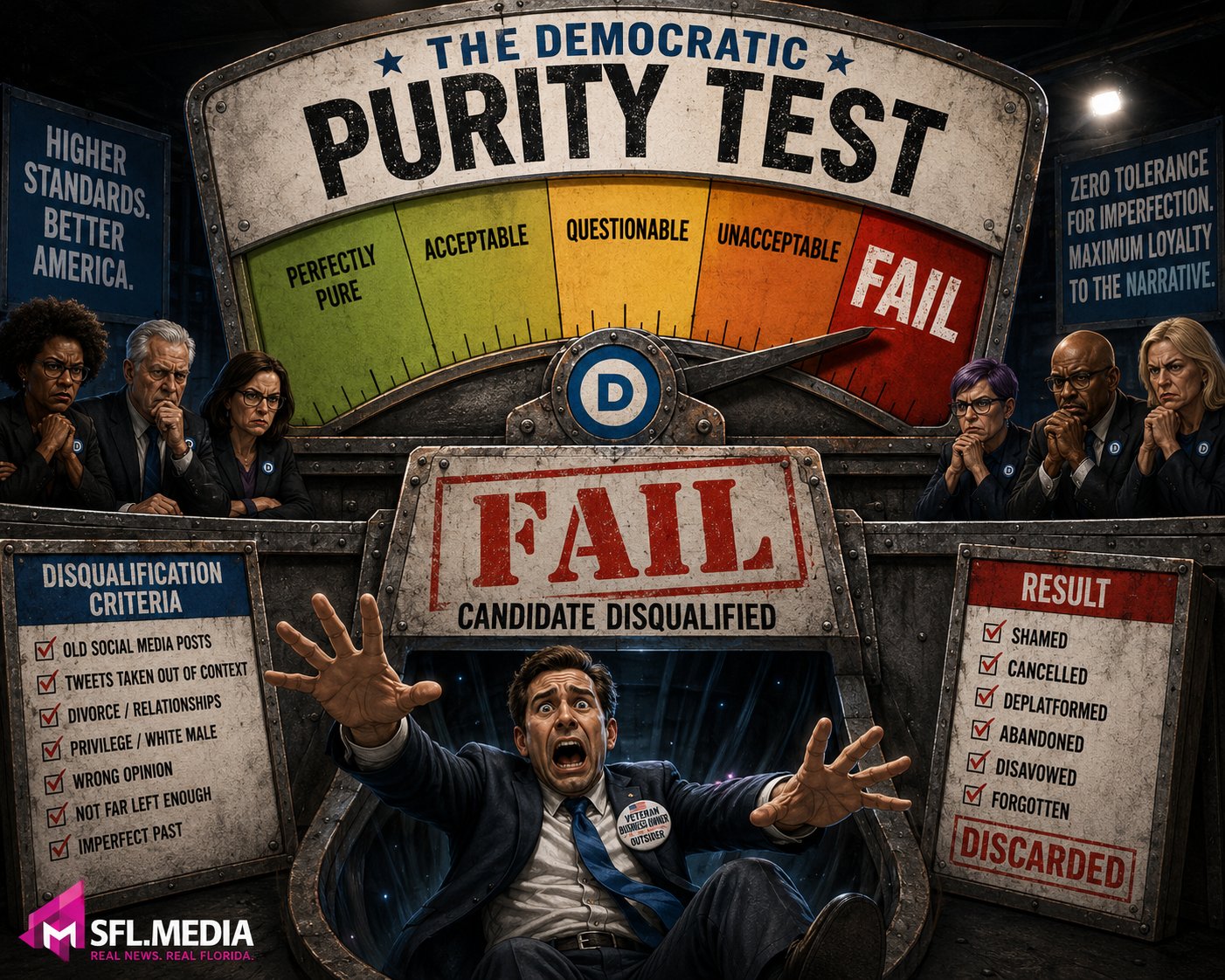
Is the Democratic Party’s Vetting Culture is Driving Away all the Political Talent
The Graham Platner Controversy Reignites an Old Debate
The rapid collapse of Graham Platner’s U.S. Senate campaign in Maine has reopened a long running debate inside Democratic politics: Does the party’s approach to candidate vetting discourage talented outsiders from running for office?
The controversy unfolded with remarkable speed. Platner, a U.S. Marine combat veteran who served multiple deployments in Iraq, won the Democratic primary with approximately 72% of the vote and emerged as the party’s nominee to challenge incumbent Republican Sen. Susan Collins. Days later, following the publication of allegations involving a former girlfriend regarding an incident that allegedly occurred in 2021, national Democratic organizations and prominent party figures withdrew their support. Platner denied the allegations before ultimately suspending his campaign amid mounting political pressure.
The episode immediately became larger than one candidate. It reignited an uncomfortable question that has surfaced repeatedly over the past decade: whether Democrats have created a political culture that places increasingly strict reputational standards on their own candidates while competing against a Republican Party that often responds very differently when faced with controversy.
A Different Standard Than the Opposition?
Political parties routinely vet candidates before elections, and both Democrats and Republicans have withdrawn support from candidates facing serious misconduct allegations. Where critics see a growing difference is in the speed and consistency with which each party reacts.
Supporters of aggressive vetting argue that public officials should be held to high ethical standards and that parties have a responsibility to protect victims, preserve public trust, and avoid nominating candidates whose personal conduct could undermine confidence in government. Critics counter that the practical effect has been to narrow the Democratic candidate pipeline by discouraging individuals with imperfect personal histories, contentious divorces, military trauma, financial setbacks, or other complicated life experiences from seeking office in the first place.
Whether that perception reflects reality remains difficult to quantify. Measuring the number of qualified people who ultimately choose not to run for office is inherently challenging. Yet campaign consultants and political strategists have increasingly discussed recruitment itself as a growing obstacle, particularly when private conduct can rapidly become national political news.
The Candidate Pipeline Problem
Unlike career politicians, many potential candidates arrive from military service, business, law enforcement, medicine, labor, or entrepreneurship. Those careers often involve decades of personal and professional experiences that can become targets during modern opposition research. Every campaign now assumes that decades old social media posts, relationships, business disputes, lawsuits, divorces, financial problems, or personal conflicts may eventually become public.
For some prospective candidates, the risk is simply not worth it. The result, critics argue, is not necessarily a shortage of intelligent people willing to serve. Instead, it may produce a narrower pool dominated by individuals who have spent much of their professional lives inside politics and who possess carefully managed public records. Whether that makes for stronger leadership remains an open political question.
Veterans and Political Outsiders Face Unique Challenges
The Platner case also highlighted another issue that resonates beyond Maine: the transition from military service to civilian political life. Combat veterans often speak openly about the difficulties of returning from war, including post-traumatic stress, depression, anxiety, and challenges adjusting to civilian relationships. Mental health advocates have spent years encouraging veterans to seek treatment without fear of stigma.
Critics of Platner’s removal argue that campaigns should distinguish between documented criminal conduct and allegations that have not been adjudicated, particularly when candidates acknowledge struggling with the lasting effects of combat service. Supporters of the Democratic response argue that allegations of sexual misconduct deserve serious consideration regardless of military background and that political parties must weigh both legal and ethical considerations when selecting nominees.
Those competing perspectives illustrate why the debate has become so divisive within Democratic politics.
Electoral Consequences Remain Difficult to Ignore
Beyond questions of ethics, strategists increasingly focus on the practical consequences of replacing candidates after they have secured nominations. Campaigns invest months building volunteer networks, donor relationships, advertising strategies, and voter recognition. Replacing a nominee late in the election cycle forces parties to rebuild much of that infrastructure while asking voters to rally behind someone they did not originally choose.
In Maine, Platner’s suspension came after Democratic primary voters had overwhelmingly selected him as their nominee, leaving party leaders scrambling to regroup ahead of a competitive Senate race. Whether that decision ultimately helps or hurts Democratic chances in November remains to be seen.
A Debate Likely to Continue
The Platner controversy has become about more than one Senate campaign. It reflects a broader discussion about how political parties balance accountability with electoral competitiveness. Supporters of rigorous vetting argue that ethical standards strengthen democratic institutions and demonstrate that no individual is above scrutiny.
Critics argue that a political culture that quickly abandons candidates after allegations, particularly when those allegations have not resulted in criminal charges or judicial findings, risks shrinking the pool of experienced leaders willing to enter public life.
Neither side disputes that character matters. The disagreement lies in where political parties should draw the line between accountability, due process, and electoral strategy. As both parties prepare for future election cycles, the debate over candidate vetting, political risk, and recruitment is unlikely to disappear. If anything, the controversy in Maine suggests it may become one of the defining questions facing both parties in the years ahead.


















































Want to join the conversation?
Create an account or sign in to share your thoughts, vote,
and reply to other readers.
Showing 0 of 0 comments
Don't have an account?
Already have an account?