
The Future Is Arriving Faster Than We Think
Every January, the technology world descends upon Las Vegas for one of the biggest and most influential events on Earth: the Consumer Electronics Show, better known simply as CES. The annual event has become the global stage where companies unveil products that often define the direction of technology for years to come. CES 2026 did not disappoint. From robots that climb stairs to AI-powered pets and televisions that seem to float on walls, this year’s event was a glimpse into a future that feels increasingly like science fiction. The technologies on display weren’t merely concepts anymore—they were products that many consumers may soon be able to buy.
The History of CES
CES has a remarkable history that stretches back nearly six decades. The first Consumer Electronics Show was held in New York City in June 1967. At the time, only about 17,500 people attended, and around 200 exhibitors showcased products like radios, televisions, and stereo systems. Over the years, CES became the launchpad for some of the most important innovations in modern technology.
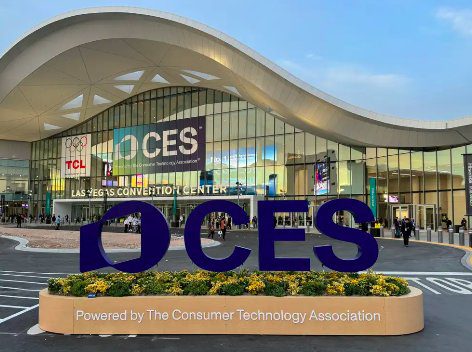
The show introduced the world to the VCR in the 1970s, the compact disc in the 1980s, the Nintendo Entertainment System in 1985, and DVD technology in the 1990s. Microsoft’s founder, Bill Gates, became a CES staple during the personal computer revolution, often delivering keynote speeches that shaped the tech industry’s direction. In later years, CES became synonymous with emerging technologies like smartphones, autonomous vehicles, artificial intelligence, and robotics. Since 1998, Las Vegas has served as the permanent home of CES, transforming the city into the world’s largest annual technology showcase every January.
AI is Now Everywhere
The biggest theme of CES 2026 was artificial intelligence. Unlike previous years, where AI felt like a feature being added to products, this year AI was the foundation upon which many devices were built. Nearly every major company had some form of AI integration, whether it was in televisions, home appliances, vehicles, or personal devices.
One of the most fascinating products was the Sweekar AI pet. Think of it as a Tamagotchi for the age of artificial intelligence. The palm-sized device actually “grows” and develops a personality over time based on interactions with its owner. It learns language, requires attention, and can even “die” if neglected. The product blurs the line between toy and digital companion and may represent the beginning of a new category of AI-powered emotional support devices.
Robots are Getting Smarter
Another standout was the Roborock Saros Rover, the world’s first robot vacuum capable of climbing stairs. Previous robot vacuums were confined to a single floor or required humans to move them around the house. The Saros Rover uses articulated wheel-legs that literally lift the vacuum from one stair to the next, allowing it to clean entire homes autonomously. It sounds simple, but solving the stair-climbing problem has been a major challenge for robotics engineers for years.
Robot companions were also everywhere at CES. Companies showcased humanoid robots capable of carrying on conversations, assisting elderly people, and even helping with household chores. The robotics industry appears to be rapidly moving toward a future where personal robots become as common as smartphones.
TVs Continue to Evolve
Televisions at CES 2026 looked like something from a science-fiction movie. TCL showcased a glasses-free 3D television that allows viewers to experience depth without wearing cumbersome eyewear. Meanwhile, manufacturers unveiled ultra-thin displays that resemble wallpaper and can practically disappear into a room’s décor.
The newest televisions also feature advanced AI systems that can automatically optimize picture quality, identify actors appearing on screen, and even translate subtitles in real time. The television is rapidly becoming an intelligent hub rather than just a display.
Rollable Screens are Finally Becoming Real
Lenovo turned heads with its Legion Pro Rollable concept laptop. The machine begins as a standard 16-inch laptop but can physically expand its screen into an ultrawide display using flexible OLED technology. It is one of the clearest examples yet that the future of computing screens may not be fixed in size. Instead, our devices could physically transform depending on how we want to use them.
AI for Your Pets
Animal lovers found plenty to get excited about as well. Swiss startup AI-Tails unveiled an intelligent feeding station for cats that monitors eating habits, body temperature, and facial expressions to identify potential health problems before owners notice symptoms. It essentially acts as an AI-powered veterinarian monitoring your pet around the clock.
Sound You Can Taste
Perhaps the strangest product at CES 2026 was the Lollipop Star. The candy uses bone-conduction technology to transmit music vibrations through your jaw while you eat it, allowing users to “taste” music in a completely new sensory experience. It’s one of those products that perfectly encapsulates CES: weird, innovative, and unlike anything anyone expected.
NVIDIA Continues to Dominate AI
No CES would be complete without a major announcement from NVIDIA. CEO Jensen Huang unveiled the company’s new Vera Rubin computing architecture, which promises significantly faster AI processing and dramatically improved efficiency. The platform is expected to power everything from advanced cloud computing to autonomous vehicles and next-generation AI applications. NVIDIA also introduced new software aimed at helping self-driving cars reason through complex situations more like humans do.
The 21 Coolest Technologies at CES 2026
- Glasses-free 3D televisions
- Rollable OLED laptops
- AI pets that grow and learn
- Stair-climbing robot vacuums
- Smart pet health stations
- Wallpaper-thin televisions
- AI-powered home assistants
- Humanoid service robots
- Autonomous driving systems
- Foldable smartphones
- Smart glasses
- AI-enhanced home appliances
- Immersive gaming displays
- Portable holographic displays
- Intelligent health monitoring devices
- Next-generation wearable technology
- Multi-screen laptops
- Bone-conduction musical candy
- Robot companions
- AI-integrated entertainment systems
- Advanced computing platforms powered by Nvidia’s new architecture.
The Future Arrived in Las Vegas
CES has always been a crystal ball into the future. Many products shown there never make it to store shelves, while others become indispensable parts of our daily lives. Looking at CES 2026, one trend is undeniable: artificial intelligence is rapidly becoming embedded in nearly every aspect of consumer technology.
The gadgets unveiled this year suggest a future filled with intelligent companions, robots capable of helping around the house, displays that change shape, and devices that anticipate our needs before we even ask. It is a future where technology increasingly fades into the background, becoming more personal, more intuitive, and more integrated into everyday life.
If CES 2026 proved anything, it’s that the future isn’t coming someday. It’s already here, and it’s arriving faster than most of us ever imagined.



















































Want to join the conversation?
Create an account or sign in to share your thoughts, vote,
and reply to other readers.
Showing 0 of 0 comments
Don't have an account?
Already have an account?