
Trump Ties Greenland Threats to Nobel Snub, Escalating Standoff With Europe
NUUK, Greenland — President Donald Trump has directly linked his aggressive posture toward Greenland to his failure to win the Nobel Peace Prize, telling Norway’s prime minister that he no longer felt “an obligation to think purely of Peace,” according to a text message released Monday by the Norwegian government. The message, sent to Jonas Gahr Støre, marks a sharp escalation in a growing transatlantic dispute over Trump’s repeated threats to take control of Greenland, a self-governing territory within the Kingdom of Denmark and a member of NATO through Denmark.
Trump’s comments came as his administration moved to impose new economic penalties on U.S. allies. On Saturday, Trump announced a 10% import tax, set to begin in February, on goods from eight European countries that have publicly supported Denmark and Greenland, including Norway. European governments responded with an unusually unified rebuke.
“Complete and Total Control of Greenland”
In the text message released by Norway, Trump wrote that because his country “decided not to give me the Nobel Peace Prize for having stopped 8 Wars PLUS,” he no longer felt bound to pursue peace as a guiding principle. He concluded by asserting, “The World is not secure unless we have Complete and Total Control of Greenland.”
The White House confirmed the authenticity of the message. Deputy press secretary Anna Kelly said Trump believes Greenlanders “would be better served if protected by the United States from modern threats in the Arctic region.”
Norwegian officials rejected Trump’s framing outright. Støre said Norway’s position was unequivocal: Greenland is part of Denmark, and Norway fully supports Danish sovereignty. He also emphasized that the Nobel Peace Prize is awarded by an independent committee appointed by the Norwegian Parliament, not by the Norwegian government.
Allies Push Back, Seek De-Escalation
Across Europe, leaders attempted to lower tensions while firmly opposing U.S. pressure. Kaja Kallas, the European Union’s foreign policy chief, said the bloc had “no interest to pick a fight” but would “hold our ground.” European Council President António Costa said EU leaders were prepared to defend themselves against “any form of coercion.”
British Prime Minister Keir Starmer said he believed the dispute could and should be resolved through calm discussion, adding that he did not expect military action.
Trump, however, declined to rule out the use of force. Asked whether the United States could invade Greenland, Danish Foreign Minister Lars Løkke Rasmussen said that “you can’t leave anything out until the president himself has decided to leave anything out.”
Troops, Tariffs, and Mixed Signals
Trump said the tariffs were partly a response to European troop deployments to Greenland, which he described as provocative. European officials countered that the deployments were symbolic and limited, involving only a few dozen personnel collectively, and were intended to assess Arctic security amid concerns about Russian and Chinese activity in the region. NATO Secretary General Mark Rutte said the Arctic’s importance to collective security was discussed Monday with Danish and Greenlandic officials.
Trump later said he had agreed to meet with European leaders at the World Economic Forum in Davos, Switzerland. He also posted a message from French President Emmanuel Macron, who suggested a follow-up meeting of Group of Seven leaders in Paris. Even as diplomatic efforts moved forward, Trump posted digitally altered images showing Greenland and Canada covered with U.S. flags, including one depicting a sign reading “Greenland, U.S. Territory, Est. 2026.”
Protests in Greenland
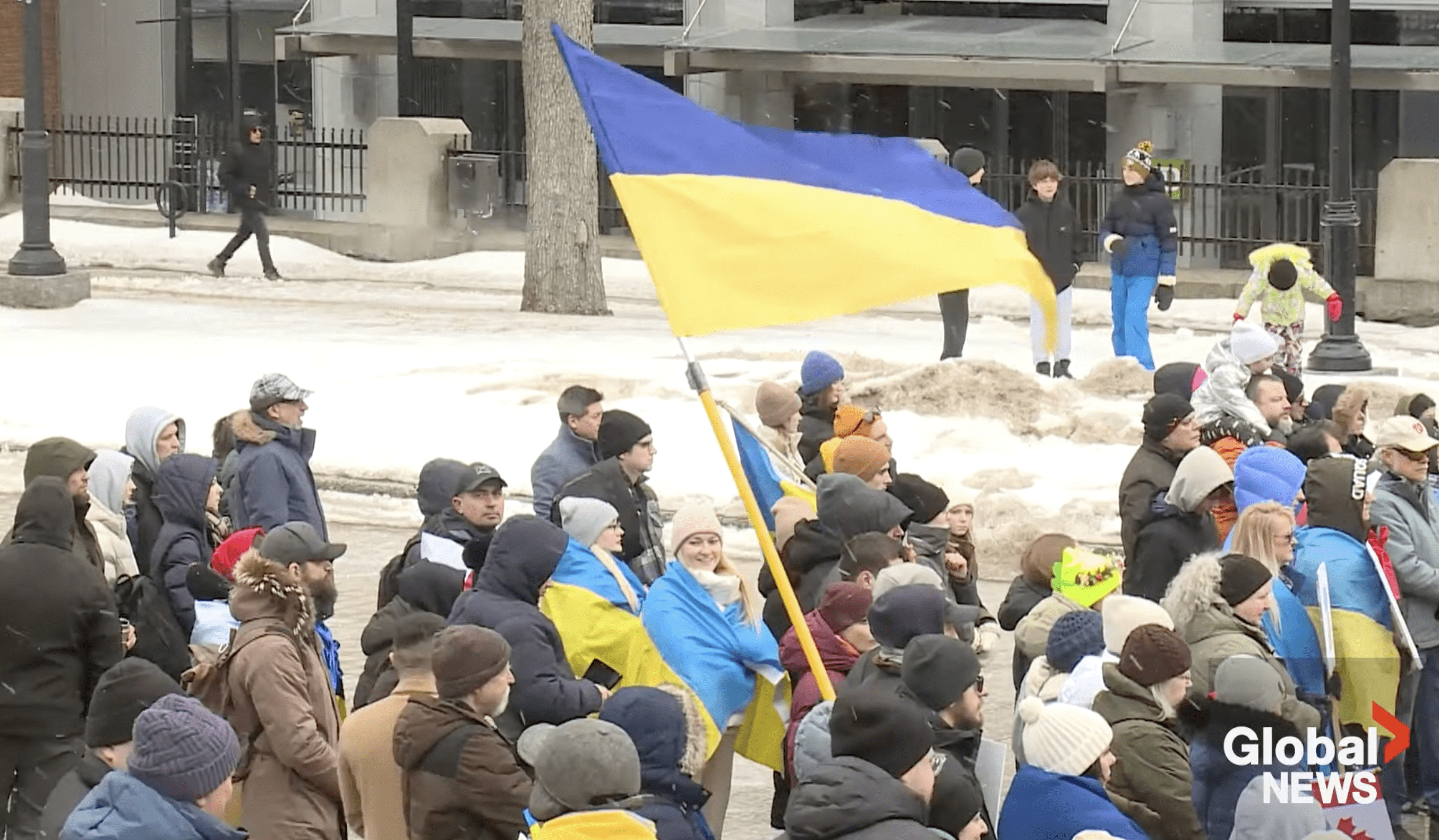
On the ground in Greenland, opposition to U.S. threats has intensified. Thousands of residents marched over the weekend in Nuuk, protesting any attempt to take over the island. Greenland Prime Minister Jens-Frederik Nielsen said tariff threats would not change Greenland’s stance. “We will not be pressured,” he wrote on social media. Naaja Nathanielsen, Greenland’s minister for business, minerals, energy, justice, and equality, said the swift response from U.S. allies demonstrated that the issue extends beyond Greenland itself.
“I think a lot of countries are afraid that if they let Greenland go, what would be next?” she said.
Nobel Prize Undercurrent
Trump’s reference to the Nobel Peace Prize added a personal dimension to the dispute. The prize was awarded last year to Venezuelan opposition leader María Corina Machado, who later presented her Nobel medal to Trump. The Nobel Committee said the prize cannot be transferred or shared. Despite his text message, Trump publicly downplayed the issue Monday night, telling reporters he did not care about the prize. He suggested Norway exerts influence over the Nobel process, a claim Norwegian officials have repeatedly rejected.
A Widening Rift
The confrontation over Greenland has become a flashpoint in U.S. European relations, blending trade threats, military posturing, and personal grievance into a dispute that many allies see as unprecedented in tone and scope. As European leaders prepare emergency meetings and Greenlanders continue to protest, the crisis has raised a broader question among U.S. allies: whether Washington’s pressure tactics represent a negotiating strategy or a fundamental shift in how the United States treats its closest partners.













































Want to join the conversation?
Create an account or sign in to share your thoughts, vote,
and reply to other readers.
Showing 0 of 0 comments
Don't have an account?
Already have an account?