
Trump Announces Killing of Senior ISIS Commander in Major U.S.-Nigeria Counterterrorism Strike
The Trump administration is claiming a major victory in the global fight against ISIS after a joint U.S. Nigeria military operation killed Abu-Bilal al-Minuki, a senior Islamic State commander described by President Donald Trump as “the second in command of ISIS globally.”
The strike, carried out in Nigeria’s volatile Lake Chad Basin region, marks one of the most significant counterterrorism operations in Africa in years and highlights the rapidly growing importance of sub-Saharan Africa in the global ISIS network.
According to Nigerian military officials, al-Minuki was killed alongside several top lieutenants during a coordinated strike on a fortified compound in Metele, Borno State, after months of surveillance, intelligence gathering, and reconnaissance missions conducted with American support. The Nigerian government described the mission as a “daring joint operation,” while Trump framed it as a devastating blow to ISIS leadership worldwide.
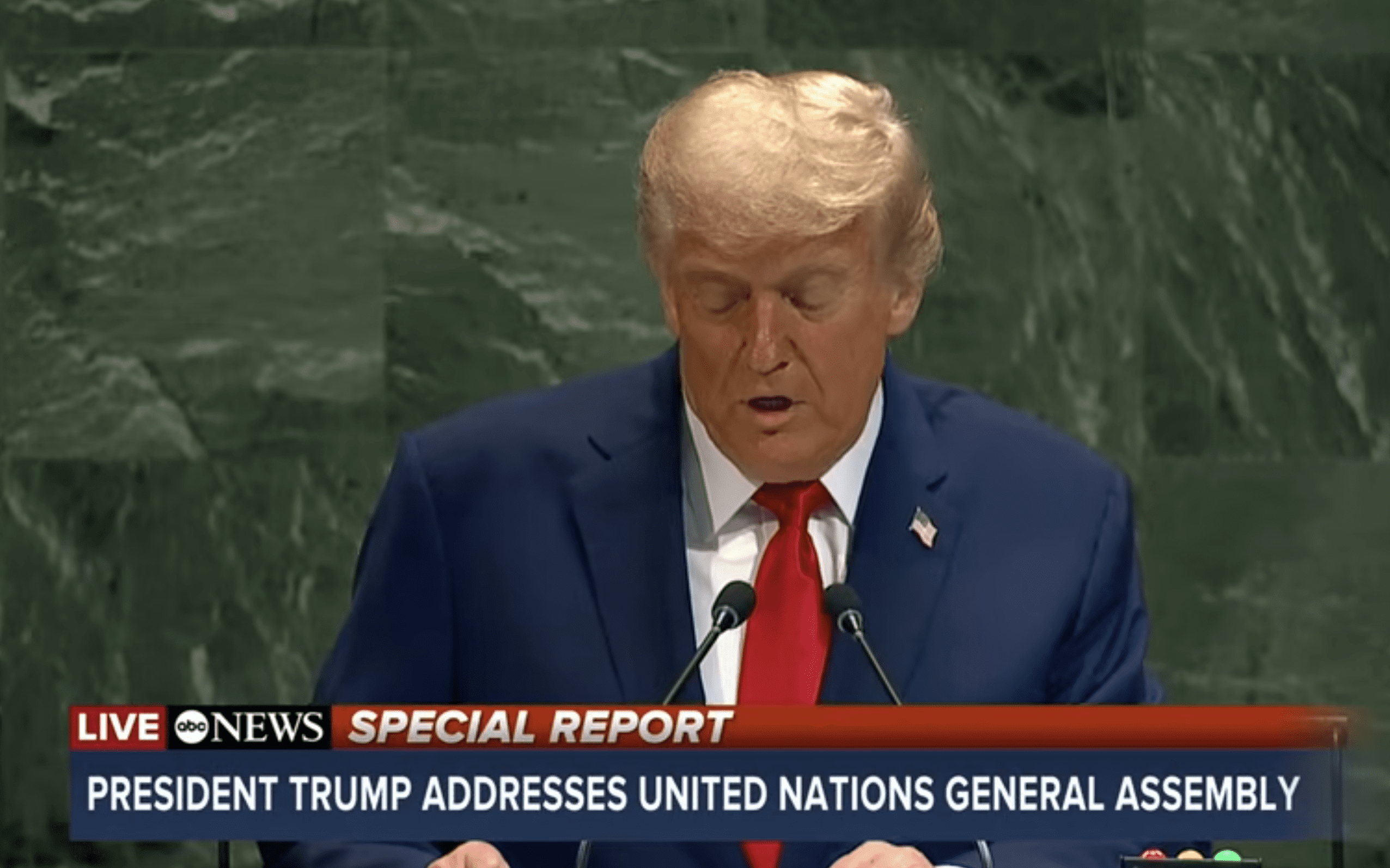
“He will no longer terrorize the people of Africa or help plan operations to target Americans,” Trump said while thanking Nigeria for its partnership in the operation.
The announcement comes as ISIS increasingly shifts its operational center away from the Middle East and into Africa, where intelligence analysts now estimate roughly 90% of the terror group’s global attacks occur. Nigeria’s ISIS affiliate, Islamic State West Africa Province (ISWAP), has become one of the deadliest extremist organizations on Earth.
That reality has fundamentally changed how the United States approaches counterterrorism. For years, much of America’s focus centered on Iraq, Syria, and Afghanistan. Now, the battleground has moved south into the Sahel and the sprawling, lawless territory surrounding Lake Chad, a region shared by Nigeria, Chad, Niger, and Cameroon that has become a breeding ground for jihadist insurgencies, arms trafficking, kidnappings, and mass civilian killings.
Al-Minuki was reportedly elevated within ISIS to lead the group’s “General Directorate of States,” placing him among the organization’s highest-ranking global operatives. Nigerian officials say he oversaw extremist operations throughout West Africa and the Sahel, coordinating attacks against civilians, minority populations, and government forces.
Authorities also tied him to the infamous 2018 Dapchi schoolgirls kidnapping, where more than 100 girls were abducted by Boko Haram linked militants in northeastern Nigeria. Before ISIS formally absorbed factions of Boko Haram in 2015, al-Minuki had reportedly already risen through the ranks of the extremist movement under the leadership of Abubakar Shekau.
The operation itself appears to represent a major escalation in direct American military cooperation inside Nigeria. While U.S. intelligence, drones, and logistical support have quietly assisted African counterterrorism efforts for years, the public framing of this mission signals that Washington now views ISIS Africa as one of the central fronts in the war against global terrorism. The Nigerian military stated that the operation achieved “zero casualties or loss of assets,” emphasizing the precision and sophistication of the strike.
Still, there is also reason for caution. Nigerian authorities have previously announced the deaths of high-profile jihadist leaders only to later retract or revise those claims. In fact, the military admitted this week that a previous 2024 announcement claiming al-Minuki’s death actually referred to another fighter using the same alias. Nigeria also prematurely announced the death of Boko Haram leader Abubakar Shekau multiple times before his death was finally confirmed in 2021. That history has fueled skepticism among some analysts until additional intelligence or forensic confirmation emerges.
But if confirmed, the death of al-Minuki would represent one of the biggest ISIS leadership losses since the collapse of the terror group’s territorial caliphate in Iraq and Syria years ago. The strike also underscores a broader geopolitical reality many Americans still do not fully understand: Africa has become one of the most important security battlegrounds of the 21st century.
Extremist violence across the Sahel has exploded over the last decade as weak governments, military coups, poverty, and foreign interference create fertile ground for radical groups to expand. Russia, China, the United States, Turkey, and Gulf nations are all increasingly competing for influence across the continent while jihadist organizations exploit instability to build parallel power structures.
President Bola Tinubu defended Nigeria’s expanding partnerships with Western nations during recent remarks in Rwanda, arguing that modern security threats cannot be handled in isolation.
“Security challenges will always be there… you cannot operate the world in isolation,” Tinubu said.
The operation may also serve as a political boost for Trump, who has repeatedly pushed an aggressive anti-ISIS posture dating back to his first term in office. His administration has increasingly portrayed international counterterrorism cooperation as proof that American military power still plays a dominant role globally despite growing instability in multiple regions.
Whether the killing significantly weakens ISIS operations in Africa remains to be seen. History has shown extremist groups are often capable of rapidly replacing commanders. But eliminating a figure described as a global operational leader unquestionably disrupts planning, financing, communications, and recruitment efforts, at least temporarily. And in a region where ISIS-linked massacres, kidnappings, and attacks continue to terrorize civilians almost weekly, even temporary disruption matters.

















































Want to join the conversation?
Create an account or sign in to share your thoughts, vote,
and reply to other readers.
Showing 0 of 0 comments
Don't have an account?
Already have an account?