
Divers Restore Italy’s Iconic Christ of the Abyss as Underwater Landmark Continues to Inspire
One of the world’s most recognizable underwater monuments has once again received a careful restoration. Divers from Italy’s police, navy, coast guard, firefighters, and other emergency services recently descended into the crystal-clear waters off the coast of San Fruttuoso in the Liguria region of northwestern Italy to clean and preserve the famous Christ of the Abyss statue. The annual conservation effort removes marine growth and corrosion using pressurized seawater, a technique that protects the bronze surface without damaging the monument or the surrounding ecosystem. The restoration is overseen by Italy’s cultural heritage officials, ensuring that one of the country’s most unique historical landmarks remains intact for future generations.
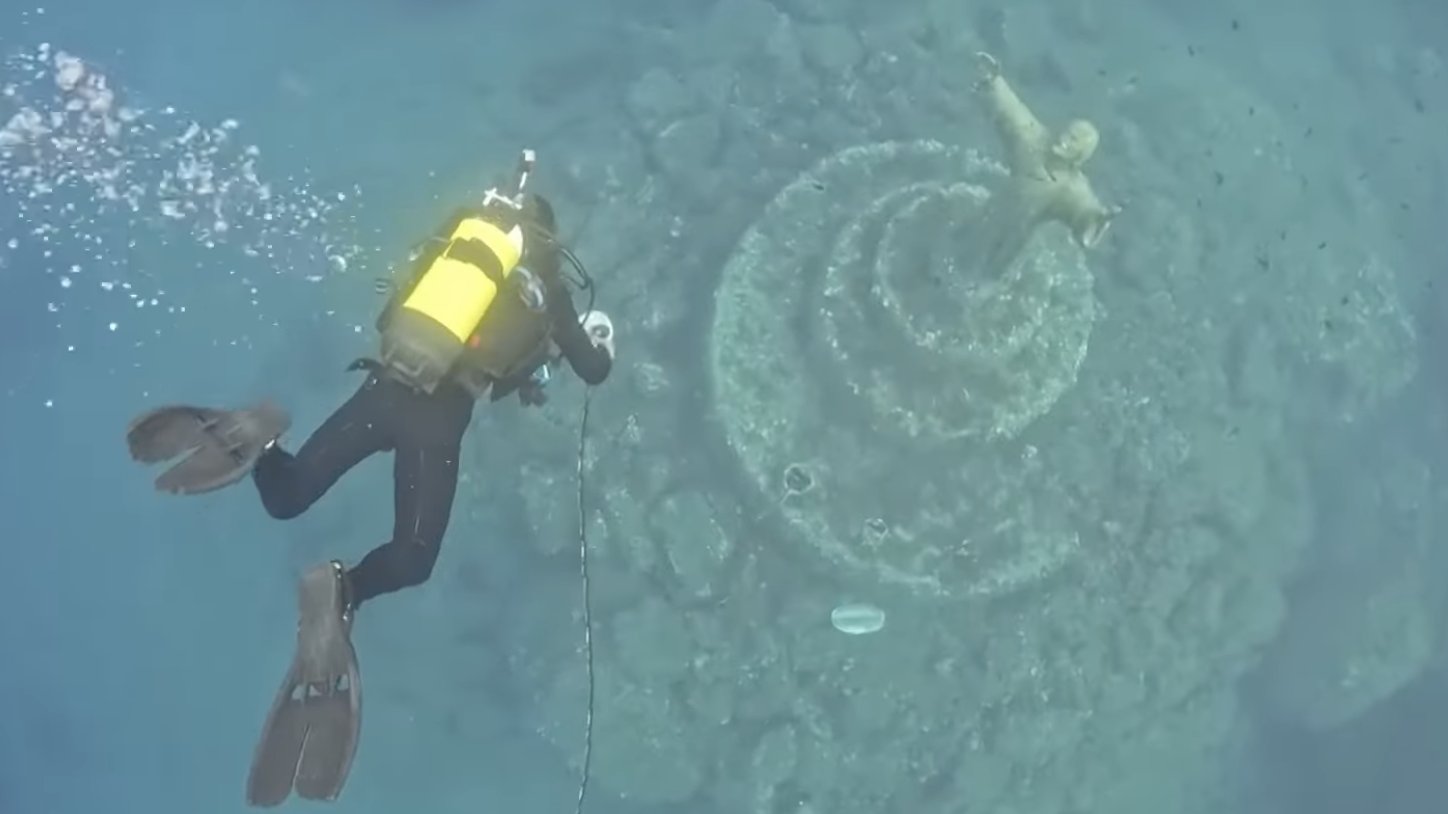
The original Christ of the Abyss (“Il Cristo degli Abissi”) was created by Italian sculptor Guido Galletti and placed on the seabed on August 22, 1954, about 56 feet below the surface in the protected bay of San Fruttuoso, located between the picturesque coastal towns of Camogli and Portofino on the Italian Riviera. Standing roughly 8 feet (2.5 meters) tall, the bronze statue depicts Jesus Christ with his arms raised toward the heavens in a gesture of peace and blessing.
The monument was commissioned as a memorial to Dario Gonzatti, considered the first Italian to use modern scuba equipment, who tragically died while diving in 1947 near the very location where the statue now stands. Over time, it also became a tribute to all sailors, fishermen, and divers who have lost their lives at sea. The statue itself carries symbolic meaning beyond its appearance, as it was cast using bronze created from melted-down medals, naval cannons, and ship parts, transforming remnants of war into a lasting symbol of peace and remembrance.
The monument has faced numerous challenges over the decades. Saltwater, marine organisms, and corrosion slowly wear away at the bronze surface, while anchors and human contact have occasionally caused physical damage. In 2003, the statue had to be lifted from the sea for an extensive restoration after one of its hands was broken off, likely by an anchor.
Conservators repaired the damaged arm, reinforced the structure, and returned the monument to the Mediterranean on a new foundation in 2004. Since then, conservation crews have adopted gentler cleaning techniques using pressurized seawater rather than abrasive wire brushes, helping preserve the statue while minimizing harm to both the artwork and surrounding marine life.
There is Also a ‘Christ of the Abyss’ in Florida
Many Americans may not realize that Florida is home to its own version of this famous underwater monument. A third casting from the original mold was donated to the United States by Italian diving equipment manufacturer Cressi and installed in 1965 at Dry Rocks Reef, approximately six miles offshore from Key Largo in the Florida Keys.
Known as the Christ of the Abyss or Christ of the Deep, the bronze statue rests in about 25 feet of water, making it accessible not only to scuba divers but also to snorkelers. Located within the Florida Keys National Marine Sanctuary, just outside John Pennekamp Coral Reef State Park, the statue has become one of Florida’s most famous underwater attractions and a bucket-list destination for divers from around the world. Covered with coral, sponges, and marine life after more than six decades beneath the waves, the Florida monument has become part of the reef itself while still maintaining the same peaceful pose as its Italian counterpart.
Today, both statues continue to serve as far more than tourist attractions. For divers, they represent places of reflection and remembrance beneath the sea. For historians and conservationists, they demonstrate the importance of preserving cultural treasures even in some of Earth’s harshest environments.
As Italy’s restoration crews continue their careful work each year, the Christ of the Abyss remains an enduring symbol of faith, sacrifice, and humanity’s enduring connection to the ocean. Whether resting beneath the Mediterranean near Portofino or surrounded by colorful coral reefs in the Florida Keys, these underwater monuments continue to inspire awe in everyone fortunate enough to descend into their silent, underwater world.



















































Want to join the conversation?
Create an account or sign in to share your thoughts, vote,
and reply to other readers.
Showing 0 of 0 comments
Don't have an account?
Already have an account?