
Florida Fisherman, 71, Killed in Alligator Attack Near Orlando, Wildlife Officers Capture and Kill 12 Foot Gator
A fishing trip turned deadly when a massive alligator reportedly dragged a 71-year-old man underwater at a Central Florida retention pond. Wildlife officers later captured and euthanized a roughly 12-foot alligator believed to be responsible for the attack.
CENTRAL FLORIDA — A 71 year old Florida fisherman was killed in a terrifying alligator attack near Orlando after witnesses reportedly saw the massive reptile grab him and pull him beneath the surface of a retention pond, prompting an emergency response and a dangerous recovery operation involving wildlife officers and professional alligator trappers.
The victim, identified as Steven Hamilton, had been fishing near a lake in Central Florida when the attack occurred. According to the televised report, witnesses saw Hamilton being pulled into the water by an alligator, and he did not resurface. Emergency responders arrived to search for him, but the presence of additional alligators in the area complicated efforts to safely enter the water and recover him.
Wildlife officers subsequently located and captured an alligator measuring approximately 12 feet long. The animal was brought onto land and killed by authorized trappers after authorities identified it as the suspected animal involved in the fatal encounter. The incident has renewed concerns about the dangers posed by large alligators in Florida’s freshwater lakes, canals, and retention ponds, particularly in areas frequently used for recreational fishing.
Witnesses Report Fisherman Was Dragged Underwater
The attack unfolded near a retention pond where Hamilton was known to fish. Witnesses reported seeing an alligator seize him and pull him into the water, leaving bystanders unable to intervene before he disappeared beneath the surface. The circumstances described by witnesses prompted an urgent response from local authorities, who faced additional hazards because other alligators were active in the immediate area.
Florida’s freshwater retention ponds can provide ideal alligator habitat, particularly when they connect to larger lakes, canals, or wetlands. Although these bodies of water are often located near residential communities and recreational areas, they can support large predators capable of moving between waterways without being readily noticed.
Investigators have not publicly established precisely what triggered the encounter or whether Hamilton was standing at the shoreline, handling a fish, or engaged in another activity when the animal attacked. Those details are important because wildlife officials have long warned that alligators can respond aggressively when people approach the water’s edge, particularly in areas where the reptiles have become accustomed to finding food.
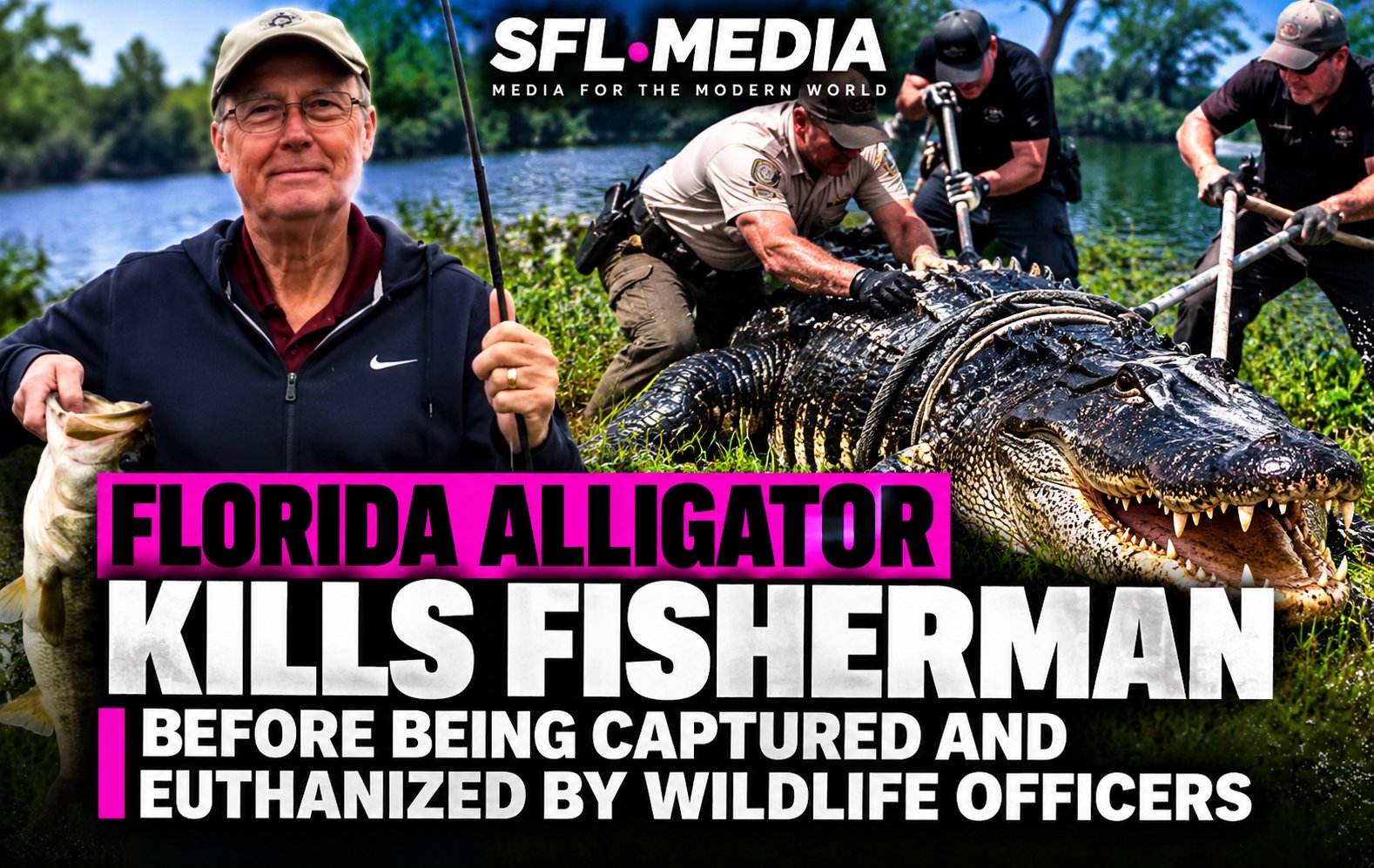
Wildlife Officers Capture and Kill Massive Alligator
Following the attack, wildlife officers and licensed trappers searched the water for the animal believed responsible. Video footage from the response showed a large alligator being restrained and brought onto land, where officials worked to control the powerful reptile before it was dispatched.
The animal measured approximately 12 feet, making it a particularly large specimen. Adult male American alligators can exceed 10 feet in length, and exceptionally large individuals may reach 13 feet or more. Animals of that size possess tremendous jaw strength and can overpower large prey, making close encounters extremely dangerous.
Authorities reported that the captured alligator was believed to be responsible for Hamilton’s death. However, the report did not establish whether forensic testing had conclusively linked that specific animal to the attack.
Under Florida’s nuisance alligator management system, authorized trappers can capture and remove alligators determined to pose a threat to people, pets, or property. Animals removed through the program are generally not relocated because relocation can create additional safety problems and alligators may attempt to return to their original territory. Depending on the circumstances, captured nuisance alligators may be humanely killed by licensed trappers.
The removal of the suspected animal was intended to address the immediate public safety threat, although officials continue to remind residents that other alligators may inhabit the same waterways.
Community Mourns a Familiar Fisherman
Hamilton’s death has shaken people who knew him from his time fishing in the area. Connor Kelly, who occasionally fished alongside Hamilton, described him as a friendly and approachable person whose death was difficult to comprehend. Kelly remembered Hamilton as a kind man who was easy to talk to, offering a glimpse into the personal loss behind an incident that has attracted attention because of the size of the alligator and the circumstances of the attack.
For local anglers, the tragedy is a reminder that familiar fishing locations can still present unpredictable wildlife hazards. Florida residents frequently encounter alligators in lakes, canals, golf course ponds, and neighborhood retention basins, but repeated exposure to the animals can sometimes create a false sense of security.
Second Fatal Alligator Attack in Florida This Year
Hamilton’s death marks the second fatal alligator attack reported in Florida in 2026, according to the Associated Press. In June, 31 year old Brittany Clark was killed by a large alligator while swimming in a Central Florida waterway near Oviedo. The two deaths have renewed attention on how Florida manages encounters between people and large alligators in residential and recreational areas.
Despite the recent fatalities, deadly alligator attacks remain uncommon. State records cited by the Associated Press indicate that 34 people have been killed by alligators in Florida since 1948, including the two deaths reported this year. Florida’s extensive network of lakes, rivers, wetlands, canals, and retention ponds provides habitat for an estimated 1.3 million alligators, making encounters with the reptiles a routine part of life in many communities.
The American alligator was removed from the federal endangered species list in 1987 following a successful recovery effort, but the species remains regulated under state and federal wildlife protections. Florida manages potentially dangerous animals through its Statewide Nuisance Alligator Program, which allows residents to report alligators that may threaten public safety.
The recent fatalities have also prompted broader discussions about whether existing wildlife management policies provide sufficient flexibility to remove dangerous animals from heavily populated areas. However, the rarity of fatal attacks makes it difficult to determine whether the two deaths in 2026 represent a sustained increase in risk or an unusual concentration of tragic incidents.
Authorities Warn Residents to Keep Their Distance
Following Hamilton’s death, local authorities urged residents and visitors to remain cautious around Florida waterways, even when alligators appear motionless or uninterested in nearby activity. Winter Garden Police Capt. Michael Mason emphasized that alligators are common around Lake Apopka and that people should respect the animals’ territory rather than assume they are harmless.
Wildlife officials recommend remaining a safe distance from the water’s edge, keeping pets away from shorelines, never feeding alligators, and avoiding swimming in areas where the reptiles are known to live. Feeding alligators is particularly dangerous because it can cause them to associate people with food, increasing the likelihood of future encounters.
Fishing presents additional concerns because anglers often spend extended periods near the water and may handle fish that attract predators. Officials advise fishermen to remain alert, avoid allowing alligators to approach their catch, and leave an area immediately if a large animal begins moving toward them.
Residents who encounter an alligator they believe poses a threat can contact the Florida Fish and Wildlife Conservation Commission’s nuisance alligator hotline at 866-FWC-GATOR (866-392-4286).
A Routine Fishing Trip Ends in Tragedy
What began as an ordinary afternoon of fishing at a Central Florida park ended in tragedy when a massive alligator attacked a man who had come to enjoy the water. Within hours, emergency responders had recovered Hamilton’s body, wildlife trappers had removed and killed the suspected animal, and a local community was mourning the loss of a familiar fisherman.
The Winter Garden Police Department and the Florida Fish and Wildlife Conservation Commission are continuing to investigate the circumstances surrounding the attack. Authorities have not reported evidence that Hamilton provoked the animal, and the precise sequence of events remains under review.
For Hamilton’s family and friends, the loss is devastating. For other Florida residents, the incident serves as a reminder that even familiar lakes and neighborhood ponds are part of a natural environment shared with powerful predators.
Florida’s alligators are an important part of the state’s wildlife, but the death of Steven Hamilton demonstrates how quickly a seemingly peaceful encounter near the water can become fatal.

Sources and Further Reading
- Associated Press — Fisherman, 71, Attacked and Killed by 12-Foot Alligator Alongside Florida Lake
- CBS News — Alligator Kills 71-Year-Old Man Fishing at Florida Pond
- WESH 2 News — Alligator Attacks and Kills Man Fishing in Winter Garden
- USA Today — Florida Man, 71, Fishing in Pond Dies in Alligator Attack
- WUSF / Associated Press — Fisherman Attacked and Killed by Alligator Alongside Florida Lake
- Original Video Report — Florida Man Killed by Alligator














































Want to join the conversation?
Create an account or sign in to share your thoughts, vote,
and reply to other readers.
Showing 0 of 0 comments
Don't have an account?
Already have an account?