
South Florida Condos: The Budget Bomb Under the Boom
“Low HOA is not a bargain. It’s a time bomb with a lobby.”
The Post-Surfside Cold Shower
Florida rewired condo governance after Surfside. Milestone structural inspections are now on a clock, and associations must base budgets on an engineer’s Structural Integrity Reserve Study (SIRS) for the big-ticket systems, structure, roof, glazing, critical MEP, life-safety. Those reserves aren’t optional on 2025+ budgets. The familiar “owners voted to waive” era is effectively over, with narrow exceptions. That flips decades of underfunding into mandatory line items.
“The developer sells a lifestyle. The statute now demands a balance sheet.”
The Insurance Vice
Even before a single chunk of concrete is repaired, association master insurance has morphed into a second mortgage. Premiums for condo associations more than doubled statewide from 2022 to 2024. Underwriters are reading engineer reports and meeting minutes; unresolved defects become pricing, or non-renewal. In plain English: every crack, leak, and overdue repair is a premium hike waiting to happen.
The Special-Assessment Era (Miami-Dade & Broward)
You can see the math in the headlines. Mid-2000s and older towers are swallowing five- and six-figure per-unit calls to catch up on concrete restoration, glazing, chillers, roofs, elevators, and life-safety:
Brickell’s 1060 Brickell approved ~ a $21 million assessment, five-figure bills to owners.
Palm Bay Yacht Club told owners ~$175,000 per unit for a $46 million recert package.
North Miami’s Cricket Club saw a ~$30 million proposal; sales at losses and lender squeamishness followed.
This isn’t “mismanagement” noise; it’s structural lifecycle hitting statutory deadlines in a hurricane belt priced by insurers and lenders who read the same reports you do.
Why “Low HOA” Was Always a Lie
Low HOA was never efficiency it was subsidy. For years, developer-controlled boards and owner votes kept dues artificially low by waiving structural reserves, deferring major repairs, and masking risk behind temporarily cheap insurance. That created a hidden liability stack—concrete, glazing, elevators, roofs pushed past service life with no cash set aside. Post-Surfside laws and today’s tougher underwriting simply dragged those costs into daylight. If dues look “low” now, you’re borrowing against the building’s future and the payback shows up as sudden, often six-figure assessments.
A coastal high-rise is a steel-and-concrete machine living in salt air. True operating costs include:
Concrete & façade: spalling/rebar repair is the budget nuke for 25–40-year-old stock.
Impact glazing & doors: high-velocity wind zones demand expensive systems across every unit and common area.
Elevators: modernization commonly runs low- to mid-six figures per car, multiplied by banks of cars in tall towers.
Roof, generator/ATS, chillers, fire/life-safety: multi-million cycles, unavoidable.
Stack that with mandatory SIRS funding and volatile insurance, and you get the reality buyers meet in 2025: Florida HOA/condo fees in metro areas like Fort Lauderdale, Orlando, and Tampa are running 15%+ year-over-year, well above national medians.
“If dues look cheap today, the costs are hiding in tomorrow’s assessment or next year’s premium.”
What About All the New Buildings Going Up?
The skyline is surging: supertalls and branded product downtown and up the beaches; resort-style campuses in Fort Lauderdale. New towers don’t need immediate concrete restoration, but they are not cheap to run:
Amenity-heavy product (private restaurants, speakeasies, multiple pools, wellness clubs) bakes high fixed staffing and operations into dues.
Branded hotel-residence hybrids stack hotel ops complexity on a condo’s budget.
Exotic systems (car-elevators; sprawling glazing walls; multi-deck water features) raise long-term maintenance exposure.
SIRS still applies, reserves must be funded from day one under new budgets.
And the recert clock still ticks: in Miami-Dade’s coastal zone, formal recertification comes at 25 years, not 30.
Translation: “new” shifts the timing of pain, not the inevitability. Expect high dues out of the gate at brand-name properties and count on them rising.
Buyer’s Field Manual (Use This Before You Wire a Deposit)
This is the pre-close survival kit. Treat it like an aircraft checklist, not a suggestion box. Before you wire a single dollar, force the building to show you its engineering (milestone/SIRS), insurance (current binders and carrier demands), capital plan (scopes, bids, permits), and financial health (budget, reserve funding, assessment history, delinquencies). Then map every high-cost amenity or system—glazing walls, chillers, elevators, pools, restaurants, to a reserve line with timing and dollars. If anything is missing, outdated, or “in process,” price the risk into your offer or walk. Cheap dues without documents isn’t value; it’s a booby trap.
SIRS + Funding: Get the study and the adopted 2025/2026 budget. Confirm structural items are fully funded per the engineer’s schedule.
Milestone/Recert Status: Demand Phase-1/Phase-2 reports, scopes, and permits. Near-coast Miami-Dade buildings hit recert at 25 years.
Insurance Binder(s): Ask for current quotes and any carrier loss-control demands tied to repairs, roofs, glazing, or life-safety.
Amenity Overhead: Identify cap-ex hogs (car elevators, glass walls, chillers, multiple pools, F&B outlets) and trace them to reserve lines.
Assessment History & Delinquencies: Minutes, notices, liens, and collection rates. Weak collections = higher dues on the compliant.
Turnover & Controls: If developer-controlled, scrutinize whether early budgets met statutory reserve requirements. Don’t inherit a shortfall.
Fort Lauderdale Reality Check
If you want low-drama ownership, consider newer, smaller, inland buildings (fewer elevators, simpler glazing, lower wind exposure). If you want oceanfront value, underwrite like a lender: price in six-figure assessments on older stock or pay cash in elite towers where $3k–$5k/month dues won’t force panic selling.
“South Florida’s condo market isn’t broken it’s finally being priced correctly.”
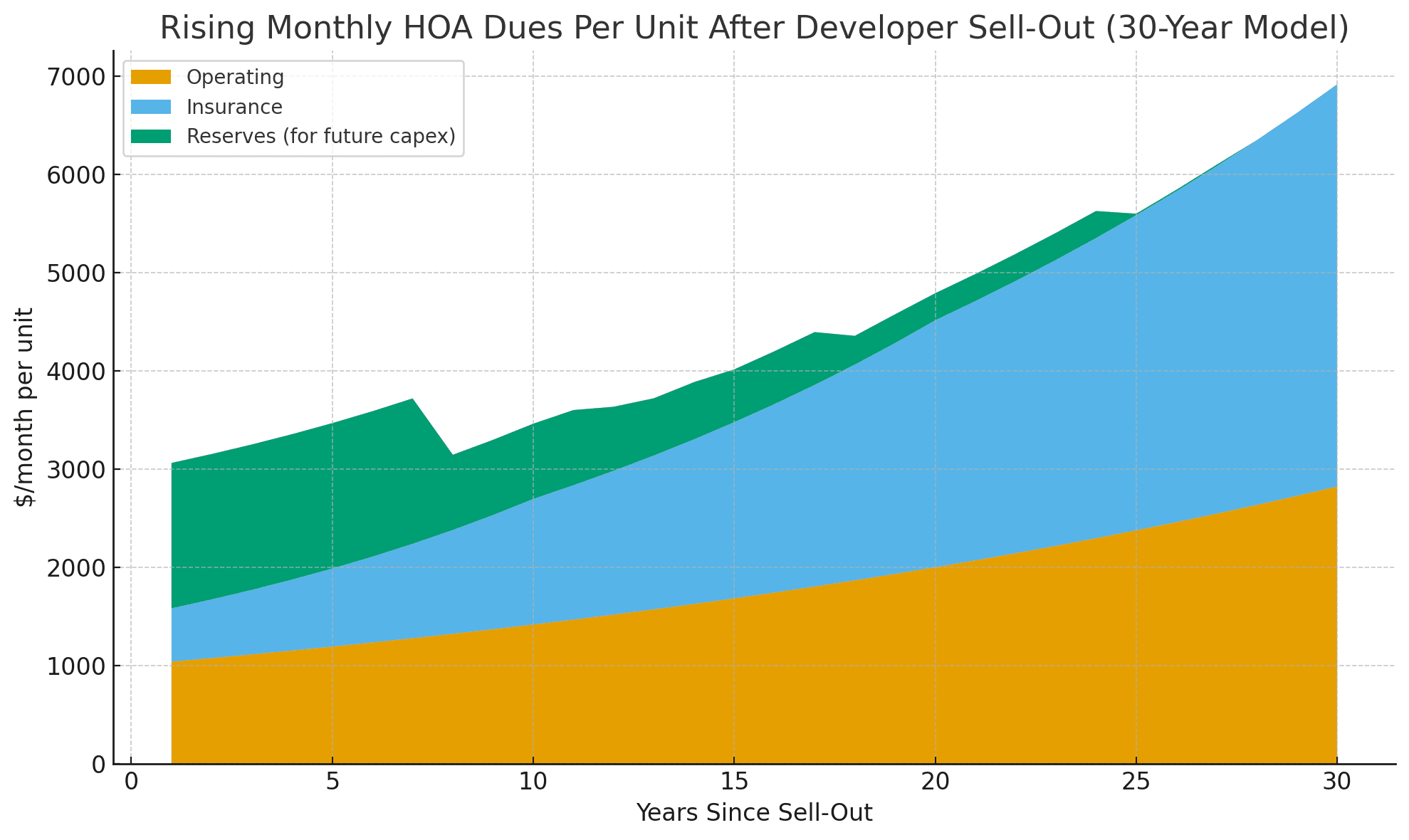
Rising Costs After Sell-Out by the Developer
“After the developer cashes out, owners inherit rising operating, insurance, and reserve bills and they compound.”
The chart shows a 30-year, post–sell-out model for a 200-unit oceanfront high-rise. It breaks monthly dues per unit into three realities you can’t dodge: operating, insurance, and reserves to fully fund future capital work (concrete, glazing, roof, elevators, chillers, generator). You’ll see how dues start “reasonable,” then climb steadily as insurance and reserve requirements stack up exactly what buyers feel today across South Florida.


















































![John Daniel "Raizin"[a] Caine](https://sfl.media/wp-content/uploads/2026/01/inside-the-u-s-raid-that-snatched-the-venezuelan-president-and-his-wife-from-their-home-screenshot-2026-01-03-at-8.46.21-pm.png)

Want to join the conversation?
Create an account or sign in to share your thoughts, vote,
and reply to other readers.
Showing 0 of 0 comments
Don't have an account?
Already have an account?