
Peter Thiel’s Argentine Exit Raises Questions About Billionaire Patriotism
For decades, Peter Thiel has been one of the most influential figures in American technology, finance, and politics. Through investments in companies like PayPal, Facebook, and Palantir, Thiel helped shape the modern digital economy while building a fortune worth billions of dollars.
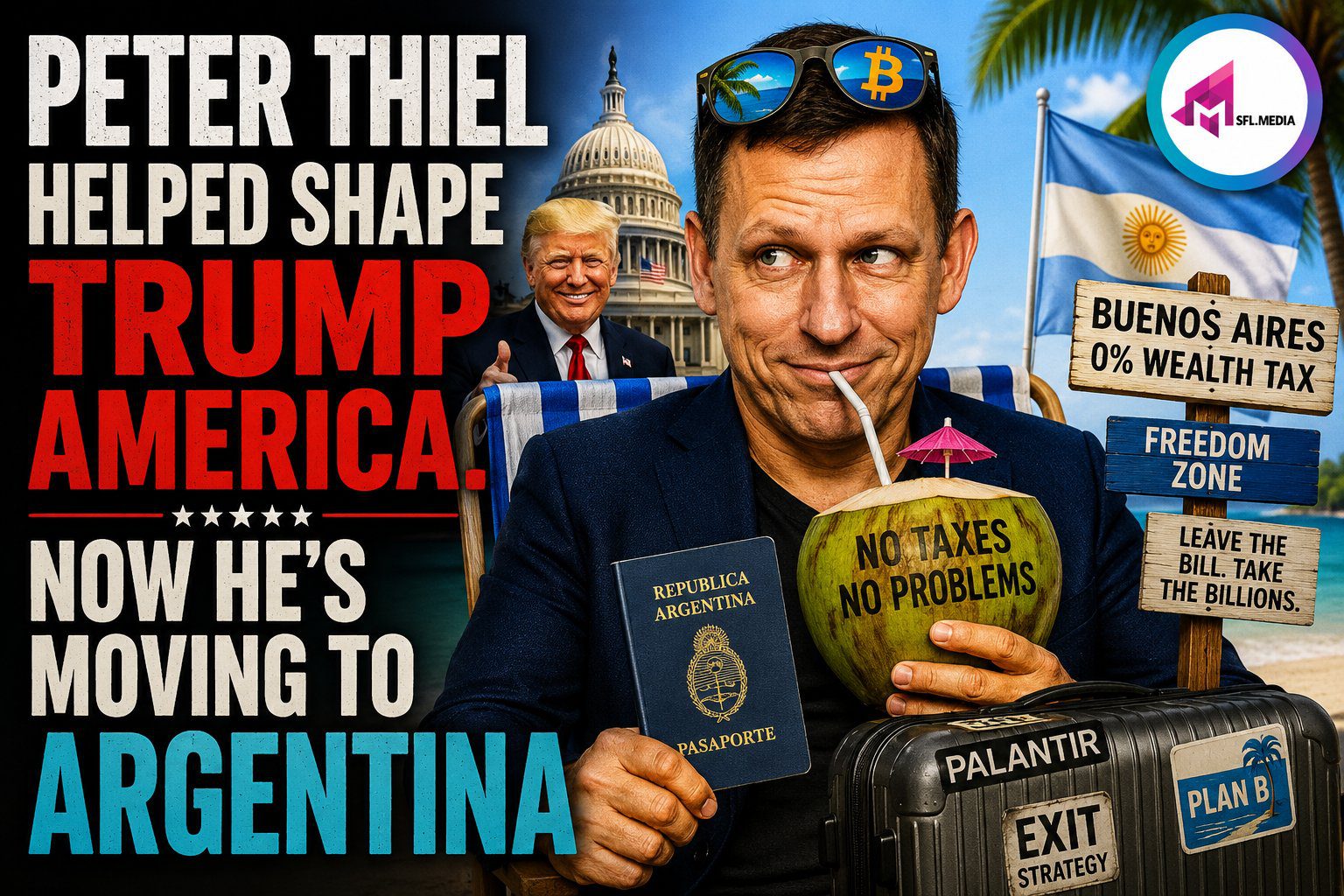
Now, as political tensions rise and wealth tax proposals gain traction in parts of the United States, Thiel has reportedly relocated much of his life to Argentina, fueling a broader debate about whether America’s billionaire class remains committed to the country that made their fortunes possible.
The move comes after years of Thiel exerting enormous influence over American politics, particularly within the Republican Party and the populist-right movement that has transformed Washington over the past decade.
The Billionaire Behind JD Vance
Long before JD Vance became Vice President of the United States, he was a venture capitalist backed by Peter Thiel. Thiel provided financial support for Vance’s investment firm and later became one of the largest donors to his successful 2022 Ohio Senate campaign. Political observers across both parties widely credit Thiel as one of the most important figures in Vance’s rise from author and venture capitalist to national political leader.
Thiel was also among the earliest and most prominent Silicon Valley figures to publicly support Donald Trump, speaking at the 2016 Republican National Convention when much of the technology industry remained hostile to Trump’s candidacy. Over the following years, Thiel’s influence expanded as a growing number of tech executives, venture capitalists, and entrepreneurs aligned themselves with a political movement he helped legitimize.
The Palantir Empire
At the center of Thiel’s influence sits Palantir Technologies, the data-analysis and artificial intelligence company he co-founded in 2003.
Palantir has become deeply embedded within the American national security apparatus, securing contracts with the Department of Defense, intelligence agencies, federal law enforcement organizations, and numerous allied governments around the world.
The company’s software has become increasingly important as military planners, intelligence officials, and government agencies incorporate artificial intelligence into decision making processes. Supporters argue Palantir provides critical national security tools that help protect the United States and its allies. Critics counter that the company represents a growing merger of private corporate power and government surveillance capabilities, creating unprecedented influence for a single technology firm. Either way, taxpayers helped fund a significant portion of Palantir’s growth through billions of dollars in government contracts.
A Philosophy Outside the Mainstream
Thiel’s political and philosophical views have long distinguished him from much of Silicon Valley. He has repeatedly argued that modern Western societies suffer from stagnation caused by excessive regulation, bureaucratic expansion, and declining willingness to embrace technological risk.
Drawing inspiration from philosopher René Girard, Thiel has warned that institutions promoting stability, regulation, and consensus can ultimately suppress innovation and human advancement. His critics see these arguments as justification for weakening democratic safeguards and environmental protections. His supporters view them as a necessary challenge to institutions they believe have become resistant to progress. Regardless of one’s perspective, Thiel’s worldview increasingly places him at odds with many of the political, academic, and regulatory institutions that dominate American public life.
Why Argentina?
Reports of Thiel’s move to Argentina have attracted attention because of the country’s increasingly libertarian political direction under President Javier Milei. Milei has built an international reputation by attacking taxes, reducing regulations, and advocating free-market economic reforms. Those positions closely align with many of Thiel’s long-held views on government and economic freedom.
The relocation has also reignited questions about the responsibilities of ultra wealthy Americans. Should billionaires who amassed fortunes through American markets, American infrastructure, American universities, and American government contracts maintain a deeper commitment to the country that enabled their success? Or should they be free to relocate wherever economic and political conditions best suit their interests? The question is unlikely to disappear.
The Billionaire Exit Problem
Peter Thiel is hardly the first wealthy American to seek opportunities abroad. What makes his situation unique is the scale of his influence. Few private citizens have played a larger role in shaping modern technology, financing political movements, influencing national security policy, and helping elevate future political leaders. That influence helped shape the America that exists today.
Now, as debates over wealth taxes, political polarization, artificial intelligence, and economic inequality intensify, one of the country’s most powerful billionaires appears to be positioning himself thousands of miles away from the consequences. Whether that move represents prudent financial planning or a troubling symbol of elite disengagement depends largely on one’s political perspective. But it highlights a growing reality in modern America: the people with the greatest ability to shape the country’s future often possess the greatest ability to leave it behind.












































Want to join the conversation?
Create an account or sign in to share your thoughts, vote,
and reply to other readers.
Showing 0 of 0 comments
Don't have an account?
Already have an account?