
How Will These Robots Help Patients and Staff?
Artificial intelligence continues making its way into nearly every industry, and now it has officially rolled into the halls of a Texas hospital. Odessa Regional Medical Center (ORMC) in Odessa, Texas, has begun deploying AI-powered service robots designed to assist nurses with many of the routine but time-consuming tasks that take them away from patient care.
While some headlines have referred to them as “robot nurses,” hospital officials are quick to point out that these machines are not replacing licensed nurses or providing direct medical treatment. Instead, they are functioning as robotic assistants, helping transport medications, laboratory specimens, medical supplies, and other essential items throughout the hospital 24 hours a day. The goal is simple: reduce the physical workload placed on nurses so they can spend more time at patients’ bedsides.
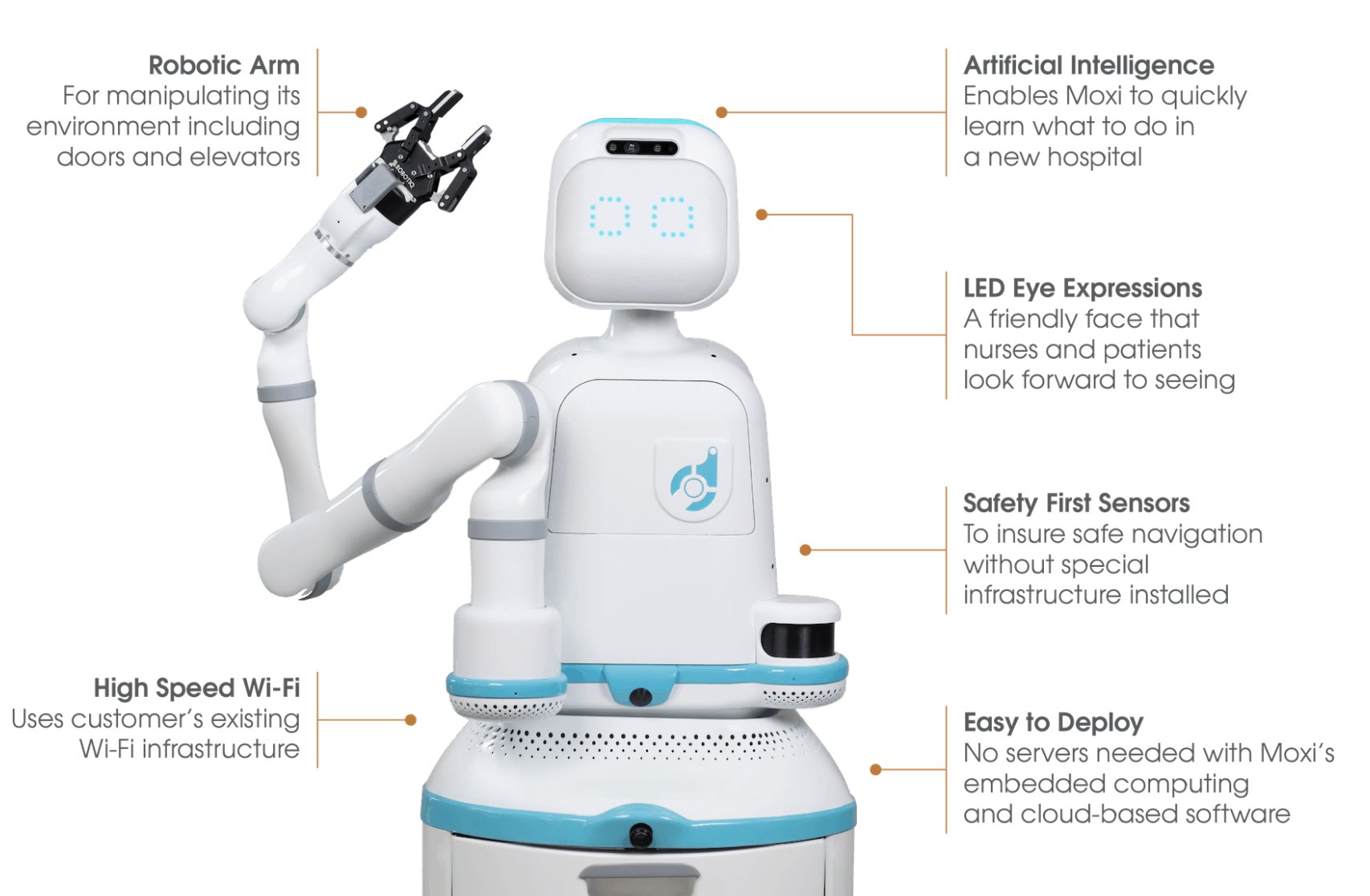
The robots being used are being called “Moxi”, designed by Diligent Robotics, a Texas-based company specializing in healthcare automation. Standing approximately five feet tall and weighing around 300 pounds, each Moxi is equipped with advanced sensors, cameras, and artificial intelligence software that allow it to navigate hospital hallways autonomously.
The robots can call elevators, avoid people and obstacles, and travel throughout the facility without human guidance. Using secure, locked drawers, they safely transport medications and sensitive materials between nursing stations, pharmacies, laboratories, emergency departments, and supply rooms. QR codes positioned throughout the hospital help the robots accurately identify locations and complete deliveries.
The Hospital Staff Loves the Robots
Odessa Regional Medical Center has deployed three of the robots, and hospital employees have already given them names inspired by the Nickelodeon cartoon The Fairly OddParents: Cosmo, Wanda, and Timmy. Staff members featured in the report described the robots as surprisingly personable despite being machines. Moxi even displays animated LED “heart eyes” when interacting with employees, adding a bit of personality to the technology and helping ease concerns that the robots might feel cold or intimidating.
According to Emergency Room Director Jami Brothers, staff have embraced the new additions with enthusiasm, noting that the robots had already been busy transporting lab specimens throughout the emergency department on their first day of operation.
Hospital executives emphasized that the robots are intended to solve a growing problem in modern healthcare: nurse burnout. Nurses often walk several miles during a single shift while retrieving medications, lab samples, and supplies. Every trip across the hospital means less time available for direct patient care. ORMC CEO Stacey Brown explained that even small improvements in efficiency can make a significant difference during a busy shift.
By assigning repetitive delivery tasks to robots, nurses can devote more attention to treating patients, communicating with families, administering medications, and handling critical clinical responsibilities instead of acting as couriers. As patient volumes continue to increase across the Permian Basin, hospital leadership believes these efficiency gains will become increasingly important.
They Strongly Insist That These Rots are NOT Here to Replace Nurses
One of the biggest concerns surrounding AI in healthcare is whether machines will eventually replace medical professionals. Hospital officials strongly rejected that notion. Staff repeatedly emphasized that the robots do not perform examinations, make diagnoses, administer medications directly to patients, or enter patient rooms. Their work is limited to non-patient-facing logistical support behind the scenes.
Jami Brothers addressed public concerns directly by saying that people often assume robots are coming for nurses’ jobs, but she argued the opposite is true. According to Brothers, Moxi simply makes nurses better at what they already do by eliminating unnecessary walking and repetitive errands, allowing caregivers to spend more meaningful time with patients.
The arrival of robotic assistants in Odessa is part of a broader trend taking place across American healthcare. Hospitals nationwide continue to struggle with staffing shortages, rising patient volumes, and burnout among healthcare workers. Companies like Diligent Robotics have spent years developing autonomous systems capable of handling routine hospital logistics without replacing clinical decision-making.
Similar Moxi robots have already been deployed in hospitals across Texas and several other states, with studies suggesting they help reduce nurse fatigue while improving workflow efficiency. Researchers and healthcare leaders increasingly view collaborative robots as support tools rather than replacements, allowing highly trained medical professionals to focus on the tasks that require human judgment, empathy, and expertise.
*****Editor’s Note*****
As artificial intelligence continues expanding into healthcare, Odessa Regional Medical Center offers a glimpse into what many hospitals may look like in the coming years. Instead of replacing doctors and nurses, AI-powered robots like Moxi appear poised to become another member of the healthcare team, quietly handling deliveries behind the scenes while human caregivers remain focused on what matters most: caring for patients.
Whether this technology becomes commonplace across the country remains to be seen, but for now, the hallways of one Texas hospital have become home to a new kind of coworker that never gets tired, never needs a lunch break, and is always ready for the next delivery.



















































Want to join the conversation?
Create an account or sign in to share your thoughts, vote,
and reply to other readers.
Showing 0 of 0 comments
Don't have an account?
Already have an account?