
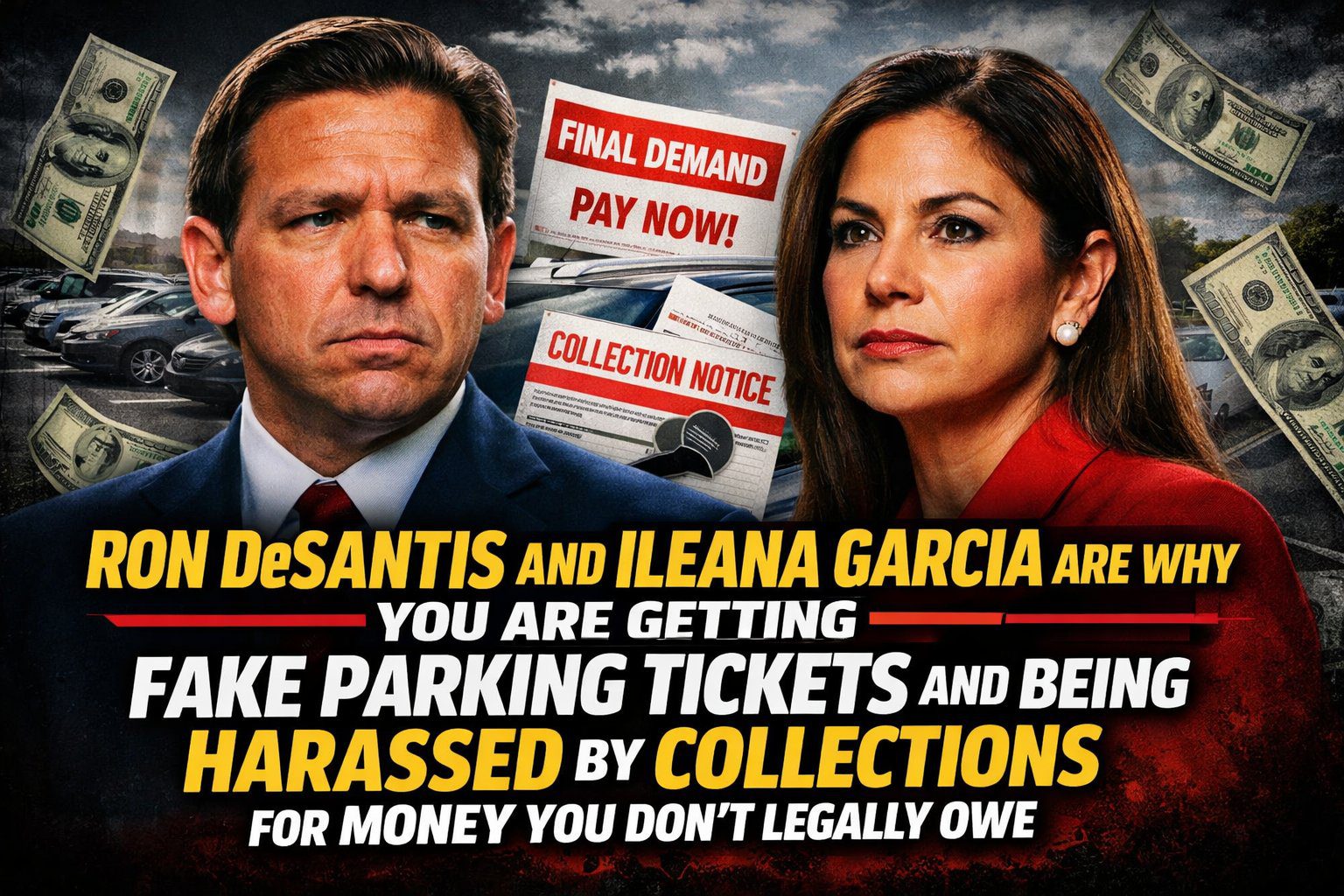
Florida Legalized “Private Parking Tickets” Ileana Garcia Backed the Law That Blocked Cities Like Fort Lauderdale From Protecting Locals
“What used to be called predatory is now protected by law, thanks to Ron DeSantis and Ileana Garcia, Florida politicians who put corporations above the people they represent.” – Patrick Zarrelli
Across South Florida, drivers are opening their mail to find what look like official parking tickets, complete with photos, deadlines, and threats of collections. They read like citations. They feel like citations. But they’re not issued by police. They’re issued by private companies. And as of 2024, Florida law explicitly allows it, while blocking cities from doing anything about it.
A Law That Overrode Local Control
In July 2024, a sweeping change took effect under Florida Statute 715.075, created through Senate Bill 388 and House Bill 271. The legislation was championed by Ileana Garcia and signed into law by Ron DeSantis. On paper, the law was pitched as a “consumer protection” measure, standardizing signage, requiring a 15-minute grace period, and mandating an appeals process. But buried inside it is the provision that matters most:
Cities and counties “may not restrict or prohibit” private parking enforcement.
That single clause wiped out years of local efforts in places like Fort Lauderdale, Miami, and West Palm Beach, where officials had already moved to rein in what they viewed as abusive practices. Before this law, South Florida municipalities were actively trying to protect residents from misleading “ticket-like” notices and aggressive collection tactics. After it, they were legally sidelined.
A Parallel System That Looks Like Law, But Isn’t
The result is a two track enforcement system that most drivers don’t fully understand.
Public parking tickets, issued by city officials or police, are backed by law, processed through courts, and tied to your license or registration. Private parking “invoices,” by contrast, operate under contract law. The argument is simple: you parked on private property, you agreed to posted terms, and if you violated them, you owe a fee. The truth is though, you don’t owe them anything at all and there is nothing they can do about it.
But the execution is where controversy really explodes.
These notices are often designed to resemble official citations, down to formatting, language, and tone, creating intended confusion that critics say is intentional.
The law now allows companies to:
- Capture your license plate
- Obtain your mailing address
- Send a demand for payment
- Escalate non-payment to collections
And while the law requires disclaimers stating the notice is not a government citation, critics argue the overall presentation still blurs that line in practice. No matter how you frame it, this is an unethical practice that should be illegal, and those involved should be held accountable.
Collections Without Courtrooms
The most aggressive pressure point isn’t the initial notice, it’s what comes after. Private parking operators can refer unpaid invoices to abusive collections agencies. While they cannot suspend your license or issue criminal penalties, they can repeatedly pursue payment and attempt to collect the debt like any other private obligation.
For many residents, the experience feels less like a dispute and more like financial intimidation, without the procedural safeguards of the court system.
There is an appeals process, but it is administered internally by the same company issuing the charge, a setup that raises obvious questions about neutrality.
South Florida Became Ground Zero
Long before the state stepped in, South Florida was already dealing with the fallout. Local governments in Miami-Dade and Broward had begun responding to a surge in complaints tied to private parking enforcement companies. Lawsuits were filed. Consumer advocates raised alarms. Municipalities attempted to restrict practices that were widely viewed as misleading or excessive.
Then the state intervened, not to strengthen local protections, but to override them. Lawmakers including Ron DeSantis and Ileana Garcia stepped in, dismantling safeguards cities like Fort Lauderdale had already put in place and replacing them with a statewide system that protects private enforcement. To critics, it’s a clear example of government siding with corporate interests over the people it was elected to serve.
The 2024 law effectively told cities:
You don’t get to regulate this anymore.
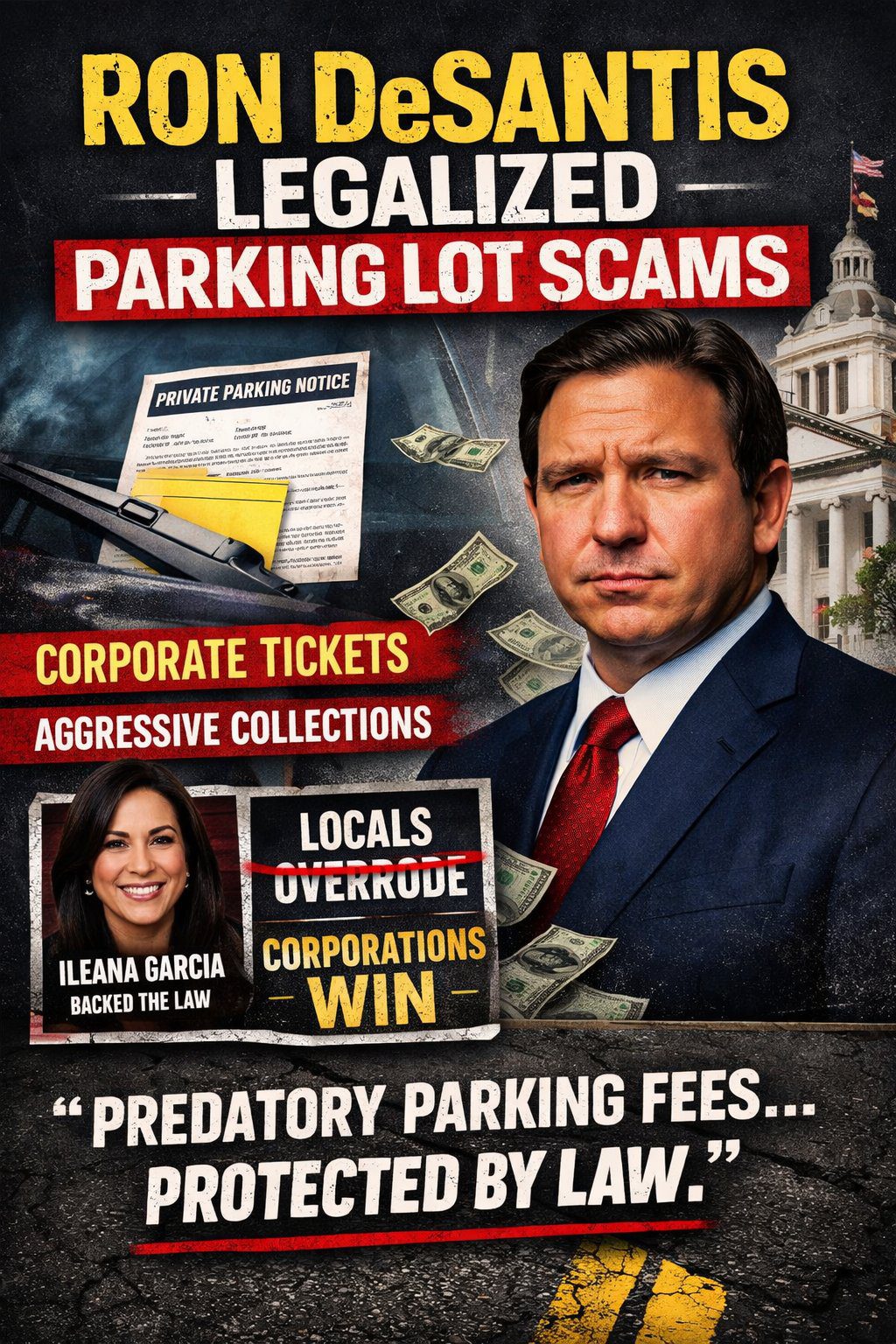
The Politics Behind the Decision
Supporters of the law argued that property owners have a fundamental right to manage and enforce rules on their land. They framed the legislation as a way to bring consistency to a fragmented system and to add baseline consumer protections. But the outcome tells a different story.
The law didn’t eliminate controversial practices, it legitimized them and shielded them from local oversight.
And that’s where the political scrutiny lands squarely on lawmakers like Ileana Garcia, who sponsored the bill. Critics argue that the legislation moved forward despite clear evidence of public backlash and documented complaints. Government analyses themselves acknowledged concerns about confusing fees and the potential for abuse in private parking enforcement systems.
Governor Ron DeSantis Signed The Bill Knowing Everyone in Florida Hates It
When the bill landed on Ron DeSantis’s desk, the warning signs weren’t subtle, they were already playing out across South Florida. Cities like Miami and Fort Lauderdale had moved to rein in private parking operators after a surge of complaints about citation style notices, aggressive billing tactics, and collection threats that many residents said felt indistinguishable from government enforcement. DeSantis signed the legislation anyway, in April 2024, locking those practices into state law and stripping local governments of the ability to stop them. In doing so, he didn’t just approve a regulatory framework, he overrode communities that had already identified the problem firsthand. The result is a system where private companies can pursue drivers for payment with minimal oversight, while the cities dealing with the fallout are legally barred from stepping in.
A Growing Public Trust Problem
At its core, this issue isn’t just about parking, it’s about trust. When residents can no longer easily distinguish between a government issued citation and a corporate demand for payment, the integrity of enforcement itself begins to erode.
A city cannot function cleanly when enforcement authority is blurred between public law and private profit.
In Fort Lauderdale, a city built on tourism, mobility, and dense urban activity, that confusion has real consequences. Visitors don’t know what’s legitimate. Residents don’t know what they’re obligated to pay. And local officials don’t have the authority to step in.
Florida made a deliberate policy choice: protect private enforcement and remove local control.
It did so under the banner of standardization and consumer protection. But on the ground, many residents see something else entirely: A system where corporations can issue citation style notices, demand payment, and pursue collections, all without the transparency, neutrality, or accountability expected from actual law enforcement. That tension isn’t going away. And as more drivers encounter these notices, the political consequences may only be beginning.
Sources
Florida Legislature — Parking on Private Property (Statute 715.075)
https://www.flsenate.gov/Laws/Statutes/2024/0715.075
Florida Senate Bill 388 (2024)
https://www.flsenate.gov/Session/Bill/2024/388
Florida House Bill 271 (2024)
https://www.flhouse.gov/Sections/Bills/billsdetail.aspx?BillId=78981
Florida Politics — DeSantis Signs Private Parking Bill
https://floridapolitics.com/archives/668379-gov-desantis-signs-bill-setting-consumer-protection-rules-for-private-parking-facilities/
Miami-Dade Legislative Analysis on Private Parking
https://www.miamidade.gov/govaction/legistarfiles/Matters/Y2025/250478.pdf
Local 10 News — Lawsuits Against Private Parking Enforcement
https://www.local10.com/news/local/2022/05/04/consumer-protection-professional-parking-management-faces-another-lawsuit/

















































Want to join the conversation?
Create an account or sign in to share your thoughts, vote,
and reply to other readers.
Showing 0 of 0 comments
Don't have an account?
Already have an account?