
Tiger Woods Arrested in Jupiter Island After DUI Crash With No Alcohol Detected
JUPITER ISLAND, Fla. — Tiger Woods was arrested Friday afternoon on a DUI charge after crashing his vehicle on Beach Road, with authorities alleging impairment despite a breath test showing no alcohol in his system. According to the Martin County Sheriff’s Office, the crash occurred shortly after 2 p.m. on March 27 in the 200 block of Beach Road in Jupiter Island, a residential coastal roadway located just miles from Woods’ home.
Crash on Beach Road Leads to Arrest
Investigators say Woods was driving a Land Rover northbound when he attempted to pass a truck towing a trailer. During the maneuver, his vehicle struck the rear of the truck, causing the SUV to slide a considerable distance before coming to a stop. Authorities confirmed that neither Woods nor the other driver sustained injuries. Woods was taken into custody at the scene.
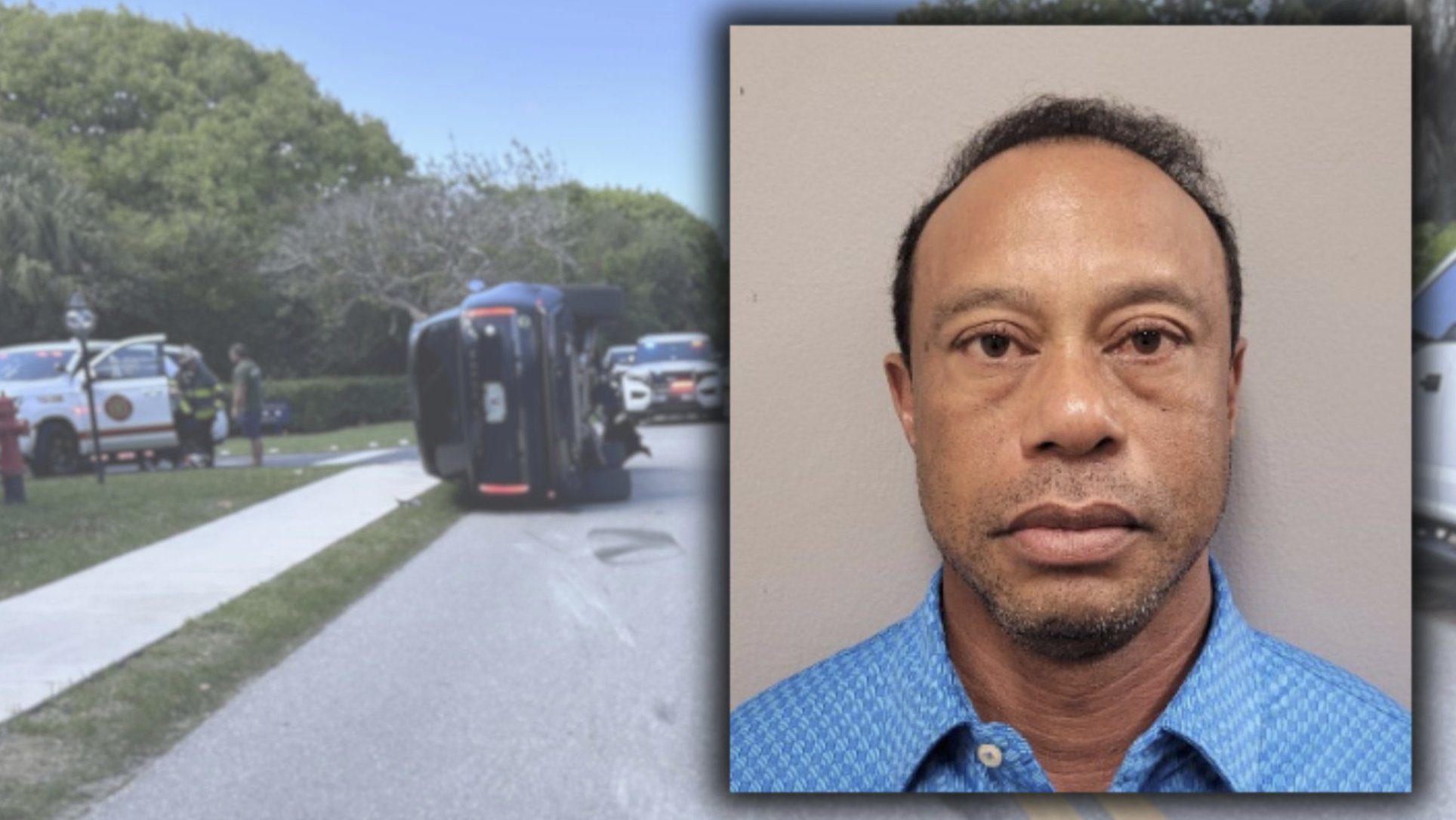
Breathalyzer 0.00, Deputies Still Cite Impairment
A breathalyzer test administered by deputies registered 0.00, ruling out alcohol. However, law enforcement officials said Woods displayed signs of impairment. A Drug Recognition Expert on scene determined the condition was consistent with the influence of medication or another substance. Woods declined to submit to a urine test, which under Florida law constitutes a separate offense. He was subsequently charged with driving under the influence, property damage, and refusal to submit to a lawful test. Sheriff John Budensiek said no drugs or medication were recovered at the scene, but emphasized that impairment can be established through officer observation and field evaluation. Woods was booked into the Martin County Jail and is expected to be held for a mandatory period before release.
A Familiar Pattern Resurfaces
The incident places Woods back into a familiar and increasingly concerning narrative that has followed him for more than a decade. In 2017, he was arrested less than 10 miles away in Jupiter after being found asleep behind the wheel; a toxicology report later revealed a mix of prescription drugs, including painkillers and sleep aids. In 2021, he survived a high-speed rollover crash in California that left him with severe leg injuries, though no toxicology testing was conducted at the time. His 2009 crash outside his Florida home, while less severe legally, marked the beginning of a period of personal and professional unraveling.
“This could have been a lot worse.” — Sheriff John Budensiek
A Case Built Without Toxicology, For Now
What separates this case from a typical DUI arrest is not just Woods’ name, but the nature of the impairment allegation. There was no alcohol involved, no drugs recovered at the scene, and no toxicology confirmation — at least not yet. Instead, the case hinges on observed behavior, field evaluations, and Woods’ refusal to submit to further testing. Under Florida law, that refusal carries its own consequences, including potential jail time and an automatic license suspension, but it also leaves a critical gap in public understanding of what exactly led to the impairment determination.
South Florida’s Broader DUI Reality
For a region like South Florida, where drug related DUI cases have become increasingly common, this incident underscores a broader shift in enforcement. Alcohol is no longer the sole focus; impairment in any form is enough to trigger arrest and prosecution. Law enforcement agencies have leaned more heavily on Drug Recognition Experts in recent years, particularly in cases involving prescription medications or substances that do not register on a breath test.
What Comes Next for Woods
Woods, now 50, had recently been working toward a return to competitive golf following multiple surgeries, including procedures on his back and Achilles tendon. Whether that comeback remains viable now is uncertain, but the legal process ahead will likely take precedence. A conviction could carry fines, jail time, and further damage to a legacy that has already been repeatedly tested by off-course issues. For now, the facts remain tightly defined by what happened on a short stretch of road in Jupiter Island: a high-speed pass, a collision, and an arrest built not on alcohol, but on suspected impairment without a confirmed substance. The investigation remains ongoing, and the outcome will ultimately depend on how prosecutors, and potentially a jury, interpret the evidence that follows. What is clear is that Woods walked away from another crash without injury. In South Florida, that alone is often the difference between a headline and a tragedy.





































































Want to join the conversation?
Create an account or sign in to share your thoughts, vote,
and reply to other readers.
Showing 0 of 0 comments
Don't have an account?
Already have an account?