
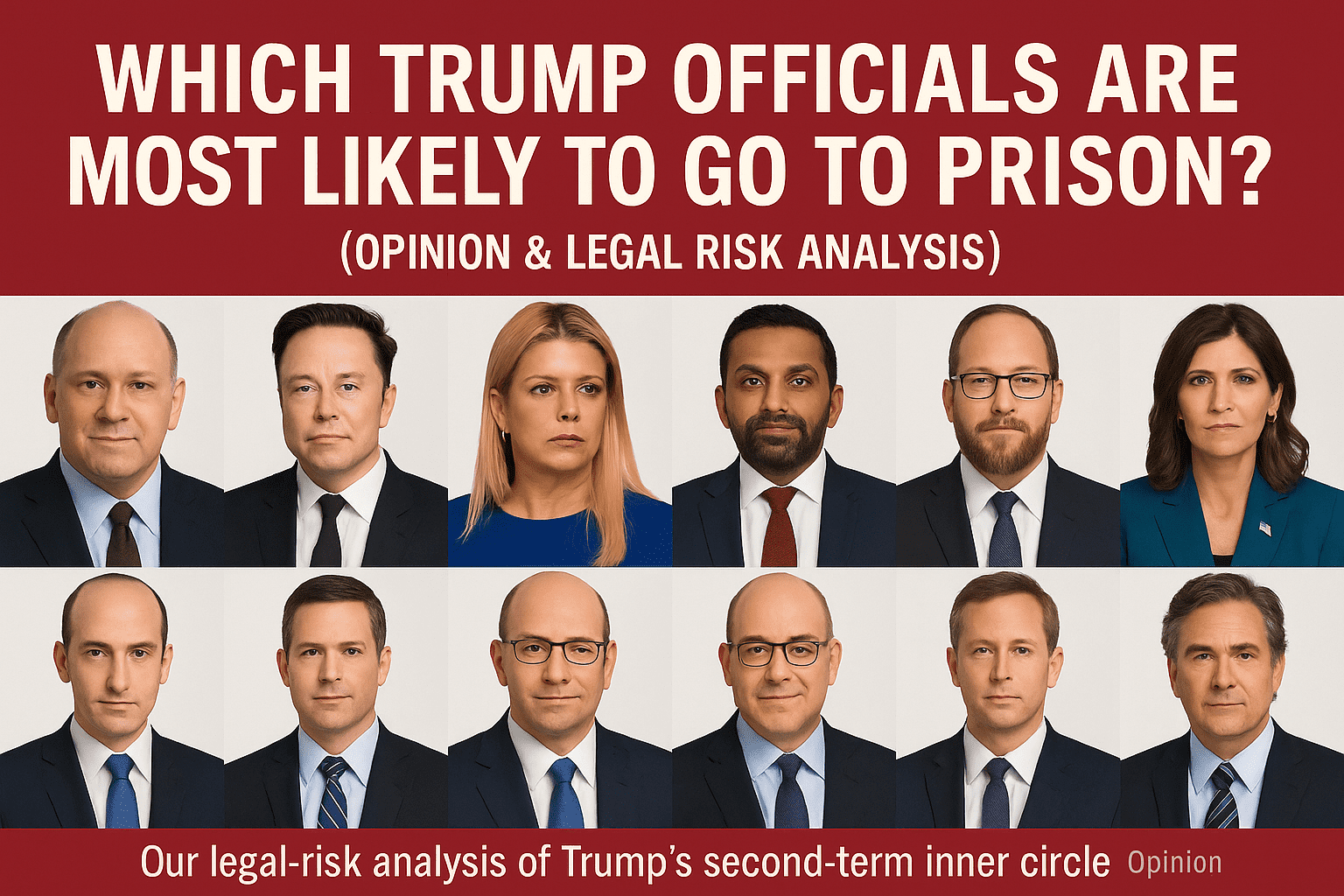
Trump Officials Most Likely To Go To Prison
A Government of Loyalists, Grifters, and Walking Indictments — Accountability Is Unavoidable
America didn’t enter Trump’s second term healthy. It entered wounded, climate crisis accelerating, democratic institutions scarred, and national cohesion cracking. Instead of stabilizing the nation, Trump stacked his administration with loyalists, extremists, disgraced ex-operatives, and opportunists who treated federal power like a private fiefdom. What followed wasn’t governance. It was pillage. It was retaliation. It was corruption masquerading as policy.
“This isn’t an administration, it’s a protection racket wrapped in a federal budget.”
Below is the real ranking powered by AI, this is a list of most legally exposed figures in Trump’s second-term government, ordered by how likely they are to face prosecution or civil enforcement once the political shield drops. Every name here is backed by real reporting, real lawsuits, real internal documents, and real abuse of public power. This is the Prosecution Index of Trump 2.0.
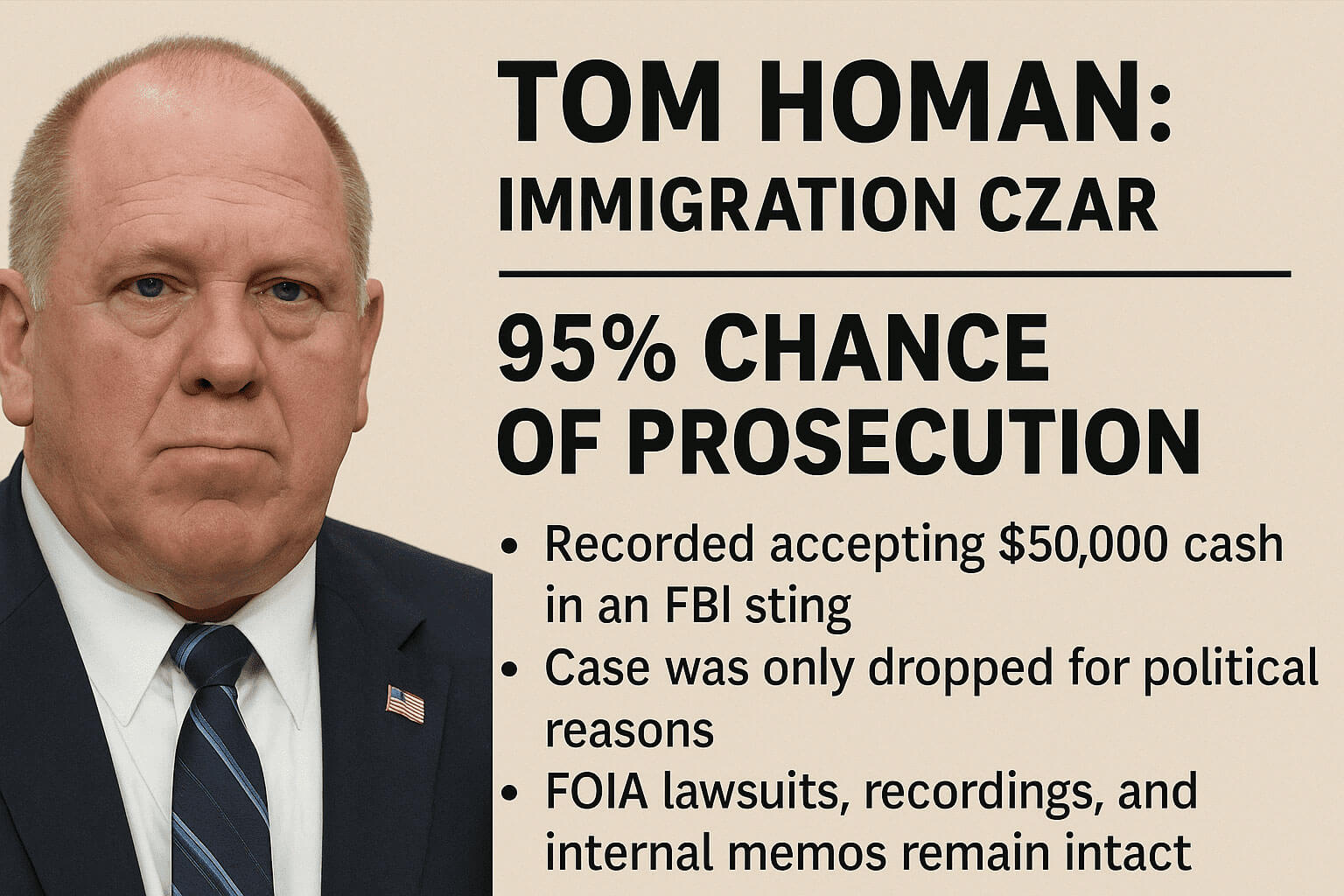
1. Tom Homan: Immigration Czar
95% Chance of Prosecution
Most Likely to Face Prosecution
Homan stands out as the administration’s most radioactive official, legally speaking. He wasn’t merely controversial, he was caught. An undercover FBI sting recorded him accepting $50,000 in cash from agents posing as businessmen seeking immigration contracts under a future Trump administration. Biden’s DOJ opened the public-corruption case. Trump’s DOJ killed it the second he retook power. But cases don’t disappear when recordings exist. FOIA suits, Senate letters, and watchdog demands have preserved every scrap. Homan is a bribery case waiting for sunlight.
Prosecution-Likelihood Bullet Points:
• Recorded accepting $50,000 cash in an FBI corruption sting.
• Case was only dropped for political reasons, not evidentiary ones.
• FOIA lawsuits, recordings, and internal memos remain intact.
• Easiest to prosecute immediately once DOJ independence returns.
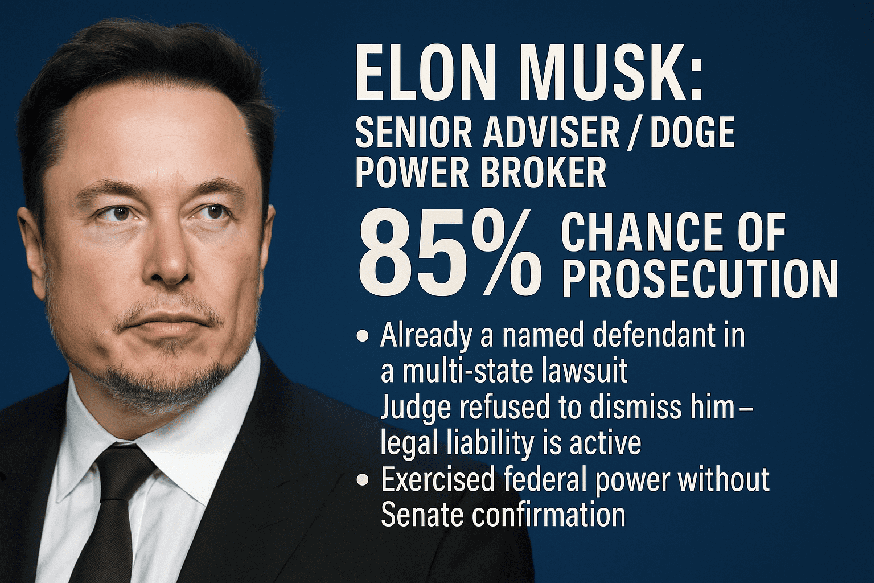
2. Elon Musk: Senior Adviser / DOGE Power Broker
85% Chance of Prosecution
Musk didn’t just advise Trump, he helped design and turbocharge the Department of Government Efficiency (DOGE), the radical agency behind federal purges, ideological loyalty screening, and data grabs from civilian agencies. Fourteen states have already sued DOGE and Musk for unconstitutional actions. A federal judge refused to dismiss him. Operating without Senate confirmation while directing the dismantling of federal protections turns Musk into the rare official who is already under active legal fire during the administration itself.
Prosecution-Likelihood Bullet Points:
• Already a named defendant in a multi-state constitutional lawsuit.
• Judge refused to dismiss him and legal liability is active, not theoretical.
• Exercised federal power without Senate confirmation.
• Central figure in unconstitutional firings, data theft, and agency hijacking.
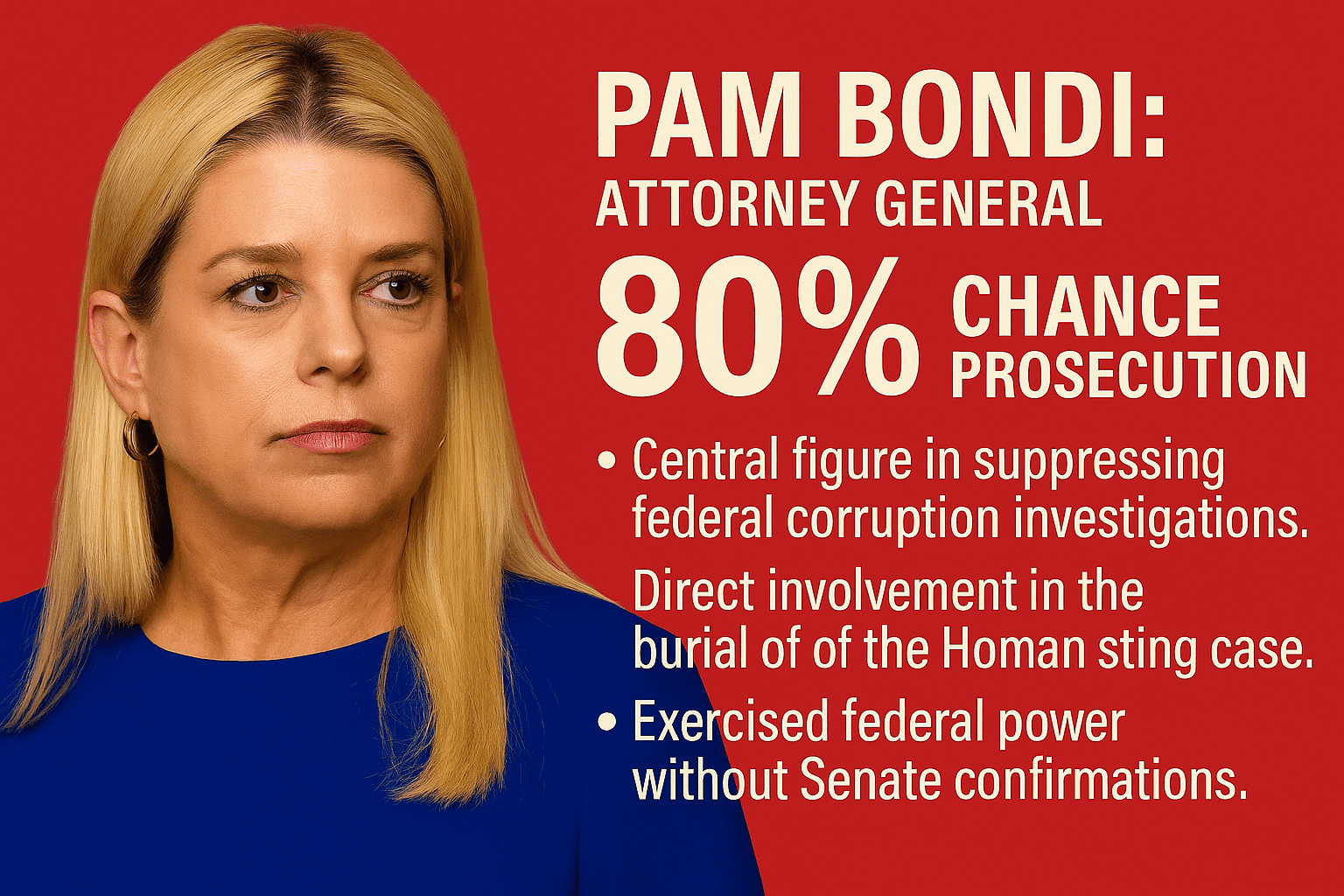
3. Pam Bondi: Attorney General
80% Chance of Prosecution
Bondi transformed DOJ into Trump’s personal legal defense team. She blocked corruption probes, redirected federal prosecutors toward Trump’s political enemies, and refused to answer Congress about why she shut down the Homan bribery case. Bondi didn’t inherit a corrupted system, she engineered one, weaponizing the rule of law and leaving behind a perfect trail of memos, refusals, and reversals ripe for future investigators.
Prosecution-Likelihood Bullet Points:
• Central figure in suppressing federal corruption investigations.
• Direct involvement in the burial of the Homan sting case.
• Multiple conflicts of interest and politically biased interventions.
• High likelihood of future obstruction of justice investigations.
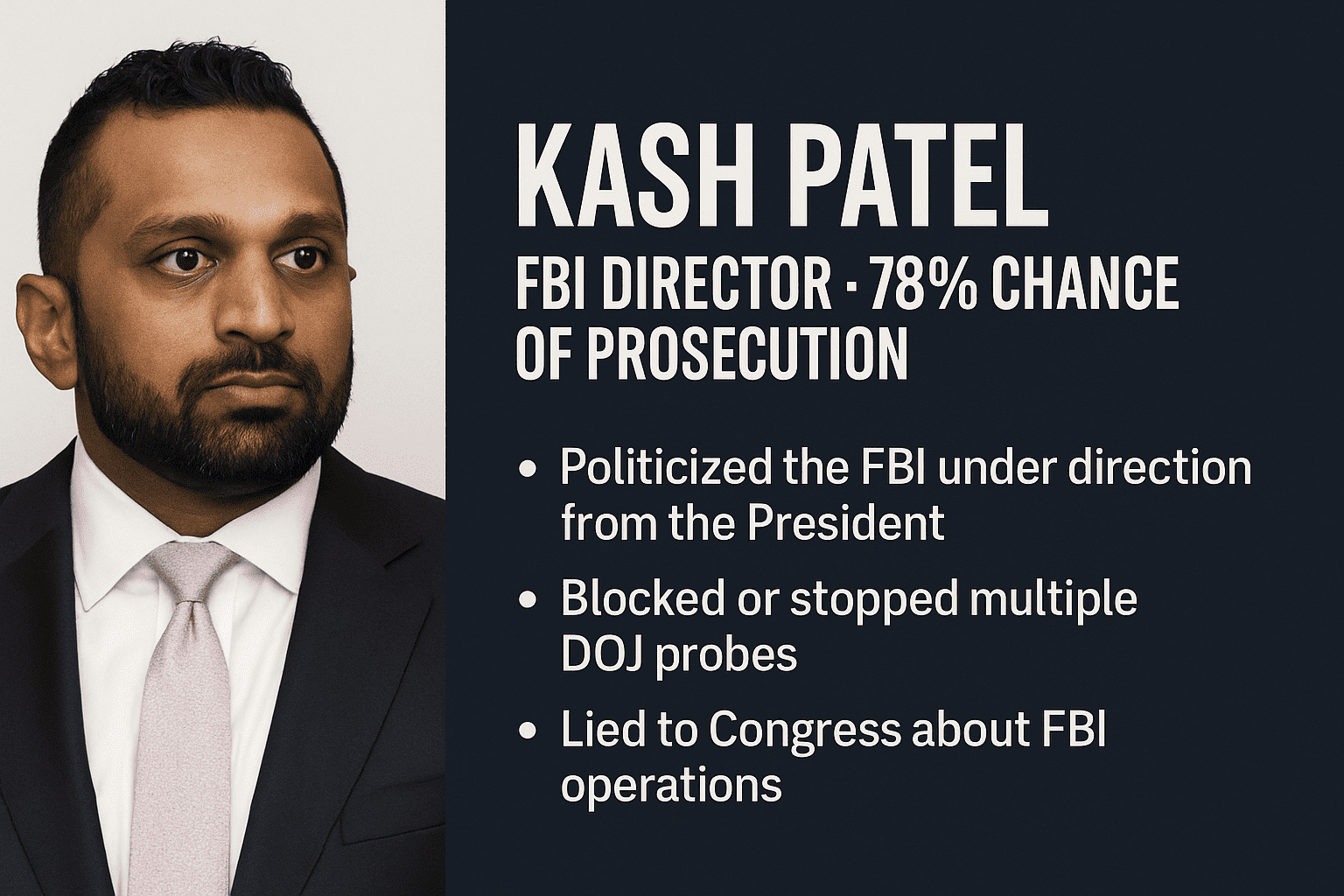
4. Kash Patel: FBI Director
78% Chance of Prosecution
Patel purged the FBI of career officials, installed ideological loyalists, sidelined corruption cases, and aggressively retaliated against staff who worked on Trump-related investigations. His tenure has already triggered civil lawsuits from former FBI officials alleging political retaliation and unlawful terminations. His fingerprints sit on every disabled public-integrity case, all potential evidence of obstruction. He even lied under oath to cover up the Epstein files.
Prosecution-Likelihood Bullet Points:
- Lied under oath about Epstein Files.
- Defendant in civil litigation over retaliatory firings.
- Implemented loyalty tests inside the FBI.
- Shut down or stifled politically sensitive investigations.
- Strong exposure to civil-rights violations and obstruction probes.
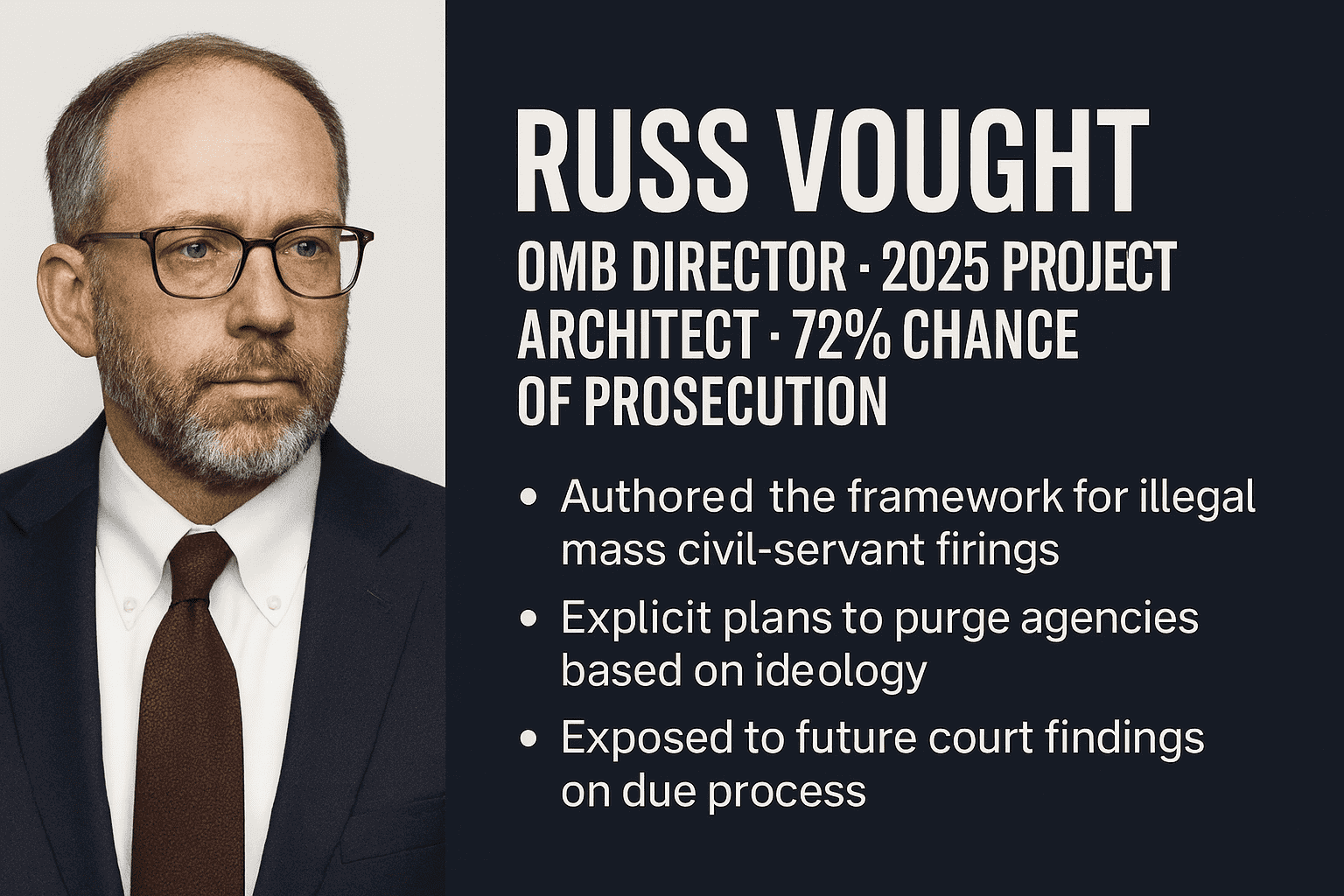
5. Russ Vought: OMB Director / Project 2025 Architect
72% Chance of Prosecution
Vought is the strategic brain behind the second-term purge state. He drafted the architecture for firing tens of thousands of federal workers, politicizing the civil service, and embedding ideological tests into government employment. His memos and directives are explicit, and legally questionable. If mass terminations end up violating civil-rights law, whistleblower protections, or constitutional requirements, Vought becomes the mastermind on the hook.
Prosecution-Likelihood Bullet Points:
• Authored the framework for illegal mass civil-service firings.
• Explicit written plans to purge agencies based on ideology.
• Exposed to future court findings on due process and Title VII violations.
• Every fired employee becomes a potential plaintiff.
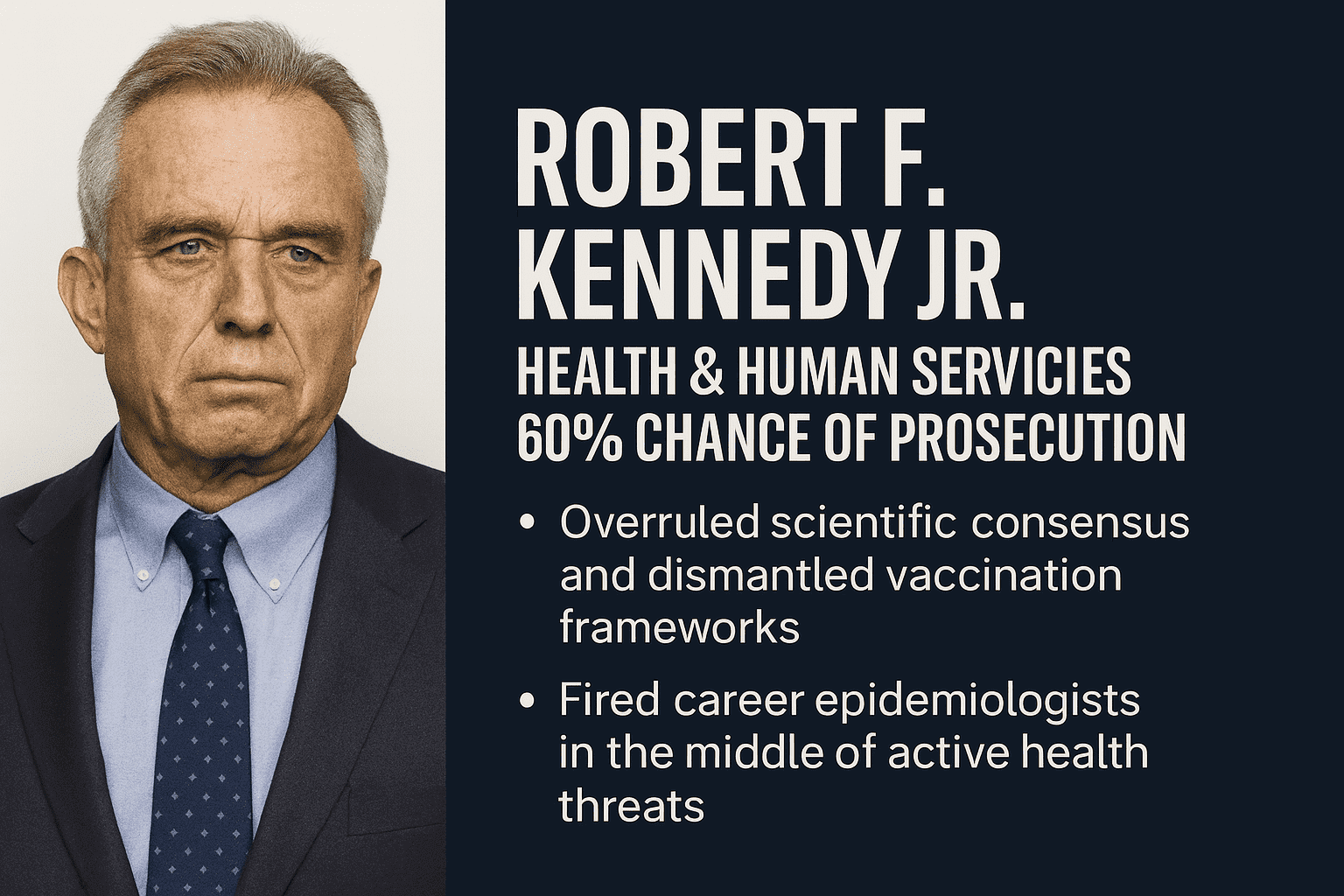
6. Robert F. Kennedy Jr.: Health & Human Services
60% Chance of Prosecution
RFK Jr. entered office over the objections of Nobel laureates and top medical officials. He fired CDC leadership, dismantled vaccine advisory structures, and imposed ideological controls over public-health science. If avoidable deaths, outbreaks, or suppressed scientific guidance can be traced to his directives, he becomes legally exposed for negligence, mismanagement, and abuse of scientific authority.
Prosecution-Likelihood Bullet Points:
• Overruled scientific consensus and dismantled vaccine frameworks.
• Fired career epidemiologists in the middle of active health threats.
• High negligence and wrongful-death exposure if outbreaks worsen.
• Medical community already warned his policies would “cause harm.”
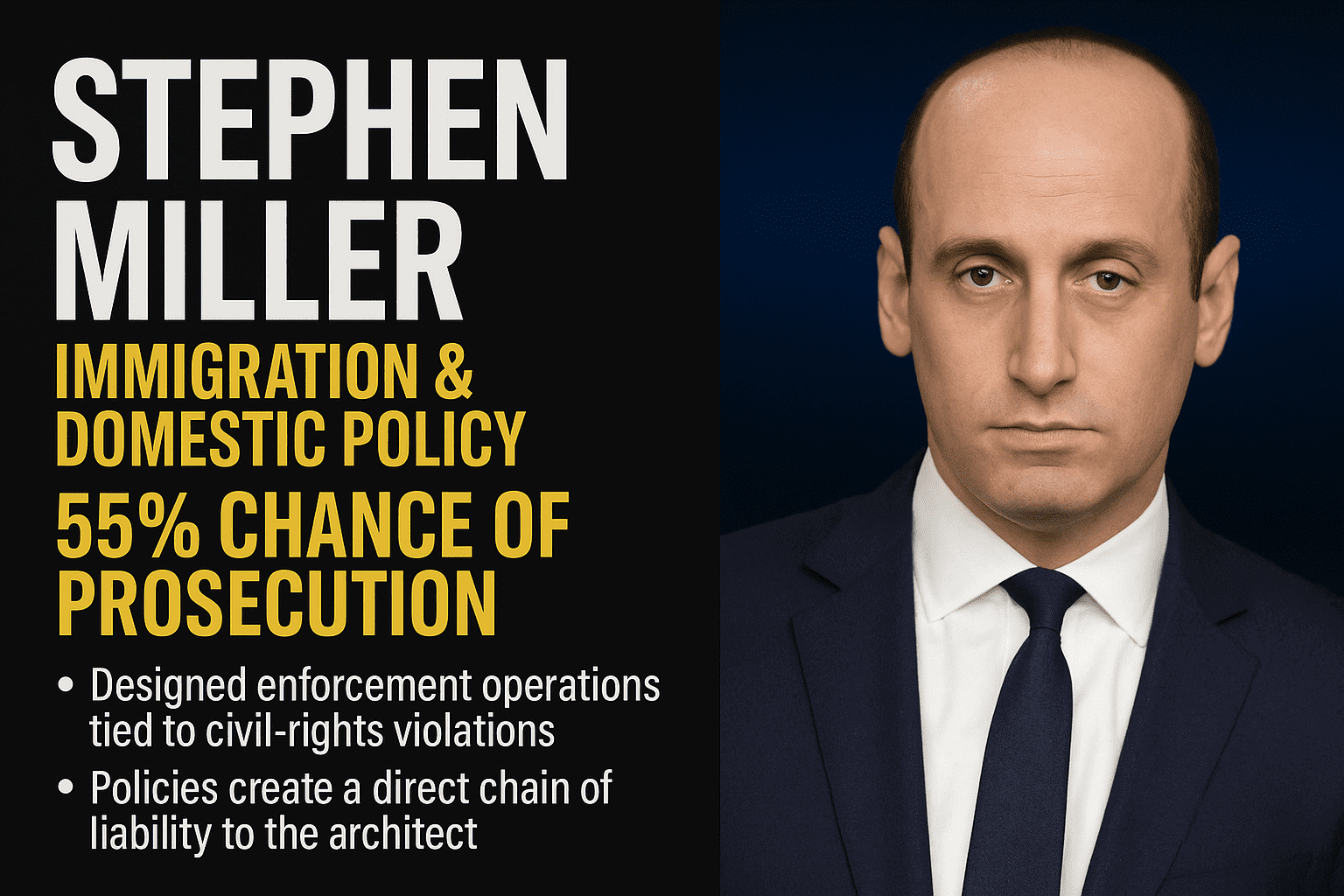
7. Stephen Miller: Immigration & Domestic Policy
55% Chance of Prosecution
Miller is the ideological engine of Trump’s harshest domestic policies, mass workplace raids, expanded detentions, and attempts to deploy military units in immigration operations. He is the architect behind programs that create direct legal exposure: wrongful detentions, rights violations, and due-process failures.
Prosecution-Likelihood Bullet Points:
• Designed enforcement operations tied to civil-rights violations.
• Policies create a direct chain of liability to the architect.
• Large future exposure from wrongful detention lawsuits.
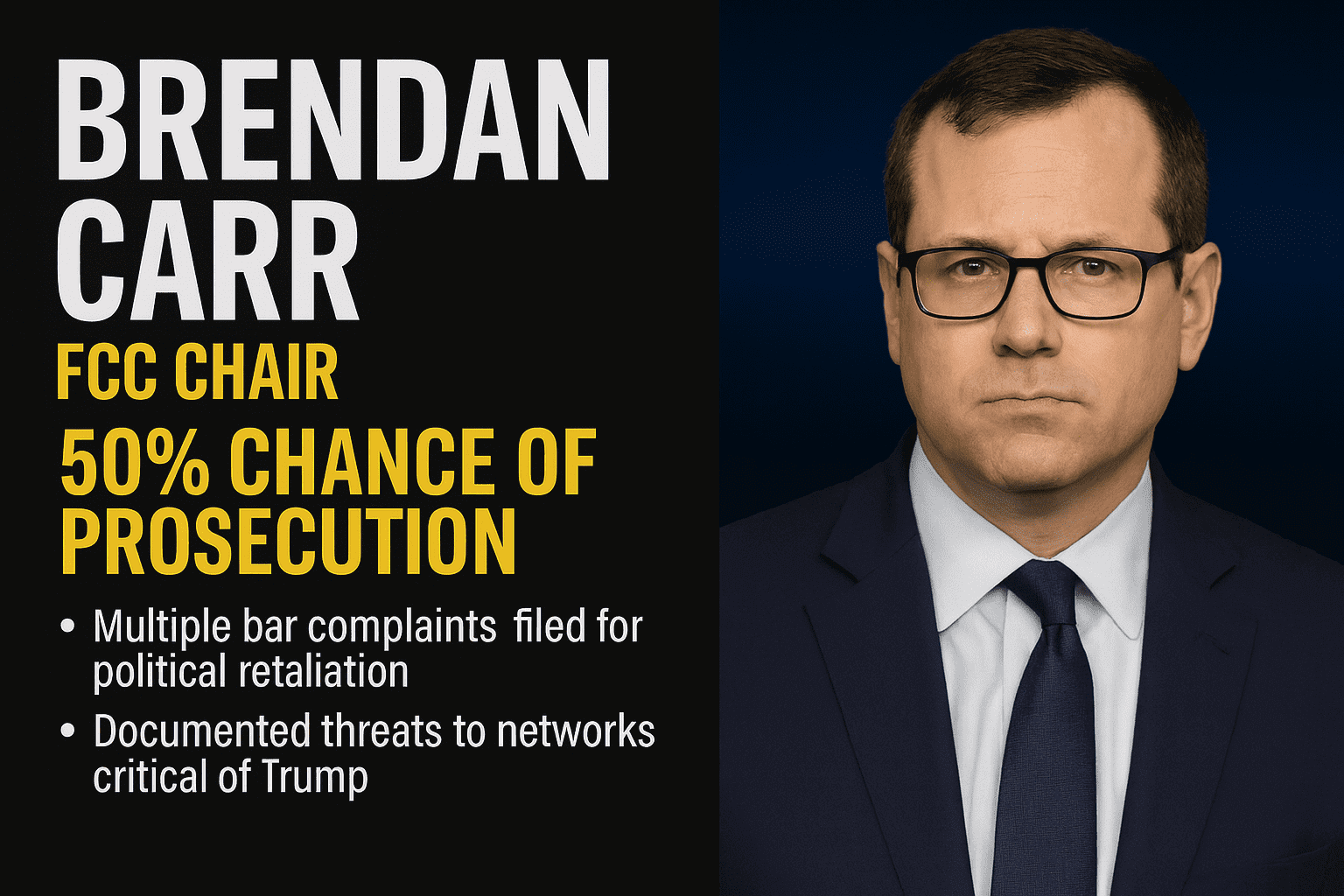
8. Brendan Carr: FCC Chair
50% Chance of Prosecution
Carr turned the FCC into a political weapon, threatening broadcasters over coverage critical of Trump, pressuring networks, and intertwining regulatory approvals with Trump’s personal media grievances. Multiple bar complaints already outline clear allegations of abusing federal licensing authority for political retaliation.
Prosecution-Likelihood Bullet Points:
• Multiple bar complaints filed for political retaliation.
• Documented threats to networks critical of Trump.
• Potential First Amendment and IG investigation exposure.
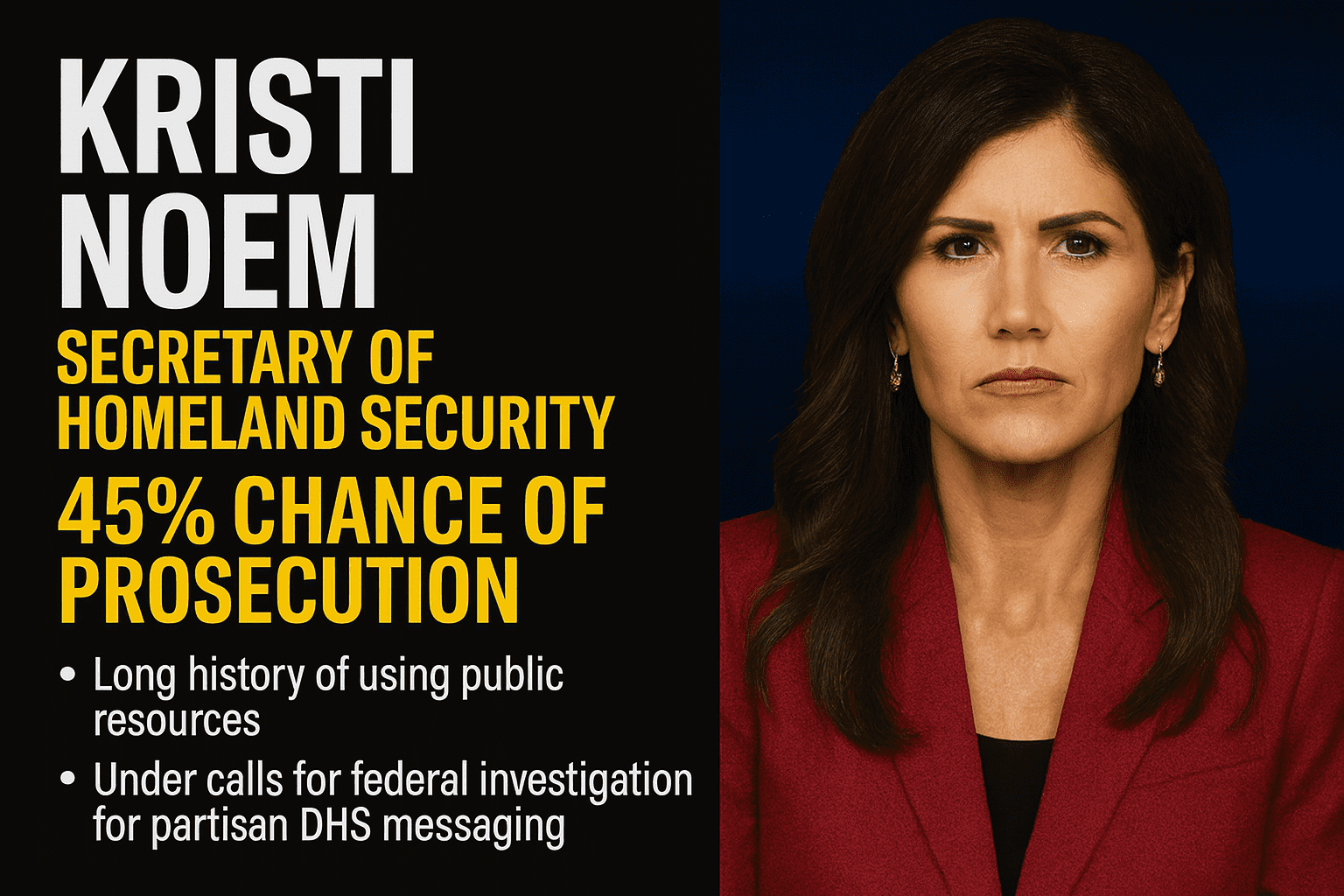
9. Kristi Noem: Secretary of Homeland Security
45% Chance of Prosecution
Noem’s misuse of government resources started in South Dakota and metastasized at DHS. She used TSA security lanes for partisan messaging, mixed taxpayer resources with political travel, and triggered lawsuits and ethics reviews. Her exposure is more administrative than criminal, but it is significant.
Prosecution-Likelihood Bullet Points:
• Long history of misusing public funds.
• Under calls for federal investigation for partisan DHS messaging.
• Likely to face ethics, IG, and administrative sanctions.
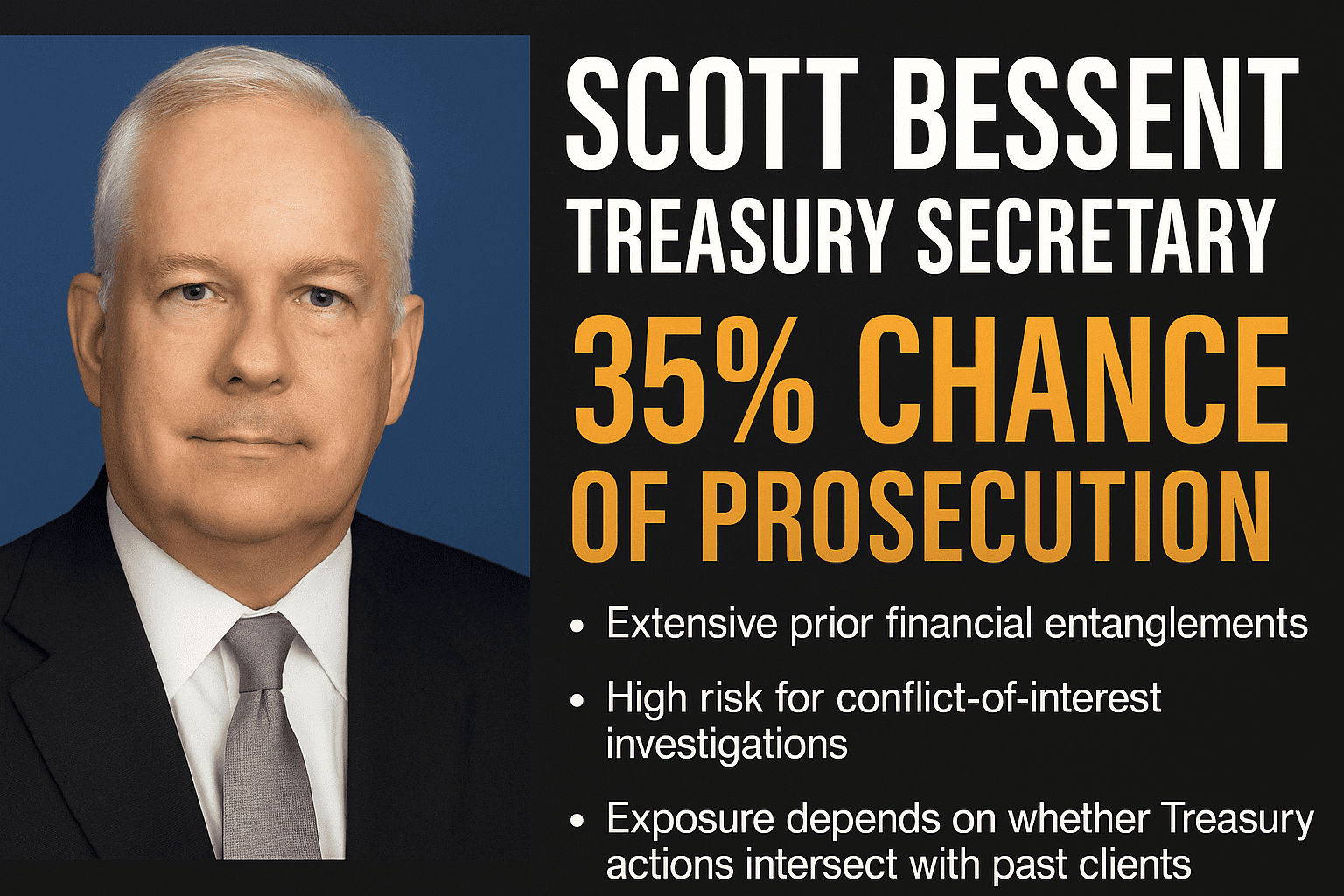
10. Scott Bessent: Treasury Secretary
35% Chance of Prosecution
Bessent brings a hedge-fund background soaked in potential conflicts, Chinese currency vehicles, crypto investments, and private funds with direct sensitivity to Treasury actions. His risk is classic financial oversight and regulatory capture.
Prosecution-Likelihood Bullet Points:
• Extensive prior financial entanglements.
• High risk for conflict-of-interest investigations.
• Exposure depends on whether Treasury actions intersect with past clients.
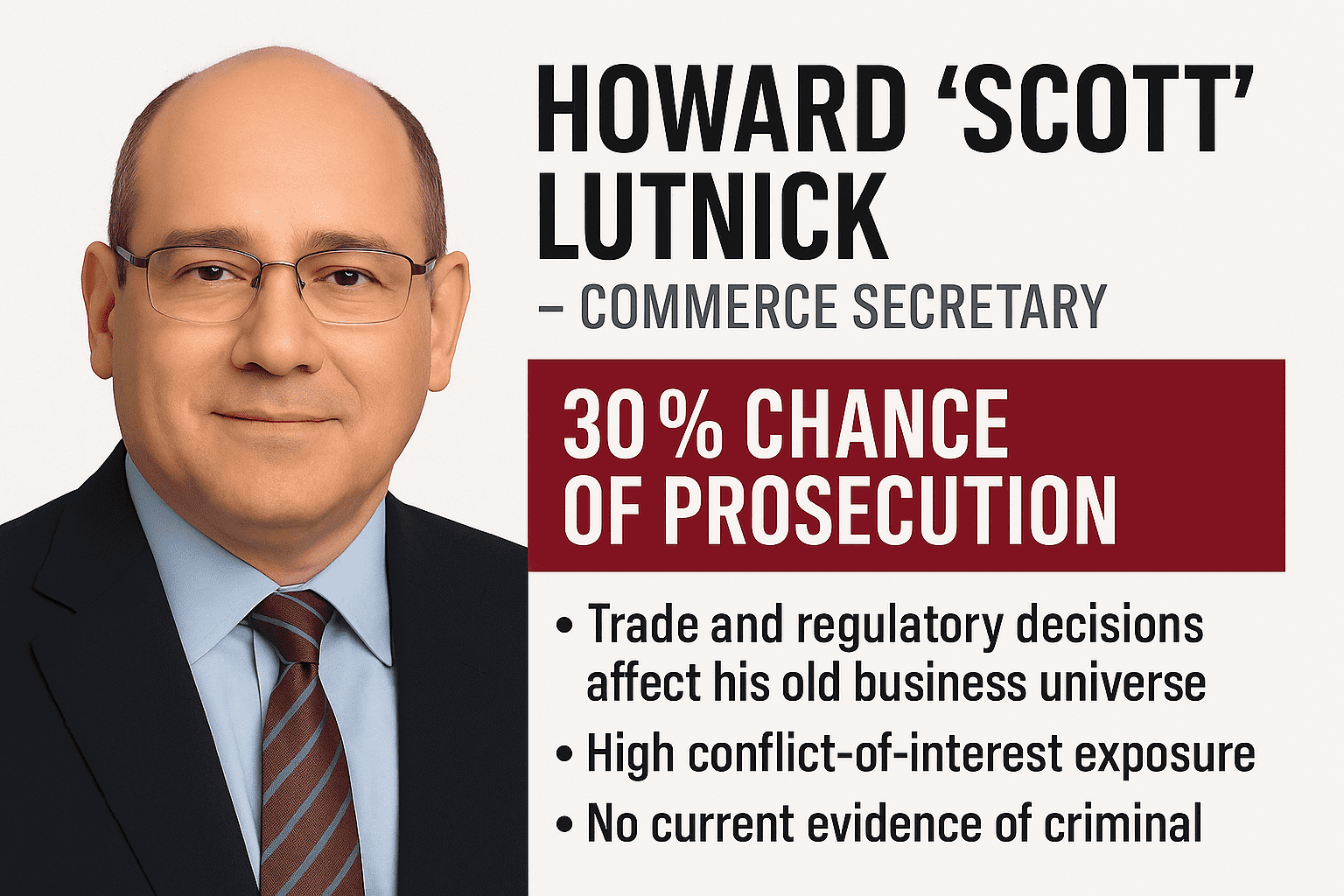
11. Howard “Scott” Lutnick: Commerce Secretary
30% Chance of Prosecution
Lutnick is deeply connected to firms impacted by Commerce decisions on trade, export controls, and regulatory approvals. The risk is structural: he is in a position to indirectly benefit private entities he’s long been tied to.
Prosecution-Likelihood Bullet Points:
• Trade and regulatory decisions affect his old business universe.
• Conflict-of-interest exposure, not active misconduct (yet).
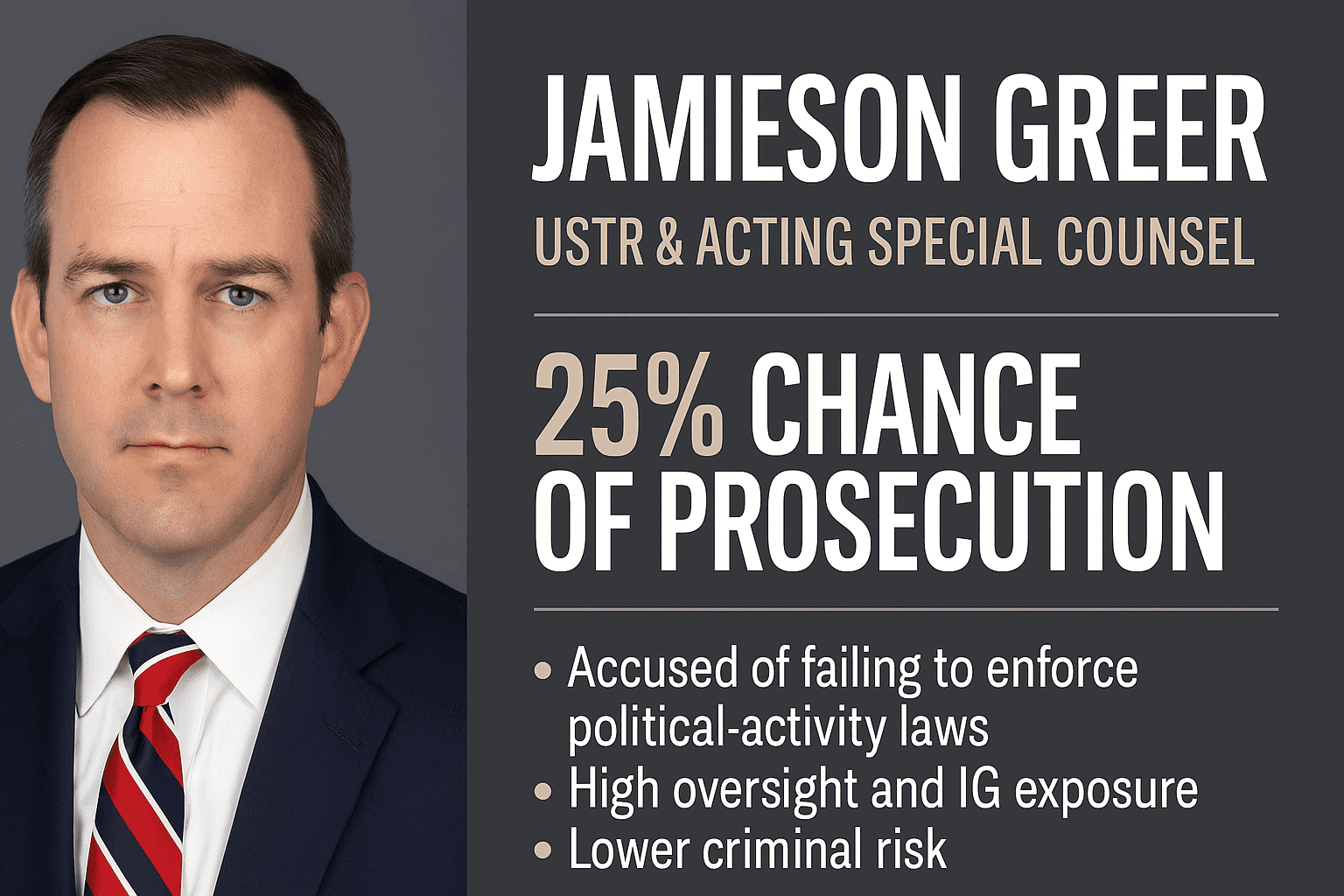
12. Jamieson Greer: USTR & Acting Special Counsel
25% Chance of Prosecution
Greer oversees both trade negotiations and Hatch Act enforcement, a dual role ripe for conflict. Congressional Democrats have already accused him of slow-walking investigations into Trump officials violating political-activity laws. His exposure rests on what he ignored or buried.
Prosecution-Likelihood Bullet Points:
• Accused of failing to enforce the Hatch Act against Trump officials.
• High oversight and IG-exposure, but lower criminal risk.
The Cost of Letting These People Run a Country
This administration wasn’t built to govern. It was built to shield loyalty, monetize public power, and punish anyone standing in the way. While America faces rising seas, collapsing infrastructure, record heat, historic inequality, and threats to democratic stability, these officials chose self-interest, political vengeance, and authoritarian experimentation.
“They inherited a fragile nation. They treated it like a disposable asset.”
The damage they’ve caused is not temporary. It’s generational. It will outlive Trump, outlive this administration, and outlive them. If America is to survive the climate emergency, rebuild its democracy, and return to basic decency, these individuals must face full accountability, legal, political, and historical.
The paper trails exist.
The recordings exist.
The lawsuits exist.
The victims exist.
Now the question is whether justice will.










































Want to join the conversation?
Create an account or sign in to share your thoughts, vote,
and reply to other readers.
Showing 0 of 0 comments
Don't have an account?
Already have an account?