
Did Taking Pay Cut in Philadelphia the NBA’s New Salary-Cap Loophole?
LeBron James has officially entered one of the strangest financial arrangements of his NBA career. After leaving the Los Angeles Lakers and signing a two year, approximately $8 million contract with the Philadelphia 76ers, James has reportedly agreed to a deal with prediction market company Polymarket worth roughly $15 million per year. That means LeBron is reportedly making nearly four times more from his Polymarket endorsement than he is from the Philadelphia 76ers this season. And naturally, the timing has raised eyebrows across the NBA.
James’ contract with Philadelphia will pay him approximately $3.88 million during the upcoming 2026-27 season, a dramatic reduction from the roughly $52 million he earned from the Lakers last season. The 41 year old superstar had spent most of his career commanding maximum or near maximum contracts, but he chose to accept the veteran minimum in Philadelphia in an attempt to join a roster he believes gives him another legitimate opportunity to win an NBA championship. The Sixers already have major money committed to Joel Embiid, Jaylen Brown and Tyrese Maxey, so James’ willingness to take substantially less made it possible for Philadelphia to fit another enormous piece into an already expensive roster.
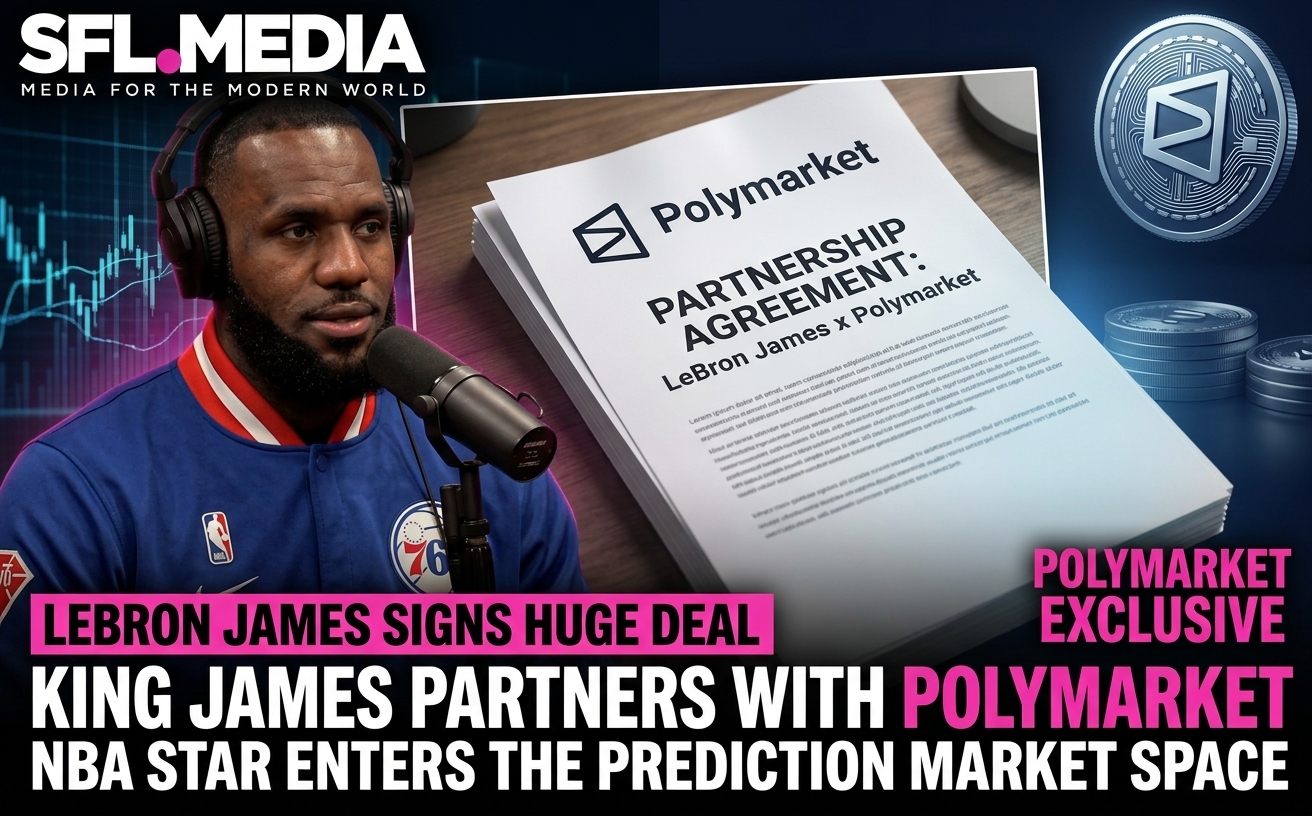
Then came Polymarket. According to Front Office Sports, James’ new partnership with Polymarket is worth approximately $15 million annually. The agreement is reportedly an endorsement arrangement rather than an ownership stake, and James’ promotional work is expected to focus primarily on football. His previous agreement with DraftKings had expired.
On the surface, there is nothing particularly unusual about LeBron James earning enormous endorsement money. He has been one of the most commercially valuable athletes on the planet for two decades. Nike, SpringHill, Beats, Pepsi and numerous other companies have paid handsomely for access to the LeBron James brand. Nobody seriously argues that every dollar an NBA superstar makes away from basketball should count against the salary cap.
The problem is the timing. James took an enormous discount to play for Philadelphia, and almost immediately afterward comes a $15 million per year commercial relationship with a company operating in a business that has become deeply intertwined with professional sports. That creates an obvious question: could a player theoretically take less money from an NBA team because he knows he has another enormous source of income waiting for him outside the league? That is where the controversy begins.
Did LeBron Circumvent the Salary Cap With Philadelphia?
There is currently no public evidence that LeBron James or the Philadelphia 76ers circumvented the NBA’s salary cap. That distinction is extremely important. There has been no public finding that Philadelphia arranged the Polymarket deal. There is no reported evidence that the Sixers negotiated the agreement, directed Polymarket to pay James, received anything from Polymarket in exchange for James taking less money, or otherwise participated in an arrangement designed to funnel additional compensation to James outside his NBA contract.
The reporting surrounding the Polymarket agreement describes it as an independent endorsement deal in which James has actual promotional obligations. That is fundamentally different from an NBA team secretly arranging a lucrative side payment for one of its players. NBA insider Brett Siegel nevertheless pointed out the potential problem with the broader concept. He argued that the league could eventually face a situation in which a star agrees to a significantly smaller NBA contract because he knows an outside company is going to compensate him with millions of dollars.
In that theoretical scenario, the endorsement deal could effectively provide the financial incentive for a player to give his team additional salary-cap flexibility. That does not mean that is what happened with LeBron. It means the NBA may have a new problem on its hands.
The Kawhi Leonard Comparison Is Why Everyone Is Looking Twice
The reason the LeBron story has generated so much discussion is the NBA’s recent punishment of the Los Angeles Clippers and Kawhi Leonard. The league’s investigation into the Clippers found that the organization improperly facilitated off court income opportunities for Leonard involving four companies that did business with the Clippers: Aspiration Partners, Boingo Wireless, Daktronics and Lockton Insurance.
According to the NBA’s findings, the Clippers helped initiate endorsement opportunities, facilitated agreements and used their business relationships with the companies involved. The league determined that the arrangements violated the NBA’s salary-cap circumvention rules. The punishment was enormous.
The Clippers were fined $30 million and ordered to forfeit five first round draft picks, one in each of the 2029 through 2033 drafts. Owner Steve Ballmer was suspended from league and team activities for an entire year. Clippers executives were also suspended, and Leonard was fined $700,000.
The investigation found that Leonard’s representatives had pressured the Clippers to help create additional off-court income opportunities for him. The NBA concluded that the Clippers crossed the line from simply allowing a player to pursue his own endorsement opportunities into actively helping arrange compensation that was connected to companies doing business with the organization. That is a very different fact pattern from what has been publicly reported about LeBron and Polymarket. And that difference matters.
Why the LeBron Deal Is Still Uncomfortable
The NBA’s salary cap exists to prevent wealthy teams from simply purchasing competitive advantages. If a team could tell a player, “We’ll only pay you $5 million through the NBA, but we’ll have our business partners pay you another $20 million,” the salary cap would become little more than decorative accounting. That is precisely why the Kawhi Leonard case was so damaging.
The LeBron situation, however, currently appears to be the opposite. Polymarket is not a Philadelphia 76ers sponsor arranging payments to James on Philadelphia’s behalf. There is no publicly established financial connection between the Sixers and the Polymarket endorsement deal. James also reportedly has legitimate promotional responsibilities under the agreement. So while the optics are strange, optics are not the same thing as proof of a rules violation.
In fact, the NBA’s current rules allow players to have endorsement agreements unrelated to their basketball contracts. James has been making money outside the NBA for years. His enormous business empire is one of the reasons he can afford to sacrifice tens of millions of dollars in salary without suddenly having to start selling his sneakers from the trunk of a car. The real question for the league is whether these types of deals could eventually become a mechanism for manipulating the salary cap.
The Polymarket Controversy Is Bigger Than Basketball
There is another controversy surrounding the deal, and this one has nothing to do with the NBA salary cap. Polymarket is a prediction market platform that allows users to trade contracts based on the outcomes of future events. Its expansion into sports has generated substantial attention and controversy because critics argue that sports prediction contracts function much like gambling, while prediction market companies maintain that they are financial contracts rather than traditional sports bets.
Polymarket has increasingly pushed into professional sports, while regulators and state officials have challenged the legality of sports-related prediction markets in various jurisdictions. The company has also recently introduced measures such as voluntary deposit limits and account lock outs amid growing concerns about compulsive trading. That has created an interesting divide among NBA players.
San Antonio Spurs superstar Victor Wembanyama recently said he would never endorse sports betting companies and criticized the idea of NBA players promoting gambling related platforms. His comments came directly in the wake of the growing number of NBA stars becoming associated with sports betting and prediction market companies. LeBron has now placed himself squarely on the other side of that debate.
There is an obvious financial argument for the decision. Fifteen million dollars a year is fifteen million dollars a year, regardless of whether the check comes from an athletic shoe company, a beverage company or a prediction market. But critics argue that athletes have enormous influence over young fans, and that promoting prediction markets normalizes gambling like behavior to an audience that includes millions of people who may not fully understand the risks. And that criticism became especially loud because of LeBron’s enormous cultural reach.
There Is Also an Ironic Twist
The relationship between LeBron and prediction markets has an almost perfect Hollywood quality twist to it. Before he signed with Philadelphia, prediction markets were literally taking wagers on where he would play next. More than $273 million worth of contracts tied to James’ free-agency decision were reportedly traded across prediction platforms. Philadelphia was initially considered a major underdog in those markets before the news broke, and the odds shifted almost instantly once James announced his decision.
Now the same superstar whose free agency became one of the biggest prediction-market stories of the summer is being paid by one of the companies operating in that industry. You couldn’t write a better plot if you were trying.
The Fallout Could Be Bigger Than LeBron
The most important part of this story may ultimately have nothing to do with whether LeBron personally broke an NBA rule. If the league allows superstar players to routinely sign below market NBA contracts while simultaneously receiving massive outside endorsement deals, other players and teams could eventually attempt to replicate the strategy.
Imagine a hypothetical 29 year old superstar who is worth $50 million annually on the open market. Instead of taking $50 million from his team, he signs for $30 million because a corporation unrelated on paper to the team agrees to pay him another $20 million for endorsements.
If that endorsement deal was independently negotiated, legitimate and supported by actual promotional work, the NBA could have difficulty arguing that anything improper occurred. But now imagine the team introduced the company, helped negotiate the agreement, promised the company future business, or otherwise helped arrange the side payment. That is where the situation begins looking much more like the Kawhi Leonard case. And that is the line the NBA will almost certainly be watching.
For Now, LeBron Has Not Been Caught Doing Anything Illegal
The temptation is to look at the numbers, see $3.9 million from Philadelphia and $15 million from Polymarket, and immediately declare that LeBron found a secret way around the salary cap. That conclusion is not supported by the evidence currently available.
LeBron James took a veteran minimum contract with Philadelphia. He has an independently reported endorsement agreement with Polymarket. The deal reportedly involves actual promotional work, is focused on football and does not appear to have been arranged by the 76ers. That is legal under the current rules. The controversy is therefore less about what LeBron has been proven to have done and more about what this type of arrangement could allow NBA players and teams to do in the future.
The Kawhi Leonard investigation has made the league considerably more suspicious of seemingly unrelated endorsement agreements, particularly when team sponsors or team business relationships are involved. The NBA just handed down one of the harshest salary cap punishments in league history, and it would be foolish to expect executives around the league to ignore the lessons from that case.
For LeBron, the situation is much simpler. He appears to have traded tens of millions of dollars in NBA salary for a chance to chase another championship while maintaining the massive business empire he has spent decades building.Whether the NBA eventually decides that the growing relationship between player salaries and outside prediction-market money requires new rules is another question entirely.
For now, there is a controversy. There is a very interesting loophole to watch. But there is no established evidence that LeBron James circumvented the NBA salary cap with the Philadelphia 76ers. And after what happened to the Clippers and Kawhi Leonard, you can be fairly certain the NBA is going to be watching these deals a whole lot more closely.
Sources for Article
- NBA: Investigation and penalties involving the Clippers and Kawhi Leonard
- Front Office Sports: LeBron James’ Polymarket deal
- CBS Sports: LeBron’s Polymarket endorsement and NBA scrutiny
- NBA.com: LeBron James signs with Philadelphia
- Reuters: LeBron’s Philadelphia move and contract
- Washington Post: Clippers/Kawhi salary-cap investigation
- The Block: LeBron’s Polymarket partnership and prediction-market activity



































Want to join the conversation?
Create an account or sign in to share your thoughts, vote,
and reply to other readers.
Showing 0 of 0 comments
Don't have an account?
Already have an account?