
What Happened to Florida State Football? Inside the Breakdown of a College Football Dynasty
For more than three decades, Florida State football operated at a level that would be nearly impossible for any modern program to sustain. Under legendary head coach Bobby Bowden, the Seminoles transformed from a regional program into one of the most powerful and recognizable forces in college football.
From 1976 through 2009, Bowden compiled an official NCAA-recognized record of 304-109-4 at Florida State, won national championships in 1993 and 1999 and established a standard of consistency that became synonymous with Seminoles football. The NCAA record reflects victories later vacated because of sanctions, which is why other historical references credit Bowden with a higher on field total.
The problem for every coach who followed him is that Bowden’s standard was not merely excellent. It was historically abnormal. Florida State’s struggle to consistently return to that level has been the product of several forces working simultaneously: extraordinary historical expectations, coaching instability, institutional friction, delayed infrastructure investment, recruiting failures, problems along the line of scrimmage, financial constraints and a college football landscape that changed dramatically beneath the program.
The Seminoles have experienced spectacular highs since Bowden’s retirement, most notably Jimbo Fisher’s 2013 national championship team and Mike Norvell’s remarkable 13-1 campaign in 2023. Those peaks, however, have been surrounded by dramatic downturns, including a 2-10 collapse in 2024 and another losing season in 2025. That volatility explains why rebuilding Florida State has proven considerably more complicated than simply hiring the right coach.
Bobby Bowden Made the Nearly Impossible Look Normal
Bowden’s greatest accomplishment may not have been either of his national championships. It was the extraordinary consistency of his program. From 1987 through 2000, Florida State finished in the AP Top 5 for 14 consecutive seasons while winning at least 10 games every year. No other coach has matched that combination over 14 straight seasons. Florida State also went through 14 consecutive bowl appearances without a loss from 1982 through 1995, including 11 consecutive bowl victories. The Seminoles became a permanent fixture among the nation’s elite rather than a program that occasionally reached championship contention.
Bowden’s teams dominated the ACC after Florida State joined the conference in 1992. The Seminoles won 12 ACC championships during his tenure, including nine consecutive conference titles from 1992 through 2000. The program produced Heisman Trophy-winning quarterbacks Charlie Ward in 1993 and Chris Weinke in 2000, along with generations of elite NFL talent. Players such as Deion Sanders, Derrick Brooks, Warrick Dunn, Peter Boulware, Marvin Jones, Walter Jones and numerous others made Florida State one of the country’s most reliable pipelines to professional football.
Bowden himself was inducted into the College Football Hall of Fame in 2006 while still coaching. His legacy created an enormous measuring stick for every coach who followed. At Florida State, winning has rarely been enough because coaches are inevitably judged against an era when competing for national championships became an annual expectation. The reality is that Bowden’s 14 year run of Top 5 finishes was a historical anomaly that depended on elite recruiting, coaching continuity, player development, institutional support and a culture built over decades. Replicating it would require virtually everything to go right for an unusually long period of time.
Jimbo Fisher Proved Florida State Could Still Reach the Top
Jimbo Fisher demonstrated that the Bowden standard was not completely unreachable. After taking over for Bowden in 2010, Fisher rebuilt Florida State into a national powerhouse, culminating in the 2013 season when the Seminoles went 14-0 and defeated Auburn 34-31 in the BCS National Championship Game. That team, led by Heisman Trophy winning quarterback Jameis Winston, was one of the most dominant teams of the modern era. Florida State scored an NCAA record 723 points, overwhelmed much of its schedule and completed the first 14-0 season in school history.
Fisher’s Seminoles also won ACC championships in 2012, 2013 and 2014, while the 2014 team reached the inaugural College Football Playoff. His success proved that Florida State still had the brand, recruiting territory and institutional potential to become a national championship program after Bowden. It also exposed a larger problem. Florida State could still reach the top, but the university was struggling to build the infrastructure necessary to remain there.
The Facilities Arms Race Became an Institutional Fight
One of the most consequential problems of the Fisher era developed away from the field. Florida State was competing in a rapidly escalating college football arms race in which football only facilities, recruiting resources, support staffs, nutrition programs and increasingly sophisticated player development operations were becoming prerequisites for competing nationally.
Fisher repeatedly pushed university leadership and the Seminole Boosters for additional football investment as programs such as Alabama, Clemson, Georgia and other national powers spent heavily on facilities and recruiting infrastructure. The disagreement became about much more than buildings. It raised a fundamental question about whether Florida State’s institutional investment matched its championship expectations. Florida State wanted to operate like an elite national program on Saturdays while Fisher increasingly believed it needed to spend like one from Sunday through Friday. By the end of his tenure, the relationship had deteriorated. Fisher left Florida State for Texas A&M in 2017, and his departure became a major turning point. The Seminoles were not simply replacing a coach. They were replacing a national championship coach while attempting to address roster deterioration, internal frustration and infrastructure concerns that had accumulated beneath the surface.
Willie Taggart Inherited Problems and Created Another Reset
Florida State hired Willie Taggart in 2018 hoping a younger coach with strong Florida recruiting connections could restore momentum. Instead, the program deteriorated rapidly. Taggart inherited significant roster and organizational problems, including serious deficiencies along the offensive line and instability at quarterback. Florida State’s offense became one of the least efficient among major programs, while penalties, sacks and inconsistent execution repeatedly undermined the team.
The offensive line became a visible symbol of the broader decline. Over Taggart’s 21 games, Florida State surrendered 71 sacks. The Seminoles also failed to reach a bowl game in his first season, ending a bowl streak that had stretched back to the early Bowden era. Taggart finished 9-12 and was fired after only 21 games. The decision may have been understandable based on the results, but it created another expensive organizational reset at precisely the moment Florida State desperately needed continuity.
The program had gone from Bowden, who coached 34 seasons in Tallahassee, to Fisher, who lasted eight, and then to Taggart, who did not complete two full seasons. Recruiting classes were being assembled by coaches who might not be there to develop them, players were learning new systems and the institutional foundation beneath the roster was becoming increasingly unstable.
The Breakdown Started in the Trenches
Perhaps the most important football explanation for Florida State’s prolonged inconsistency has been its struggles along the line of scrimmage. Elite programs can occasionally survive a weakness at wide receiver, running back or even quarterback. It is far more difficult to compete nationally when offensive and defensive lines lack elite talent and depth.
Florida State spent significant stretches of the post-Fisher era struggling to consistently identify, sign and develop the caliber of high school linemen necessary to control games against elite opponents. That created a vicious cycle in which poor offensive-line play hurt quarterback development and limited the playbook, while quarterback struggles made the offense less productive and losing made recruiting more difficult.
The same principle applied defensively. The great Florida State teams were built around NFL caliber defensive linemen capable of controlling games without constant schematic assistance. When that advantage disappeared, the entire defense became more difficult to operate. The result was a program that could occasionally assemble enough high end talent to compete at an elite level but increasingly lacked the foundational depth required to sustain success over an entire season.
Mike Norvell Used the Transfer Portal to Rebuild Florida State Faster
Mike Norvell inherited a damaged program in December 2019 and then immediately encountered the COVID-19 pandemic, complicating a rebuild that already required major roster and cultural changes.
Norvell eventually found an innovative path forward. The Transfer Portal became one of the central tools of Florida State’s resurgence, allowing the Seminoles to add experienced players capable of contributing immediately instead of waiting years for traditional recruiting classes to mature. The strategy worked spectacularly. Florida State improved to 10 wins in 2022 and entered 2023 with a veteran roster led by quarterback Jordan Travis and transfer additions who became central figures in the program’s revival. The Seminoles completed a perfect 13-0 regular season and ACC Championship run before being excluded from the College Football Playoff after Travis suffered a season ending leg injury.
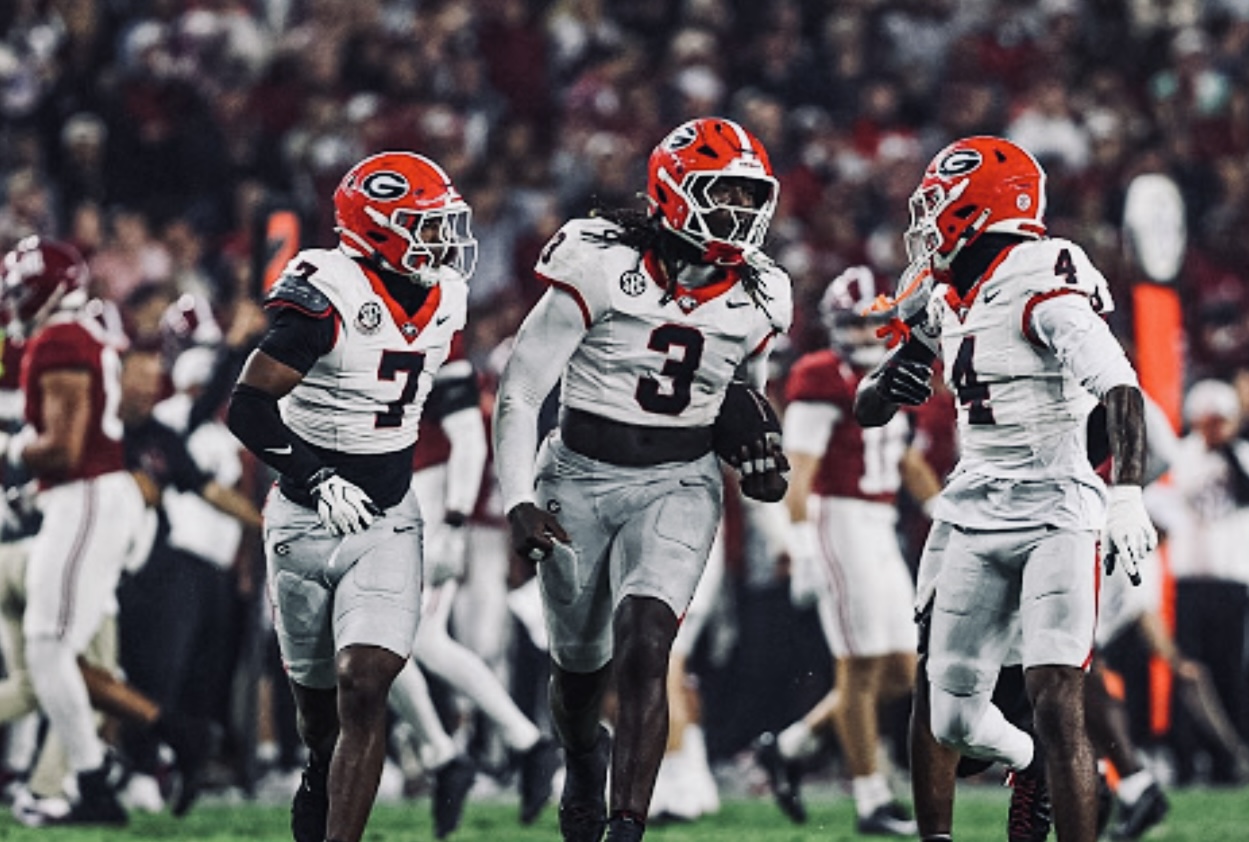
Florida State then faced Georgia in the Orange Bowl amid widespread opt-outs and departures and finished the season 13-1. The final loss was historically ugly, but it should not obscure what the Seminoles accomplished before the postseason roster disintegrated. Florida State had gone from one of the most unstable major programs in the country to an undefeated ACC champion in four seasons. The comeback also contained the seeds of the next problem because the same portal strategy that accelerated Florida State’s recovery also created a roster that was more vulnerable to sudden turnover.
The 2023 Team Was Built to Win Immediately, Not Necessarily to Last
Norvell’s portal strategy allowed Florida State to accelerate the traditional rebuilding process by importing experience. Players such as Jared Verse, Jermaine Johnson II, Keon Coleman, Johnny Wilson and others became examples of how effectively Florida State could identify transfers and develop them into major contributors and NFL prospects.
Portal heavy roster construction, however, carries inherent volatility. A veteran transfer may provide elite production for one or two seasons before graduating, entering the NFL or transferring again. When too many of those players leave simultaneously, the program must already have another layer of developed talent ready behind them. That is where Florida State became vulnerable. The 2023 team lost quarterback Jordan Travis, running back Trey Benson, receivers Keon Coleman and Johnny Wilson, defensive stars including Jared Verse, Braden Fiske and others, along with substantial veteran leadership throughout the roster.
Florida State entered 2024 attempting to replace not only talent but experience, leadership, chemistry and production across multiple position groups simultaneously. The replacements did not come close to reproducing what had been lost, and the result was one of the most dramatic collapses in modern college football.
From 13-1 to 2-10 in One Season
Florida State entered 2024 less than a year removed from an undefeated ACC championship regular season and finished 2-10. The offense averaged only 15.4 points and approximately 270 yards per game, while the Seminoles averaged fewer than 90 rushing yards per game, surrendered 49 sacks and struggled to generate sustained offense regardless of who played quarterback.
The collapse demonstrated the danger of mistaking a successful roster for a fully rebuilt program. Florida State’s 2023 team had been excellent, but the infrastructure underneath that roster had not yet developed enough quality depth to absorb massive personnel losses.
The Transfer Portal had accelerated the climb, but it could not guarantee that Florida State would stay there. That distinction is crucial to understanding Norvell’s tenure because the portal itself was not the mistake. Florida State used it exceptionally well. The problem was that portal success had to be accompanied by stronger high school recruiting and long-term player development so the roster could replenish itself internally.
2025 Showed Improvement Without Solving the Winning Problem
Florida State made sweeping changes after the 2-10 disaster and improved to 5-7 in 2025. The record remained unacceptable by the program’s standards, but the underlying football performance changed substantially. Most notably, Florida State led the ACC in both total offense and rushing offense in 2025, averaging approximately 472 yards of offense and nearly 219 rushing yards per game. That represented a dramatic recovery from the historically poor 2024 offense.
The problem was that improved production did not translate into enough victories. Florida State began the season with a statement 31-17 victory over No. 8 Alabama and followed it with two dominant wins, but the Seminoles then lost five of their next six games, including close losses to Virginia, Miami and Pitt, before ultimately finishing 5-7.
That season provided another important clue about the broader breakdown. Florida State was no longer simply dealing with a talentless offense incapable of moving the football. The program had become inconsistent in different ways, failing to turn statistical improvement into the week to week execution required to win close games and survive a full Power Four schedule.
Florida State Can No Longer Own Florida Recruiting by Reputation Alone
There was a time when Florida State could dominate the recruiting landscape in its own backyard. Bowden’s Seminoles routinely attracted elite prospects from throughout Florida, and the state’s extraordinary high school talent became the foundation of the program. That advantage has eroded. Modern college football recruiting is no longer primarily about geography, relationships and tradition. It is increasingly influenced by Name, Image and Likeness compensation, revenue sharing, collective resources, facilities, playing time, NFL development and the freedom provided by the Transfer Portal.
Programs such as Georgia, Alabama and Ohio State routinely recruit Florida’s best players. Florida State is therefore no longer simply competing against Miami and Florida for elite in state talent. It is competing nationally for players who might once have been far more likely to remain inside the state. That means the Seminoles cannot rely on their helmet, history and geography to rebuild the roster. They need an aggressive national personnel operation capable of identifying talent earlier, winning expensive recruiting battles and developing players after they arrive.
When a program is losing, that challenge becomes even more difficult. Prospects want to see a pathway to championships, NFL development, playing time and financial opportunity. Losing can hurt recruiting, weakened recruiting can hurt future performance, and the cycle can reinforce itself.
The ACC Revenue Fight Added Another Layer of Instability
Florida State’s financial and conference situation also became an important part of the story. The athletic department has carried major financial obligations while simultaneously navigating a rapidly changing economic model in college sports. At the same time, Florida State became embroiled in a high profile legal battle with the ACC over the conference’s grant-of-rights agreement and the financial gap separating the ACC from richer conferences such as the Big Ten and SEC.
The eventual 2025 settlement created greater clarity. Rather than facing the previously feared economic consequences associated with escaping the ACC’s grant of rights, Florida State and the conference agreed to a structured exit framework. The penalty was established at $165 million before declining by $18 million annually and eventually reaching $75 million in 2030-31. A departing school that pays the required exit fee can retain control of its media rights. The settlement also created a viewership based revenue model under which 60% of television revenue is distributed using a formula tied to football and men’s basketball viewership, while the remaining portion is distributed more evenly.
For a national brand such as Florida State, the change provides an opportunity to generate additional conference revenue while creating a clearer potential exit path in the future. It does not, however, erase years of uncertainty or eliminate the financial gap the Seminoles are trying to close against the richest programs in college football.
Mike Norvell’s Contract Changed the Economics of Firing a Coach
Florida State’s decision to retain Norvell after two consecutive losing seasons cannot be understood without examining the economics of his contract. Following the 2023 ACC championship season, Norvell received an eight year, $84 million enhanced contract running through December 31, 2031. The agreement contains substantial financial protections for the coach if Florida State terminates him without cause.
Depending on the timing of any dismissal and the remaining compensation calculation, a coaching change could require Florida State to spend tens of millions of dollars simply to end the existing agreement. Once potential assistant-coach obligations, transition costs and the contract required to hire another nationally established coach are included, changing leadership becomes an enormous institutional financial decision rather than merely a reaction to a Saturday afternoon loss.
Norvell also committed millions of dollars from his compensation toward Florida State’s broader football initiative following the 2024 collapse, illustrating how deeply the financial health of the football operation has become connected to roster retention, recruiting and infrastructure. The administration therefore faces a difficult equation. Florida State has championship expectations, but firing the coach and rebuilding again would itself consume resources that could otherwise be directed toward players, recruiting, facilities and personnel.
Florida State Changed the Entire Football Operation Around Norvell
Rather than immediately starting over at head coach, Florida State began reconstructing the operation surrounding Norvell. Following the 2024 collapse, Norvell hired veteran offensive coach Gus Malzahn and defensive coordinator Tony White. The immediate results were significant, as Florida State’s offense rebounded dramatically in 2025 under Malzahn while White’s defense improved across several statistical categories.
Malzahn retired from coaching in February 2026 after one season in Tallahassee, and Tim Harris Jr. was promoted to offensive coordinator. White remains Florida State’s defensive coordinator. The Seminoles also added former Texas, Houston and Florida Atlantic head coach Tom Herman in July 2026 as assistant to the head coach, giving Norvell another experienced offensive and program-building voice inside the operation.
Perhaps more importantly, Florida State continued restructuring its personnel department. John Garrett returned to Tallahassee as deputy athletics director and general manager of player personnel, helping oversee an operation increasingly focused on high school evaluation, roster construction and sustainable talent acquisition.
Those changes all point toward the same strategic lesson. Transfers can transform a roster quickly, but they cannot permanently substitute for identifying, signing and developing elite players over several seasons. Florida State’s latest restructuring is therefore less about finding another shortcut and more about rebuilding the infrastructure that allows success to survive roster turnover.
The 2026 Opener Offered an Early Look at the New Structure
Florida State opened the 2026 season with a 34-17 victory over New Mexico State, providing an early indication that the latest version of the program could build upon some of the offensive progress made a year earlier.
Quarterback Ashton Daniels completed 17 of 27 passes for 202 yards and a touchdown while adding a rushing score. Florida State produced 419 yards of total offense, exceeded 200 yards both passing and rushing, went 6-for-6 in the red zone and held New Mexico State to only 47 rushing yards. Sophomore running back Ousmane Kromah rushed for 115 yards on 14 carries, giving Florida State the type of productive ground game that had disappeared during the catastrophic 2024 season.
One victory over New Mexico State does not establish that Florida State is back, erase consecutive losing seasons, prove the roster is championship caliber or settle questions surrounding Norvell’s future. What it does provide is an early test of a different rebuilding philosophy.
Florida State is no longer simply attempting to import enough veterans to manufacture another immediate contender. The objective is to create a sustainable football operation capable of recruiting high school players, developing linemen, retaining proven talent, supplementing intelligently through the Transfer Portal and maintaining continuity within the coaching and personnel departments.
Florida State’s Real Problem Was Never Just One Coach
Florida State’s decline is often reduced to a simple question: Why can’t the Seminoles just find the right coach? The reality is considerably more complicated because no single coach has been responsible for every stage of the decline, and no single hire can repair every structural problem at once.
Since Bowden’s retirement, Florida State has experienced coaching instability, recruiting misses, line-of-scrimmage problems, infrastructure disputes, massive roster turnover, financial pressure, conference uncertainty and revolutionary changes in the economics of college football. Those problems often compounded one another, turning individual weaknesses into broader organizational instability.
Fisher demonstrated that Florida State could still win a national championship, but his departure also demonstrated what happens when the football coach and institution stop moving in the same direction. Taggart demonstrated how quickly a major program can deteriorate when roster weaknesses, poor execution and organizational instability compound one another. Norvell demonstrated that the Transfer Portal could rebuild Florida State at remarkable speed, while the 13-0 start in 2023 proved the Seminoles could again compete among the nation’s elite.
The 2024 collapse then demonstrated how fragile that success could become when a veteran-heavy roster disappeared without sufficient developed depth behind it. The 2025 season offered another lesson by showing that Florida State could dramatically improve offensively and still finish 5-7 because rebuilding a championship program requires far more than fixing one side of the football.
Taken together, those eras tell a consistent story. Florida State’s problem has never been simply finding a coach capable of producing one great season. The harder challenge has been building an institution capable of sustaining that success when coordinators leave, star players depart, recruiting classes miss, budgets tighten and the sport changes around it.
Bobby Bowden’s Standard Was Extraordinary, but Florida State’s Expectations Should Still Be High
Bobby Bowden’s legacy should not simply become a weapon used against every coach who follows him. Fourteen consecutive Top 5 finishes and 14 straight seasons with at least 10 victories represent one of the greatest sustained runs in the history of college football. Expecting any modern coach to automatically duplicate that achievement ignores how extraordinary the accomplishment actually was.
Acknowledging that Bowden’s standard was historically unusual, however, does not mean Florida State should lower its expectations. It means the university should understand what made that success possible and recognize that championship football is the product of an entire system rather than one charismatic head coach.
Bowden’s Florida State was built on elite recruiting, player development, coaching continuity, institutional commitment, physical dominance along the line of scrimmage and an overwhelming belief that the best players in America belonged in Tallahassee. The modern version of college football requires all of those things plus challenges Bowden never had to manage at today’s scale, including NIL compensation, direct athlete revenue sharing, the Transfer Portal, conference realignment, escalating coaching salaries and a national financial arms race for talent.
Florida State therefore cannot solve its problems through one coordinator, one quarterback, one recruiting class or one expensive coaching change. Sustainable success requires the entire institution to function like a championship program, from university leadership and boosters to recruiting operations, player development, roster management, facilities, coaching continuity and financial strategy.
The Seminoles have repeatedly shown that they can still reach the summit. Bowden’s 1993 and 1999 championships proved it. Fisher’s 2013 championship proved it again. Norvell’s 13-0 run through the 2023 ACC Championship provided another reminder that Florida State still possesses the brand, talent base and competitive ceiling required to matter nationally. The difficult part has been staying there, and that may ultimately be the central lesson of Florida State’s turbulent post-Bowden era. The Seminoles have not forgotten how to win. They have struggled to build an entire modern football operation capable of sustaining winning at the level Bobby Bowden once made look normal, and until that institutional foundation becomes as strong as the expectations surrounding it, Florida State will remain vulnerable to the same cycle of dramatic resurgence followed by equally dramatic decline.



















































Want to join the conversation?
Create an account or sign in to share your thoughts, vote,
and reply to other readers.
Showing 0 of 0 comments
Don't have an account?
Already have an account?