
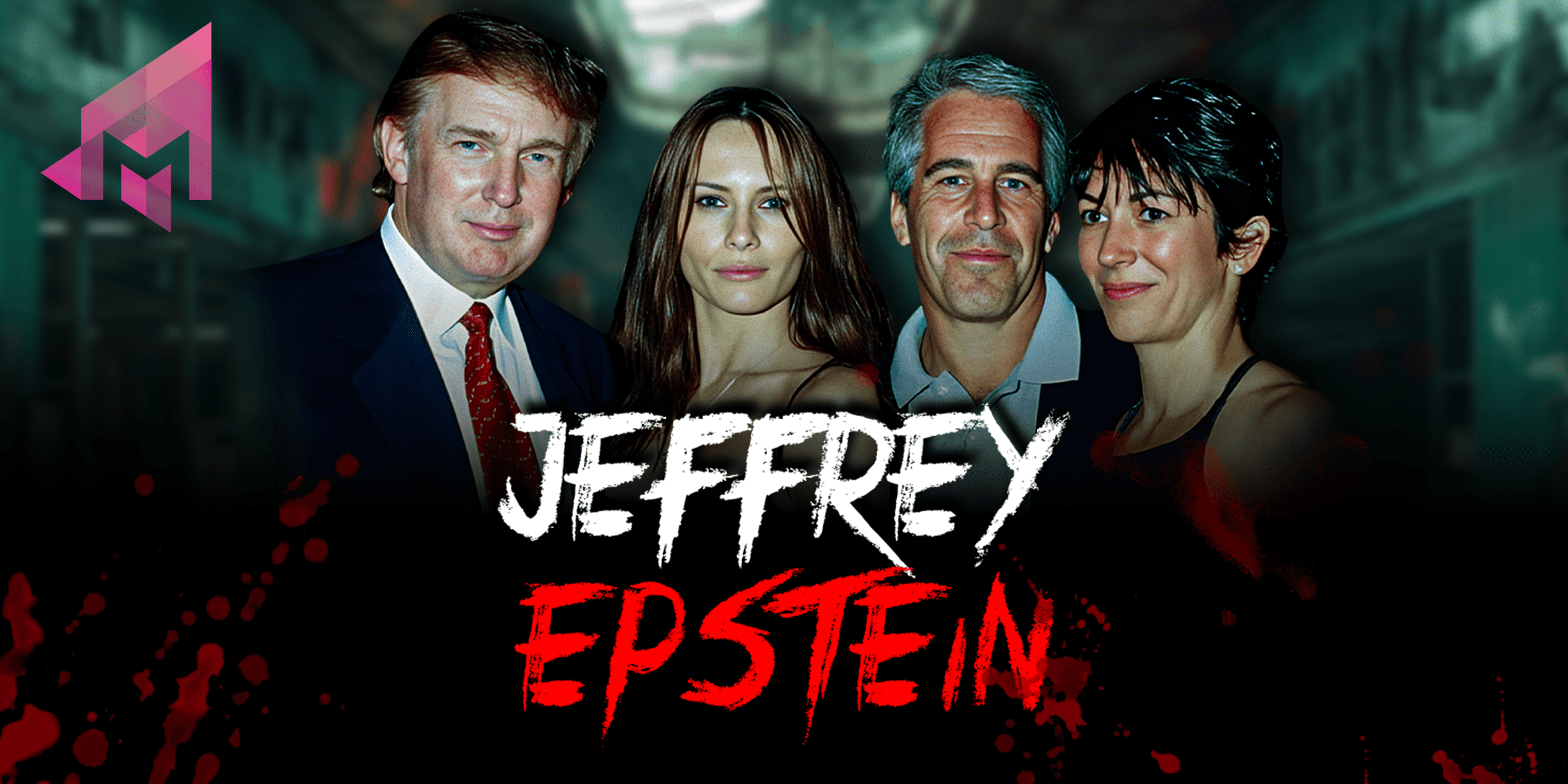
Newly Released FBI Intake Memo Names Powerful Figures in Epstein Allegations, Expands Historical Record of the Case
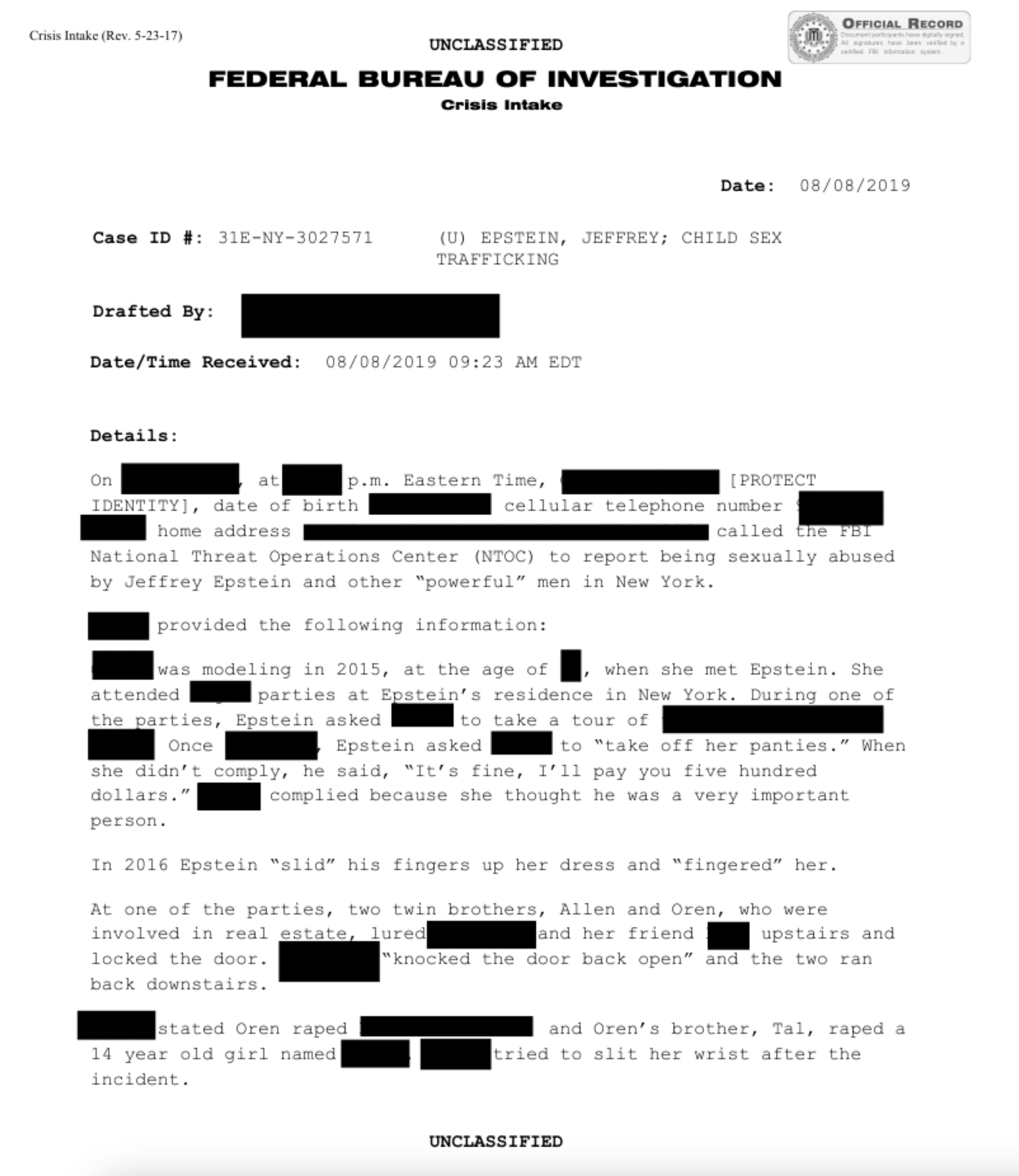
An unclassified FBI crisis intake report dated August 8, 2019, Case ID 31E-NY-3027571, is drawing a lot of attention as part of the expanding public archive tied to the Jeffrey Epstein child sex trafficking investigation.
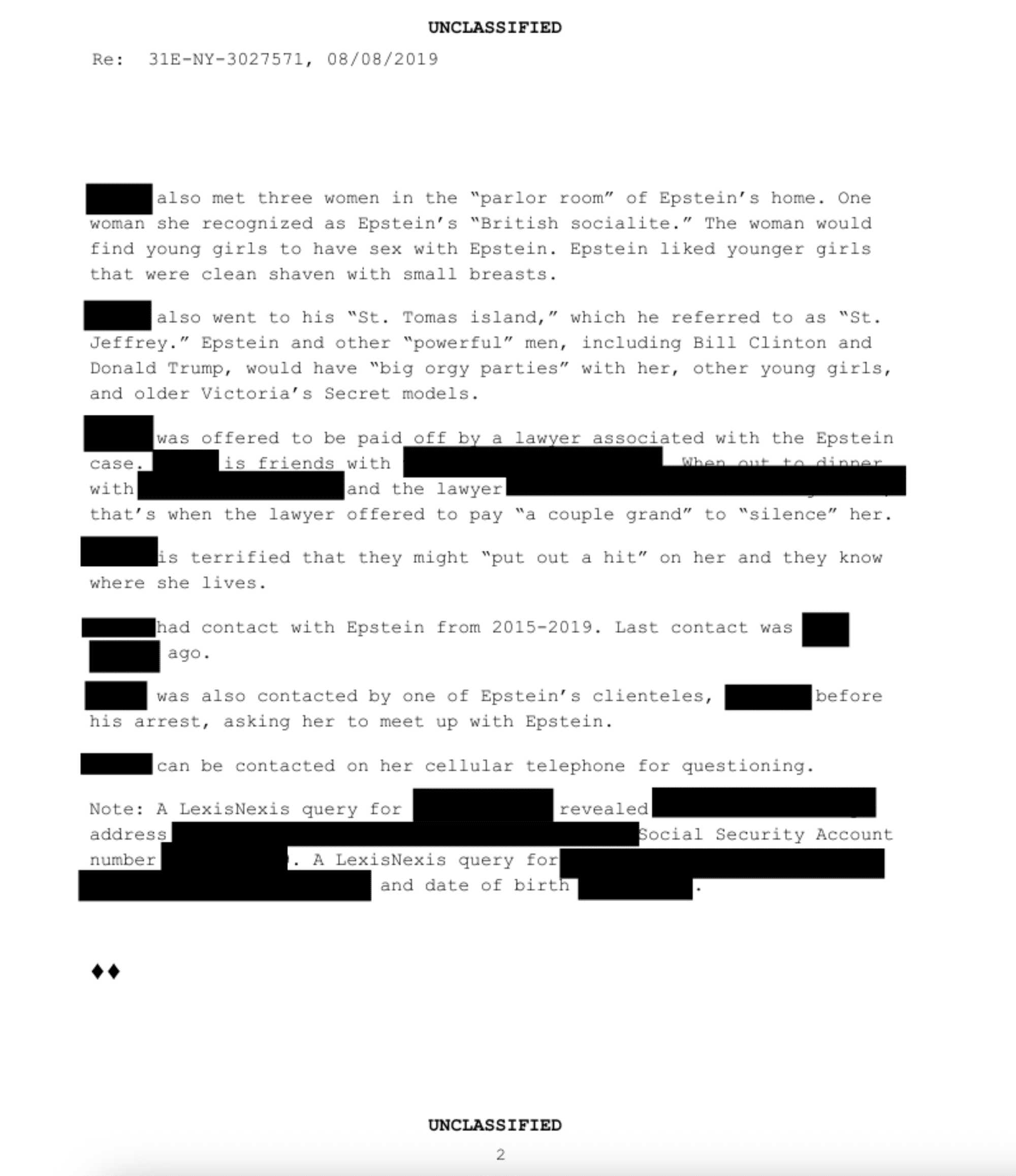
The document, marked “UNCLASSIFIED” and labeled as a Federal Bureau of Investigation Crisis Intake form, records allegations made by a caller who claimed she was sexually abused and described events involving Epstein and other “powerful” men. The memo states that “Epstein and other ‘powerful’ men, including Bill Clinton and Donald Trump,” allegedly engaged in sexual activity with young girls and models at gatherings connected to Epstein.
“Epstein and other ‘powerful’ men, including Bill Clinton and Donald Trump, would have ‘big orgy parties’…”
The intake report also logs allegations about Epstein’s stated preferences for younger girls and includes claims that the caller was offered money by an attorney associated with the Epstein case to remain silent. The document further notes that the caller expressed fear of retaliation.
What the Document Is and What It Is Not
The report is an FBI intake memo. That means it records allegations made to federal authorities. It does not represent a finding of fact, a verified conclusion, or a criminal charge against the individuals named.
However, intake documents are part of the official investigative record. They are preserved within federal case files and form part of the broader evidentiary landscape investigators review when building or declining cases. The memo is dated less than a week before Epstein’s death in federal custody on August 10, 2019.
The Broader Pattern
This intake report does not stand alone. Over the past several years, multiple accusers have alleged that Epstein’s residences in New York, Palm Beach, New Mexico, and the U.S. Virgin Islands hosted environments involving underage girls and powerful men. Civil litigation, prior indictments, and testimony connected to Epstein and his associate Ghislaine Maxwell, who was convicted in 2021 on federal sex trafficking charges, established that Epstein operated a long-running trafficking scheme involving minors.
The intake memo adds to that historical archive by documenting additional claims that powerful political figures were present during some gatherings. Both Bill Clinton and Donald Trump have previously acknowledged knowing Epstein socially. Neither has been criminally charged in connection with Epstein’s trafficking case, and both have denied wrongdoing in past statements. Still, the presence of their names inside an FBI child sex trafficking intake report raises renewed questions about proximity, knowledge, and accountability.
Political and Institutional Implications
The political sensitivity is obvious. Allegations naming former presidents in connection with a convicted sex trafficker carry enormous weight, even when presented as unverified claims logged by investigators. The memo also references an alleged attempt to silence the caller with money, echoing a recurring theme in the Epstein saga: secrecy, non-disclosure agreements, and settlements that shielded powerful individuals from scrutiny for years.
The larger institutional question remains unresolved: how much information did federal authorities possess prior to Epstein’s death, and how thoroughly were all avenues pursued?
Why This Matters Now
The Epstein case has never fully receded from public attention. Court filings, unsealed records, civil suits, and congressional inquiries continue to surface pieces of a sprawling network that intersected with politics, finance, academia, and media. Each newly released document adds to the historical record.
This intake report does not deliver a verdict. It does not prove the allegations it records. But it does confirm that such allegations were formally reported to federal authorities and entered into an official case file. In a scandal defined by power and secrecy, documentation matters. The memo now becomes part of the permanent archive, a reminder that the Epstein investigation was not confined to one man, one island, or one conviction, but intersected with some of the most influential figures in modern American public life. As additional records emerge, the broader story continues to evolve.
















































Want to join the conversation?
Create an account or sign in to share your thoughts, vote,
and reply to other readers.
Showing 0 of 0 comments
Don't have an account?
Already have an account?