
The Story of the Man at the Center of the Tupac Shakur Murder Case
For nearly 30 years, the murder of Tupac Shakur has remained one of the biggest unsolved mysteries in American music history. On September 7, 1996, the 25-year-old rap superstar was shot multiple times while riding in a BMW with Death Row Records founder Suge Knight in Las Vegas. Tupac died six days later.
For decades, investigators chased leads, suspects and theories, but nobody was charged with killing Tupac.
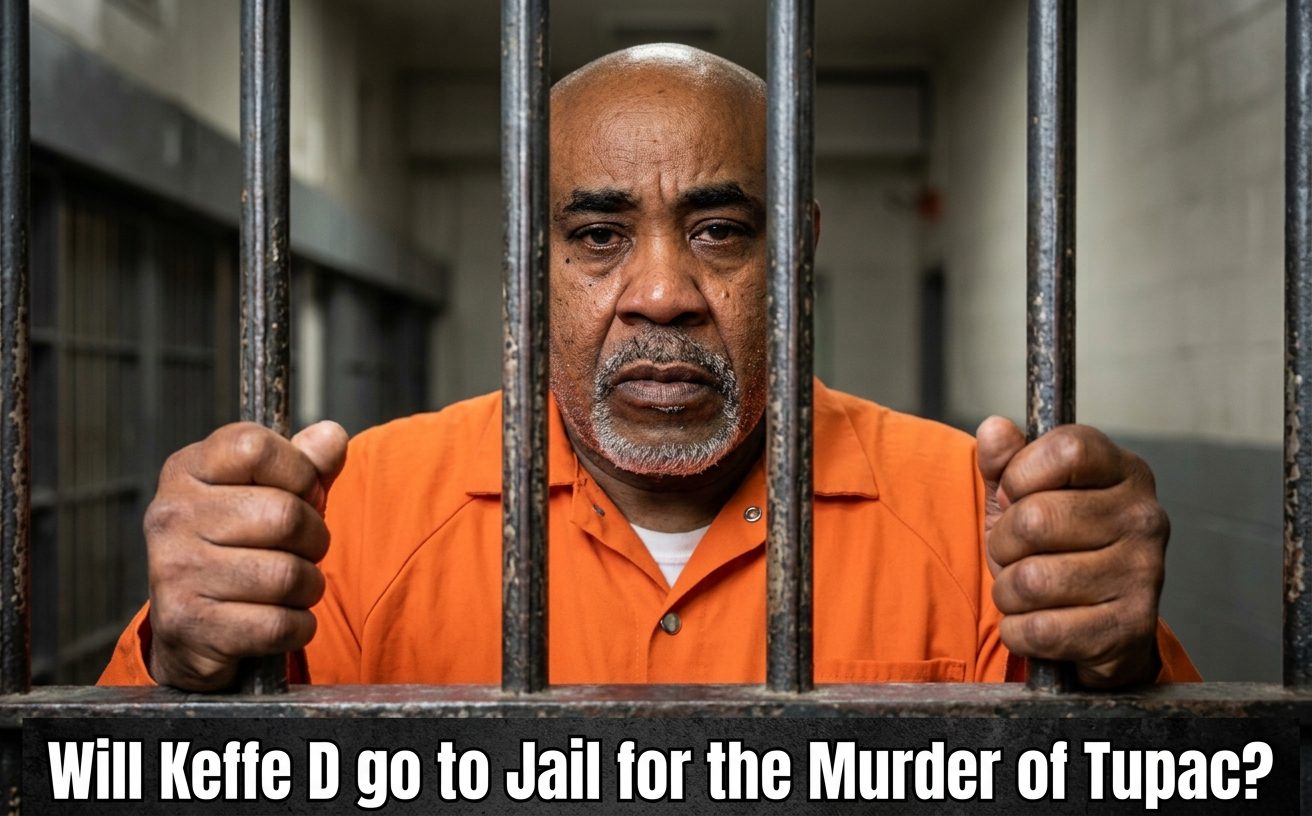
Then there was Duane Keith “Keffe D” Davis.
Unlike most of the people connected to the case, Davis spent years talking publicly about what happened that night. He gave interviews, appeared in documentaries and eventually wrote a memoir detailing his version of events. Those statements would ultimately make him the first and only person ever charged with Tupac Shakur’s murder.
The strange part is that Davis has never claimed he was the man who actually pulled the trigger. Instead, prosecutors allege that he helped organize the retaliation that led to Tupac’s death and participated in the events surrounding the shooting. That makes Keffe D one of the most important figures in the entire Tupac saga.
Who Is Keffe D?
Duane Keith Davis, known by his street name Keffe D, grew up in the Compton and Watts areas of Los Angeles and became involved with the South Side Compton Crips.
Davis has described himself as a significant figure within the organization and eventually became involved in drug trafficking. He served time in prison for drug-related offenses during the 1980s before returning to the streets.
His life placed him directly in the intersection of two worlds that would become inseparable during the 1990s: Los Angeles gang culture and the rapidly expanding West Coast hip-hop industry.
Davis was not a rapper or record executive. His importance came from his connections to the people surrounding the music business, particularly the street organizations associated with Death Row Records and its founder, Suge Knight.
Davis has said that he knew Knight for years, dating back to their childhood connections in Compton.That relationship would eventually put him dangerously close to one of the most consequential nights in hip-hop history.
The Tupac-Suge Knight Connection
By 1996, Tupac Shakur had become the biggest star on Death Row Records. The label, controlled by Suge Knight, had built an enormous reputation around artists such as Dr. Dre, Snoop Dogg and Tupac. But Death Row was also deeply connected to the street culture of Los Angeles.
Knight and members of his entourage were associated with the Mob Piru faction of the Bloods, while Davis was connected to the South Side Compton Crips.
The Crips and Bloods had a long and often violent history of rivalry. That background became critical on the night Tupac was killed.
Orlando “Baby Lane” Anderson
At the center of the story was Davis’s nephew, Orlando “Baby Lane” Anderson. Anderson was a member of the South Side Compton Crips and was already known to people around Death Row.
On September 7, 1996, Tupac, Suge Knight and their entourage were attending the Mike Tyson vs. Bruce Seldon boxing match at the MGM Grand in Las Vegas. While inside the casino, Tupac spotted Anderson.
A confrontation followed, and Anderson was assaulted by members of Tupac’s group. That fight is considered the critical event that prosecutors say triggered the eventual shooting.
According to the prosecution’s theory, Davis and his associates viewed the attack on Anderson as an act of disrespect that required retaliation. And that retaliation allegedly came later that night.
The White Cadillac
After the confrontation at the MGM Grand, Davis and several associates allegedly got into a white Cadillac. According to prosecutors, the people inside the vehicle included Davis, Anderson, Terry “T-Brown” Brown and Deandrae “Dre” Smith.
Their alleged objective was to find Tupac and his entourage. Eventually, they encountered the BMW being driven by Suge Knight. Tupac was sitting in the passenger seat. The Cadillac pulled alongside the BMW. Then the shots were fired.
Tupac was struck multiple times. Knight was also wounded but survived. Tupac was rushed to University Medical Center in Las Vegas, where he remained in critical condition. Six days later, on September 13, 1996, Tupac Shakur died from his injuries. He was only 25 years old.
Was Keffe D the Shooter?
This is one of the most important distinctions in the case. Prosecutors do not need to prove that Davis personally fired the gun. Their allegation is that Davis participated in the planning and execution of the attack and therefore can be held responsible for the murder even if another person pulled the trigger.
For years, Davis himself identified Orlando Anderson as the shooter. Anderson became the most frequently named suspect in the Tupac investigation, but he was never charged with the murder. Anderson consistently denied involvement.
Then, in 1998, less than two years after Tupac’s death, Anderson was killed in an unrelated gang shooting in Compton. He was never brought before a judge. He never stood trial. And he never had the opportunity to tell a jury his version of what happened. That left investigators with a massive problem. The man most commonly identified as Tupac’s shooter was dead.
The Other Alleged Members of the Cadillac
The other men allegedly inside the Cadillac also eventually died. Terry Brown was killed in 1999. Orlando Anderson died in 1998. Deandrae Smith also subsequently died. That means there is no surviving member of the alleged shooting team who can simply walk into court and testify about what happened inside the Cadillac.
This is one of the most significant challenges facing prosecutors. Much of the case against Davis revolves around his own statements and his descriptions of what happened. And that is where the story gets even stranger.
Keffe D Starts Talking
For years, Davis was one of the people who knew the most about the night Tupac was killed. Eventually, he started talking publicly. A lot. Davis gave interviews and appeared in documentaries discussing Tupac, the Crips, Death Row Records and the events surrounding the shooting.
In 2008, Davis also spoke with investigators. He described his involvement and reportedly acknowledged being inside the Cadillac that night. According to prosecutors, Davis described obtaining the gun and passing it toward the back seat. He also described the confrontation involving his nephew and the retaliation that followed.
However, there was an important legal complication. Davis’s 2008 interview occurred under a proffer agreement. The agreement provided protections concerning information he gave investigators. That meant prosecutors could not simply treat everything he said during that protected interview as ordinary evidence against him. But Davis kept talking. And that would eventually become extremely important.
The Book That Changed Everything
In 2019, Davis published his memoir, Compton Street Legend.
The book described his life in Compton, his involvement with the Crips, his relationships with people surrounding Death Row Records and his account of the Tupac and Biggie murders. By putting his story into a book, Davis effectively created a permanent record of many of his claims.
That was potentially disastrous from a legal perspective. Prosecutors could now examine what Davis had said publicly after the protected 2008 interview. Instead of relying solely on an old police interview, investigators had years of interviews, public statements and written material to examine.
Davis had become one of the most prominent people publicly discussing Tupac’s murder. He had also become one of the most obvious people for investigators to scrutinize.
Why Did Keffe D Keep Talking?
That question has fascinated people following the case. Davis has portrayed himself as someone who wanted to tell his story and explain what happened after surviving cancer and getting older.
There was also an obvious financial incentive. Tupac remains one of the most famous figures in music history. The story of his murder is worth money. Books sell. Documentaries attract viewers. Interviews generate attention.
A man who claims to know exactly what happened during one of the most famous murders in music history has something extremely valuable. Davis appeared willing to capitalize on that knowledge. But there is an enormous irony in what happened next. The same story that made Davis money and gave him notoriety eventually helped prosecutors build a murder case against him.
The Diddy Connection
Davis has also made explosive allegations involving Sean “Diddy” Combs.
Over the years, Davis has claimed that Combs was connected to an alleged plan involving Tupac and Suge Knight. Davis has alleged that money was offered for a hit. Those claims have generated enormous attention, particularly because the deaths of Tupac and The Notorious B.I.G. occurred only months apart.
However, this part of the story must be separated from established fact. Combs has denied involvement in Tupac’s murder. He has never been charged with Tupac’s killing. Davis’s allegations are not proof that Combs participated in the murder. They remain allegations made by Davis and have become another controversial chapter in a case already overflowing with rumors and competing theories.
The Biggie Investigation
Davis’s name also became connected to the investigation into the murder of Christopher Wallace, better known as The Notorious B.I.G.
Biggie was murdered in Los Angeles in March 1997, just six months after Tupac’s death. Because Tupac and Biggie had been at the center of the famous East Coast-West Coast rap rivalry, investigators and the public naturally began looking for connections between the two murders.
Former Los Angeles Police Department detective Greg Kading eventually investigated both cases. Davis became an important figure because of his connections to the Los Angeles street world surrounding the two murders. His statements gave investigators another potential window into the people and rivalries surrounding Tupac’s killing.
The 2023 Arrest
Nearly three decades after Tupac’s death, Las Vegas police finally arrested Davis.
In September 2023, authorities charged him with murder with a deadly weapon and an allegation involving criminal gang activity. The arrest was the biggest development in the Tupac case in years. Davis pleaded not guilty.
Investigators had searched his Nevada home earlier that year, seizing computers, photographs, ammunition and other materials they believed could help establish connections between Davis and the South Side Compton Crips and the events surrounding Tupac’s murder.
For the first time, someone was finally going to court in connection with the killing of Tupac Shakur. And it was not Orlando Anderson. It was Keffe D.
The Prosecution’s Case and the Defense’s Argument
The prosecution’s argument is essentially that Davis was the senior figure behind the retaliation. The state argues that the attack on Anderson at the MGM Grand provided the motive. Davis allegedly helped organize the retaliation, obtained the weapon and participated in the search for Tupac.
According to the prosecution, Davis then handed the gun toward the back seat of the Cadillac, where Anderson allegedly used it to shoot at Tupac’s BMW. The state does not necessarily need to prove that Davis fired the weapon himself.
Instead, prosecutors must convince the jury that he intentionally participated in the murder. That distinction could determine the entire case.
Davis’s defense has attacked the reliability of his statements. The defense argues that Davis has spent years telling stories and portraying himself as a central figure in the Tupac saga. They contend that his accounts have changed over time and that he had financial and publicity incentives to exaggerate his role.
There is also the question of independent evidence. The defense has emphasized the lack of physical evidence directly proving that Davis was inside the Cadillac during the shooting. The murder weapon has never been definitively connected to Davis. The alleged shooter is dead. The other alleged occupants of the Cadillac are dead. And Davis’s own statements are therefore central to the prosecution’s case. That makes his credibility perhaps the single most important issue in the courtroom.
The Current 2026 Trial
Now Davis’s trial is taking place in Las Vegas nearly 30 years after Tupac was killed. The case has attracted enormous attention because of what is at stake. If Davis is convicted, prosecutors will finally have secured a murder conviction connected to Tupac Shakur’s death.
But a conviction would not necessarily answer every question. It would not establish beyond all dispute who pulled the trigger. It would not prove every allegation Davis has made over the years. And it would not resolve every conspiracy theory surrounding Tupac and Biggie.
What it could establish is that Davis was criminally responsible for participating in the attack that killed Tupac. As the trial reaches its closing stage, prosecutors and the defense are essentially asking the jury to answer two very different questions.
The prosecution wants jurors to believe that Davis’s decades of statements amount to an admission of participation. The defense wants jurors to believe that those same statements demonstrate why Davis cannot be trusted.
The Most Important Question: Who Pulled the Trigger?
This remains the biggest unresolved question. The prosecution’s theory is that Orlando Anderson was the shooter. Davis himself has repeatedly identified Anderson. But Anderson died in 1998 without ever being charged.
There will therefore never be a traditional trial in which prosecutors can present their evidence against Anderson and a jury can determine whether he was guilty. That leaves Davis’s trial occupying an unusual place in American criminal history. The person accused of organizing or participating in the killing is alive.
The person most commonly accused of actually firing the shots is dead. And the evidence connecting the two comes largely through the words of the surviving man.
Keffe D’s Legacy
Whatever happens in court, Keffe D has already become permanently connected to the story of Tupac Shakur. He was a gang member from Compton who had connections to the street world surrounding Death Row Records. His nephew was involved in the confrontation that preceded Tupac’s murder. He was allegedly inside the Cadillac when Tupac was shot. He spent years discussing what happened.
And then, he published a book about it. Eventually, those stories helped lead authorities to charge him with murder. There is an almost unbelievable irony in the entire saga. For decades, investigators desperately wanted someone to explain what happened to Tupac.
Keffe D eventually stepped forward and provided his version. He talked in interviews. He talked in documentaries. He wrote about it. He became a public figure because of it.
And now a jury has to decide whether those words represent the truth about one of the most famous murders in music history or the increasingly embellished story of a man who knew the value of being the guy who supposedly knew what really happened.
Either way, Duane “Keffe D” Davis has accomplished something few people ever could. He turned himself into one of the central characters in the Tupac Shakur murder mystery.
And nearly 30 years after Tupac’s death, he is finally sitting in a courtroom where the story he has been telling for decades could determine whether he spends the rest of his life behind bars.





































Want to join the conversation?
Create an account or sign in to share your thoughts, vote,
and reply to other readers.
Showing 0 of 0 comments
Don't have an account?
Already have an account?