
John Oliver Takes Aim at America’s Subscription Economy: How Companies Turned Everything From Printers to Cars Into a Monthly Bill
John Oliver used the latest episode of HBO’s Last Week Tonight to dissect one of the most frustrating transformations in the modern American economy: the steady conversion of products consumers once simply purchased into services they are expected to pay for indefinitely. The August 23, 2026 episode focused on the subscription model and how recurring payments have spread far beyond Netflix, Spotify and traditional media services into automobiles, printers, appliances, food, smart home devices and an increasingly bizarre collection of everyday consumer products.
The problem is not necessarily subscriptions themselves. Plenty of services legitimately provide continuing value and make sense as recurring purchases. The deeper issue highlighted by Oliver is what happens when companies discover that recurring revenue is considerably more valuable than completing a single transaction with a customer. Once that incentive takes hold, businesses have powerful reasons to transform ownership into access, free trials into automatic payments and cancellation into an obstacle course designed to keep the money flowing.

The Subscription Economy Is Coming for Everything
For years, subscriptions were relatively straightforward. Consumers subscribed to newspapers, magazines, cable television and eventually streaming platforms because companies continuously provided new content. That model has now escaped those traditional boundaries and moved aggressively into physical products and services that Americans once expected to purchase outright.
Oliver highlighted subscription offerings involving fast food, survival boxes, animal bones, smart home products, printers and automobiles. The absurdity makes for great comedy, but behind the jokes is a serious economic shift. Increasingly, consumers can purchase a physical product containing technology that is already installed and functional, only to discover that continued access to certain capabilities requires another monthly payment.
Automakers provide one of the clearest examples. Companies have experimented with charging recurring fees for connected vehicle services and software enabled features, while General Motors has previously projected that software and subscription services could eventually become an enormous business. The company has estimated an opportunity reaching as much as $25 billion in annual revenue by 2030.
That changes the traditional relationship between manufacturers and customers. For most of modern consumer history, buying a product generally meant owning the capabilities physically built into it. Software has created an entirely different possibility. Manufacturers can sell consumers the hardware while retaining control over portions of its functionality. Your car may physically contain the equipment necessary to perform a function, but software can determine whether you are permitted to use it. That represents a fundamentally different concept of ownership.
The Printer That Can Tell You That You Cannot Print
Oliver also turned his attention to printers, an industry that had already perfected the art of frustrating customers long before subscriptions became fashionable. HP’s Instant Ink program represents the broader trend particularly well. Rather than simply purchasing replacement ink when necessary, customers can enroll in a recurring service tied to printing usage, with subscription cartridges operating under terms connected to the active service.
The larger philosophical question is difficult to ignore: if consumers physically possess a printer and cartridge, how much control should the manufacturer retain over their ability to use them? That question will become increasingly important as ordinary products remain permanently connected to manufacturers through software.
Cars, appliances, security systems, televisions and household devices can now receive remote updates and communicate continuously with corporate servers. Those connections can provide genuinely useful services, security improvements and new functionality, but they also give manufacturers unprecedented control over products after they leave the store. The subscription economy therefore represents something larger than another monthly charge appearing on a credit card statement. It represents a gradual renegotiation of what it means to actually own something.
Why Corporate America Loves Subscriptions
The reason businesses are embracing subscriptions is not mysterious. Recurring revenue is extraordinarily attractive. Instead of convincing a customer to make another purchase every year, a company can automatically collect revenue every month until the customer actively stops it. Investors also tend to value predictable recurring revenue because future cash flow becomes easier to forecast, customer lifetime value can increase and companies can develop long term financial relationships with consumers.
One customer can effectively become a continuing revenue stream, and that incentive becomes even more powerful when companies discover that some consumers will continue paying for services they barely use simply because the monthly charge is small enough to escape attention. Ten dollars does not sound particularly significant. Neither does $15, $8 or $20. But stack enough subscriptions together and households can find themselves paying hundreds of dollars every month across entertainment, software, cloud storage, fitness, food delivery, apps, memberships, connected vehicles and other services.
The subscription economy succeeds partly because consumers rarely experience the total cost at once. Instead, the expense arrives as a collection of relatively small recurring charges scattered across credit cards and bank accounts. Each individual payment can appear insignificant while the combined financial burden becomes substantial.
Your Subscription Can Also Become a Data Pipeline
Oliver also raised another valuable component of the subscription business model: data. Connected products can provide manufacturers with extraordinarily detailed information about how customers use them. Smart appliances can potentially reveal when households wash clothes, cook food or operate particular devices. Connected vehicles can generate information about driving behavior, while apps and connected services can track usage patterns, engagement and other behavioral information.
That data can provide legitimate benefits. Manufacturers can use information from connected devices to diagnose failures, improve products, understand customer behavior and develop new features. But the information can also become commercially valuable, giving companies another incentive to maintain an ongoing digital relationship with customers long after the original purchase.
The transformation of ordinary household products into connected services therefore creates two potentially lucrative relationships with the consumer. Companies can collect recurring revenue while simultaneously collecting information about how their products are being used. Consumers are no longer merely buying products. In some business models, they are continuously generating both money and data.
Getting Customers Into a Subscription Is Only Half the Game
The most troubling portion of Oliver’s segment involved what happens when consumers try to leave. Regulators use the term “negative option” to describe arrangements in which a consumer’s silence or failure to cancel can result in continued charges. Free trials are one of the most familiar examples. A customer enters a credit card, receives something free for a week or month and the subscription automatically converts into a paid membership unless the customer remembers to cancel.
There is nothing inherently deceptive about automatic renewal when the terms are obvious and cancellation is simple. Problems emerge when businesses deliberately introduce friction, obscure important terms or make ending a subscription significantly more difficult than starting one.
The Federal Trade Commission has spent years examining practices involving confusing enrollment systems, inadequate disclosures and cancellation procedures that can be considerably more complicated than signup. The concern is not merely that companies want customers to remain subscribers. Every business wants to retain customers. The concern is whether some companies are designing systems specifically to exploit confusion, forgetfulness and frustration.
Amazon’s Cancellation Process Was Literally Called “Iliad”
One of the strongest examples featured by Oliver came directly from the Federal Trade Commission’s litigation against Amazon. According to the FTC’s complaint, Amazon previously used an online Prime cancellation system internally known as the “Iliad Flow,” a remarkably appropriate name given that The Iliad is one of the ancient world’s most famous epic poems.
The FTC alleged that Amazon’s cancellation process required consumers to navigate multiple pages, clicks and options before completing a cancellation, while enrolling in Prime could be substantially easier. Federal regulators argued that Amazon made the cancellation process unnecessarily complicated and difficult to locate. Amazon later changed its cancellation process and has disputed allegations that it violated the law.
Regardless of how the litigation is ultimately viewed, the case provides a nearly perfect illustration of the economic incentives surrounding subscription cancellation. If joining takes seconds while leaving takes several minutes, some percentage of customers will become frustrated, distracted or simply decide to deal with it later. Multiply that percentage across tens of millions of subscribers and inconvenience itself can become financially valuable.
Adobe Faced Federal Allegations Over Early Termination Fees
Adobe became another major example in the national debate surrounding subscription pricing and cancellation. The Justice Department, acting on a referral from the FTC, sued Adobe in 2024 over allegations involving its subscription enrollment and cancellation practices. Federal prosecutors alleged that Adobe pushed consumers toward an “annual paid monthly” plan without adequately disclosing that cancelling during the first year could trigger an early termination fee.
The government alleged that information about the fee could be buried behind interfaces and disclosures that failed to clearly communicate the financial consequences of cancelling. Adobe disputed the government’s characterization of its practices and has maintained that it is transparent about its subscription terms.
The broader issue extends well beyond one software company. Subscription businesses face an unavoidable incentive problem because customers who remain subscribed longer generate more revenue. That is perfectly normal when consumers stay because they value the service. It becomes more problematic when retention is achieved through confusion, hidden costs or unnecessary barriers to cancellation.
Washington Came Up With a Remarkably Simple Solution
The Federal Trade Commission under the Biden administration attempted to address the problem through what became widely known as the “Click to Cancel” rule. Under former FTC Chair Lina Khan, the agency finalized an updated Negative Option Rule in October 2024 built around a remarkably straightforward principle: cancelling a recurring subscription should generally be as easy as signing up for one.
The FTC sought to require businesses to provide cancellation mechanisms that were at least as simple as the methods consumers used to enroll. Someone who subscribed online generally should not suddenly be required to telephone a representative, navigate an elaborate retention system, send certified mail or appear at a physical location simply to stop paying. The rule also sought clearer disclosures and informed consent before companies could impose recurring charges.
The basic consumer protection principle could be explained in one sentence: a company should not be allowed to make leaving substantially harder than joining.
Then the Federal Rule Was Killed Before It Could Fully Take Effect
The national solution never reached full implementation. In July 2025, the U.S. Court of Appeals for the Eighth Circuit vacated the FTC’s amended rule shortly before its scheduled compliance deadline. Importantly, the court’s decision did not establish that requiring easy subscription cancellation was itself unlawful. The rule was vacated because of problems with the regulatory process the FTC used to create it.
The appeals court concluded that the FTC failed to conduct a preliminary regulatory analysis required after an administrative law judge determined that the rule’s economic effect crossed a statutory threshold. That procedural failure ultimately proved fatal to the regulation.
The result was an unusually frustrating policy outcome. A broadly understandable consumer protection measure disappeared not because courts determined consumers should be forced through complicated cancellation procedures, but because the federal agency responsible for implementing the regulation failed to satisfy an important procedural requirement during rulemaking. The legal defeat eliminated the national rule, but it did nothing to eliminate the underlying subscription practices that prompted it.
Consumer Complaints Continue to Pile Up
There is strong evidence that consumers remain frustrated with negative option marketing and recurring subscriptions. In March 2026, the FTC again sought public input on negative option practices as regulators continued examining how consumers are enrolled, charged and retained in subscription programs.
The agency reported that complaints involving negative option practices had increased dramatically over the previous several years, rising from at least 33 complaints per day in 2020 to roughly 90 per day in 2025. Those complaints came from consumers across the country and involved businesses operating in numerous industries.
That matters because subscription traps are sometimes dismissed as relatively trivial consumer annoyances. Individually, they often are. A forgotten $10 or $20 payment might not materially change someone’s finances. But multiply recurring unwanted charges across millions of consumers and the economic consequences become substantial. The subscription business model depends on scale, and so does the potential consumer harm.
States Are Increasingly Filling the Federal Vacuum
Without one comprehensive federal standard, consumer protection increasingly depends on where a customer lives. States including California and New York have strengthened laws governing automatic renewals and subscription cancellation, while other states have adopted their own requirements governing disclosures, renewals and termination procedures. The result is a familiar American regulatory patchwork in which a subscription practice can face different requirements depending on the customer’s state. For consumers, that means protections vary geographically. For businesses operating nationally, it means navigating multiple regulatory systems instead of complying with one clear federal standard.
There is a legitimate argument that neither consumers nor responsible businesses benefit from unnecessary regulatory fragmentation. A clear national standard requiring transparent pricing, informed consent and straightforward cancellation could simultaneously protect consumers while giving legitimate subscription companies predictable rules.
This Is Ultimately About Whether Americans Still Own the Things They Buy
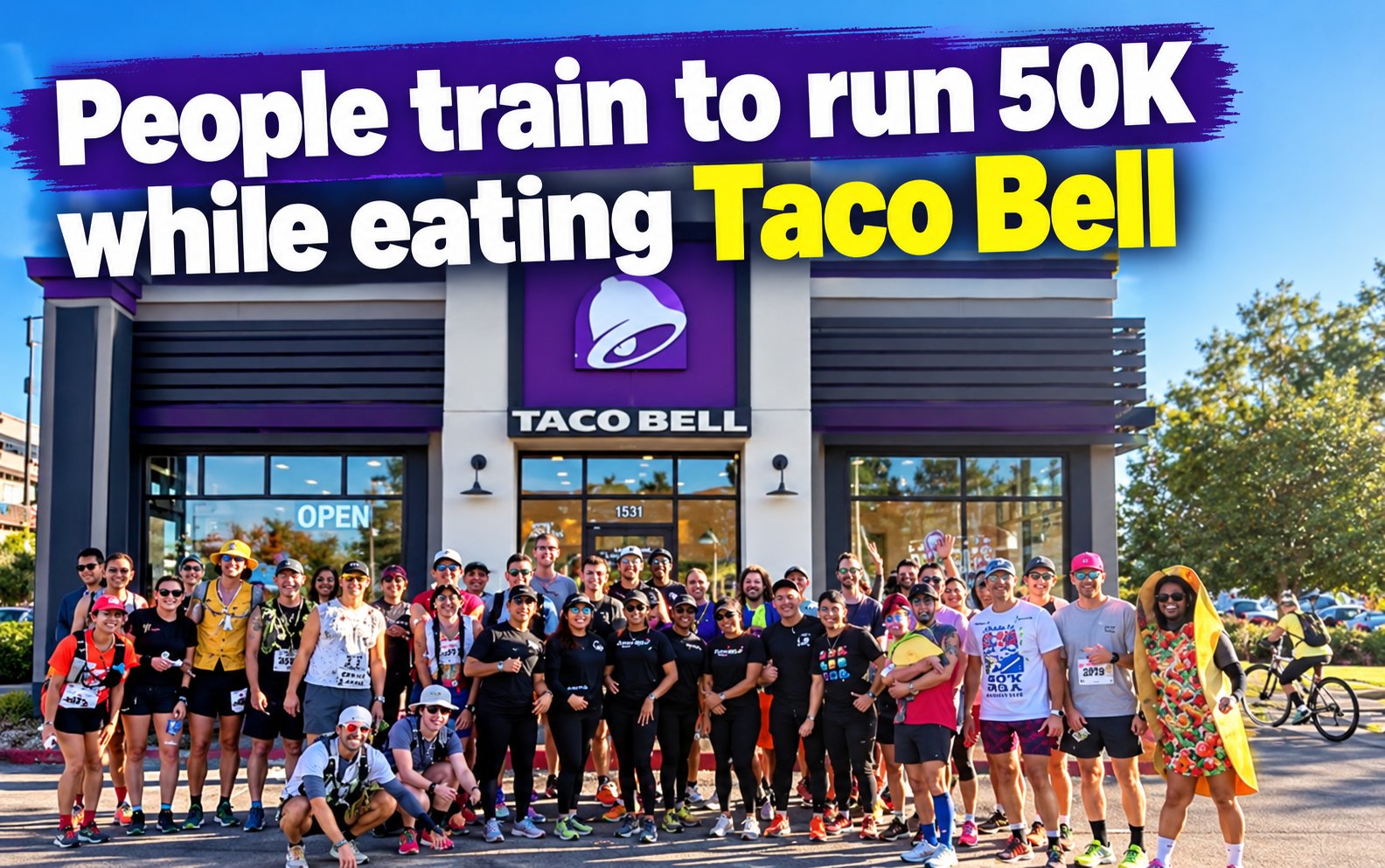
Oliver’s segment works as comedy because subscriptions have become ridiculous, but underneath the Taco Passes, animal bone deliveries and printer jokes is a serious economic debate about ownership in the digital age. Technology has given manufacturers extraordinary power to maintain control over products long after consumers purchase them. Software can unlock features, disable features, collect information and determine whether hardware continues providing certain functionality. Subscriptions can convert purchases into permanent financial relationships, while companies can design interfaces that make entering those relationships considerably easier than leaving them.
None of this means subscriptions are inherently bad. Some are convenient, inexpensive and genuinely useful. Consumers frequently prefer subscriptions when they provide continuous value, and companies have every right to develop recurring revenue models when customers knowingly choose them.
The problem begins when recurring payments stop being a convenience and become a mechanism for extracting revenue through confusion, inertia, artificial restrictions or deliberately complicated cancellation procedures. Consumers should know exactly what they are purchasing, exactly what they will be charged and exactly how to stop paying.
If a company can enroll someone with a button, there is little technological justification for requiring a phone call, certified letter, maze of webpages or heroic journey through customer service to cancel. That is ultimately why Oliver’s argument resonates. The subscription economy does not need to disappear, but consumers should retain meaningful control over their money, their data and the products they purchase. And the exit door should be just as easy to find as the entrance.
Sources
Last Week Tonight with John Oliver: Subscriptions
Federal Trade Commission: Final Click to Cancel Rule
Federal Trade Commission: Negative Option Rule
Federal Trade Commission: Amazon Prime Case
U.S. Department of Justice: Adobe Subscription Lawsuit
U.S. Court of Appeals for the Eighth Circuit: Custom Communications v. FTC
Federal Trade Commission: 2026 Request for Public Comment on Negative Option Marketing

































Want to join the conversation?
Create an account or sign in to share your thoughts, vote,
and reply to other readers.
Showing 0 of 0 comments
Don't have an account?
Already have an account?