
Trump Promised to Lower Prices. Now MAGA Is Telling Americans Higher Gas Prices Are a ‘Sacrifice’
President Donald Trump spent much of his 2024 campaign making one of the simplest promises in American politics: prices would come down. Groceries, gasoline, energy, housing and other everyday expenses were repeatedly invoked as evidence that Americans had become worse off, with Trump promising voters that a return to the White House would bring rapid relief.
By March 2026, however, the political message surrounding prices had changed dramatically. With the war in Iran disrupting global energy markets and gasoline prices climbing across the United States, some of Trump’s supporters and conservative commentators were no longer promising cheap fuel. Instead, they were asking Americans to accept higher prices as a necessary sacrifice. That contradiction became the centerpiece of Seth Meyers’ March 19 “A Closer Look” segment on NBC’s “Late Night,” which juxtaposed Trump’s campaign promises with rising energy costs, inflation data and interviews with voters now confronting higher prices at the pump. The sharpest moment came from Pennsylvania, where a woman who said she had voted for Trump three times expressed extraordinary regret over her support for the president.
Trump’s Campaign Was Filled With Promises to Bring Prices Down
Meyers opened the segment with a montage of Trump campaigning on affordability, repeatedly promising that his administration would reduce prices for American consumers. Trump mentioned everything from groceries and energy to housing, insurance, bacon, eggs, apples and lettuce while portraying inflation as one of the defining failures of the previous administration. Those promises were politically powerful because inflation had already reshaped household budgets and voter attitudes. Trump did not merely campaign on slowing future inflation; his rhetoric frequently gave voters the broader impression that everyday costs themselves would decline.
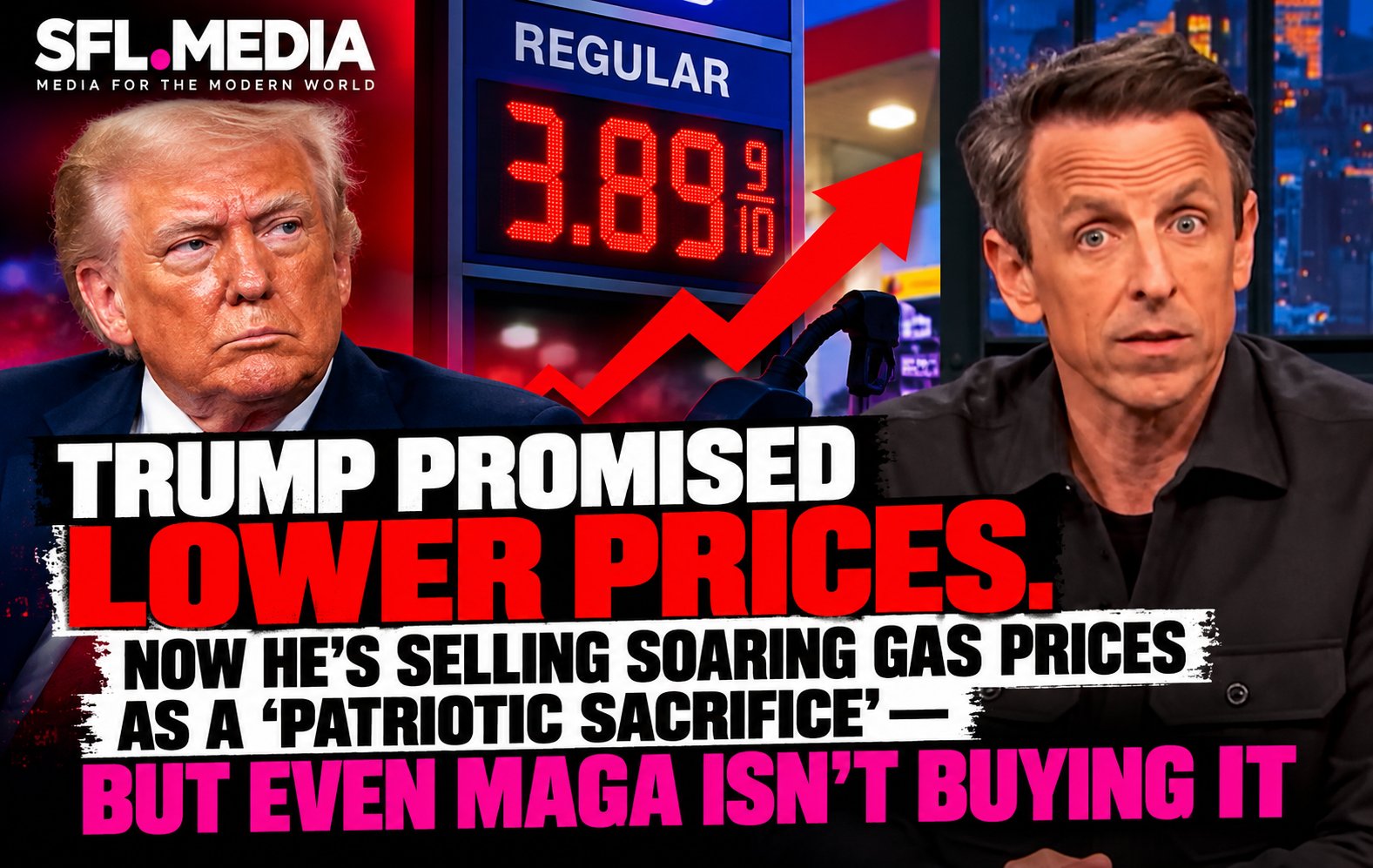
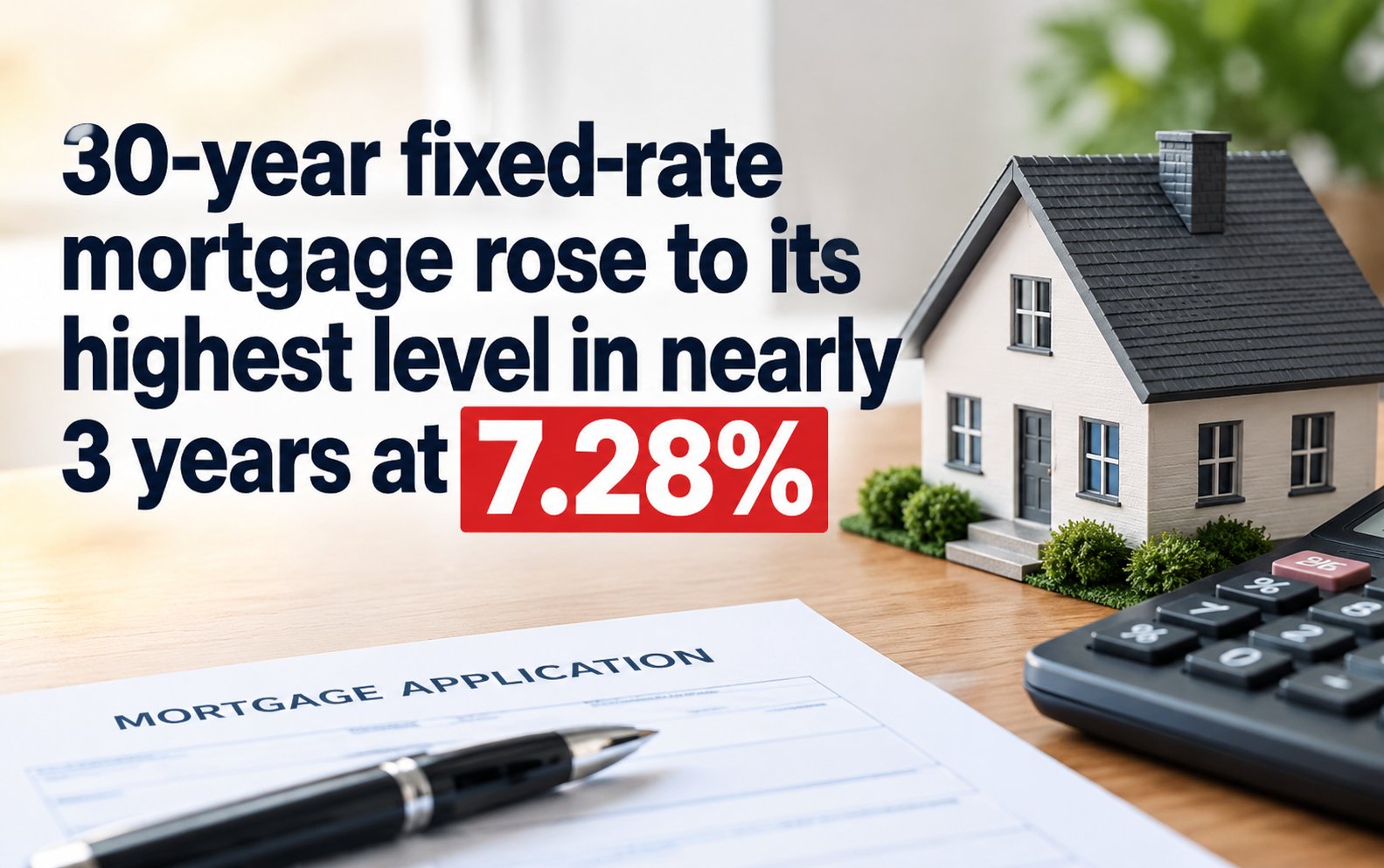
Meyers contrasted those promises with economic reports showing continued price pressures in early 2026. The segment cited producer-price data showing wholesale inflation running hotter than economists expected, raising concerns that businesses facing higher costs could eventually pass some of those increases along to consumers. The larger economic problem was being compounded by energy markets. The U.S. and Israeli military conflict with Iran disrupted oil supplies and shipping, helping push American gasoline prices sharply higher. Reuters reported in early March that the national gasoline average had crossed $3 per gallon for the first time since November as the conflict sent crude prices upward. By mid March, reporting on the Pennsylvania voter interviews put the national average near $3.80 per gallon, compared with just under $3 roughly a month earlier.
Higher Oil Prices Don’t Stay at the Gas Station
The economic consequences of an oil shock extend far beyond what drivers see on the sign outside a gas station. Petroleum is embedded throughout the modern economy, meaning sustained increases in crude oil and fuel prices can raise transportation, manufacturing and agricultural costs simultaneously.
Diesel moves enormous quantities of American freight. Jet fuel affects airlines and air cargo. Petroleum is used in plastics and packaging, while natural gas and other energy inputs are important to fertilizer production and agriculture. Businesses facing higher transportation and production costs can ultimately pass some of those expenses to consumers. That creates a particularly difficult political problem for an administration elected partly on reducing the cost of living. Even if an overseas military conflict is the immediate catalyst for an energy shock, Americans experience the consequences domestically every time they fill their tanks or encounter higher transportation-related costs elsewhere in the economy.
The Message Shifts From Lower Prices to ‘Sacrifice’
Meyers focused much of his segment on what he characterized as a remarkable change in conservative messaging. Rather than arguing that higher gasoline prices were unacceptable, several Trump supporters featured in television clips said Americans should be prepared to absorb additional costs if doing so was necessary to prevent Iran from obtaining a nuclear weapon or to advance U.S. national security objectives.
One supporter said paying somewhat more for gasoline was worth it if it prevented Iran from acquiring a nuclear weapon. Other commentary featured in the segment framed the situation in explicitly patriotic terms, invoking the idea that “freedom is not free,” that Americans would need to make sacrifices and that the country should tolerate “short term pain for long term gain.” That argument is fundamentally different from the economic pitch Trump made during the campaign. The question was no longer simply whether the administration could deliver cheaper gasoline. It had become whether Americans should accept more expensive gasoline because the administration believed its foreign policy objectives justified the cost.
The White House and administration allies also pushed back against criticism by emphasizing the high prices Americans experienced during the Biden administration and portraying the latest energy spike as temporary rather than evidence of a lasting economic deterioration.
Iran War Sends Gas Prices Surging
The underlying increase in fuel prices was not simply a late night comedy premise. Energy markets were reacting to a genuine geopolitical shock. Reuters reported on March 2 that gasoline prices had climbed above $3 per gallon as escalating conflict involving Iran disrupted oil markets. Iranian retaliation against energy infrastructure and threats to shipping through the Strait of Hormuz intensified fears about global supply disruptions, sending crude prices higher and creating the possibility of additional increases at American pumps.
The Strait of Hormuz is particularly important because it serves as one of the world’s most consequential oil-shipping corridors. Any significant interruption to traffic through the region can quickly affect expectations about global supply, even before actual shortages reach American consumers. The political danger was apparent almost immediately. A Reuters/Ipsos survey reported that nearly half of respondents said they would be less likely to support Trump’s Iran policy if gasoline prices continued rising, illustrating how quickly a foreign policy conflict can become a domestic pocketbook issue.
Then Came a Three Time Trump Voter in Pennsylvania
The most politically damaging footage in Meyers’ segment did not come from a Democratic politician or liberal commentator. It came from Amanda Robbins, a Pennsylvania resident who told NBC News that she had voted for Trump three times. NBC News senior politics reporter Jonathan Allen interviewed voters at a gas station in Millersburg, Pennsylvania, asking how they felt about the Iran conflict and rising gasoline prices. Several voters remained supportive of Trump’s actions and said they were willing to pay more at the pump if that was the price of protecting the country. Robbins had a dramatically different reaction. When Allen asked what she would say directly to Trump, Robbins delivered an expletive filled denunciation of the president. Allen then asked how many times she had voted for him. Three times, she answered.
“That was my bad,” Robbins said. “Apparently, I’m an idiot.”
The exchange immediately went viral because it condensed a much larger political problem into a few seconds of television. Robbins was not a lifelong Trump opponent attacking a president she had always disliked. She identified herself as someone who repeatedly voted for him and was now publicly expressing regret. At the same time, the complete NBC interviews offered a more complicated picture than the viral clip alone. Other Trump voters interviewed at the same Pennsylvania gas station continued to support the administration’s actions against Iran and explicitly said they were willing to tolerate higher gasoline prices in exchange for what they viewed as greater national security.
The Political Problem Is the Change in Expectations
The central issue highlighted by Meyers was therefore not simply that gasoline prices had increased. Presidents have limited control over the price of oil, which is determined by a complicated global market involving production levels, refinery capacity, international demand, geopolitical instability and decisions by major petroleum producing countries.
The political vulnerability comes from the expectations Trump himself established. Trump repeatedly presented lower prices as something his administration could deliver, often using extraordinarily confident language about how quickly Americans would see economic relief. When gasoline prices subsequently surged because of a military conflict initiated during his presidency, supporters were forced to explain why Americans should accept precisely the type of price increases Trump had spent years attacking.
That does not by itself prove the administration’s Iran policy is economically unjustified. Governments routinely make national security decisions that carry economic costs, and voters can reasonably decide that those costs are worth paying. The contradiction is political: a movement that spent years treating high gasoline prices as evidence of presidential failure is now confronting high gasoline prices under its own administration.
Meyers Turns the Contradiction Into the Punchline
Meyers used that reversal as the foundation for his comedy. Campaign footage of Trump promising lower prices was followed by news reports about inflation and soaring energy costs, which were then contrasted with supporters arguing that Americans should embrace financial sacrifice. The segment concluded by juxtaposing the economic anxiety surrounding gasoline and consumer prices with Trump discussing progress on a new White House ballroom, giving Meyers an obvious comedic target: voters worried about what it costs to fill their cars while the president talked about a major construction project at the White House.
Late night comedy is not economic analysis, and Meyers makes no attempt to disguise his political point of view. But the underlying numbers and voter reactions driving the segment were real. Gasoline prices had risen rapidly following the escalation with Iran, energy costs were threatening to feed additional inflationary pressure through the economy, and at least some Trump supporters were openly telling Americans that paying more was a sacrifice worth making. The political question for Trump is whether voters who supported him because they expected lower prices will make the same calculation.
Amanda Robbins already gave her answer.

Sources & Further Reading
Reuters — U.S. gasoline crosses $3 per gallon amid Iran conflict
U.S. Bureau of Labor Statistics — Producer Price Index
NBC/Late Night — Segment via Yahoo Entertainment
TV Insider — Pennsylvania Trump voter reacts to rising gasoline prices








































Want to join the conversation?
Create an account or sign in to share your thoughts, vote,
and reply to other readers.
Showing 0 of 0 comments
Don't have an account?
Already have an account?