
Trump’s Birthright Citizenship Fight Heads to the Supreme Court And the Constitution Isn’t on His Side
“This isn’t a policy debate. It’s a constitutional collision.”
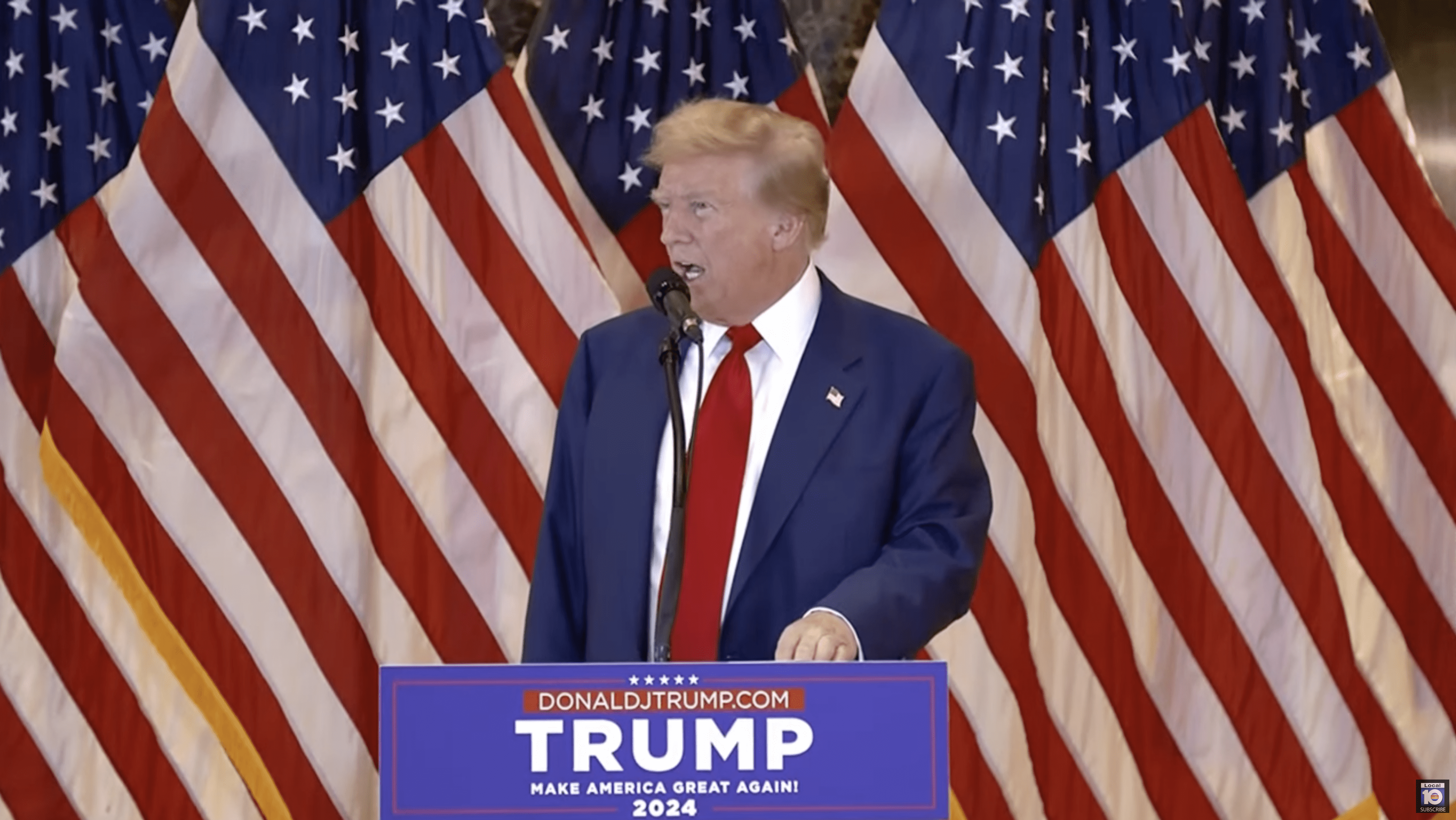
On January 20, 2025, within hours of returning to power, Donald Trump signed an executive order titled “Protecting the Meaning and Value of American Citizenship.” It immediately triggered one of the most consequential legal battles in modern immigration law, a direct attempt to end birthright citizenship as Americans have understood it for more than 150 years.
Now, as the case reaches the U.S. Supreme Court in April 2026, the question is no longer political. It’s constitutional. And based on the arguments presented so far, Trump’s case is colliding head on with both the text of the Constitution and a century of settled law.
The Policy: A Direct Challenge to the 14th Amendment
At its core, the executive order attempts to redefine one of the most explicit guarantees in the Constitution: the Citizenship Clause of the 14th Amendment. The order directs federal agencies to deny citizenship documents to children born on U.S. soil if their parents are not citizens or lawful permanent residents. That includes children of undocumented immigrants and even those born to parents in the country legally on temporary visas.
In practical terms, it would end automatic citizenship for millions of people born in the United States.
The legal argument hinges on a narrow reinterpretation of the phrase “subject to the jurisdiction thereof,” claiming that not all individuals physically present in the U.S. fall under that definition.
Why Legal Experts Say the Case Falls Apart
Across the legal spectrum, from liberal scholars to conservative constitutionalists, there is broad agreement: the argument is extraordinarily weak. The Citizenship Clause itself is unambiguous. It states that anyone born in the United States and subject to its jurisdiction is a citizen. For more than a century, that phrase has been understood to mean anyone subject to U.S. law. If you can be arrested, prosecuted, and taxed in the United States, you are under its jurisdiction.
That includes undocumented immigrants. It includes visa holders. It includes almost everyone on U.S. soil.
That interpretation was cemented in the landmark 1898 Supreme Court case United States v. Wong Kim Ark, which held that a child born in San Francisco to non-citizen parents was, unequivocally, an American citizen. The ruling has stood as the definitive interpretation of the 14th Amendment ever since. There’s also a structural problem Trump’s order cannot escape: a president cannot override the Constitution. Executive orders can direct agencies, but they cannot rewrite constitutional rights.
To end birthright citizenship, you don’t need a memo, you need an amendment.
And that requires a level of political consensus that simply does not exist.
Why Trump Is Pushing This Fight
The legal case may be weak, but the political motivation is clear. Trump has long framed birthright citizenship as a “loophole” that incentivizes illegal immigration, a claim widely disputed by immigration experts. Ending it has been a central talking point in his broader effort to restrict immigration and redefine who qualifies as American. But beyond policy, there’s a deeper ideological push.
This is about redefining citizenship itself, from a right tied to birthplace to a status tied to lineage.
That shift would move the United States away from a foundational principle that has distinguished it from many other nations: that citizenship is not inherited by blood, but granted by birth within the country.
A Skeptical Supreme Court, Across Ideological Lines
The case, now before the Supreme Court, has revealed something rare in today’s polarized judiciary: skepticism from both sides. During oral arguments, John Roberts reportedly described the administration’s legal theory as “quirky” and “idiosyncratic” a notable signal from a chief justice not known for rhetorical overreach. Several justices raised concerns that the policy would create a permanent underclass of people born in the United States but denied citizenship a scenario that echoes the very conditions the 14th Amendment was designed to eliminate after the Civil War.
The amendment wasn’t written to restrict citizenship. It was written to guarantee it.
Even conservative justices pressed the government on practical implications. Without birthright citizenship, a birth certificate would no longer be sufficient proof of citizenship. Americans could be forced to produce documentation of their parents’ immigration status to access basic rights, from passports to employment. The result, as several justices suggested, would be administrative chaos.
The Stakes: More Than Immigration
This case is about more than immigration policy. It’s about the durability of constitutional rights in the face of executive power. If the Court were to accept the administration’s argument, it would open the door to a fundamental redefinition of citizenship, one that could ripple far beyond immigration and into the core of American identity.
Who is an American? And who gets to decide?
For more than a century, that answer has been clear. Trump’s order attempts to change it unilaterally.
Trump’s effort to end birthright citizenship isn’t just controversial, it’s constitutionally unstable.
It runs against the plain text of the 14th Amendment, contradicts binding Supreme Court precedent, and attempts to use executive power where constitutional change is required. The Supreme Court’s skepticism reflects that reality. And while the final ruling is expected later this year, the trajectory is already clear.
This isn’t a close call. It’s a test of whether the Constitution still means what it says.














































Want to join the conversation?
Create an account or sign in to share your thoughts, vote,
and reply to other readers.
Showing 0 of 0 comments
Don't have an account?
Already have an account?