

U.S. Air Force Cloud Platform Hacked, Raising National Security Concerns Over Growing Wave of Federal Cyber Breaches
A reported cyber intrusion into the U.S. Air Force’s flagship Cloud One computing platform is raising serious questions about military cybersecurity, government oversight and America’s ability to defend its digital infrastructure against increasingly sophisticated cyber threats.
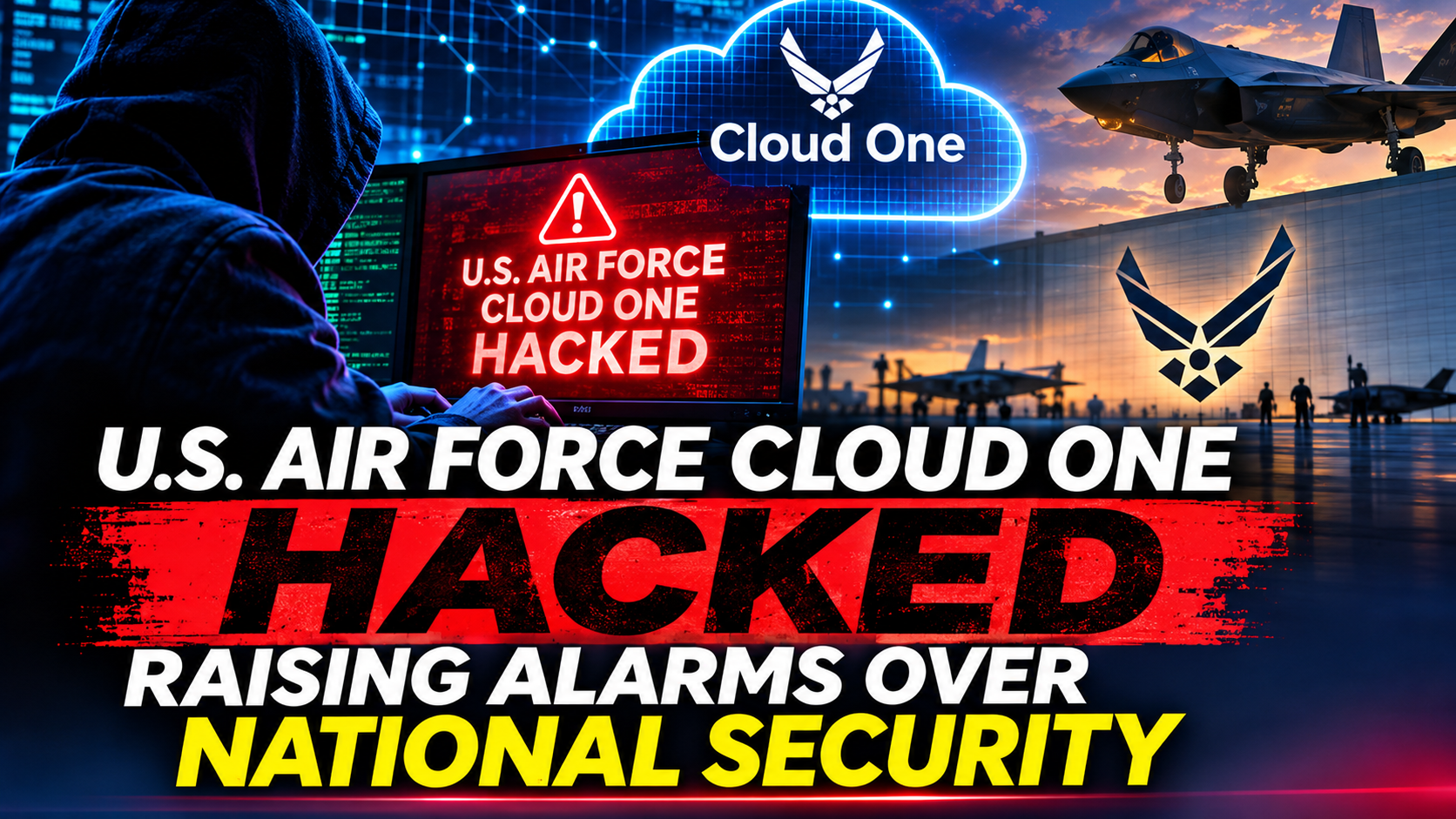
WASHINGTON — Hackers have reportedly infiltrated one of the United States military’s largest cloud computing environments, potentially exposing sensitive information concerning military personnel, logistics, equipment maintenance and operational readiness. The breach comes amid a growing series of cybersecurity incidents affecting American government institutions, intensifying concerns about the federal government’s ability to protect its increasingly interconnected digital infrastructure.
Reuters first reported the intrusion on November 27, 2026, citing multiple sources familiar with the incident. The compromised platform, known as Cloud One, provides essential computing infrastructure supporting the U.S. Air Force, Space Force and other Department of Defense organizations. The intrusion was reportedly discovered during system upgrade work, prompting investigators to seek assistance from U.S. Cyber Command to assess the potential damage.
The Pentagon has maintained that classified and mission-critical systems remain secure. However, investigators have not publicly established who was responsible for the intrusion, how long the hackers maintained unauthorized access or whether sensitive information was stolen. Those unanswered questions are particularly concerning given the platform’s extensive role in supporting American military operations around the world.
The breach was discussed Saturday on MS NOW during a segment hosted by Antonia Hylton, featuring former CIA officer Marc Polymeropoulos, Democratic political strategist Joel Payne and Republican commentator Matthew Bartlett. The discussion examined the potential national security consequences of the intrusion, the growing threat of AI-enabled cyberattacks and questions surrounding federal cybersecurity preparedness under the Trump administration.
Hackers Infiltrate the Air Force’s Flagship Cloud Computing Platform
Launched in 2017, Cloud One was designed to modernize the Air Force’s digital infrastructure by consolidating computing resources within a standardized cloud environment. The platform incorporates services from Microsoft, Amazon, Oracle and Google, allowing military organizations to manage applications, access information and coordinate administrative and operational functions across the globe.
Cloud One supports applications involving military personnel records, payroll, aircraft maintenance, logistics, air defense information and weapons inventory management. Among its documented applications are the Air Force’s Cloud Based Command and Control system, which consolidates air defense information from across North America, and the Theater Integrated Combat Munitions System, which tracks military munitions at installations worldwide.
Its importance extends considerably beyond conventional administrative functions, making the security of Cloud One a significant consideration for American military readiness. While centralized cloud computing can dramatically improve efficiency, collaboration and access to information, it also introduces complex security challenges. Consolidating numerous applications within interconnected environments can increase the potential consequences of a successful cyber intrusion if appropriate safeguards fail.
Reuters reported that investigators had not established the identities of the hackers, the full extent of their access or whether any information had been stolen. The possibility that sensitive military information was exposed remains a significant concern, but the presence of particular applications within Cloud One does not establish that those applications were individually compromised.
Hackers Reportedly Penetrated Cloud One’s Administrative Infrastructure
One of the most concerning revelations involves reports that the attackers penetrated Cloud One’s control plane, the administrative infrastructure responsible for managing the cloud computing environment. Unauthorized access at this level creates potentially serious security risks because administrative systems play a central role in overseeing applications, permissions and computing resources.
Depending on the extent of the access obtained, intruders could potentially acquire intelligence concerning military logistics, equipment availability and operational readiness. However, investigators have not publicly established that the attackers accessed or extracted such information. Gaining unauthorized access to an administrative environment does not automatically establish that every application or database operating within it has been compromised.
The Air Force declined to provide specific details regarding the affected systems, citing its policy against publicly discussing network vulnerabilities and operational security.
“We continuously take prudent measures to protect Department (of the Air Force) information, systems and mission capabilities.” — U.S. Air Force statement to Reuters
Although limiting public disclosure during an active military cybersecurity investigation is understandable, the lack of detailed information leaves significant questions about the severity of the intrusion, the effectiveness of existing security protections and whether investigators have identified the full extent of the unauthorized activity.
Cyberattack Disrupts Air Force Technology Operations
The consequences of the breach have reportedly extended beyond the initial unauthorized access. Efforts to transfer additional administrative applications into Cloud One were suspended, while restrictions were imposed on software updates and certain administrative permissions. Federal News Network separately corroborated aspects of the disruption, reporting that remediation efforts affected functions requiring administrative access.
These interruptions illustrate one of the less visible consequences of a major cybersecurity incident. Even when attackers do not directly disable critical infrastructure, the process of containing an intrusion can interrupt legitimate operations, delay modernization projects and complicate routine security maintenance. Restrictions on software updates are particularly concerning when technology providers are simultaneously releasing patches for newly discovered vulnerabilities.
For the military, cybersecurity is not simply a matter of protecting confidential information. It also involves ensuring that authorized personnel can reliably access the systems necessary to perform their responsibilities. A compromised network can create operational challenges even when classified information remains protected. The extent to which Cloud One’s temporary restrictions have since been lifted remains publicly unclear.
Pentagon Maintains Classified and Mission Critical Systems Remain Secure
The Associated Press reported Saturday that the intrusion occurred earlier in 2026 and did not affect classified or mission critical systems, citing a person familiar with the situation. Military cybersecurity officials have reportedly taken steps to mitigate the threat and strengthen the affected environment, while the White House’s National Security Council and Homeland Security Council remain involved in reviewing the incident.
Those assurances provide an important indication that the breach may be more limited than initially feared. Nevertheless, unclassified information can possess considerable intelligence value, particularly when it concerns military personnel, supply chains, equipment maintenance and operational readiness.
Foreign intelligence services do not necessarily need access to classified war plans to develop a detailed understanding of American military capabilities. Individually unclassified records can become strategically valuable when aggregated and analyzed alongside other intelligence sources, potentially revealing patterns that would otherwise remain concealed.
Consequently, determining whether classified systems were compromised represents only one component of a comprehensive national security assessment. Investigators must also establish what information was accessible, whether it was collected and whether any unauthorized access remains within the affected environment.
Former CIA Officer Warns of Espionage and Hybrid Warfare
During Saturday’s MS NOW coverage, former CIA officer Marc Polymeropoulos outlined two fundamentally different threats associated with cyber intrusions into sensitive government infrastructure: traditional intelligence collection and preparations for future disruption.
Polymeropoulos compared the situation to discovering that an intruder had unlocked the front door of a building without knowing which rooms the individual subsequently entered. The analogy illustrates the difficulty investigators face when attempting to reconstruct a cyberattack and determine its full consequences, particularly when unauthorized access may have remained undetected for an extended period.
Traditional cyber espionage involves collecting information that could provide a foreign government or intelligence organization with a strategic advantage. Military personnel records, operational patterns, equipment availability and logistical information could all potentially contribute to a broader intelligence assessment.
Hybrid warfare introduces a different concern. Rather than immediately stealing information or disrupting operations, an adversary may seek to maintain clandestine access that could be exploited during a future geopolitical crisis or military confrontation. Such access could potentially threaten communications, transportation, logistical operations and other essential services during periods of heightened vulnerability.
There is currently no publicly established evidence that the Cloud One attackers were operating on behalf of a foreign government, maintained persistent access or were preparing for a future military conflict. Nevertheless, the possibility of strategically motivated cyber intrusions remains a significant concern for American national security officials.
Air Force Hack Follows a Troubling Series of Federal Cybersecurity Incidents
The Cloud One intrusion follows a series of recently disclosed cybersecurity incidents affecting American government institutions. Reuters reported that the federal government was already addressing the consequences of multiple other cyber incidents involving the FBI, Pentagon, Department of Homeland Security, intelligence agencies and Treasury Department.
Among the incidents discussed during Saturday’s MS NOW broadcast were reported breaches involving an unclassified intelligence analysis environment used by the CIA and the Office of the Director of National Intelligence, the FBI’s National Crime Information Center and military personnel information.
The FBI’s National Crime Information Center is particularly significant because it provides law enforcement agencies nationwide with access to information concerning missing persons, outstanding warrants, wanted individuals, stolen property and other criminal justice records. Unauthorized access to such a system could have serious implications for public safety, individual privacy and ongoing investigations.
Recent technology disruptions affecting Federal Aviation Administration communications, Microsoft and JPMorgan Chase have further contributed to concerns about America’s dependence on interconnected digital infrastructure. However, technology outages and confirmed cyber intrusions are not interchangeable, and there is currently insufficient evidence to establish that these incidents were coordinated or conducted by the same perpetrators.
What these developments collectively demonstrate is the enormous responsibility placed on digital systems supporting essential government and commercial functions, as well as the potentially widespread consequences when those systems fail or become compromised.
Artificial Intelligence Is Transforming the Cybersecurity Battlefield
The growing availability of advanced artificial intelligence tools is introducing another layer of complexity into America’s cybersecurity challenges. AI systems can analyze extensive amounts of software code, identify potential security weaknesses and accelerate technical tasks that previously required considerably more human effort.
For cybersecurity defenders, these capabilities offer significant advantages, including faster threat detection, automated monitoring and improved vulnerability assessments. For malicious actors, however, similar capabilities can accelerate reconnaissance, improve deceptive communications and potentially reduce the time required to identify exploitable weaknesses.
The resulting competition is creating an environment in which cybersecurity teams must respond to emerging threats at unprecedented speed. Traditional government procurement procedures, lengthy software modernization projects and bureaucratic approval processes may struggle to keep pace with technological developments occurring across the private sector.
The danger is particularly significant for sprawling government cloud environments, where numerous applications, vendors and administrative systems must operate within a coordinated security framework. Weaknesses in individual components can create broader security challenges if systems are insufficiently isolated or monitored.
There is no publicly confirmed evidence that artificial intelligence was used to conduct the Cloud One intrusion. Nevertheless, the incident comes at a time when AI’s potential to accelerate cyberattacks is becoming a major consideration for national security officials. The challenge facing the United States is no longer simply whether it possesses sophisticated cybersecurity technology, but whether government institutions can deploy, maintain and adapt that technology faster than adversaries attempting to defeat it.
Pentagon Auditors Previously Identified Cloud One Security Concerns
The reported intrusion is particularly concerning in light of previous government oversight findings involving Cloud One. A 2023 Department of Defense inspector general audit identified deficiencies in the platform’s security authorization process, raising questions about how officials evaluated cybersecurity risks associated with its commercial cloud infrastructure.
Subsequent oversight reporting indicated that documentation demonstrating completion of a recommended security reassessment had not been provided through September 2025. Those findings do not establish that the previously identified deficiencies contributed to the current intrusion, but they provide important context for congressional investigators examining the platform’s security history.
Government cybersecurity audits are intended to identify weaknesses before they develop into operational incidents. When corrective recommendations remain unresolved or their implementation cannot be adequately documented, questions naturally arise about whether government agencies are exercising sufficient oversight of systems entrusted with sensitive information.
Investigators should determine whether the previously identified deficiencies were addressed, whether corrective measures were independently verified and whether any unresolved weaknesses contributed to the circumstances surrounding the reported breach.
Did Trump Administration Budget Cuts Weaken Federal Cybersecurity?
Saturday’s MS NOW discussion also raised questions about whether federal workforce reductions, government restructuring and spending cuts associated with the Trump administration’s Department of Government Efficiency initiative may have affected America’s cybersecurity preparedness.
Cybersecurity requires significant institutional expertise, continuous monitoring, experienced personnel and sustained investment. Reductions in staffing or disruptions to established government programs can introduce additional risks if essential responsibilities are eliminated without adequate replacements.
Modernizing outdated government systems and eliminating unnecessary expenditures can be legitimate policy objectives. However, cybersecurity programs must be evaluated according to the risks they mitigate rather than exclusively through the immediate financial savings associated with reducing budgets or personnel.
The Cloud One intrusion raises legitimate questions about whether federal cybersecurity agencies have sufficient staffing, funding and technical resources to protect increasingly complex government infrastructure. There is currently no publicly established causal connection between DOGE-related cuts and the Air Force breach, and establishing such a connection would require a detailed examination of staffing changes, budget decisions, security audits, contractor oversight and the circumstances surrounding the intrusion.
Congressional investigators should determine whether administrative decisions contributed to the vulnerability, delayed its discovery or complicated the government’s response. That inquiry should be driven by evidence rather than partisan assumptions, particularly when the consequences of inadequate cybersecurity could extend across multiple branches of the federal government.
Federal Cybersecurity Leadership Faces Additional Scrutiny
The Cloud One breach also comes amid leadership instability within the federal government’s cybersecurity apparatus. CBS News reported that White House National Cyber Director Sean Cairncross was dismissed from his position in the week preceding public disclosure of the Air Force intrusion.
His departure comes during a period of growing concern about government cybersecurity and the ability of federal institutions to respond effectively to emerging threats. Although there is no established connection between Cairncross’s dismissal and the Cloud One breach, the timing raises broader questions about leadership continuity and coordination among the government agencies responsible for defending America’s digital infrastructure.
Effective national cybersecurity policy depends on cooperation between military organizations, civilian agencies, intelligence services, private technology companies and critical infrastructure operators. Maintaining consistent leadership and clearly defined responsibilities is particularly important during periods of multiple security incidents and rapidly evolving technological threats.
Federal Contractors and Commercial Cloud Providers Face Renewed Scrutiny
Cloud One also illustrates the federal government’s growing dependence on private technology companies to operate essential national security infrastructure. Its architecture incorporates resources from several of the world’s largest commercial cloud computing providers, while private defense contractors have played important roles in implementing and maintaining the platform.
Science Applications International Corporation, commonly known as SAIC, previously served as the platform’s prime contractor before the Air Force awarded the follow on contract to Leidos in late 2025. Federal News Network reported that Leidos formally assumed responsibility in May 2026 under a potential five-year agreement valued at approximately $455 million.
Leidos announced the modernization contract in March 2026, emphasizing plans to strengthen security, increase automation, simplify cloud operations and reduce costs. Following reports of the breach, the company referred questions concerning the incident to the Air Force.
The involvement of private companies in military technology infrastructure is neither unusual nor inherently problematic. Commercial technology providers frequently possess expertise, resources and computing capabilities that would be difficult for the government to independently develop at comparable speed or scale. However, extensive reliance on contractors introduces additional questions about accountability, supply chain security, administrative privileges and responsibility for identifying and resolving vulnerabilities.
The Cloud One breach should prompt renewed examination of whether federal contracts establish sufficiently rigorous cybersecurity requirements, whether contractors are independently audited and whether government officials retain adequate visibility into the security of systems operated on their behalf. There is currently no publicly established evidence that negligence by Leidos, SAIC or any of Cloud One’s commercial cloud providers caused the intrusion.
America’s Digital Infrastructure Is Becoming a National Security Front Line
For much of American history, national security discussions focused primarily on protecting geographic borders, military installations, transportation networks and physical infrastructure. Today, many of the systems supporting those assets exist within interconnected digital environments that can potentially be targeted from anywhere in the world.
An adversary no longer necessarily needs to penetrate a military installation physically to gather information about its operations. Digital espionage may provide valuable insights into equipment readiness, procurement schedules, personnel information and logistical dependencies without a conventional military confrontation.
The threat extends far beyond the Pentagon. America’s electric grids, water utilities, telecommunications networks, financial institutions, hospitals and transportation systems increasingly rely on digital technologies that must remain operational under difficult circumstances.
In South Florida, where international airports, major seaports, military installations and financial institutions support significant portions of the regional economy, cybersecurity has become an increasingly important component of public safety and economic resilience. A successful cyberattack against critical infrastructure could create cascading consequences affecting businesses, government agencies and ordinary Americans who have little direct control over the security of the systems upon which they depend.
The interconnected nature of modern infrastructure means that cybersecurity is no longer an isolated information technology concern. It is an essential component of economic stability, emergency preparedness, public safety and national defense.
Congress Must Demand Answers About the Air Force Cyberattack
The Cloud One breach presents an important opportunity for congressional oversight of federal cybersecurity programs, military cloud infrastructure and the government’s preparedness for emerging AI-enabled threats. Lawmakers should seek a comprehensive explanation of when the intrusion began, how long it went undetected, what information was potentially accessible and whether investigators have definitively removed unauthorized access from the affected environment.
Congressional committees should also examine whether sufficient safeguards were in place to detect suspicious activity, restrict unauthorized access and prevent compromised systems from threatening other government infrastructure. Additional scrutiny should address contractor oversight, cybersecurity staffing levels, unresolved audit recommendations, vulnerability management practices and whether federal modernization programs adequately prioritize security alongside operational efficiency.
Some details will necessarily remain classified to protect national security and prevent adversaries from learning about defensive capabilities. However, classified briefings and closed congressional hearings can provide meaningful oversight without publicly exposing sensitive operational information.
The American public does not need access to every technical detail of a military cybersecurity investigation. It does deserve confidence that independent oversight exists, that government officials are accountable for preventable security failures and that appropriate resources are being devoted to protecting sensitive information.
The Air Force Breach Is a Warning America Cannot Afford to Ignore
The reported infiltration of Cloud One exposes a fundamental tension at the center of modern American national security. The United States is increasingly dependent on sophisticated, interconnected digital infrastructure, yet that same infrastructure presents new opportunities for espionage, criminal activity and potential disruption.
The Pentagon’s assurances that classified and mission-critical systems remain secure are encouraging. However, those assurances do not eliminate the need to determine precisely what happened, address underlying security weaknesses and examine whether similar vulnerabilities exist elsewhere within federal technology environments.
The growing capabilities of artificial intelligence, the complexity of commercial cloud infrastructure and the persistent threat of foreign intelligence operations will require sustained investment, technical expertise and effective government oversight. Cybersecurity cannot be treated as an administrative expense that can be reduced without considering the potential consequences for national security.
America spends hundreds of billions of dollars annually maintaining one of the world’s most sophisticated military forces. Protecting the digital infrastructure that supports those capabilities must be treated with the same seriousness as protecting aircraft, naval vessels, military installations and weapons systems.
National security in the 21st century is not measured exclusively by the strength of America’s military hardware. It also depends on whether the digital systems supporting that military can withstand the adversaries determined to compromise them.

Sources & Further Reading
-
Reuters – Exclusive: Hackers Breach U.S. Air Force Flagship Cloud One Computing Platform
-
Federal News Network – Hackers Breach Air Force’s Cloud One Computing Environment
-
CBS News – U.S. Air Force Cloud Platform Breached by Hackers, Report Says
-
Defense News – Hackers Breach U.S. Air Force Flagship Cloud One Computing Platform
-
Department of Defense Office of Inspector General – Audits, Investigations and Government Oversight
-
United States Cyber Command – Official Military Cybersecurity Information
-
Federal Bureau of Investigation – Cybercrime and National Security Threats
-
South Florida Media – Independent National Security, Technology and Political News Coverage
-
South Florida Media – Latest News and Investigative Reporting

















Loading comments…