

I Will Be Honest. I Didn’t Buy The Russell Brand Testimonies From the Start, and After the Interview with Tucker Carlson and Megyn Kelly, I’m 100% Convinced it is Not True
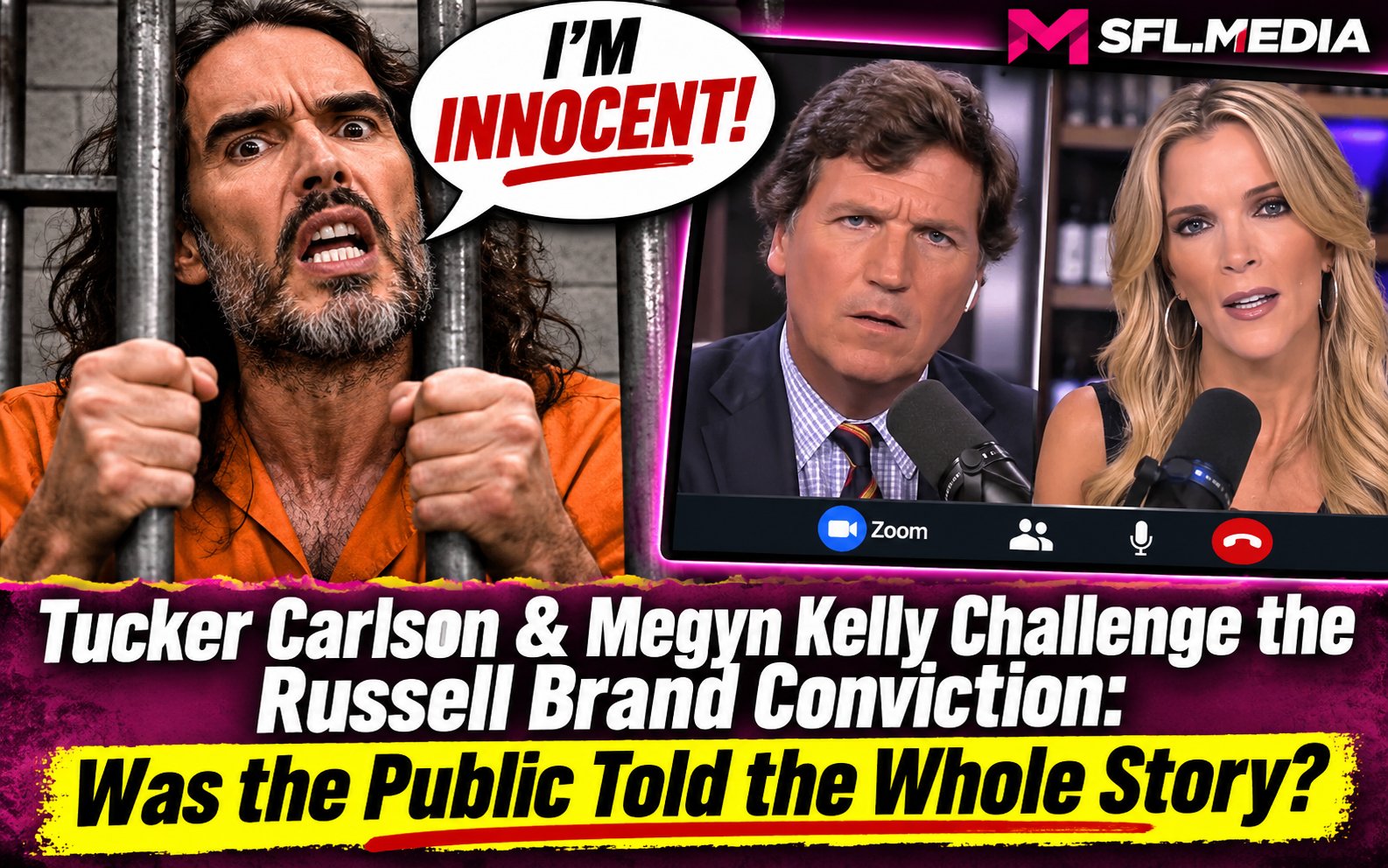
Megyn Kelly makes several specific arguments about the prosecution, the anonymous complainants, the Netflix documentary, the media coverage and the length of Brand’s sentence. The interview is important because Kelly isn’t simply defending Brand’s personality or his past behavior. She’s challenging the credibility of the prosecution’s case and arguing that the public hasn’t been given the full context. The bombshell interview raises questions whether Russell Brand’s political transformation has influenced the way his case has been portrayed, and more importantly his GUILTY verdict.
What Kelly Argues in the Interview
1. The anonymous complainant: Kelly questions why the woman identified as complainant five has lifelong anonymity and argues that the public cannot independently assess her account. UK law protects the identities of complainants in sexual-offence cases.
2. The delay in reporting: Kelly emphasizes that the woman allegedly waited approximately 17 years before reporting the incident as rape. Kelly argues that her earlier statements to a friend were inconsistent with her later allegations.
3. The nature of the encounter: Kelly disputes the characterization of the sexual encounter and argues that the circumstances described at trial support a different interpretation.
4. The Netflix documentary: Kelly criticizes journalist Roz Irwin and questions the documentary’s treatment of witnesses, including an alleged failure to disclose earlier favorable comments about Brand.
5. The political angle: Kelly argues that Brand’s political transformation and outspoken Christian beliefs have influenced the way British authorities and the media have treated him.
6. The sentence: Kelly questions the proportionality of Brand’s 10 year and six month prison sentence and compares it with sentences in other British sexual offense cases.
What the Court Record Says
A verdict was given, and this interview took place after it. It took place after the sentencing as well.
-
On November 5th, 2026, a jury convicted Brand of one count of rape and three counts of sexual assault involving four women.
-
He was acquitted of two additional rape charges and one attempted indecent assault charge.
-
Six women gave evidence during the four week trial. They testified behind screens to protect their identities.
-
On November 9th, Brand received a sentence of 10 years and six months.
-
The judge’s sentencing remarks specifically state that he disregarded allegations on which the jury had acquitted Brand or had not been sure beyond reasonable doubt
The Anonymous Accuser at the Center of Kelly’s Argument
One of the most controversial portions of the interview concerned the woman Kelly identified as “complainant five”, who accused Brand of rape. Kelly focused heavily on the fact that the complainant’s identity is protected under British law. In the United Kingdom, individuals who report sexual offenses are generally entitled to lifelong anonymity, even after a trial has concluded. Kelly argued that this prevents the public from independently evaluating the accuser’s background, hearing her account in her own words or assessing the circumstances surrounding the allegation.
She also discussed what she characterized as inconsistencies between the woman’s earlier statements and her eventual allegations. According to Kelly’s description of testimony presented during the trial, the woman had previously expressed uncertainty about the encounter and allegedly told a friend that she was young and might have been equally responsible. Kelly also questioned the delay between the alleged incident and the eventual rape complaint, arguing that the woman’s characterization of the encounter changed many years later.
These are serious questions. The prosecution argued that the women came forward independently after the 2023 investigation brought allegations against Brand into public view. Delayed reporting does not, by itself, establish that an allegation is false. But seventeen years later sure makes it look “funny”. The jury ultimately convicted Brand of rape involving one complainant. The public can scrutinize the evidence and the legal process, but the fact that an accuser remains anonymous does not mean that her identity or testimony was hidden from the court.
Here are a list of very interesting facts about “complainant five” whom Brand was convicted of raping. This info was completely disseminated from the Tucker / Megyn Kelly interview. The info was taken from a direct transcript of the interview, and only feature Megyn Kelly’s input as she is the one who did all the research.
1 – “Complainant five” is named as such, because from the first time she came forward to police, rather, first to journalists allegedly and then police to now, we have never known her real name. We have no idea who this person is. None whatsoever. We don’t know her name. We don’t know what she looks like. We have never heard her voice. We’ve never been able to hear her story in her own telling of it.
90%+ of communication is through body language. That’s how we instinctively know if somebody is a “truth teller” or not. None of that has been provided, because in the UK, you can make these accusations and you have lifetime anonymity. You will never be unearthed as an accuser with your actual name and likeness. So “complainant five” is all we know about the accuser.
2 – She met Russell Brand at one of his performances on stage. Brand infamously made clear at all of these performances that if you went backstage with him, he was going to have sex with you. There would be “sex acts” immediately. Knowing that, this woman (complainant five) went backstage and willingly dove immediately into a “sex act”. Her friend went to the front of Brand and was performing oral sex on him. “Complainant five”, within ten seconds of walking in, without even being introduced to Brand, dropped to her knees and gave him what we can only describe as anal sex with her tongue.
The big dispute at trial was whether she stuck her tongue in his anus or just around his anus. And she admitted just around the area. So this woman had a sexual act with Brand before even shaking his hand. Didn’t even exchange names, and that’s what she did to him. Shortly thereafter, he programmed her into his phone as “anal play”.
3 – In an incident after the first meeting, Brand called her and asked her to come over to his house. She willingly went. She knew they’d be having sex. Both times she went, she was cheating on her boyfriend at the time. To which she admitted to as well. So there’s a real question about this woman’s mentality and her morality. She went over to his house and willingly engaged in vaginal sex with him. Brand testified that they had been flirting about anal sex, that this was a naughty, subversive thing, that they were both kind of like, wouldn’t that be kind of fun?
She agreed to it. And her only admonition was “be gentle”. She denies that they talked about it, but they did have vaginal sex. She claims he flipped her over and then performed (anal sex) on her without her consent. He says he absolutely had her consent and that there was no objection whatsoever. He also testified that after that act, they sat there and watched TV together. She claims that wasn’t true. And what she really claimed to be upset about was that he allegedly said to her, look at the mess you’ve made, clean it up. And she didn’t feel that he was polite to her or caretaking of her. Brand denied that, too, for what it’s worth, when he took the stand. And that basically is all we know, about “complainant five”.
And she allegedly said no during the sex act, and that it was not to her liking. But it’s hard to believe that this woman, who would stick her tongue in and or around a stranger’s anus, would have had such a strong objection after her friend gave him oral, she gave him anal, she gave it up vaginally to being flipped over and doing it one additional way.
4 – The woman went 17 years without using the word rape or accusing Brand of rape. Only once this alleged documentary broke in 2023, did she then start to reimagine this as a rape by Brand. She went to the police. And keep in mind, that this is the same woman, when she first spoke about this case to her friend and the friend gave testimony at trial to this fact, that she said, “I really don’t know if there’s anything to my story. I was young and probably just as responsible as he was.” That’s the woman whose testimonial just put Russell Brand in prison for a decade.
For her charge, Brand got nine years in prison. He has a ten and a half years sentence in total. The extra 18 months is for three additional women who accused him of “sexual assault”. And those alleged “sexual assaults” were that he made out with a woman at a bar, that now claims it was without her consent and that he allegedly felt her breasts and her butt over her clothes with a bunch of witnesses standing there who were not moved at all by what they saw.
Another woman who says Brand grabbed her breasts. And a third woman who says at work she was asked by a third party if she would give him a massage on his shoulders. She didn’t really want to do it, but she did do it. And that when they came together for this, he bent down. He allegedly sniffed her nether regions and that was it.
None of these incidents would have ever have been prosecuted as a standalone case. Not one witness of any of this went to the police, nor accused Brand of assault or anything illegal for the better part of two or more decades. It wasn’t until they saw the 2023 hit piece masquerading as a documentary by a journalist who seems to be extremely dishonest.
What About the Netflix Documentary?
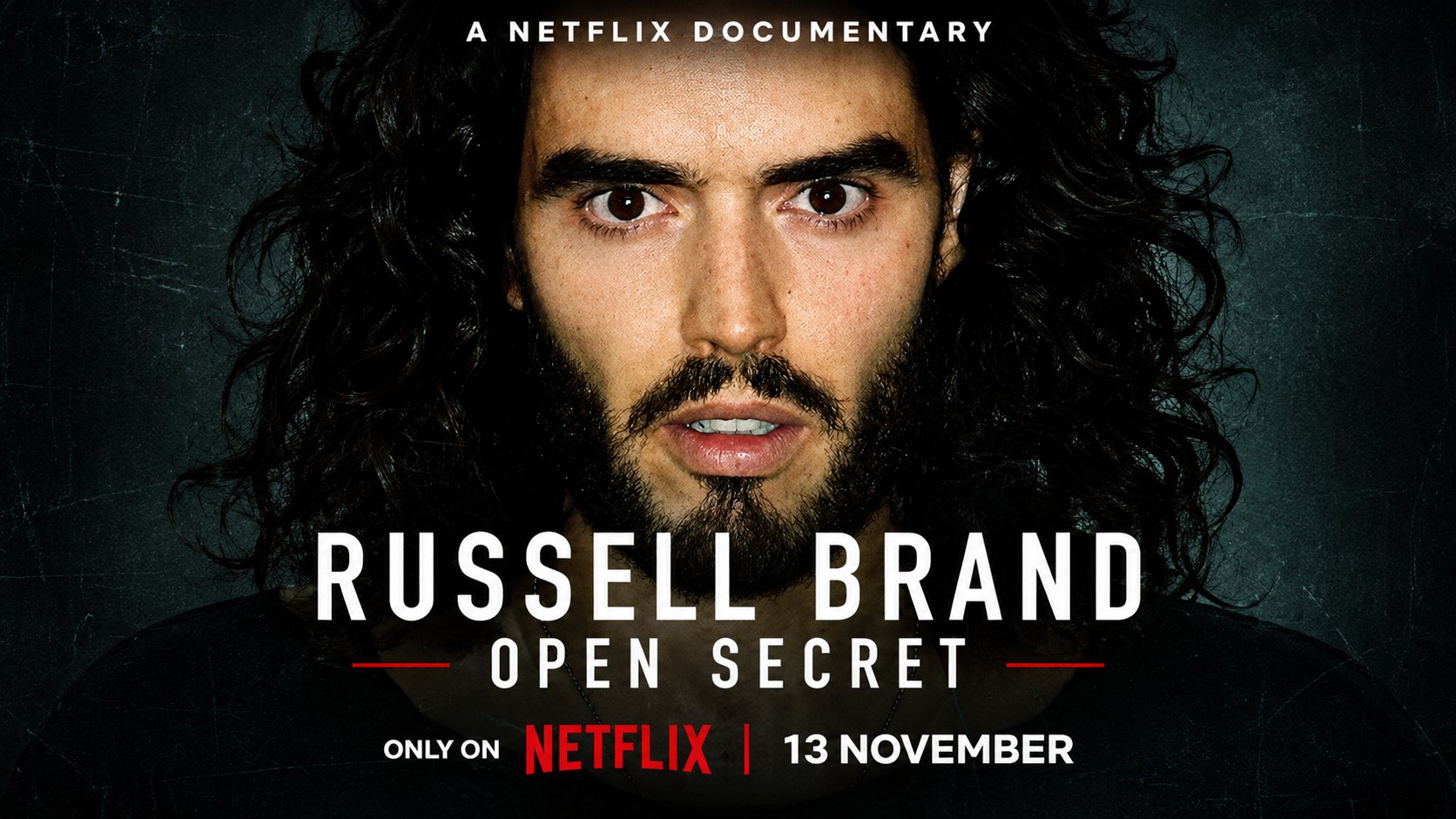
Kelly also directed considerable criticism toward journalist Roz Irwin and the reporting surrounding the allegations against Brand.cShe questioned the credibility and completeness of the documentary’s reporting, particularly its treatment of individuals who had previously spoken favorably about Brand.
One example Kelly raised involved a Guardian journalist who had reportedly nominated Brand for a ‘Hero of the Year’ recognition in 2014. Kelly argued that the documentary failed to adequately disclose that earlier relationship and the journalist’s previous favorable assessment of Brand. Her broader criticism was that the documentary presented a carefully constructed narrative without providing viewers with all the relevant historical context. That’s a legitimate journalistic question. Documentaries dealing with criminal allegations should be transparent about their sources, previous statements and potential conflicts or changes in perspective.
SFL.MEDIA and I watched the doc. Here are some more interesting points that Megyn Kelly points out about the Netflix documentary.
1 – Roz Irwin is a British journalist who was for some time sniffing around the Russell Brand story. And no one had any interest in outing Russell Brand for his bad deeds when he was a person of the left politically. In fact, there is a new documentary on Netflix in which Roz Irwin participates and her reporting partner participates as well. And this documentary features a Guardian journalist whose name I don’t have in front of me, but trust me, this same man who was featured heavily in this so called documentary in 2014 nominated Russell to be his hero of the year, and talked about how he’s mercurial and he’s odd and he’s interesting.
And even though he’s controversial, he was his hero of the year. Fast forward 12 years and this same guy is part of this Netflix documentary featuring Roz and her reporting partner, now saying how loathsome he is and how disgusting his right wing turn was. And how she he doesn’t believe the the the turn toward Christianity. They have a bunch of witnesses who are saying that. And this is their star witness, this Guardian guy, to talk about how vile his right wing politics are, all without disclosing that this man called him hero of the year 12 years earlier.
So Roz Irwin started sniffing around. She apparently had no interest in this back in 2014. She did not sniff around back then when he was the Guardian’s hero of the year. It wasn’t until his politics were much more conservative. He was very outspoken on the COVID vaccine, the government overreach, the smackdown on free speech rights there and here, speaking out about people like Bill Gates, Big Pharma. And suddenly Roz Irwin got interested in Russell Brand and started to kick the tires on some of these rumors about Russell forcing women into non consensual behavior. And like that, a controversy was born.
Now, keep in mind, Russell had a friend testify at trial. This this guy was not a witness for Russell, but he testified that Russell had told him his goal was to have sex with 5,000 women. I don’t know that he hit 5,000, but he definitely made thousands. And of all the thousands of women that Russell bedded during this time frame before he settled down, repented, became a Christian, got right with God, etc., we have what, six total women who came forward for this trial, only four of whom had claims that ultimately were accepted by a jury.
Was Brand Treated Differently Because of His Politics?
Perhaps the most explosive portion of the conversation involved Brand’s political transformation. Once known for his left wing activism and criticism of established political institutions, Brand has increasingly aligned himself with conservative commentators, questioned mainstream narratives and publicly embraced Christianity. Carlson and Kelly suggested that this transformation may have contributed to the intensity of the media coverage and the treatment Brand has received from British authorities.
Kelly argued that the same entertainment industry and media outlets that previously tolerated or celebrated Brand’s behavior became far more interested in exposing him after his political views changed. Carlson took the argument further, suggesting that the British government’s relationship with dissenting voices and criticism of established institutions deserves greater scrutiny. These are allegations of political motivation, not established findings. Nevertheless, questions about consistency in media coverage and whether public figures receive equal treatment regardless of their political beliefs are worth examining. A criminal prosecution should be judged on evidence, not political popularity. That standard should apply whether the defendant is a conservative, liberal, celebrity, activist or someone nobody has ever heard of.
The Ten Year Prison Sentence
Brand was convicted on November 5th, 2026, of one count of rape and three counts of sexual assault involving four women. He had also faced two additional rape charges and one charge of attempted indecent assault, on which the jury found him not guilty. On November 9th, Judge Joel Bennathan sentenced Brand to ten years and six months in prison.
Kelly described the sentence as excessive and questioned how it compared with punishments imposed in other British sexual offense cases. Her argument was that the punishment appeared disproportionate when compared with sentences handed down in cases involving other serious offenses.
The sentence is certainly substantial, but comparisons require care. Different offenses, aggravating circumstances, criminal histories and sentencing guidelines can produce very different outcomes. The judge’s published sentencing remarks are particularly important here. He explained the sentencing calculations and stated that he had disregarded allegations on which the jury had not convicted Brand. The official court document deserves to be read alongside Kelly’s criticism rather than relying exclusively on commentary from either side.
The Questions That Remain
The Tucker Carlson and Megyn Kelly interview raises several questions that deserve more attention.
Was the Netflix documentary sufficiently transparent about its sources and the history of the people interviewed? Were inconsistencies in testimony adequately examined? Was the prosecution’s case presented fairly to the public? Was Brand’s sentence proportionate under British sentencing guidelines? And has the media applied the same standards to Brand that it applies to other public figures?
Those questions should not be dismissed simply because they come from commentators who disagree with the mainstream media. There is a distinction between questioning a criminal conviction and declaring that the entire case was fabricated. The former is a necessary part of a functioning justice system. The latter requires considerably more than an opinion expressed during a podcast.
The Bottom Line
The Russell Brand case is no longer just a story about a famous comedian facing allegations from his past. It has become part of a much larger discussion involving media credibility, political polarization, celebrity influence, criminal justice and the public’s ability to distinguish evidence from narrative.
Kelly’s interview provides a forceful challenge to the conventional media presentation of the case. Whether her arguments ultimately withstand examination against the trial evidence is another matter. One thing is certain: when someone receives a decade-long prison sentence, the public has every reason to demand transparency, consistency and accountability from the institutions responsible. Justice should never depend on whether someone is politically fashionable, unpopular, famous or controversial. And the media should never expect the public to stop asking questions. SFL.MEDIA won’t stop, that’s for sure.





Loading comments…