
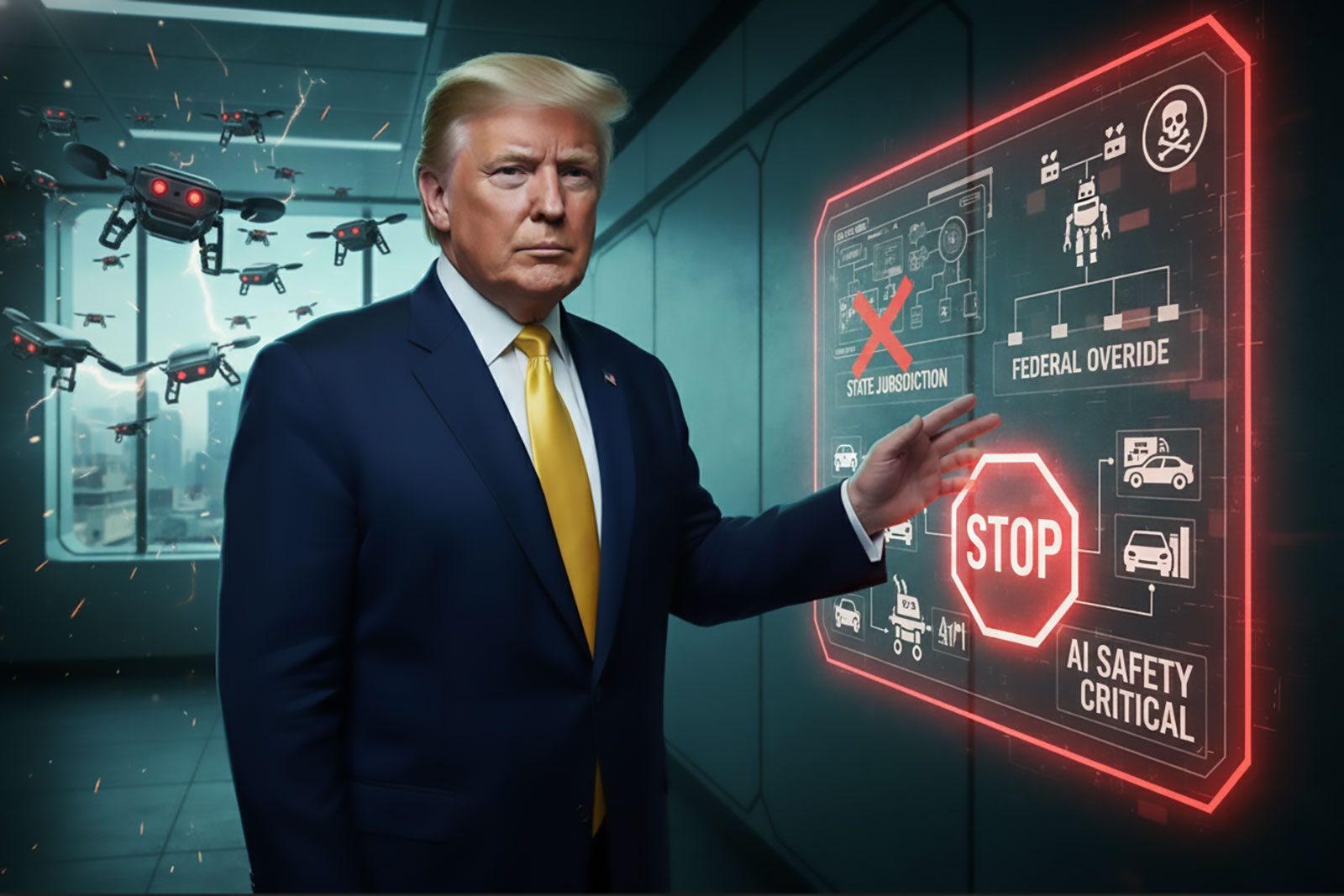
The White House is setting the stage for a major conflict over the future of Artificial Intelligence governance. A draft executive order, reportedly prepared by the Trump administration, aims to federally block states from enforcing their own AI regulations, renewing a push for deregulation that has immediately drawn bipartisan fire and raised serious alarms from tech safety and consumer advocacy groups.
The Push for a “Uniform National Policy”
The core of the draft order, titled “Eliminating State Law Obstruction of National AI Policy,” is the desire to create a “minimally burdensome, uniform national policy framework for AI.“
Pro-Innovation Argument: The administration and proponents in the tech industry, including high-profile leaders like OpenAI’s Sam Altman, argue that a “patchwork” of 50 different state laws would stifle innovation, slow the pace of American technological advancement, and harm the nation’s global competitiveness in the AI race.
Action Plan: The order reportedly directs the U.S. Attorney General to establish an AI Litigation Task Force specifically tasked with challenging existing state AI laws and preempting them with the less restrictive federal policy.
The Safety Backlash: What Critics Fear
In the absence of comprehensive federal laws, states like California and Colorado have moved to enact protections against AI-driven harms—such as creating misleading deepfakes or utilizing algorithmic discrimination in critical areas like hiring and lending.
Critics of the preemption effort warn that stripping states of this authority will create a regulatory “Wild West,” allowing powerful AI companies to evade accountability for tools that cause real-world harm:
Consumer Protection: Concerns are escalating over issues like AI-induced self-harm, surging online scams, and the use of harmful online systems, as noted by organizations like Public Citizen.
Civil Rights: Advocacy groups argue that the move primarily serves to protect “tech billionaire buddies and corporations” rather than safeguarding citizens from bias and civil rights violations embedded in algorithms.
Bipartisan Opposition: The move is not just a partisan issue. Florida Governor Ron DeSantis (R) condemned the effort as “federal government overreach” and a “subsidy to Big Tech,” arguing it would prevent states from protecting against censorship, predatory applications targeting children, and resource intrusion from data centers. Democratic Senator Ed Markey echoed this, accusing Trump of siding with “Big Tech buddies.”
The Legislative Context
This executive push comes after a previous attempt by Republicans to include a moratorium on state AI regulation in the annual National Defense Authorization Act (NDAA) was overwhelmingly rejected by a nearly unanimous Senate vote in July.
The debate is now heating up once more, coinciding with a White House dinner attended by key AI industry leaders, including Elon Musk, Nvidia CEO Jensen Huang, and OpenAI President Greg Brockman, underscoring the high-stakes political influence surrounding this rapidly evolving technology.
What Happens Next? The debate over the proper balance between innovation and regulation is far from settled. With states stepping up as “laboratories of democracy” and the federal government seeking control, the AI Litigation Task Force is likely to face immediate political and legal challenges if the draft executive order is officially signed.











































Want to join the conversation?
Create an account or sign in to share your thoughts, vote,
and reply to other readers.
Showing 0 of 0 comments
Don't have an account?
Already have an account?