

North Korea Is Running Out of Airplanes, Yet Its Aging National Airline Has Avoided a Documented Fatal Crash for More Than 40 Years
Air Koryo operates an aging fleet of Soviet-designed aircraft, faces severe international sanctions, and struggles to maintain an aviation network that once stretched across continents. Yet despite its reputation as one of the world’s worst airlines, North Korea’s state-owned carrier has gone more than four decades without a publicly documented fatal crash.
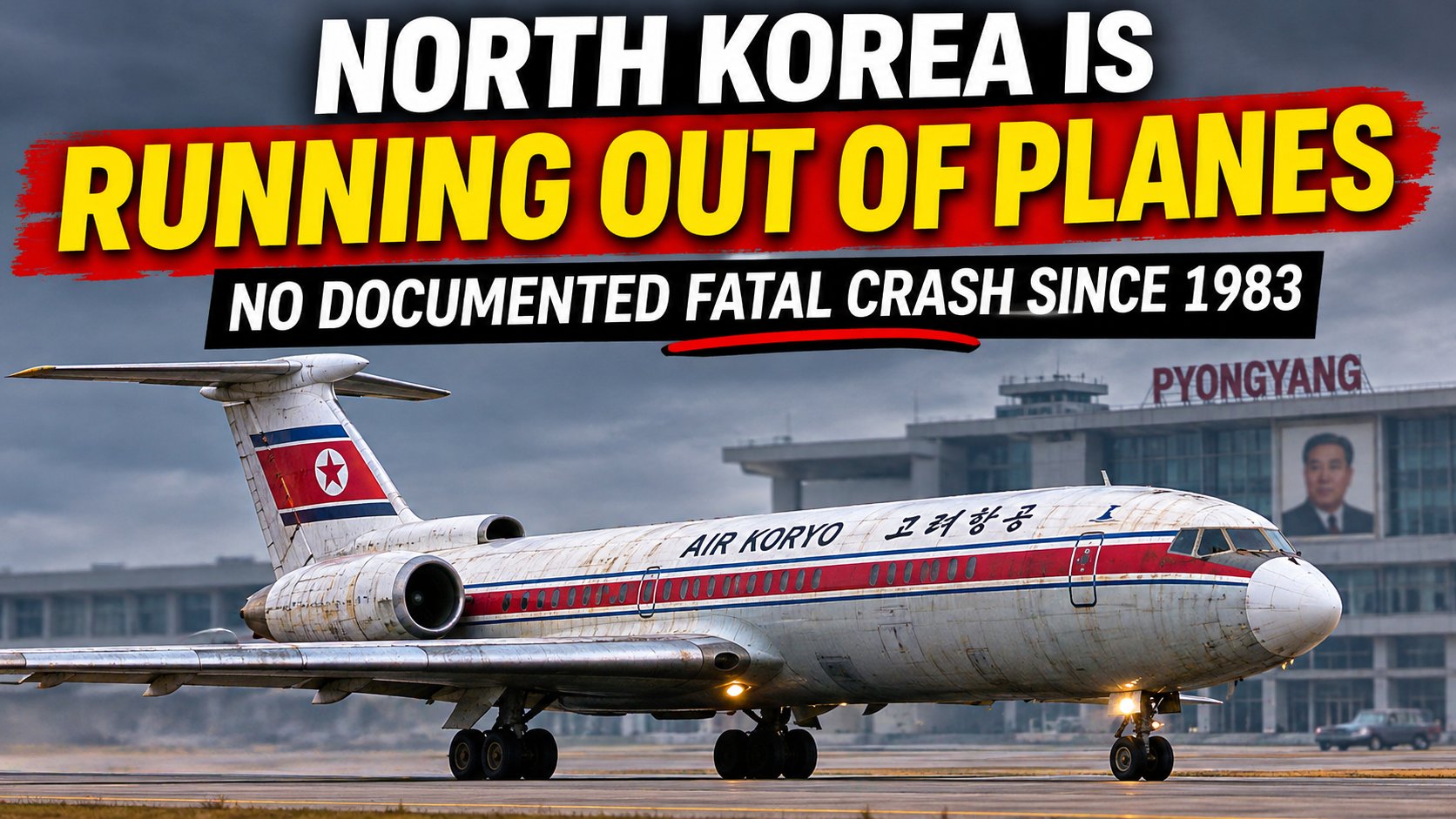
PYONGYANG, NORTH KOREA — North Korea’s national airline is facing an aviation crisis decades in the making. Its fleet includes Soviet designed aircraft dating back to the Cold War, international sanctions have complicated access to replacement parts and modern equipment, and its once expansive international network has contracted to a handful of destinations. Yet despite these challenges, Air Koryo has maintained one of aviation’s more unusual distinctions: no widely documented fatal crash since 1983.
The contradiction is remarkable. Air Koryo has historically received some of the industry’s lowest passenger service ratings, operated aircraft types retired by most major international carriers, and faced longstanding restrictions on entering European airspace. Nevertheless, its last widely recorded fatal accident occurred more than four decades ago, when an Ilyushin Il-62 operated by its predecessor airline crashed in Guinea, killing all 23 people aboard.
That record, however, comes with an important qualification. North Korea’s highly restricted information environment makes independent oversight difficult, while Air Koryo operates dramatically fewer flights than most international airlines. An airline conducting only a handful of weekly services has fewer opportunities for accidents than carriers operating hundreds or thousands of flights daily. Without reliable operational statistics, maintenance records, and independent safety audits, the absence of recent fatal accidents cannot establish that Air Koryo is exceptionally safe.
The unusual history was recently explored by French aviation commentator Alexis Ferragne in a documentary titled Pourquoi les avions nord-coréens ne crashent jamais?, translated as Why Do North Korean Airplanes Never Crash? The video traces the airline’s transformation from a symbol of Cold War industrial ambition into an increasingly isolated carrier struggling to preserve aircraft built for an aviation industry that largely no longer exists.
Air Koryo’s predicament reveals a broader problem facing North Korea. The country is not simply operating old airplanes. It is attempting to sustain an aviation system dependent on aircraft manufacturers, replacement components, technical expertise, and international supply chains that have changed dramatically since the collapse of the Soviet Union.
From Cold War Aviation Power to a Fleet Frozen in Time
Air Koryo’s origins stretch back to North Korea’s early relationship with the Soviet Union, which provided aircraft, technical assistance, and economic support to establish international air connections. The carrier’s predecessor, Chosonminhang, developed routes linking Pyongyang with Moscow and other destinations across the communist bloc, reflecting North Korea’s efforts to build an industrialized state with international commercial and diplomatic connections.
During the 1960s and 1970s, North Korea benefited from competition between the Soviet Union and China, obtaining industrial equipment, infrastructure assistance, and military support from both communist powers. Although South Korea would eventually emerge as a far wealthier and more technologically advanced economy, North Korea initially possessed a substantial industrial base and pursued ambitious transportation projects, including an international airline capable of reaching destinations far beyond the Korean Peninsula.
The airline operated an assortment of Soviet-manufactured aircraft, including the Ilyushin Il-18 turboprop, Il-62 long-range jet, Tupolev Tu-134 and Tu-154 passenger aircraft, and Antonov An-24 regional turboprop. These planes connected Pyongyang with cities throughout Eastern Europe, the Soviet Union, China, and selected destinations in Africa, allowing North Korea to maintain a global presence that would become increasingly difficult to sustain in later decades.
At the height of its ambitions, North Korea reportedly explored acquiring Western aviation technology, including a proposal involving the Concorde supersonic passenger aircraft in the late 1970s. Ferragne’s documentary describes options for two Concordes that were never delivered, although the precise contractual details remain insufficiently documented to treat the proposed purchase as a confirmed aircraft order.
Today, many of the aircraft types that once represented North Korea’s technological ambitions have disappeared from mainstream international passenger service. What were once symbols of industrial progress have become aviation antiques, increasingly difficult to maintain and expensive to operate in an industry transformed by modern engines, computerized flight systems, and more demanding maintenance and regulatory requirements.
The Collapse of the Soviet Union Devastated North Korea’s Airline
The dissolution of the Soviet Union in 1991 marked a turning point for North Korea’s economy and aviation industry. For decades, Soviet assistance had provided access to aircraft, spare parts, aviation fuel, engineering expertise, and favorable trade arrangements. When that economic relationship collapsed, North Korea lost much of the support that had allowed its national airline to operate an international network despite the country’s relatively limited domestic resources.
The consequences were devastating across the North Korean economy. Industrial production deteriorated, trade contracted, and the country experienced a severe economic crisis followed by a catastrophic famine during the 1990s. Air Koryo faced its own version of that collapse as aircraft became harder to maintain, international destinations disappeared, and the financial resources required to modernize the fleet became increasingly scarce.
Routes that once connected Pyongyang with Eastern European capitals were gradually abandoned as former communist countries developed new economic relationships and shifted toward Western aircraft. Meanwhile, the Soviet-designed jets remaining in North Korea became increasingly outdated, with manufacturers changing ownership, production lines closing, and replacement components becoming more difficult to obtain.
North Korea reportedly explored acquiring Western-built passenger aircraft during periods of diplomatic engagement with Washington, including McDonnell Douglas MD-82 jets. Those efforts did not result in a modernized fleet, leaving the airline dependent on Russian and Soviet designed aircraft as the rest of the commercial aviation industry continued advancing. The long term consequences were substantial. While airlines elsewhere invested in newer Boeing, Airbus, and regional aircraft with improved fuel efficiency and modern avionics, Air Koryo remained reliant on aging equipment whose original industrial support network was steadily disappearing.
Nuclear Sanctions Turned an Aging Fleet Into a Maintenance Nightmare
North Korea’s development of nuclear weapons introduced another major obstacle to aviation modernization. Following its first nuclear test in 2006, the United Nations Security Council imposed sanctions that expanded substantially after subsequent nuclear and ballistic missile tests, particularly during 2016 and 2017. Those restrictions, combined with national export controls and financial sanctions, complicated North Korea’s ability to purchase aircraft, obtain specialized equipment, access international banking services, and maintain relationships with foreign aviation suppliers.
The sanctions environment is more complicated than a blanket prohibition on every civilian aviation component. Restrictions vary depending on the type of equipment, its potential military applications, the supplier, and the applicable legal framework. Nevertheless, the cumulative effect has made aircraft acquisition and maintenance significantly more difficult for a country already isolated from much of the international financial and transportation system.
Before restrictions became more severe, Air Koryo acquired several comparatively modern Russian designed aircraft, including Tupolev Tu-204 passenger jets and Antonov An-148 regional aircraft. These additions represented an attempt to move beyond the airline’s oldest Soviet-era equipment, but they did not resolve the underlying problems of obtaining spare parts, maintaining specialized systems, and replacing aircraft as they reached the end of their practical operating lives.
Even Russian designed aircraft can incorporate components manufactured by companies in other countries, including electronic systems and specialized equipment subject to export restrictions. As international sanctions intensified and aviation supply chains became more fragmented, maintaining these aircraft became increasingly complicated. The result is an airline whose future depends not simply on whether its remaining aircraft can still fly, but whether North Korea can continue obtaining the components, technical expertise, and engineering support necessary to keep them airworthy.
Air Koryo’s 40-Year Fatal Crash Record Comes With an Important Catch
Perhaps the most surprising aspect of Air Koryo’s history is its absence of a widely documented fatal passenger crash since July 1, 1983, when an Ilyushin Il-62M operated by the airline’s predecessor crashed in Guinea. The aircraft was traveling from Pyongyang to Conakry, with intermediate stops, when it struck mountainous terrain during its approach. All 23 people aboard, including 17 passengers and six crew members, were killed.
Since that disaster, publicly available aviation accident records have not identified another fatal crash involving the airline. However, Air Koryo has experienced nonfatal incidents, including reported landing accidents in Pyongyang in August 2006. Its record should therefore be described as an absence of documented fatal crashes, not an absence of accidents or operational problems.
The distinction matters because aviation safety cannot be reliably measured by counting fatal accidents alone. Commercial aviation safety assessments also examine incident rates, aircraft maintenance, pilot training, regulatory oversight, operational procedures, and compliance with international standards. North Korea’s lack of transparency makes many of those factors difficult to evaluate independently.
Air Koryo’s limited flight frequency further complicates the comparison. Major international airlines conduct enormous numbers of flights each year, generating extensive safety data across millions of passengers and flight hours. Air Koryo’s much smaller operation produces comparatively little public information, meaning that its long period without a documented fatal crash does not necessarily demonstrate a superior safety record.
The airline’s historically poor reputation also deserves clarification. Air Koryo was once famous for receiving a one-star rating from Skytrax, but that classification primarily assessed the passenger experience, including cabin comfort, amenities, and service quality. It was not equivalent to a technical aviation safety audit.
Independent safety assessments present a less flattering picture. AirlineRatings has assigned Air Koryo a low safety rating, while the European Union has maintained operating restrictions on most of its fleet because of concerns about compliance with international aviation safety standards. Under the EU restrictions, two specified Tupolev Tu-204 aircraft have been exempted from the broader prohibition.
In other words, Air Koryo’s lack of recent fatal crashes is a noteworthy historical fact, but it is not evidence that the airline has somehow discovered a safer way to operate aging aircraft than the rest of the aviation industry.
How North Korea Keeps Soviet-Era Aircraft Flying Decades After Their Prime
Maintaining aircraft built decades ago presents significant engineering and logistical challenges, particularly when manufacturers have stopped producing replacement components or original suppliers are no longer available. Aircraft require regular inspections, component replacements, structural monitoring, and specialized maintenance, regardless of how frequently they operate.
One method used throughout the aviation industry to maintain older aircraft is parts cannibalization, which involves removing usable components from grounded aircraft and installing them in others. When properly documented, inspected, and approved, the practice can be a legitimate maintenance strategy rather than evidence of unsafe operations.
Ferragne’s documentary argues that North Korea has used this approach to keep some of its remaining aircraft operational, potentially sacrificing older airframes to provide components for others. The explanation is plausible given the airline’s supply difficulties, but detailed maintenance records are not publicly available. It is therefore impossible to independently establish the extent of Air Koryo’s cannibalization practices or determine precisely how many aircraft have been dismantled for parts.
Even if the practice is widespread, it offers only a temporary solution. Engines, landing gear, hydraulic systems, avionics, and structural components have maintenance requirements and service limitations that cannot simply be ignored. Some parts must be replaced or overhauled after specified flight hours, operating cycles, or calendar intervals, while others require inspections to establish continued airworthiness.
The airline’s extremely limited flight schedule may help reduce wear associated with repeated takeoffs, landings, and flight hours, but aircraft continue to deteriorate even when parked. Corrosion, aging seals, environmental exposure, and calendar based maintenance requirements can affect aircraft regardless of how often they fly. The larger problem is that an airline cannot indefinitely maintain an aging fleet without a dependable source of replacement components, qualified technical support, and the financial resources needed to keep aircraft compliant with applicable operating standards.
Air Koryo’s International Network Has Shrunk to Three Regular Destinations
Air Koryo’s limited operations are among the clearest signs of how far the airline has retreated from its Cold War ambitions. Aviation schedules published during 2026 identify three regular international destinations from Pyongyang: Beijing and Shenyang in China, and Vladivostok in Russia.
AeroRoutes reported that Air Koryo’s published summer schedule included two weekly departures to Beijing using Tupolev Tu-204 aircraft, two to Shenyang using Antonov An-148 aircraft, and three to Vladivostok using Tupolev Tu-154 aircraft. Actual aircraft assignments and flight frequencies can vary, but the schedule illustrates the extraordinary limitations of an airline that once maintained connections across Europe and Asia.
Flight-network data published during 2026 also identified Beijing, Shenyang, and Vladivostok as the carrier’s principal international destinations. The limited network reflects North Korea’s political isolation, strict restrictions on foreign travel, and relatively small market for international passenger services.
There has, however, been a limited expansion of domestic service. Aviation industry publication ch-aviation reported that Air Koryo resumed flights between Pyongyang and the coastal city of Wonsan on July 23, 2026, using Antonov An-148 aircraft. The service was reportedly scheduled twice weekly, although its status as a permanent route or seasonal operation remained uncertain. That development is important because it demonstrates that the airline is not exclusively operating international services and has made at least one recent effort to expand domestic connectivity.
The narrow international network reflects North Korea’s broader isolation. Strict controls on foreign travel, limited tourism, sanctions, and the country’s restricted commercial relationships have substantially reduced the market for international passenger services. Although some aviation links resumed after North Korea’s pandemic-era border closures, the country’s commercial aviation sector remains a fraction of the size of those in neighboring China, Japan, and South Korea.
The airline’s reduced schedule may help preserve its remaining aircraft, but it also limits revenue and reinforces its dependence on state support. With relatively few flights and a restricted passenger market, acquiring an entirely new fleet would represent a substantial financial and logistical undertaking.
Air Koryo Has Expanded Beyond Aviation to Survive
Air Koryo’s business activities reportedly extend beyond operating passenger aircraft. The airline has been associated with branded consumer products and transportation ventures, including soft drinks, cigarettes, and taxi services, reflecting the unusual structure of North Korea’s state controlled economy. Unlike publicly traded international airlines, Air Koryo does not release detailed financial statements that allow outside analysts to determine precisely how much revenue comes from ticket sales, government support, or other commercial operations. As a result, the financial significance of these ventures remains difficult to assess independently.
The diversification also reflects the broader role of state enterprises in North Korea, where commercial organizations may participate in activities that would normally be handled by unrelated companies in other countries. Such arrangements can help sustain government controlled institutions, but they do not eliminate the considerable expense of operating and maintaining commercial aircraft. For Air Koryo, the fundamental challenge remains the same regardless of its other businesses: passenger aircraft require substantial investment, specialized technical support, and access to replacement components that cannot easily be substituted with revenue from unrelated commercial activities.
Could Russia or China Save North Korea’s Airline?
Air Koryo’s long term survival may depend on whether Russia or China can eventually provide replacement aircraft and maintenance support despite international sanctions and export restrictions. Both countries have invested in domestic commercial aviation industries, although neither offers a simple solution to North Korea’s immediate needs.
Russia has accelerated efforts to develop domestically manufactured passenger aircraft and replace foreign components following Western sanctions imposed after its invasion of Ukraine. However, the Russian aviation industry continues to face production, certification, and supply-chain challenges, limiting its ability to deliver large numbers of new aircraft.
China has also developed a growing commercial aircraft industry, including the COMAC C919, but its aircraft still rely on foreign technology in important areas. Purchasing Chinese aircraft would therefore not automatically eliminate the complications associated with international export controls, maintenance requirements, and the availability of specialized components.
Russia may represent the more practical partner because Air Koryo already operates Russian-designed aircraft and has longstanding technical relationships with the country’s aviation industry. Nevertheless, any future fleet modernization would require financing, training, maintenance infrastructure, regulatory compliance, and an arrangement that satisfies or otherwise addresses applicable international restrictions.
There is currently insufficient public evidence to establish that North Korea has secured a major replacement-aircraft agreement capable of renewing Air Koryo’s aging fleet. Without such an arrangement, the airline will continue facing pressure as older aircraft become increasingly difficult or uneconomical to maintain.
North Korea May Have Avoided Fatal Crashes, but It Cannot Escape the Economics of Aviation
Air Koryo’s history illustrates one of the stranger contradictions in modern commercial aviation. The airline has survived the collapse of its principal Cold War benefactor, endured decades of international isolation, and continued operating aircraft types that have largely disappeared from the world’s passenger networks. At the same time, its publicly documented fatal accident history has remained unchanged for more than four decades.
That distinction is remarkable, but it should not be confused with proof of exceptional safety. The absence of recent fatal crashes tells only part of the story, particularly for an airline whose operational data, maintenance records, and regulatory oversight remain difficult to examine independently.
The greater long term concern is whether Air Koryo can maintain a viable fleet at all. Aircraft require continuing investment, and every aging airframe eventually reaches a point where maintaining it becomes technically challenging, financially impractical, or both. Limited flight operations can extend some maintenance intervals, but they cannot indefinitely overcome the effects of aging equipment and restricted access to replacement parts.
North Korea has demonstrated an unusual ability to preserve machinery and infrastructure that much of the industrialized world abandoned decades ago. Air Koryo remains one of the most visible examples, operating a small international network with aircraft whose designs date to an entirely different era. Air Koryo’s greatest challenge may not be avoiding its next fatal crash. It may be finding enough serviceable airplanes to keep flying at all.


















Reader discussion
Join the conversation
Want to join the conversation?
Create an account or sign in to share your thoughts, vote and reply to other readers.
No comments yet. Be the first to share your thoughts.
No comments