
Riyadh Airport Hit Repeatedly as Deadly Missile and Drone Strikes Spread
The Middle East is facing another dangerous escalation, and this time Saudi Arabia’s civilian aviation infrastructure is taking the brunt of the assault. Yemen’s Iran aligned Houthi movement has launched a series of missile and drone attacks against Saudi targets, including King Khalid International Airport in Riyadh, one of the kingdom’s most important aviation hubs.
Were there two attacks? Yes, but the situation has gone well beyond two. Reports published between October 6th and October 12th describe multiple attacks on Saudi airports, including separate strikes on Riyadh’s airport on October 10th and 11th. The Houthis have claimed responsibility for several of the attacks, while Saudi authorities have reported deaths, hundreds of injuries and significant disruption to air travel.
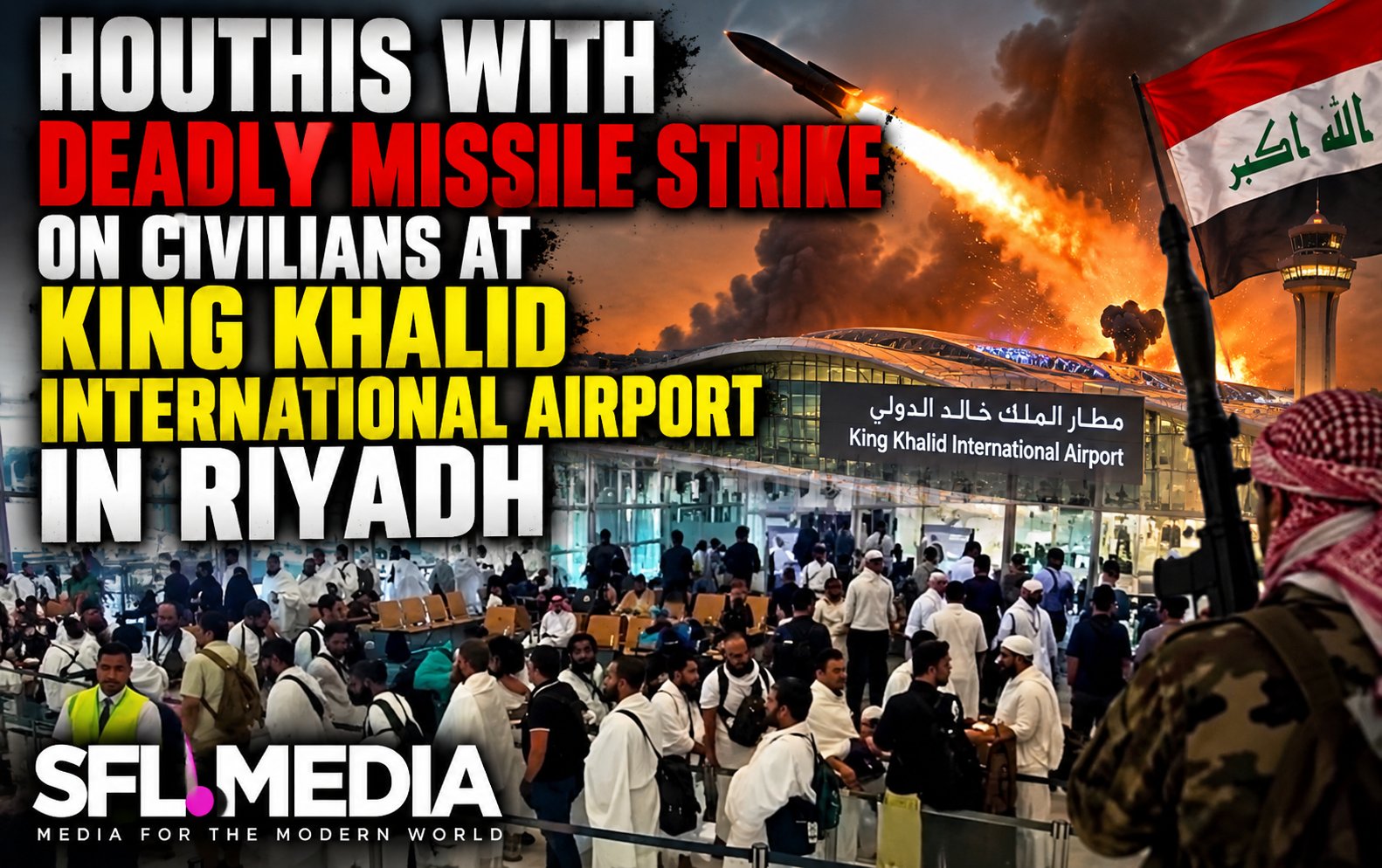
This is not simply a story about missiles flying across a border. It is a developing confrontation involving civilian casualties, vulnerabilities in Saudi air defenses, threats to international airlines and the possibility that a conflict already engulfing the region could expand even further.
The Attacks: A Timeline of What Has Happened
October 6th
Reports from Saudi authorities described attacks targeting airports in Jazan and Najran, both in the kingdom’s south, near Yemen. Three people were reportedly injured, while Saudi air defenses intercepted a ballistic missile headed toward Khamis Mushait. These incidents marked part of the widening campaign against Saudi aviation infrastructure.
October 6th–7th
Saudi Arabia’s General Authority of Civil Aviation reported two separate attacks. One targeted facilities at Abha International Airport, killing two people and injuring 28. Another targeted King Khalid International Airport in Riyadh, killing one person and injuring eight. The Houthis claimed responsibility for attacks on Saudi airports. The incidents prompted a forceful response from the Saudi-led coalition, which said it struck more than 80 Houthi military sites in Yemen.
October 8th
The Houthis announced that they had launched a ballistic missile toward King Khalid International Airport, claiming it hit its target. Explosions were reported in Riyadh, and smoke and flames were seen rising from the airport. A commercial aircraft operated by Saudia, Saudi Arabia’s national airline, was badly damaged by fire. Reports indicated that debris from an interception or another projectile may have caused the damage, although the precise sequence was not immediately clear. No confirmed passenger fatalities aboard the aircraft were reported.
October 10th
A missile attack struck Riyadh’s King Khalid International Airport, killing at least 12 people initially and injuring more than 300! By October 11th, Saudi authorities had reported 13 deaths. The victims included Saudi citizens and foreign nationals from Bangladesh, the United States, Jordan, Palestine, Syria, Sudan, Egypt and other countries, according to evolving official casualty reports. Some of the injured were in critical condition. Video released by Saudi authorities showed passengers near an airport gate when a bright flash erupted, sending people scrambling for safety as smoke and flames filled the area. The airport was shut down.
October 11th
The attacks did not stop after the mass casualty incident. A projectile struck Terminal 4 at Riyadh’s airport, causing a fire. Saudi authorities reported one additional death and 11 injuries. Saudi officials also reported interceptions involving a cruise missile near the airport, a drone over the Eastern Province and a ballistic missile headed toward Khamis Mushait.
The Houthis claimed responsibility for the October 10 attack and said they had also targeted King Fahd International Airport in Dammam and two Saudi Aramco facilities. Saudi authorities subsequently confirmed an incident at Dammam airport, where a projectile reportedly struck the tarmac near parked aircraft. Damage assessments were underway.
October 12th
The escalation continued into Monday. Saudi authorities said ballistic missiles aimed toward Riyadh had been intercepted, while the Houthis subsequently claimed a fresh ballistic missile attack on King Khalid International Airport and a drone attack on an airbase in Khamis Mushait.
Saudi Arabia’s airport remained closed, with operations suspended until October 17, according to Reuters. Airlines canceled or postponed services, and the kingdom’s airspace disruptions began affecting international flight routes. The reported Houthi claims and Saudi interception announcements should be distinguished from independently confirmed impacts.
How Did Saudi Arabia’s Air Defenses Fail?
This is one of the most important questions arising from the attacks. Saudi Arabia has invested heavily in air defense systems, including American made Patriot interceptors. Yet repeated attacks have apparently managed to cause damage and casualties despite those defenses. According to reporting by the Associated Press on October 12th, Saudi Arabia launched an investigation into the apparent failure to intercept the weapons involved in the deadly Riyadh airport strike.
Two regional officials briefed on the initial findings said the Houthis first launched multiple drones, potentially to overwhelm or distract Saudi defenses, before firing cruise and ballistic missiles toward the airport. The weapons reportedly traveled more than 1,000 kilometers (620 miles) to reach Riyadh. The officials also described advanced missile systems with warheads capable of changing direction during flight, potentially making interception more difficult. Investigators are examining why Saudi defenses did not provide earlier warning and why the incoming weapons were not stopped. These are preliminary findings, not a completed investigation.
The implications are serious. If a relatively inexpensive drone and missile campaign can repeatedly threaten a major international airport despite sophisticated defenses, other countries operating similar systems will be paying attention.Air defenses are not an invisible force field. They depend on detecting incoming threats, identifying them correctly, having sufficient interceptors available and engaging targets in time. Saturation attacks can strain every part of that process.
Why Are the Houthis Attacking Saudi Arabia Now?
The latest strikes are tied to a broader escalation of the war in Yemen and the wider Middle East conflict. The Houthis, formally known as Ansar Allah, seized Yemen’s capital, Sanaa, in 2014. Saudi Arabia subsequently led a military coalition supporting Yemen’s internationally recognized government, fearing that Houthi control would strengthen Iranian influence along its southern border.
The group has since developed a substantial arsenal of missiles and drones and has repeatedly targeted Saudi infrastructure, including airports, oil facilities and pipelines. Saudi Arabia and its allies accuse Iran of supplying the Houthis with weapons, training and financial support. The Houthis reject the characterization that they are simply an Iranian proxy, while Tehran has also denied the allegations of direct control.
The current escalation comes as Saudi backed Yemeni forces attempt to reverse Houthi territorial gains, including in areas near the strategically important Bab el-Mandeb Strait. This narrow maritime passage connects the Red Sea to the Gulf of Aden and is a critical route for international shipping and energy transportation.
The Houthis’ attacks on airports appear designed to impose costs on Saudi Arabia, disrupt civilian aviation and demonstrate that the kingdom’s military infrastructure remains vulnerable. Their warnings to airlines about operating in Saudi airspace suggest that disrupting commercial travel is part of the campaign, not merely an incidental consequence.
Saudi Arabia Retaliates, and Washington Considers Getting the US Involved
Saudi Arabia and its coalition partners have responded with airstrikes against Houthi controlled territory in Yemen. On October 7th, the coalition said it had attacked more than 80 Houthi military sites. Further strikes have reportedly continued as the conflict intensified. The situation also raises the prospect of direct American military involvement. President Donald Trump said the United States was considering joining Saudi strikes against the Houthis. Washington has already provided intelligence and planning support to Saudi Arabia, but a decision to conduct its own attacks would represent a further escalation.
The danger is that retaliation could trigger another cycle of attacks, drawing additional regional powers into the fighting. A confrontation that began as a struggle over Yemen could threaten shipping lanes, energy infrastructure and civilian transport across a much wider region. The Houthis have also warned international airlines against using Saudi airports and airspace, with exceptions they have identified for the holy cities of Mecca and Medina. Such warnings do not establish that those locations are immune from danger; they represent the group’s stated position, not a guarantee of safety.
What Does This Mean for Oil Prices and the Global Economy?
Saudi Arabia is one of the world’s most important oil producers, and its aviation and energy infrastructure are critical to the regional economy. Although the airport attacks do not automatically mean oil production has been interrupted, the Houthis’ claims that they targeted Saudi Aramco facilities add another layer of concern. The greatest economic risks include damage to energy infrastructure, disruption to commercial aviation, higher insurance costs for shipping and aircraft, and increased uncertainty in global energy markets. The Bab el-Mandeb Strait is particularly important because attacks or threats there can force ships to reroute, increasing travel times and transportation costs.
The conflict is also unfolding amid wider instability affecting oil shipments through the Persian Gulf. A simultaneous threat to major shipping routes on both sides of the Arabian Peninsula would create a particularly difficult situation for energy markets and international trade. For ordinary travelers, the immediate consequences are more direct: canceled flights, closed airports, diversions and uncertainty over when normal service can resume. The Riyadh airport closure through October 17th represents a substantial disruption to one of the region’s key air travel hubs.
The Bigger Question is How Much Further Will This Escalate?
The key takeaway is that Saudi Arabia has faced a series of attacks, not merely two isolated incidents. The October 10th and October 11th strikes on Riyadh’s airport were separate events, and they followed earlier attacks on Riyadh, Abha, Jazan and Najran. The October 12th missile and drone claims indicate that the threat has continued.
The casualty figures have also evolved as injured victims have died and authorities have updated their reports. As of October 12th, the October 10th airport attack alone had been reported to have killed at least 13 people and injured more than 300, while the following day’s strike killed another person and injured 11. Those figures should not be confused with the cumulative toll across every attack in the campaign.
The central issue now is whether Saudi Arabia can restore confidence in its air defenses and deter further attacks without triggering a much larger war. The Houthis have demonstrated that they can threaten major Saudi infrastructure, while Saudi Arabia and its allies have demonstrated a willingness to retaliate against Houthi positions in Yemen. Neither development guarantees that the next round will be more limited than the last. For civilians caught in the middle, the consequences are already severe. And for the rest of the world, the combination of missile attacks, airport closures, energy infrastructure threats and the possibility of direct U.S. involvement makes this a developing story with implications far beyond Yemen and Saudi Arabia.
Sources and Article Links
1.
apnews.com
Associated Press, October 12, 2026. Covers the investigation into Saudi air-defense failures and the deadly airport attack.
2.
Reuters, October 11, 2026. Details the second consecutive day’s attack on Riyadh airport, casualties and additional Houthi claims.
3.
The National, October 12, 2026. Provides a chronological breakdown of attacks on airports in Riyadh, Abha, Jazan and Najran, along with the reported strike on Dammam.
4.
Reuters, republished by GV Wire, October 7, 2026. Reports the initial deadly attacks on Riyadh and Abha airports.
5.
Reuters, republished by MarketScreener, October 10, 2026. Covers the mass-casualty attack on Riyadh airport and the possibility of U.S. military involvement.
6.
Reuters, republished by ThePrint, October 11, 2026. Reports the subsequent airport attack and Saudi interception of another missile.
7.
Al Jazeera, October 12, 2026. Explains the strategic motivations behind the attacks, the airports affected and the broader Yemen conflict.




















































Want to join the conversation?
Create an account or sign in to share your thoughts, vote,
and reply to other readers.
Showing 0 of 0 comments
Don't have an account?
Already have an account?