

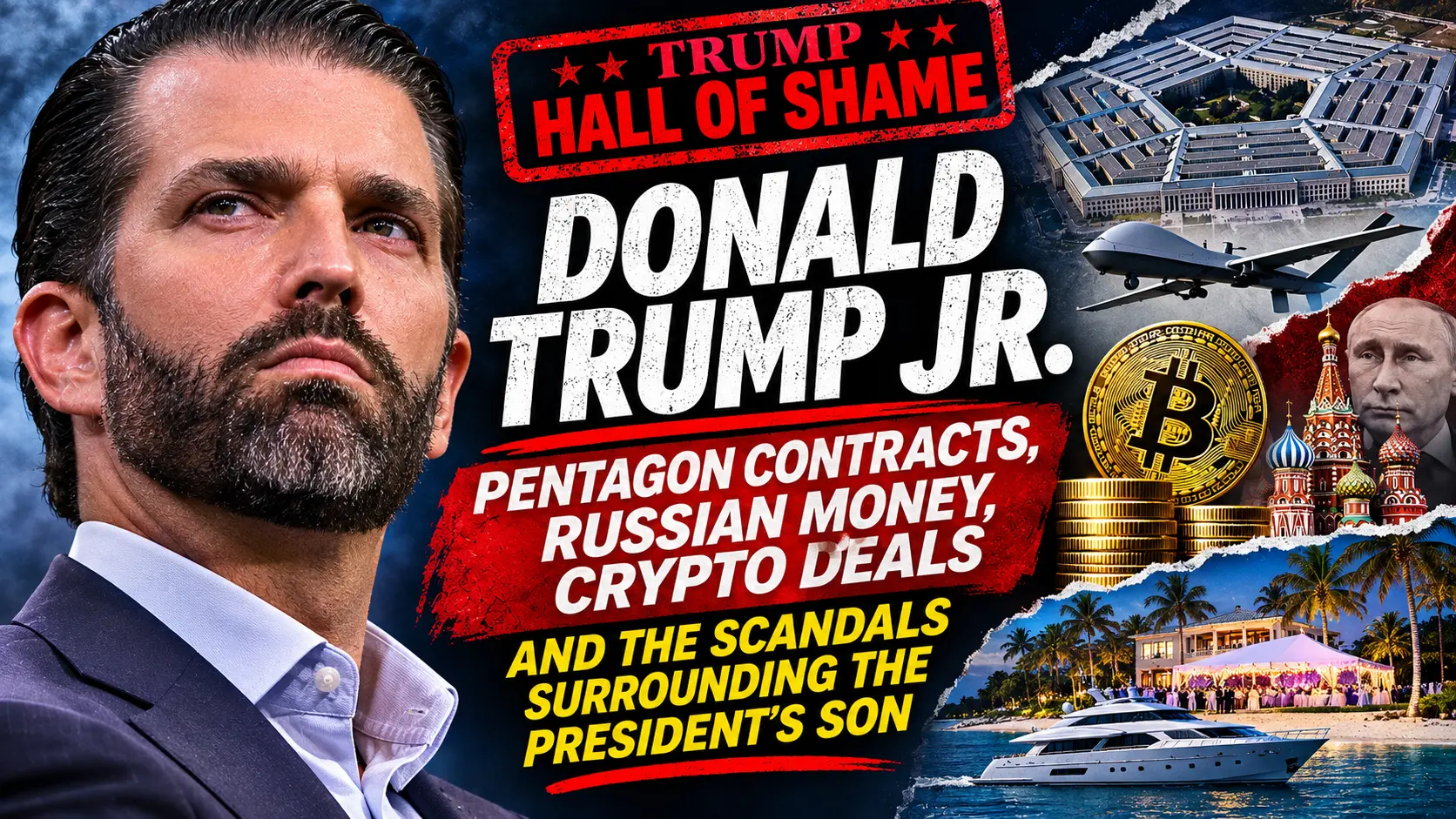
Donald Trump Jr.’s Growing Empire: Pentagon Contracts, Russian Money, Crypto Deals and the Scandals Surrounding the President’s Son
From Pentagon financing and foreign cryptocurrency investments to a Russian funded wedding celebration, presidential pardons and exclusive Washington access, Donald Trump Jr.’s expanding business network has become a major test of government ethics and presidential accountability.
Donald Trump Jr. has spent much of his public career presenting himself as an anti-establishment conservative fighting the political and financial elites who dominate Washington. Yet during his father’s second presidency, the president’s eldest son has built an extensive network of investments, advisory positions and business relationships involving companies that depend on federal contracts, regulatory decisions and government policy.
The potential conflicts extend across some of the most sensitive industries in the American economy. Defense technology companies connected to Trump Jr.’s investment network have pursued substantial Pentagon financing, cryptocurrency ventures involving the Trump family have operated amid significant changes in federal regulation, and wealthy foreign investors have established financial relationships with businesses connected to the president’s relatives. These developments have attracted scrutiny from congressional investigators, government watchdogs and investigative journalists examining whether presidential family connections have created advantages unavailable to ordinary investors.
At the center of the controversy is 1789 Capital, a venture capital firm that Trump Jr. joined shortly after the 2024 presidential election. Its investments in defense contractors, advanced manufacturing, artificial intelligence and emerging technology have placed the president’s son in a position to benefit financially from industries whose fortunes are shaped by decisions made inside his father’s administration. His involvement extends into cryptocurrency, financial services, healthcare technology, prediction markets and exclusive membership organizations offering proximity to Washington’s political establishment.
The central issue is not whether a president’s adult children are legally permitted to operate businesses. They are. The issue is whether political access, family relationships and the influence of the presidency have created financial advantages that other businesses could not obtain through ordinary competition. No single investment, government contract or political relationship establishes criminal wrongdoing. But the cumulative record presents substantial questions about procurement integrity, regulatory independence, foreign influence and the separation of presidential power from private family wealth.
1789 Capital: A Venture Capital Firm With Extraordinary Access to Washington
Trump Jr.’s decision to join 1789 Capital shortly after the November 2024 election marked a significant expansion of his financial activities beyond the Trump Organization. Founded by investors including Omeed Malik and Chris Buskirk, the firm promotes investments in American industry, defense technology and companies aligned with conservative economic priorities. Its portfolio has attracted attention because many of those businesses operate in industries that depend on federal financing, government procurement and regulatory decisions.
According to congressional inquiries and investigative reporting, the firm’s assets under management grew dramatically during the second Trump administration, reaching billions of dollars as investors sought opportunities in industries receiving substantial federal support. That growth does not mean the money belongs personally to Trump Jr., nor does it establish that the firm obtained investments improperly. Nevertheless, venture capital partners can benefit through compensation, equity participation and investment returns, creating potential financial incentives when portfolio companies receive favorable government treatment.
Congressional Democrats have questioned whether the firm’s connection to the president’s family helped attract investors, secure financing or obtain preferential consideration for companies seeking federal support. Representatives of 1789 Capital have rejected allegations of improper influence, maintaining that the firm’s success reflects legitimate investment decisions and that Trump Jr. does not participate in federal contracting decisions.
The $620 Million Pentagon Loan to Vulcan Elements
One of the most consequential controversies involves Vulcan Elements, a North Carolina manufacturer developing rare earth magnets used in defense systems, electronics and advanced manufacturing. In November 2025, the Pentagon announced a conditional $620 million loan for the company, approximately three months after 1789 Capital acquired an undisclosed ownership stake. The financing was accompanied by a separate $50 million Commerce Department incentive package, potentially providing Vulcan with $670 million in federal support.
A May 2026 ProPublica investigation revealed that White House trade adviser Peter Navarro, a political ally of Trump Jr., initiated the request for the Pentagon financing. Defense Department officials familiar with the process described unusual urgency surrounding the application, with staff directed to accelerate work that would ordinarily require extensive review. Among the companies being evaluated, Vulcan was reportedly the only financing request initiated by a senior White House official.
The federal government’s stated objective was to reduce American dependence on China for strategically important rare-earth magnets, a legitimate national security priority. However, Vulcan’s reported valuation rose from approximately $200 million around the time of 1789 Capital’s investment to roughly $2 billion following the federal announcement, potentially creating substantial gains for its investors. The exact value of 1789 Capital’s stake and any realized profits have not been publicly established.
Trump Jr.’s representatives denied that he discussed Vulcan with Navarro or participated in arranging the financing. The Pentagon maintained that political connections played no role in its funding decisions. The documented White House intervention does not establish that the loan was unlawful, but it raises significant questions about whether politically connected investors received preferential access to federal financing and whether competing companies were evaluated under equivalent conditions.
Unusual Machines, Powerus and the Pentagon Drone Business
Trump Jr. has also established financial relationships with companies operating in the rapidly expanding military drone industry. One of the most visible is Unusual Machines, a Florida based manufacturer of drone components that appointed him to its advisory board shortly after the 2024 presidential election. The arrangement included a substantial equity position, giving Trump Jr. a financial interest in a company operating in an industry heavily affected by Pentagon procurement decisions and restrictions on foreign-manufactured technology.
Unusual Machines subsequently obtained Pentagon-related business, including a reported $12.8 million order in September 2025. The timing attracted attention because the company had not previously established a comparable federal contracting history. However, the award’s existence does not demonstrate that Trump Jr. influenced the procurement process, and determining whether the company received preferential treatment would require examining the contract solicitation, competing bids and agency evaluations.
Another venture, Powerus, received backing through investment relationships involving Trump Jr., Eric Trump and companies associated with Dominari Holdings. Powerus subsequently pursued military drone contracts, including a reported Air Force arrangement valued at up to $90 million. That figure represents the reported contract value or ceiling, not necessarily the amount already paid to the company or earned by its investors.
These developments occurred as Washington increased its emphasis on domestic drone manufacturing and restrictions on Chinese technology suppliers. Such policies may legitimately advance national security, but they can also increase the value of companies positioned to supply the military. The central oversight question is whether companies connected to the president’s family received competitive treatment and whether their investors’ political relationships were adequately disclosed.
Cerebras, PsiQuantum, Firehawk and Anduril: The Broader Defense Portfolio
The defense contracting questions extend beyond drones and rare earth magnets. Companies identified in congressional inquiries involving 1789 Capital’s investment portfolio include Cerebras Systems, PsiQuantum, Firehawk Aerospace and Anduril Industries, all operating in fields that intersect with federal defense priorities. Their technologies involve artificial intelligence, quantum computing, propulsion systems and autonomous military platforms.
These businesses operate in industries where government research funding, procurement awards and national-security policy can materially affect corporate valuations. Successful government relationships can increase the commercial attractiveness of portfolio companies, even when those relationships are obtained through ordinary competitive processes. The presence of 1789 Capital among a company’s investors therefore creates a potential financial interest, but it does not mean Trump Jr. personally controls that company or receives the full value of its government awards.
Congressional investigators have sought to determine whether Trump Jr.’s position provided unusual access to decision-makers or influenced how federal agencies evaluated companies in which his investment firm held financial interests. Many of these companies possess substantial independent technological capabilities and legitimate government customers, making it essential to distinguish established procurement irregularities from the mere existence of political connections.
Russian Oligarch Financed Donald Trump Jr.’s Bahamas Wedding Celebrations
One of the most extraordinary disclosures involving Trump Jr. emerged in September 2026, when ProPublica reported that Russian boxing executive Umar Kremlev financed hundreds of thousands of dollars in celebrations surrounding Trump Jr.’s May wedding to Bettina Anderson in the Bahamas.
Kremlev heads the International Boxing Association, an organization that has received financing from Russia’s state-owned energy giant Gazprom. He has maintained connections to Russian President Vladimir Putin and was sanctioned by Ukraine over his ties to the Russian government. The wedding payments reportedly came through a Dubai based entity affiliated with the boxing organization.
The celebrations took place across exclusive private islands in the Bahamas and included elaborate entertainment, helicopter transportation and fireworks. ProPublica established that Kremlev paid for events on the Saturday and Sunday following the couple’s Friday wedding ceremony, including the Sunday reception where the newlyweds held their first dance. The distinction matters because the couple maintained that Kremlev did not finance the ceremony itself.
Trump Jr. and his wife acknowledged that Kremlev had paid for two nights of celebrations, describing the arrangement as a generous gift from a personal friend and rejecting suggestions that it reflected improper political influence. Kremlev’s representatives likewise maintained that the relationship was personal rather than political.
The revelations prompted Rep. Robert Garcia, the senior Democrat on the House Oversight Committee, to request financial records, communications and information about the relationship between Trump Jr. and Kremlev. The investigation raised questions about why an influential Russian figure with connections to Putin would provide an expensive personal benefit to the American president’s son.
The Repayment: A Russian Wedding Gift That Became a Political Liability
The controversy developed further when President Trump said his son had repaid Kremlev for the wedding celebrations. In October 2026, Kremlev publicly confirmed that Trump Jr. had reimbursed him, although the precise amount and complete terms of the repayment have not been independently established through publicly released financial documentation.
The reimbursement addressed the immediate question of whether Trump Jr. retained the financial benefit, but it did not resolve every concern about the original arrangement. Investigators would need to examine invoices, payment records, reimbursement documentation and communications between the parties to establish the complete financial history.
No public evidence reviewed establishes that Kremlev received a specific American government favor in exchange for funding the celebrations. Nevertheless, the episode illustrates the national security concerns that arise when foreign figures with close connections to an adversarial government provide substantial personal benefits to members of the president’s family.
Kalshi and Polymarket: Donald Trump Jr.’s Competing Prediction-Market Investments
Trump Jr.’s business activities also extended into prediction markets, platforms allowing customers to trade contracts based on the outcomes of elections, sporting events, economic developments and other real-world occurrences. In January 2025, he became a paid strategic adviser to Kalshi, receiving compensation that reportedly included an equity interest. His venture capital firm, 1789 Capital, subsequently invested in Polymarket, a competing prediction-market platform, and Trump Jr. joined that company’s advisory board.
The overlapping relationships attracted attention because both companies operate in an industry whose regulatory environment has changed significantly under the Trump administration. The Commodity Futures Trading Commission has taken positions favorable to expanding certain prediction market products, while state regulators have questioned whether some contracts constitute unauthorized gambling. Those disputes have major commercial implications for companies seeking to expand their customer bases and product offerings.
The financial conflict became particularly visible when 1789 Capital increased its investment in Polymarket. In November 2026, Kalshi ended Trump Jr.’s advisory relationship, citing the conflict created by his investment firm’s involvement with its competitor. Kalshi described the departure as mutual and indicated that discussions had begun months earlier. Neither the competing investments nor the advisory arrangements establish that Trump Jr. improperly influenced federal regulators. However, the situation raises questions about whether a politically connected investor could benefit from favorable government decisions affecting multiple companies in the same industry and whether sufficient safeguards exist to prevent conflicts involving regulatory access.
BlinkRx, TrumpRx and the Healthcare Self-Dealing Questions
Trump Jr.’s business interests also extend into healthcare through BlinkRx, a prescription technology company in which 1789 Capital has invested. BlinkRx helps connect patients, pharmaceutical manufacturers and prescription fulfillment services through digital technology, placing it in a market affected by federal pharmaceutical policy, prescription pricing initiatives and telehealth regulation.
The Trump administration’s TrumpRx initiative was designed to help patients access certain prescription drugs through manufacturer linked pricing and purchasing channels. Similarities between aspects of that initiative and BlinkRx’s business model have prompted questions about whether politically connected healthcare companies received preferential access to policymakers or opportunities to influence program design.
The supplied research also identifies congressional concerns about possible connections between BlinkRx executives and the development of TrumpRx, including questions about telehealth prescribing practices. However, the existence of similar business models does not establish that BlinkRx designed the federal initiative, received a government contract or obtained an improper financial benefit. Allegations involving kickbacks or prescribing misconduct require independent regulatory or investigative documentation before they can be presented as established facts.
The broader conflict of interest concern remains significant: a presidential family member has financial relationships with businesses operating in sectors directly affected by decisions made during his father’s administration. Whether those relationships influenced specific policies remains an appropriate subject for independent oversight.
PublicSquare and Credova: A Federal Consumer Finance Investigation Ends
Trump Jr. joined the board of PSQ Holdings, the parent company of PublicSquare, in December 2024. The company operates businesses connected to financial technology and consumer services, including Credova Financial, a provider of financing products associated with firearm purchases.
In August 2025, the Consumer Financial Protection Bureau formally closed an investigation into Credova that had begun in February 2021. The closure occurred during the second Trump administration, after the president’s son had joined the parent company’s board. The bureau’s explanation characterized the previous investigation as politically motivated enforcement against businesses associated with gun ownership, while PublicSquare welcomed the decision as a vindication of its operations.
The timing creates a legitimate question about regulatory independence, but the public record does not establish that Trump Jr. personally intervened to terminate the investigation. It also does not establish that Credova committed the violations originally under examination. Determining whether political relationships affected the outcome would require examining the bureau’s internal decision making and the evidence underlying its closure.
The Executive Branch: A $500,000 Private Club for Washington’s Elite
In 2025, Trump Jr. helped launch Executive Branch, an exclusive private membership club in Washington’s Georgetown neighborhood, alongside business associates including Omeed Malik and members of the Witkoff family. The club attracted immediate scrutiny because of its extraordinary membership fees and the political influence of the people associated with it.
Founding memberships were reportedly priced as high as $500,000, while other membership categories were available at lower prices. The venue was designed to provide an exclusive environment where wealthy executives, investors and political figures could socialize privately, and its opening attracted prominent members of the administration and figures from industries whose commercial interests depend heavily on federal policy.
Supporters characterized the club as a private social organization where influential people could meet without constant media attention. Critics argued that the arrangement created another avenue through which wealthy individuals could purchase proximity to political decision makers. Paying for membership does not establish that a member received a government contract, regulatory favor or policy concession. Nevertheless, a private club financially associated with the president’s son raises legitimate questions when its appeal includes opportunities to socialize with officials who exercise substantial government authority.
World Liberty Financial: Cryptocurrency, Foreign Investors and Presidential Power
Trump Jr. is also involved in World Liberty Financial, the cryptocurrency venture established with members of the Trump and Witkoff families. The business has become a major source of controversy because its commercial interests intersect with federal financial regulation, cryptocurrency enforcement and foreign investment. World Liberty Financial’s business model includes digital tokens and the USD1 stablecoin, creating potential revenue opportunities as adoption of its products increases. The venture has attracted investments and commercial relationships involving influential figures in the international cryptocurrency industry.
One of the most significant developments involved a reported $500 million investment in the venture by an entity connected to Sheikh Tahnoon bin Zayed Al Nahyan, the United Arab Emirates’ national security adviser. The transaction created a substantial financial relationship between a foreign official with major interests before Washington and a business associated with the American president’s family. The company also benefited commercially from the use of its USD1 stablecoin in a $2 billion investment transaction involving Binance and Abu Dhabi-backed MGX. That transaction was not a direct $2 billion payment to Trump Jr., but it increased the commercial significance of the stablecoin and raised questions about potential financial benefits to its issuer.
These relationships have attracted scrutiny because the Trump administration has pursued cryptocurrency-friendly regulatory policies while making decisions affecting foreign technology access, banking oversight and financial enforcement. The available evidence does not establish that Trump Jr. personally arranged improper government favors, but the overlapping financial and political interests create substantial potential conflicts.
Presidential Pardons: Binance, Paul Walczak and Julio Herrera Velutini
Presidential clemency has become another area of concern involving Trump’s political and business network. Congressional investigators have examined pardons granted to wealthy defendants and individuals connected to donors, lobbyists and businesses associated with the president’s family. Among the most prominent cases is Changpeng Zhao, the founder of Binance, who pleaded guilty to federal anti-money-laundering violations before receiving a presidential pardon in October 2025. The pardon drew attention because of Binance’s commercial relationship with World Liberty Financial and reports that Zhao’s representatives employed lobbyists connected to Trump’s political circle.
One of those lobbyists, Ches McDowell, has been identified in reporting as a personal acquaintance of Trump Jr. The relationship raises questions about access and influence, but it does not independently establish that Trump Jr. requested Zhao’s pardon or participated in the decision.
Other controversial clemency cases include Paul Walczak, a Florida healthcare executive convicted of employment tax offenses, and banker Julio Herrera Velutini, whose legal proceedings involved allegations of political bribery in Puerto Rico. Reporting and congressional inquiries have examined financial contributions, political connections and the timing of favorable legal outcomes.
These cases should not be combined into a single allegation of a coordinated pardon selling operation without evidence establishing such a scheme. Each involves different defendants, legal circumstances and financial relationships. The broader concern is whether wealthy and politically connected individuals received extraordinary access to the clemency process and whether private business relationships improperly influenced presidential decisions.
Trump Media, the Family Trust and the President’s Financial Interests
Trump Jr. also holds an important position in the ownership structure surrounding Trump Media & Technology Group, the publicly traded parent company of Truth Social. As trustee of a revocable trust holding a substantial portion of President Trump’s company shares, he occupies a role that connects his father’s private financial interests to a business built around the president’s political identity and public communications.
The arrangement raises questions about whether transferring shares into a family-controlled trust meaningfully separates the president from his financial interests. A trust administered by an adult child is not equivalent to an independently managed blind trust, particularly when the underlying assets remain concentrated in a company closely associated with the president.
The supplied research also describes congressional questions about a commercial data product associated with rapid access to Truth Social posts. Such services can be valuable to financial traders because presidential statements may influence markets, industries and individual securities. However, the specific commercial terms and regulatory allegations surrounding that product require further verification before they can be presented as established findings.
The broader ethical concern involves the intersection of presidential communications, financial markets and private commercial revenue. Any investigation should examine whether customers receive preferential access to information, whether the president’s statements are monetized through family controlled businesses and whether safeguards exist to prevent improper disclosure of government information.
The Trump SoHo Fraud Investigation: Prosecutors Considered Charges Against Trump Jr. and Ivanka
Long before his father’s second presidency, Trump Jr. faced scrutiny over allegations that prospective buyers were misled about sales at the Trump SoHo condominium hotel development in Manhattan.
A 2017 investigation by ProPublica, WNYC and The New Yorker revealed that Manhattan prosecutors had spent approximately two years examining whether Trump Jr. and Ivanka Trump made misleading statements about condominium sales. The investigation centered on representations about the development’s commercial success, which prospective buyers could have relied upon when deciding whether to invest.
According to the reporting, prosecutors considered felony charges, but Manhattan District Attorney Cyrus Vance Jr. ultimately declined to prosecute. The decision attracted additional scrutiny because Trump family attorney Marc Kasowitz had made political contributions to Vance and later met with the district attorney. The criminal investigation was closed without charges against Trump Jr. or Ivanka. The developers also resolved civil litigation involving purchasers, but the settlement did not constitute a criminal conviction or judicial finding that the siblings had committed fraud.
The episode remains significant because it raised questions about whether politically influential defendants received treatment comparable to that of ordinary business executives facing allegations of misleading investors.
New York Civil Fraud Case: Trump Jr. Found Liable, Financial Penalty Overturned
Trump Jr. was also a defendant in the New York attorney general’s civil fraud case against Donald Trump, Eric Trump, senior Trump Organization executives and associated businesses. The lawsuit alleged that the Trump Organization repeatedly inflated asset valuations and misrepresented financial information to obtain favorable terms from banks and insurers. Following a nonjury trial, Judge Arthur Engoron issued findings of civil liability and ordered substantial financial penalties and restrictions affecting the defendants. Trump Jr. was initially ordered to pay approximately $4.01 million in disgorgement connected to the sale of a lease. The court also imposed restrictions on his ability to serve in leadership positions at New York businesses.
In August 2025, a New York appellate court overturned the monetary disgorgement awards while otherwise affirming the judgment. That distinction is important: the original financial penalty against Trump Jr. was vacated, but the appellate decision did not amount to a wholesale reversal of the underlying civil fraud findings. The case remains among the most substantial judicial proceedings involving Trump Jr.’s business activities because it concerns the accuracy of financial statements and the responsibilities of senior executives managing the family enterprise.
The 2016 Trump Tower Meeting: Seeking Information From Russian Sources
Trump Jr.’s role in the 2016 presidential campaign became a central subject of Special Counsel Robert Mueller’s investigation into Russian election interference.
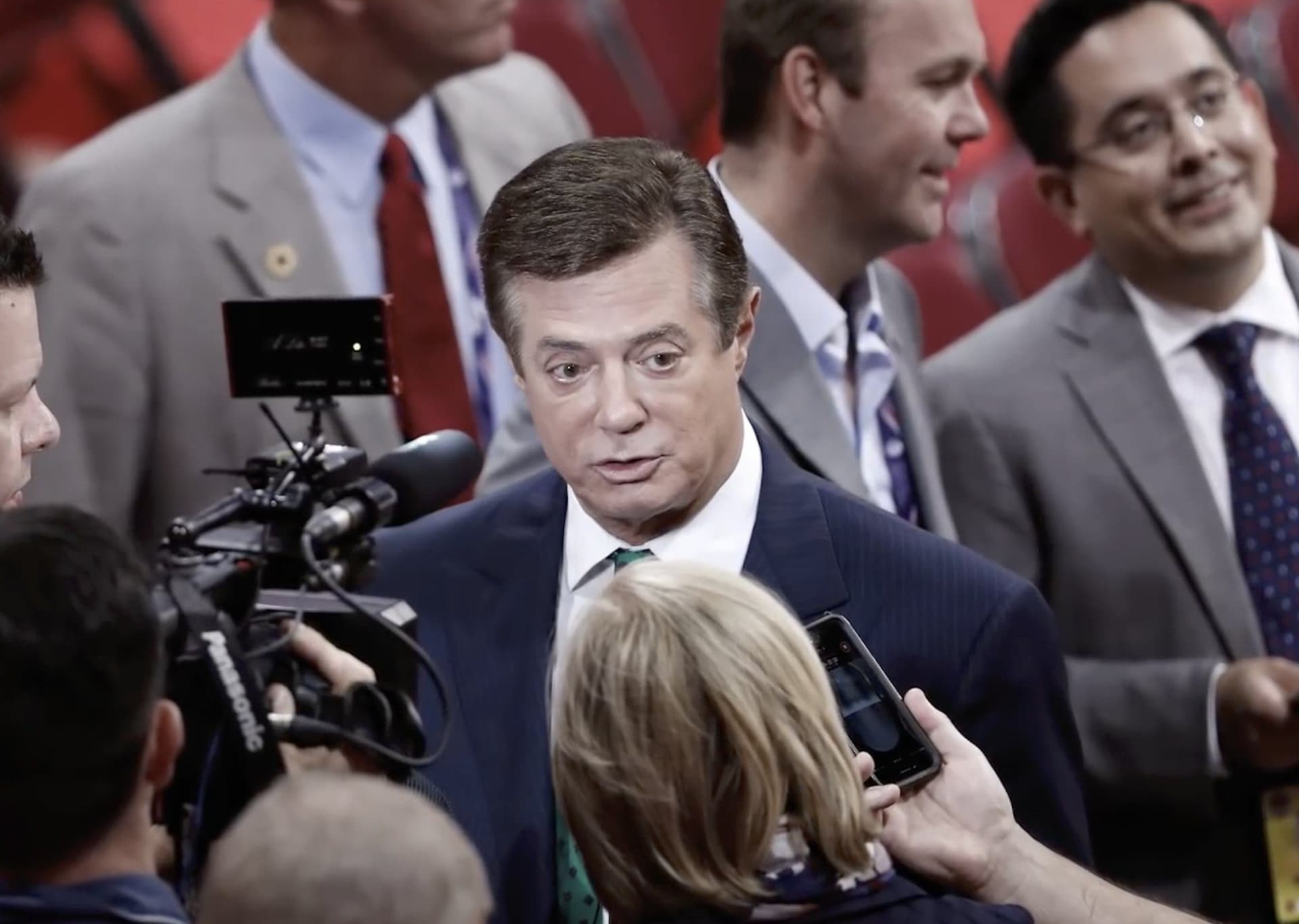
In June 2016, Trump Jr. received an email offering damaging information about Hillary Clinton that was described as part of Russia’s support for his father’s presidential campaign. Trump Jr. responded enthusiastically and arranged a meeting at Trump Tower involving campaign chairman Paul Manafort, Jared Kushner and Russian attorney Natalia Veselnitskaya.
The meeting generated intense scrutiny because federal law prohibits foreign nationals from making certain contributions to American political campaigns and prohibits campaigns from knowingly soliciting such contributions. Mueller’s investigation examined whether the promised opposition research could qualify as a prohibited foreign contribution. Prosecutors ultimately declined to charge Trump Jr., citing difficulties establishing the necessary criminal intent and determining the value of the information offered.
The absence of charges does not erase the documented willingness to entertain an offer described as assistance from the Russian government. It does, however, mean the meeting should not be described as a criminal campaign-finance violation established in court.
Mongolia Hunting Trip: Endangered Wildlife, Special Permits and Taxpayer Expenses
In August 2019, Trump Jr. traveled to Mongolia on a trophy hunting expedition during which he killed an argali sheep, a species protected under international conservation frameworks and listed as threatened under American law. ProPublica reported that Mongolian authorities issued Trump Jr. a hunting permit retroactively, after the animal had already been killed. He also met privately with Mongolia’s president, raising questions about the special treatment available to the son of the sitting American president.
The trip became a taxpayer spending controversy after Citizens for Responsibility and Ethics in Washington obtained federal records showing that Secret Service protection cost approximately $76,859. Additional State Department records subsequently indicated further government expenditures, potentially bringing the total substantially higher. Trump Jr.’s representatives described the trip as a personal hunting expedition and maintained that permits were obtained through the appropriate arrangements. Secret Service protection, however, is provided under federal security responsibilities rather than at the discretion of the protected individual.
The controversy concerned the combination of an unusual permit, access to a foreign head of state and significant public expenses associated with a private recreational trip.
Foreign Real Estate and the Trump Organization’s International Expansion
Trump Jr. has also participated in the Trump Organization’s international business activities, including the promotion of branded luxury developments in India and other overseas markets. During his father’s first presidency, the family faced criticism for continuing to market Trump-branded properties abroad while the administration conducted diplomatic and economic negotiations with governments in those same regions.
The ethical concern centers on whether foreign developers, investors or politically connected business partners might pursue commercial relationships with the president’s family in hopes of obtaining influence or favorable treatment from Washington.
International licensing agreements are not inherently improper, and the existence of a Trump-branded project does not establish that a foreign government provided unlawful benefits. Nevertheless, the family’s continuing overseas commercial relationships create questions about financial transparency, potential foreign influence and whether presidential decision-making is sufficiently insulated from private business interests.
Why Donald Trump Jr. Belongs in South Florida Media’s Trump Hall of Shame
Donald Trump Jr.’s inclusion in South Florida Media’s Trump Hall of Shame rests on a combination of documented controversies, judicial findings and substantial unresolved questions about the relationship between presidential power and private wealth.
His history includes the 2016 Trump Tower meeting, the Trump SoHo investigation, the New York civil fraud case and the Mongolia hunting controversy. More recently, his investments and advisory positions have expanded into defense procurement, cryptocurrency, financial technology, healthcare, prediction markets and private organizations offering access to Washington’s political establishment.
The $620 million Vulcan Elements loan raises questions about the role of White House intervention in financing a company connected to his venture capital firm. His drone investments create potential conflicts involving Pentagon procurement and federal technology policy. His relationships with World Liberty Financial, PublicSquare and prediction market companies intersect with significant regulatory decisions made during his father’s administration.
The Russian financed Bahamas wedding celebrations introduced a separate set of national security concerns, particularly because the original payments came from an individual with connections to Vladimir Putin. Although Trump Jr. reportedly reimbursed the money, the episode illustrates the risks associated with expensive personal benefits provided by influential foreign figures.
His involvement in the Executive Branch private club adds another dimension, creating a commercial relationship with an exclusive organization whose appeal includes access to some of the most powerful people in Washington. None of these circumstances automatically establishes criminal corruption. Several businesses have denied receiving preferential treatment, and some investigations have ended without charges or adverse findings. But the repeated intersection of Trump Jr.’s private financial interests with decisions made by his father’s government presents an unusually extensive network of potential conflicts.
The American public deserves to know whether federal contracts were awarded competitively, whether regulatory decisions were made independently, whether foreign investors received improper access and whether politically connected businesses benefited from advantages unavailable to their competitors. Those questions should be answered through procurement records, financial disclosures, congressional testimony, independent audits and the full documentation of government decisions.
Donald Trump Jr. has built a business network whose value is increasingly intertwined with industries regulated, financed and influenced by his father’s administration. Whether that proximity has produced improper advantages is a question that deserves independent investigation not simply assurances from the people positioned to benefit.
For South Florida Media’s Trump Hall of Shame, the documented history and unresolved conflicts provide ample grounds for scrutiny. In a government committed to public accountability, presidential family relationships should never substitute for competitive bidding, regulatory independence or transparent financial disclosure.
Sources & Further Reading

Defense contracting and federal financing
-
ProPublica — White House Intervention in Vulcan Elements’ $620 Million Pentagon Financing
-
CBS News — Donald Trump Jr.’s Expanding Washington Business Network
Russian financial connections and prediction markets
-
ProPublica — How Investigators Uncovered Russian Financing of Wedding Celebrations
-
ProPublica — Congressional Investigation Into Kremlev’s Wedding Payments
-
The Washington Post — Kalshi and Polymarket Investment Conflict
Financial regulation, private access and historical investigations


Loading comments…