
Peter Thiel Breaks With Trump Over Iran War as Republican Divisions Grow and U.S. Intelligence Points to Russian and Chinese Support for Iran
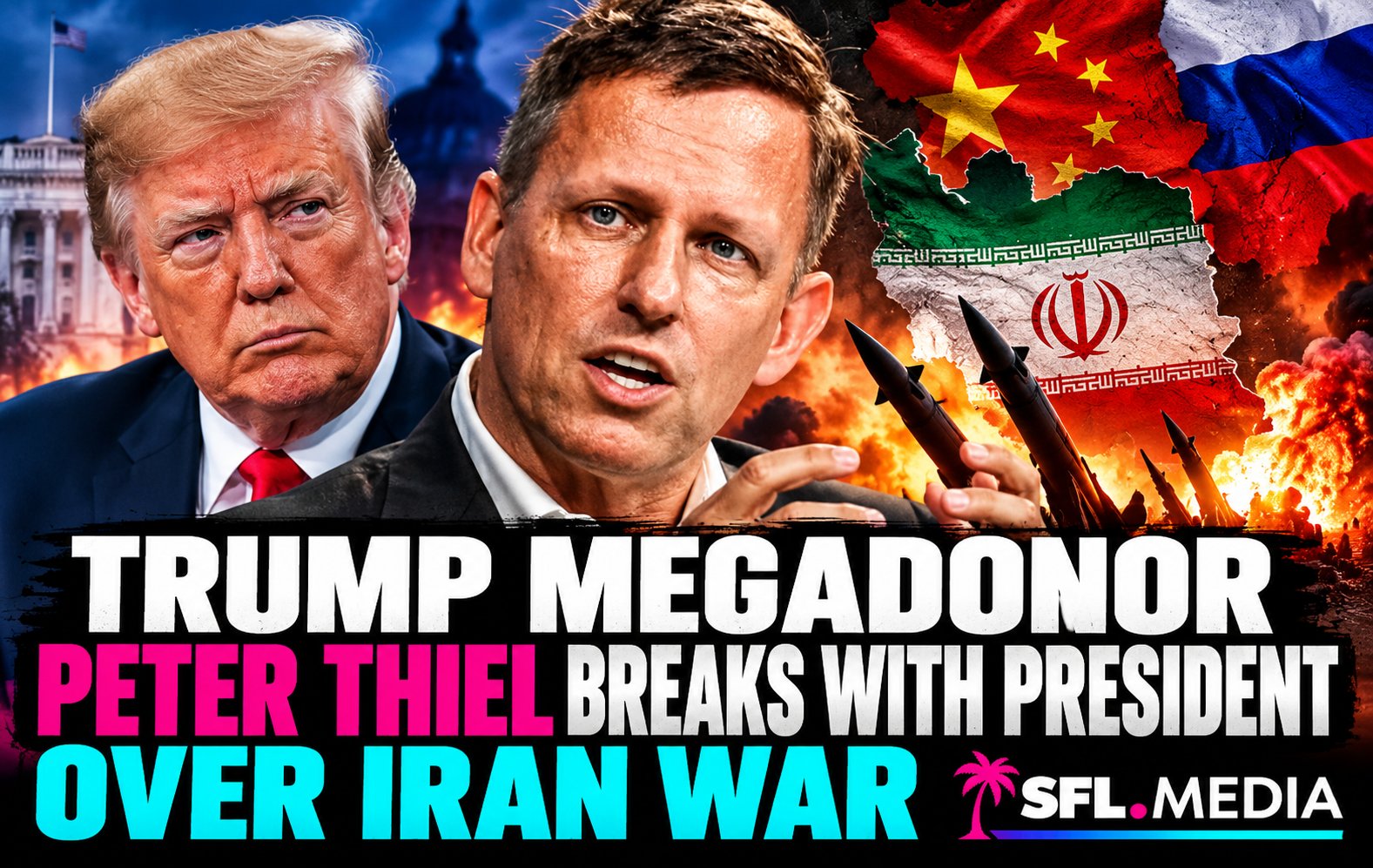
Billionaire Republican megadonor Peter Thiel says the United States should never have launched its war against Iran, exposing a growing divide within Donald Trump’s political coalition as soaring fuel prices, American military casualties and intelligence reports of Russian and Chinese assistance to Tehran raise new questions about the conflict’s costs and objectives.
WASHINGTON — One of President Donald Trump’s most influential billionaire supporters has delivered a striking criticism of the administration’s war against Iran, saying the United States should never have entered the conflict and warning that American military power, international influence and even senior administration officials could face consequences from the prolonged confrontation.
Peter Thiel, the technology investor and Republican megadonor whose financial support helped launch Vice President JD Vance’s political career, made the remarks during a private October 12 lecture in Nashville, Tennessee. Recordings obtained by POLITICO and reported on October 22 reveal that Thiel questioned the decision to initiate the war, criticized mistakes made during the conflict and expressed concern about the broader consequences for American power.
“I’m skeptical of the war. I think we should not have done it. There were a lot of mistakes that were made.” — Peter Thiel, in leaked audio obtained by POLITICO
The remarks represent a significant policy disagreement between Trump and a billionaire who has helped finance the modern conservative political movement. Thiel, a co-founder of PayPal and Palantir, was an early technology industry supporter of Trump and contributed approximately $15 million to a super PAC supporting Vance’s successful 2022 Ohio Senate campaign. His political influence extends well beyond campaign contributions, connecting Silicon Valley investors, national security technology companies and prominent figures within the Republican Party.
Thiel has not withdrawn his support for Trump, an important distinction that separates his criticism from a broader political defection. Instead, his remarks reveal a disagreement over one of the administration’s most consequential foreign policy decisions, raising questions about whether the coalition that helped return Trump to the White House shares a common vision for America’s role in the Middle East.
Thiel Questions Whether America Is Losing Military and Diplomatic Power
Thiel’s concerns extended beyond whether the United States should have initiated military action. During his Nashville lecture, he questioned whether American military strength and international influence were sufficient to sustain the conflict and its long term consequences.
“Maybe we don’t have the hard power. Maybe we’re going to lose the soft power war,” Thiel said, according to the recordings.
The distinction between hard power and soft power is central to understanding his criticism. Hard power generally refers to a country’s ability to achieve objectives through military force and economic coercion, while soft power describes its capacity to influence other nations through diplomacy, alliances, credibility and international relationships.
The United States maintains extraordinary conventional military capabilities, but the ability to destroy military targets does not necessarily guarantee a lasting political settlement. Prolonged warfare can weaken diplomatic relationships, disrupt international trade, increase pressure on military resources and create new opportunities for rival powers to expand their influence.
Thiel’s remarks suggest concern that even successful military operations could produce wider strategic costs if Washington cannot translate battlefield gains into a sustainable political outcome. His skepticism also reflects a longstanding debate within conservative foreign policy circles about whether American military intervention in the Middle East produces benefits commensurate with its financial, human and diplomatic costs.
Thiel Raises the Possibility of International Criminal Court Consequences
One of the more unusual elements of Thiel’s leaked remarks involved the International Criminal Court, the international judicial institution established to prosecute certain serious crimes under international law. Thiel suggested that the possibility of future ICC proceedings could create legal and political complications for senior Trump administration officials. He described the potential threat of an arrest warrant as a “sword of Damocles” hanging over the administration.
His concerns reportedly included the possibility that a future American president might take a different approach toward international legal institutions and officials accused of wrongdoing during the conflict. Thiel also discussed Secretary of State Marco Rubio and Defense Secretary Pete Hegseth in the context of possible legal exposure.
These remarks should not be interpreted as evidence that the ICC has issued, or is preparing to issue, arrest warrants against Trump administration officials over the Iran war. No such conclusion is established by the reporting. The United States is not a party to the Rome Statute, although ICC jurisdiction can depend on additional legal and territorial considerations. The significance of Thiel’s warning is that he is contemplating consequences that could outlast Trump’s presidency. Rather than discussing the war exclusively as a military operation, he is raising questions about how future governments, international institutions and America’s allies might evaluate the administration’s decisions.
Trump Defends the War as Necessary to Stop Iran’s Nuclear Program
Trump has presented the war in dramatically different terms, repeatedly defending American military action as necessary to prevent Iran from acquiring nuclear weapons and threatening regional and international security. In remarks featured during CNN’s coverage, the president characterized the military campaign as one of his administration’s major accomplishments, asserting that American intervention had prevented Iran from developing and potentially using nuclear weapons.
The administration’s position is that Iran’s nuclear ambitions and military activities created an unacceptable national security threat requiring decisive action. Critics of the intervention question whether the threat justified initiating a broader war and whether the military campaign has produced a durable reduction in the danger posed by Tehran. Those competing positions raise an important distinction between tactical military achievements and long-term strategic success. Destroying nuclear facilities, missile infrastructure or military installations can degrade an adversary’s capabilities, but preventing future weapons development and establishing lasting regional security require additional political and diplomatic outcomes.
The United States and Israel launched military operations against Iran on February 28, 2026, triggering Iranian retaliation against Israel and American interests throughout the region. The conflict has subsequently disrupted energy markets, endangered shipping through the Strait of Hormuz and imposed substantial military and economic costs. Nearly eight months later, the disagreement between Trump and Thiel centers on whether those costs were necessary and whether the administration’s objectives could have been achieved through other means.
Republican Anxiety Grows as Gasoline and Diesel Prices Rise
The political consequences of the war are becoming increasingly difficult to separate from its economic effects, particularly as Republicans approach the November 3 midterm elections.
According to AAA figures cited in October reporting, the national average gasoline price had climbed to approximately $4.27 per gallon, while diesel prices reached approximately $6.31 per gallon. Those figures represent substantial financial pressure on American households, commercial transportation companies, agricultural businesses and industries dependent on fuel. Diesel prices are especially consequential because diesel powers much of the nation’s freight transportation, agricultural equipment and commercial machinery. When those costs rise, businesses can face higher expenses for moving food, construction materials and consumer goods, creating additional inflationary pressure throughout the economy.
The Iran war is not the sole cause of American inflation, but disruptions to Middle Eastern energy production and shipping have contributed to higher fuel prices. The Strait of Hormuz, a critical passage for global petroleum shipments, has become a central focus of the conflict, with attacks on commercial vessels and threats to maritime traffic creating uncertainty for international energy markets.
In South Florida, those costs can affect trucking companies, tourism operators, marine businesses, airlines and other industries closely connected to transportation and international commerce.
The political challenge for Republicans is particularly acute because Trump returned to office promising to reduce household expenses and pursue an America First agenda. For voters concerned about affordability, the relationship between overseas military commitments and domestic economic conditions has become an increasingly relevant issue.
Senator Roger Marshall Illustrates the Republican Divide
Kansas Republican Sen. Roger Marshall has provided an example of the tensions facing lawmakers who support Trump but are concerned about the war’s continuation and its economic consequences.
During CNN’s reporting, Marshall expressed a desire for the conflict to end quickly and emphasized his concern about additional American military casualties. His remarks reflected anxiety about the human cost of continued fighting, although they did not amount to a direct repudiation of Trump’s original decision to initiate military action.
Marshall has also publicly disputed the causes of rising diesel prices. During an October 21 Senate debate, he attributed high diesel costs to Russia’s war against Ukraine rather than the American war with Iran. His Democratic challenger, Adam Hamilton, argued that the Iran conflict was responsible for much of the increase and called for measures to ease fuel expenses.
The exchange illustrates how the economic effects of multiple international conflicts have become intertwined with domestic political debates. Russia’s invasion of Ukraine, the war in Iran, sanctions on petroleum exports and disruptions to global energy markets all influence supply, pricing and government policy. For Republican lawmakers, these overlapping crises complicate efforts to defend the administration’s economic performance while maintaining support for its foreign policy decisions.
JD Vance, Tulsi Gabbard and the America First Foreign Policy Debate
Thiel is not the only prominent figure associated with Trump’s political movement whose views have raised questions about the war. Reporting has indicated that Vice President JD Vance expressed reservations about initiating military strikes against Iran before the conflict began. Vance’s position is especially noteworthy because of his longstanding relationship with Thiel and his previous criticism of prolonged American military involvement overseas.
Director of National Intelligence Tulsi Gabbard has also been identified in political discussions as a figure associated with skepticism toward interventionist foreign policy. Her history of opposing certain American military interventions has made her views on Iran a subject of interest, although that history should not be treated as proof of opposition to every decision made during the current conflict.
Other conservative figures, including Tucker Carlson and former Rep. Marjorie Taylor Greene, have criticized aspects of the war and questioned its consistency with Trump’s promises to avoid unnecessary foreign entanglements. The disagreement reflects competing philosophies within the Republican coalition. Some conservatives support aggressive military action against Iran as necessary to protect American interests, defend regional allies and confront nuclear proliferation. Others argue that military intervention risks drawing the United States into another prolonged conflict while diverting resources from domestic priorities.
Thiel’s criticism adds financial and political significance to that debate because of his connections to Republican leadership and the technology sector. It also demonstrates that support for Trump’s domestic agenda does not necessarily translate into agreement with his approach to Iran.
U.S. Intelligence Reports Point to Russian and Chinese Assistance to Iran
One of the most serious developments surrounding the conflict involves American intelligence assessments indicating that Russia and China have provided assistance to Iran’s military operations. Reuters reported on October 13 that U.S. intelligence assessments had identified Russian and Chinese support for Tehran, including satellite imagery used for targeting and components for military weapons. The news agency attributed those findings to two people briefed on the intelligence.
CNN separately reported in September that intelligence and satellite imagery supplied by Chinese groups had helped Iran improve its ability to target American military installations and ships operating near the Strait of Hormuz. The network cited four sources familiar with recent American intelligence assessments. According to CNN’s reporting, Chinese provided geospatial intelligence helped Iranian forces identify and strike a U.S. military installation in Jordan in July, killing three American service members. American officials cited by the network believed that the intelligence substantially improved the precision of the attack.
These findings are significant because they suggest that foreign assistance may be increasing Iran’s military effectiveness without requiring Russian or Chinese forces to participate directly in the conflict. Satellite imagery and geospatial intelligence can allow military forces to identify installations, monitor the movement of ships and aircraft, assess defensive positions and improve the accuracy of missiles and drones. Such assistance can be particularly valuable to a military facing an adversary with superior surveillance and conventional capabilities.
The reported connection between Chinese intelligence and the deadly Jordan attack is based on assessments described by sources to CNN. It should not be presented as an independently established judicial finding or as proof that the Chinese government directly ordered the attack. Nevertheless, the intelligence reporting raises important questions about the extent to which America’s strategic competitors are helping Iran challenge U.S. military operations.
Trump Disputes Intelligence Reports About Russia and China
Despite those assessments, Trump has publicly expressed skepticism that Moscow and Beijing are providing meaningful assistance to Tehran. In an October statement reported by Reuters, the president said he did not believe Russia or China were helping Iran, suggesting that any involvement would be limited and that Washington would quickly discover substantial assistance.
His remarks contrasted with the intelligence assessments described to Reuters and CNN, creating a disagreement between the president’s public characterization of the situation and information reportedly gathered by American intelligence agencies. The distinction is consequential. If foreign governments are providing targeting intelligence or weapons-related technology to forces attacking American personnel, policymakers must determine whether the assistance represents indirect support, a broader strategic partnership or conduct requiring a diplomatic or military response.
Trump’s approach has emphasized maintaining communication with Russian President Vladimir Putin and Chinese President Xi Jinping, even as both governments maintain relationships with Tehran. Supporters of that diplomatic strategy argue that continued communication with major powers can reduce the risk of escalation and preserve opportunities for negotiations. Critics question whether minimizing reports of assistance to Iran sends an insufficiently forceful message when American service members are under threat.
The available intelligence reporting establishes grounds for serious scrutiny of foreign assistance to Iran, but it does not establish that Trump knowingly disregarded confirmed intelligence or that his diplomatic relationships were the reason for his public statements.
Trump’s Russian Diesel Deal Adds Another Complication
The administration’s approach to Russia has also become intertwined with the economic consequences of the Iran war. Earlier this month, Trump announced an arrangement intended to increase the availability of Russian diesel in international markets as the United States confronted sharply higher fuel prices. The policy involved authorizing certain transactions involving Russian origin diesel, creating a potential new source of revenue for Russian petroleum suppliers.
The decision presents a foreign policy dilemma. Washington has spent years using sanctions and other economic restrictions to constrain Russia’s ability to finance its war against Ukraine, yet the Iran-related energy crisis has prompted the Trump administration to seek additional petroleum supplies from Russia. The administration argues that increasing fuel availability can help stabilize prices and protect American consumers. Critics question whether reopening certain Russian energy transactions could weaken economic pressure on Moscow.
The actual financial benefit to Russia depends on the volume of petroleum sold, the purchasers involved and the terms of the transactions. Those details remain important when assessing the policy’s practical effects. The larger issue is that the war in Iran has created economic pressures influencing American policy toward another major geopolitical adversary. At the same time, intelligence reporting has raised questions about whether that adversary is providing assistance to Iran’s military.
A War With Consequences Beyond the Battlefield
The combination of Thiel’s criticism, Republican concerns over fuel prices, reported foreign assistance to Iran and continuing American military commitments has expanded the political debate far beyond the original justification for military action.
For Trump, the administration’s central argument remains that military intervention was necessary to prevent Iran from obtaining nuclear weapons and to protect American national security interests.
For critics, including influential figures within his own coalition, the questions concern whether the war was necessary, whether its objectives are achievable and whether the costs are justified by its results.
Those costs extend beyond direct military spending. They include American casualties, disruptions to international shipping, higher energy prices, strained diplomatic relationships and the possibility that competing powers could benefit strategically from a prolonged American military commitment.
Thiel’s remarks are important precisely because they come from inside the political and financial network that helped elevate Trump and Vance. His criticism does not mean that the Republican coalition has fractured completely, nor does it establish that the president has lost the support of major conservative donors. It does, however, demonstrate that disagreements over the war have reached some of the most influential figures associated with the administration’s political rise.
As Americans prepare to vote in the midterm elections, the administration faces questions about both the military campaign and its economic consequences. The debate increasingly concerns not only whether American forces can defeat Iranian military targets, but also whether the war will leave the United States more secure, economically stable and internationally influential. Thiel has offered his assessment of the original decision: The United States should not have gone to war. Whether the administration can demonstrate that the conflict’s ultimate results justify its costs remains an unresolved question.

Sources & Further Reading
Related SFL Media Reporting
1. Trump Turns to Putin to Buy Russian Diesel, Raising Questions About U.S. Money Funding Wars in Iran, Gaza, and Ukraine — October 10, 2026. SFL Media examines the administration’s Russian diesel arrangement and its implications for international sanctions and energy prices.
2. A Closer Look: Trump’s Disastrous Handling of the Iran War — August 31, 2026. SFL Media examines the administration’s military objectives, American casualties, fuel prices and continuing instability in the Strait of Hormuz.
3. SFL Media Politics Coverage — Additional reporting on U.S. foreign policy, the Trump administration and international affairs.






































Want to join the conversation?
Create an account or sign in to share your thoughts, vote,
and reply to other readers.
Showing 0 of 0 comments
Don't have an account?
Already have an account?