
Trump Says He Is Banning CNN, Politico and MS NOW From the White House, Setting Up New First Amendment Fight
President Donald Trump says CNN, Politico and MS NOW are being banned from the White House over what he calls years of “fake,” dishonest and deliberately negative reporting, arguing that freedom of the press does not require him to provide critical outlets access to the Oval Office or other restricted presidential spaces. The announcement immediately raised constitutional questions and the prospect of another court battle over whether the government can restrict journalists because of their coverage.
WASHINGTON — President Donald Trump escalated his long-running confrontation with the national press Friday, announcing that CNN, Politico and MS NOW, formerly MSNBC, would be banned from the White House “effective immediately” because of coverage he characterized as deliberately false and overwhelmingly hostile to his administration. Trump also warned that additional news organizations could face similar restrictions, turning years of rhetorical attacks against major media organizations into a potentially significant legal confrontation over access to the presidency.
“I am proud to announce that, effective immediately, I am banning Fake News CNN, MSNOW … and Politico … from the White House as a result of their constant ‘reporting’ FAKE NEWS!” Trump wrote on Truth Social. He accused the organizations of publishing “FICTION and LIES” about his presidency and the United States and added, “Other Fake News Media Outlets to follow.” The practical scope of the announcement, however, was not immediately clear. Reporters from the targeted organizations were still working on White House grounds after Trump’s announcement, and journalists had not been physically removed from the briefing room.
Trump Says the Ban Is About Years of Negative Coverage
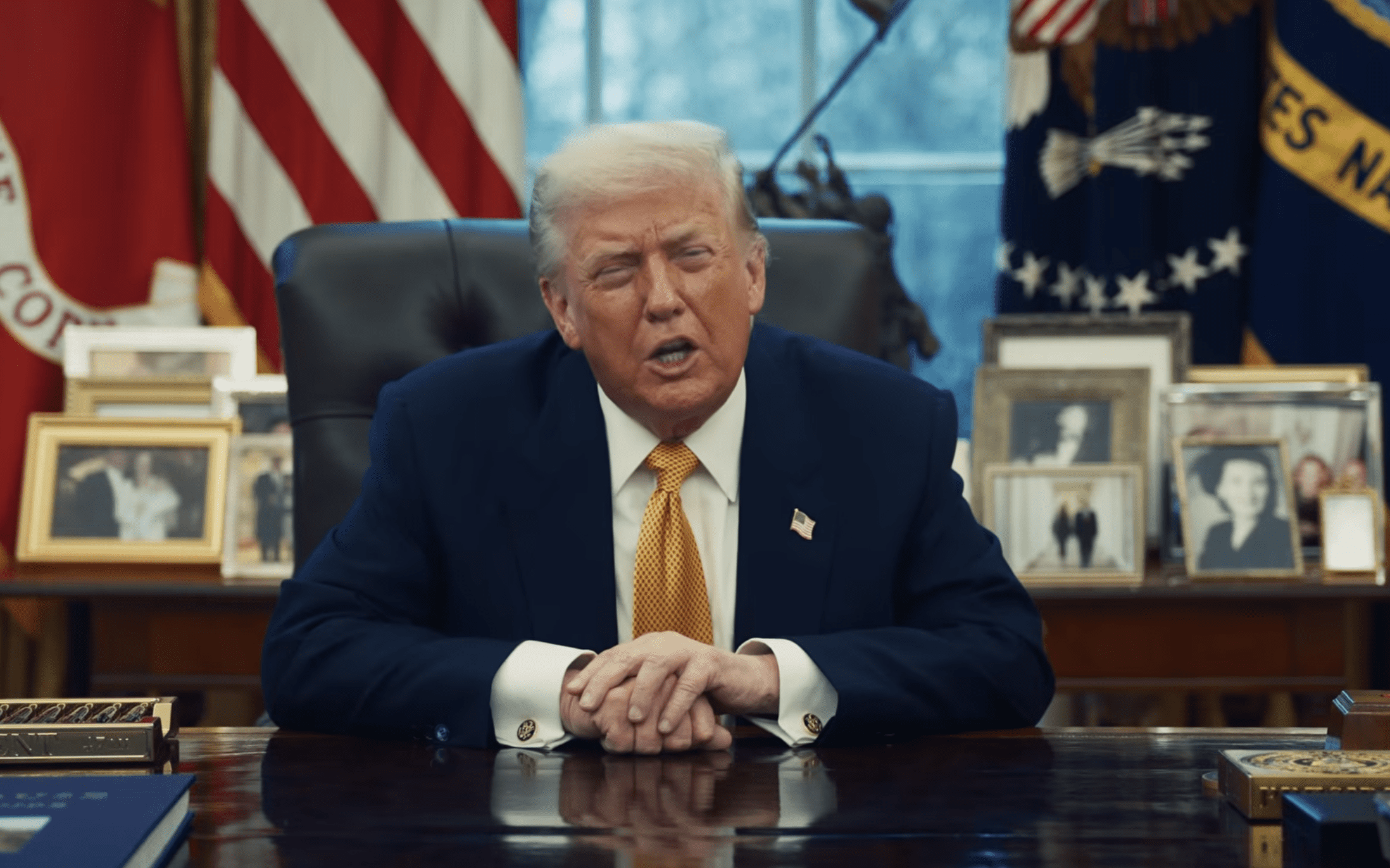
Questioned by reporters later in the Oval Office, Trump said there was no single CNN, Politico or MS NOW report that prompted his decision. Instead, he described the action as the result of accumulated frustration with years of coverage that he believes has been intentionally slanted against him and Republicans. “It’s really just cumulative stories,” Trump said, adding that “you get sick of it.” He accused the outlets of purposely producing negative coverage because, in his view, “they want to try and diminish the Republicans and a Republican administration.”
Trump simultaneously insisted that he supports freedom of the press. “You need a free press,” he said. “You need a fair press and an honest press.” His argument is that the First Amendment does not require him to provide White House access to organizations he believes repeatedly publish false or intentionally hostile coverage. Asked what the ban would actually entail, Trump described it as “a very simple ban,” saying, “I don’t want them in my office. I don’t want them here.” He said the restriction would go “as far as you can,” while leaving open the possibility that the organizations could eventually return if, in his words, “they can straighten themselves out.”
The distinction is important. Trump is not claiming that the government can prevent CNN, Politico or MS NOW from publishing stories about him. Instead, the immediate dispute concerns physical access to the White House, including the Oval Office, press briefings and restricted presidential events. Such access can be limited for logistical and security reasons, but the constitutional question becomes more complicated when access is denied to specific journalists or organizations because government officials object to their reporting.
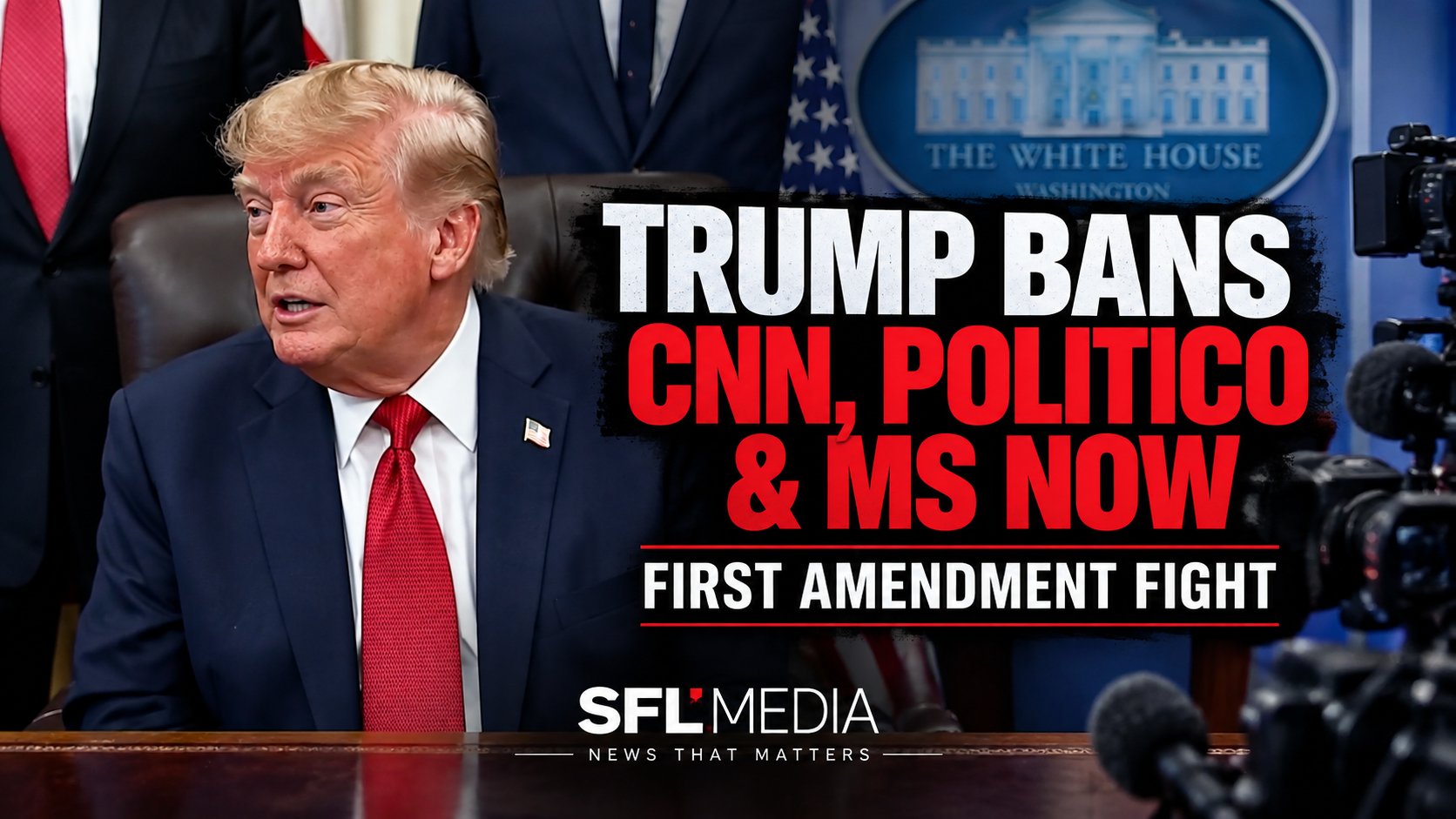
Reporters Confront Trump Over the First Amendment
Reporters immediately challenged Trump on whether excluding particular news organizations because of their coverage would amount to government retaliation based on viewpoint. One reporter reminded the president that freedom of the press is explicitly protected by the First Amendment and asked whether the move was intended to intimidate journalists. Trump rejected that characterization. “No, no, no, no. I dislike dishonest press,” he responded.
Pressed again on how the ban could be constitutional, Trump argued that journalists remain free to publish negative stories but are not necessarily entitled to access the White House. “There’s something wrong with a country that can allow people to write purposely negative stories,” Trump said. “Now, if they want to write them, that’s fine. But I don’t have to let them into my, into the people’s house.”
That argument could become central to any resulting litigation. The First Amendment protects freedom of speech and the press, but it does not give every journalist an unrestricted right to enter every government building or presidential event. The more difficult constitutional issue is whether an administration can establish a system for granting press access and then selectively exclude journalists or organizations because officials dislike their reporting or viewpoints.
Trump Acknowledges the Ban Could End Up in Court
Trump has been through a version of this battle before. During his first administration, the White House revoked CNN correspondent Jim Acosta’s press credential following a contentious 2018 press conference. CNN sued, and a federal judge ordered the White House to restore Acosta’s credential while the litigation proceeded.
Asked about that history and whether his latest restrictions could survive another court challenge, Trump appeared prepared to test the issue again. “We’ll see,” he said, later adding that he believed it was worthwhile to challenge the media “whether it survives or doesn’t.” Trump then went further, saying, “I don’t think that a court should allow fake news to be written day after day after day.”
The legal issue, however, would not simply be whether a judge agrees with Trump’s assessment of a news organization’s journalism. American courts have long recognized extensive constitutional protections against government restrictions on news reporting. The more immediate question raised by Trump’s announcement is whether the White House can condition access on whether the president considers an outlet’s reporting sufficiently accurate, fair or favorable.
That issue has already resurfaced during Trump’s second term. The Associated Press sued after the White House restricted its access to certain presidential events following the AP’s decision to continue using “Gulf of Mexico” while also recognizing Trump’s preferred name, “Gulf of America.” A federal judge ordered the administration to restore AP access to certain presidential spaces, while subsequent appeals produced additional litigation over the extent of the White House’s discretion to control access to limited presidential events.
Trump’s $8 Million Politico Claim Needs Important Context
Trump also revived a claim that Politico had effectively been kept alive through millions of dollars in federal government payments during the Biden administration. “Politico was bailed out by our government from going out of business,” Trump said. “I don’t know if it was $8 million or something, but they were given this massive subsidy.”
Federal spending records confirm that government agencies collectively spent millions of dollars on Politico products and subscriptions, including Politico Pro, a premium policy and legislative information service used by government agencies and private organizations. However, describing those payments as a government subsidy or bailout designed to keep Politico in business is not supported by the available evidence. The widely circulated $8 million figure represented purchases across multiple federal agencies rather than a direct $8 million payment from USAID, and federal agencies also purchased Politico products during Trump’s first administration.
That distinction does not resolve the separate policy question of whether federal agencies should spend taxpayer money on expensive news and policy monitoring subscriptions. An administration can determine that such services are unnecessary and cancel them. But purchasing subscriptions to a commercial information service is materially different from providing a subsidy intended to keep a news organization financially afloat, and no evidence has emerged establishing that the Biden administration made the payments for that purpose.
New York Times and Washington Post Could Also Face Restrictions
Trump made clear that his confrontation may not end with CNN, Politico and MS NOW. During the exchange, he criticized The New York Times and The Washington Post and said the White House may stop displaying those newspapers inside the executive mansion. “We are probably not going to display those papers anymore in the White House,” Trump said, while stopping short of announcing that those organizations would also be banned.
The president also suggested that the three targeted organizations could eventually regain access if their coverage changed. That statement could become legally significant because it directly connects White House access with Trump’s assessment of the outlets’ journalism. CNN responded that excluding the network because of its reporting would constitute an illegal attack on constitutionally protected press rights and said it would continue covering the administration.
Sarah Huckabee Sanders Defends Trump’s Position
Arkansas Gov. Sarah Huckabee Sanders, who served as White House press secretary during Trump’s first administration, was present during the Oval Office exchange and defended the president when reporters asked for her view. Sanders argued that Trump’s extensive interaction with reporters demonstrated that his administration was not broadly shutting down press access.
“I think it’s hard for you to argue against a free press when you’re literally standing in the Oval Office asking questions of the President of the United States,” Sanders said. She argued that Trump has made himself highly accessible to journalists and that while the president should support the First Amendment, expecting reporters to be “honest and fair” was reasonable.
Her defense highlights the central disagreement likely to follow Trump’s announcement. The administration can point to the large number of journalists who continue to question Trump directly, including reporters who routinely challenge his statements, as evidence that the White House remains accessible to the press. Critics counter that broad accessibility does not resolve the constitutional issue created when the government selectively excludes particular organizations because officials object to their coverage.
The Legal Battle Could Be Bigger Than CNN, Politico and MS NOW
The stakes extend beyond the three organizations Trump named. Presidents routinely make decisions about logistics, security and the limited number of journalists who can fit inside locations such as the Oval Office, Air Force One or presidential motorcades. Those practical restrictions are fundamentally different from excluding a specific news organization because of its editorial coverage, and that distinction could become critical if Trump’s directive reaches federal court.
Trump’s own explanation may therefore become as important as the restrictions themselves. He did not publicly cite security concerns, space limitations or violations of White House rules as the primary reason for targeting CNN, Politico and MS NOW. Instead, he repeatedly said he was acting because he considers their journalism fake, dishonest, one-sided and deliberately negative. At the same time, Trump maintains that the outlets remain free to publish whatever they want and argues that freedom of the press does not automatically guarantee physical access to the president.
The competing constitutional arguments are likely to focus on that distinction. Trump and his supporters can argue that no president is required to invite every journalist into every restricted presidential setting and that the targeted organizations remain free to criticize his administration regardless of their physical access. Press freedom advocates argue that once the government creates a system of press access, it cannot selectively withdraw that access as retaliation for unfavorable coverage or condition admission on whether the president considers a news organization sufficiently fair.
What Trump announced is therefore potentially more consequential than another rhetorical attack on CNN or another presidential complaint about unfavorable headlines. If the White House fully implements the restrictions as described, the administration could be testing a much broader constitutional proposition: whether a president can deny established news organizations access to the seat of executive power because he believes their reporting is dishonest or unfair.
Trump’s position is that a free press must also be an honest press and that journalists do not possess an unlimited right to enter restricted White House spaces. His opponents argue that the First Amendment does not permit the government to determine which journalism is sufficiently fair or truthful to receive access based on viewpoint. If the targeted organizations challenge the restrictions, federal courts may once again be asked to determine where presidential discretion over White House access ends and unconstitutional retaliation against the press begins.
Sources & Further Reading
Associated Press — Trump Says He Is Banning CNN, MS NOW and Politico From the White House
https://apnews.com/article/trump-cnn-msnow-politico-media-bans-bb675679fb10738a51bef90bde6c525a
Reuters — Trump Says He Is Banning CNN, MS NOW and Politico From White House
https://www.reuters.com/world/us/trump-bans-media-outlets-cnn-msnow-politico-white-house-2026-09-18/
The New York Times — Trump Says He Has Banned CNN, MS NOW and Politico From White House
https://www.nytimes.com/2026/09/18/business/media/trump-cnn-ms-now-politico-white-house-ban.html
The Washington Post — Trump Says He Is Banning CNN, MS NOW and Politico From the White House
https://www.washingtonpost.com/business/2026/09/18/trump-says-hes-banning-cnn-ms-now-politico-white-house/
Los Angeles Times — Trump Says He’s Banning CNN, MS NOW and Politico From the White House
https://www.latimes.com/entertainment-arts/business/story/2026-09-18/trump-bans-cnn-msnow-politico-white-house
CBS News — Trump Says He’s Banning CNN, Politico and MS NOW From the White House
https://www.cbsnews.com/news/trump-banning-cnn-ms-now-politico-white-house/
CBS News — Fact Check: Trump’s Claims About Government Payments to Politico
https://www.cbsnews.com/news/trump-politico-payments-fact-check/
FactCheck.org — Trump, Online Posts Misrepresent Government Subscriptions to News Services
https://www.factcheck.org/2025/02/trump-online-posts-misrepresent-government-subscriptions-to-news-services/

































Want to join the conversation?
Create an account or sign in to share your thoughts, vote,
and reply to other readers.
Showing 0 of 0 comments
Don't have an account?
Already have an account?