
Trump’s Trillion Dollar Christmas: How War, Gas Prices, Tariffs, and Inflation Are Making the 2026 Holiday Season the Most Expensive in American History
With holiday retail spending projected to exceed $1 trillion for the first time, rising gasoline prices, persistent inflation, and the economic consequences of President Donald Trump’s policies are putting additional pressure on American families ahead of Christmas.
Christmas 2026 is shaping up to be the most expensive holiday shopping season in American history in terms of total dollars spent, and the numbers behind that record tell a far more complicated story than the cheerful economic forecasts coming out of Washington and the retail industry.
For the first time, American holiday retail spending is projected to exceed $1 trillion, a staggering milestone arriving alongside renewed inflationary pressures, sharply higher gasoline prices, escalating energy costs, and the continuing economic consequences of President Donald Trump’s trade policies and the war involving the United States, Israel, and Iran. According to the National Retail Federation, Americans are expected to spend approximately $1.013 trillion during November and December, an increase of 4.2% over the estimated $972 billion recorded during the same period in 2025. If realized, the projection would establish a new nominal spending record for the holiday season.
But there is a catch: Higher spending does not necessarily mean Americans are buying more Christmas presents, enjoying greater prosperity, or getting more for their money. Reporting on the retail forecast indicates that inflation is expected to account for approximately half of this year’s projected holiday sales growth, meaning a significant portion of the additional spending reflects higher prices rather than additional merchandise. For millions of households, that distinction matters enormously. A family spending more on gasoline, groceries, utilities, transportation, and everyday necessities has less money available for gifts, holiday meals, decorations, and travel. Even when wages increase, rising prices can absorb those gains before consumers ever reach the checkout counter.
The result is an increasingly divided American Christmas, one in which national spending records can coexist with households cutting gift lists, hunting for discounts, and borrowing money to preserve holiday traditions. While the retail industry prepares to celebrate a historic sales milestone, many working families are confronting an uncomfortable financial reality: Christmas is becoming more expensive, and the money available to pay for it is being stretched across a growing list of essential expenses.
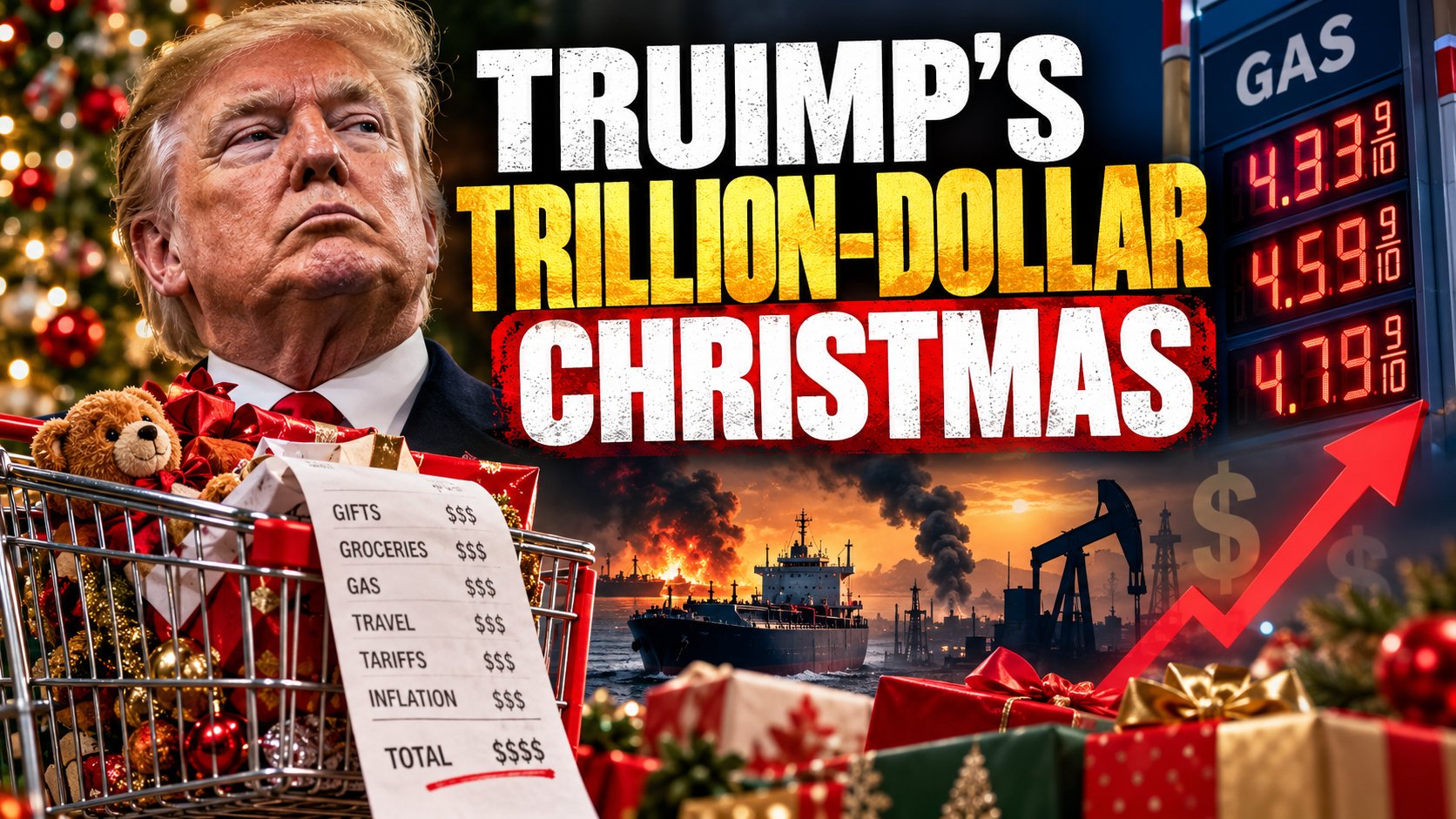
The $1 Trillion Christmas: A Record That Doesn’t Tell the Whole Story
The National Retail Federation’s forecast represents a historic milestone for the American retail industry, with shoppers expected to spend approximately $41 billion more during the 2026 holiday season than they did a year earlier. Retail industry leaders describe the projected spending as evidence of consumer resilience, pointing to Americans’ continued willingness to prioritize holiday celebrations despite economic uncertainty. Retailers are preparing promotions, discounts, and merchandise offerings designed to capture that demand, while higher-income consumers are expected to remain an important source of spending growth.
However, the difference between nominal spending and inflation adjusted purchasing power is essential to understanding what the record actually means. If consumers spend 4.2% more but approximately half that increase reflects higher prices, the inflation adjusted increase in goods and services purchased is substantially smaller than the headline suggests. This does not mean the entire trillion dollar forecast is an inflationary illusion. Real consumer spending is also expected to grow, and many households remain financially capable of maintaining or increasing their holiday purchases. Nevertheless, the spending record cannot be treated as proof that the average American family is better off financially than it was last Christmas.
The distinction becomes particularly important when examining how Americans actually experience inflation. A household that spends $1,000 on holiday purchases this year may not be buying the same quantity or quality of merchandise that $1,000 purchased several years earlier. Rising prices can reduce the number of gifts, force substitutions toward less expensive products, and eliminate discretionary purchases altogether. Meanwhile, national retail spending can continue climbing because higher income households have enough purchasing power to offset reductions among financially strained consumers. A trillion dollars in holiday sales sounds like prosperity, but whether individual Americans experience it that way depends on what their wages can buy after they have paid for everything else.
Gasoline Prices Have Surged 34.2%, and the Holiday Travel Season Hasn’t Even Started
One of the clearest signs of the financial pressure facing consumers is visible at gas stations across the country. The Bureau of Labor Statistics reported that gasoline prices increased 34.2% over the 12 months ending in September 2026, including a 9.1% increase in September alone. Overall energy prices climbed 20.4% year over year, while fuel oil prices surged 74.2%, creating additional financial pressure on households that depend on petroleum-based heating and transportation. The broader Consumer Price Index rose 3.7% over the same period, with prices increasing 0.6% in September alone, illustrating how quickly volatile energy markets can undermine household purchasing power.
According to AAA, the national average price for regular gasoline stood at approximately $4.33 per gallon on October 15, making the cost of driving a significant consideration for families planning holiday shopping, seasonal travel, and everyday commuting. The financial impact becomes obvious when applied to an ordinary household budget. A family purchasing 60 gallons of gasoline per month would spend approximately $260 at $4.33 per gallon, compared with $180 at a hypothetical price of $3 per gallon. That difference of nearly $80 per month represents money that cannot simultaneously be spent on Christmas presents, groceries, holiday travel, or paying down existing debt.
For commuters in sprawling metropolitan areas such as South Florida, where driving remains a necessity for many workers and families, the effects can be particularly noticeable. Long commutes, multiple household vehicles, and increased seasonal travel create repeated exposure to elevated fuel prices. The pressure also extends beyond personal transportation because diesel fuel powers much of America’s commercial trucking network, while petroleum products and energy expenses influence manufacturing, distribution, packaging, and delivery costs throughout the economy. Higher transportation expenses can eventually influence retail prices, although the extent and timing depend on shipping contracts, existing inventory, competition, and whether businesses absorb the costs or pass them along to customers.
The consequences are not uniform or immediate, but the economic pressure is unmistakable. Expensive energy makes it harder for businesses to move goods cheaply and more difficult for households to maintain their spending power. By the time families begin making Christmas purchases, they may already have absorbed months of additional transportation expenses, reducing the amount of money available for holiday celebrations before they have purchased a single present.
Trump’s Iran War Has Become an Economic Problem at Home
The war involving the United States, Israel, and Iran has become one of the most consequential forces affecting global energy prices in 2026, with the economic consequences extending far beyond the Middle East. The conflict began with U.S. and Israeli strikes against Iran in February, followed by Iranian retaliation and disruptions to energy shipments across the Persian Gulf. The Strait of Hormuz, a critical passage for international petroleum shipments, became a focal point of the crisis as military operations, shipping threats, and uncertainty rattled global markets and contributed to substantial volatility in oil prices.
By October, the effects were still being felt throughout international energy markets. Reuters reported that Brent crude remained above $100 per barrel despite a substantial recovery in oil shipments through the strait, as the collapse of an earlier ceasefire, renewed regional violence, and uncertainty about future shipping security continued to support elevated prices. Additional attacks and threats involving Saudi Arabia and commercial shipping intensified concerns about petroleum supplies, with Brent crude settling at $106.06 per barrel on October 14 as traders responded to the possibility of further disruptions. Those developments have significant implications for American consumers because petroleum prices influence gasoline, diesel, aviation fuel, freight transportation, and numerous products that depend on energy-intensive manufacturing and distribution.
The political debate surrounding the conflict is inseparable from its economic consequences. Critics of Trump’s military intervention question whether the United States needed to enter another Middle Eastern war and whether the administration adequately anticipated the effects on global energy markets. The administration, meanwhile, has presented its military operations and maritime security efforts as necessary to address Iranian threats and protect international shipping. Whatever the competing arguments about the war’s justification, the relationship between the conflict and energy inflation is supported by market evidence. Attacks on energy infrastructure, threats to tankers, shipping disruptions, and higher insurance and transportation costs have contributed to an increasingly expensive petroleum market.
The Trump administration has explored measures intended to increase fuel supplies and moderate prices, including easing certain restrictions on Russian petroleum exports. Such actions could provide some relief, although they do not eliminate the underlying uncertainty surrounding the conflict. For American consumers, the distinction between military strategy and economic policy becomes less meaningful when the consequences arrive on a credit card statement. Higher fuel prices affect commuters, airlines, freight companies, delivery services, and businesses throughout the economy. The war is not responsible for every increase in consumer prices, but it has become a significant contributor to the energy pressures facing households ahead of Christmas.
Tariffs Are Adding Another Layer of Costs to Christmas Shopping
While the Iran conflict has contributed to higher energy prices, Trump’s tariff policies have created a separate source of inflationary pressure affecting imported merchandise and domestically manufactured products. Tariffs are taxes imposed on imported goods, and although foreign manufacturers can sometimes absorb part of those costs by reducing their prices, American importers generally pay the duties when products enter the country. Those businesses must then decide whether to absorb the expense, negotiate lower supplier prices, or pass some of the increase along to customers, creating a chain of economic consequences that can eventually reach American families at retail checkout counters.
Research from the Federal Reserve Bank of New York demonstrates that the costs have fallen predominantly on the American side of the transaction. In a February 2026 analysis, New York Fed researchers estimated that nearly 90% of the economic burden of tariffs imposed during 2025 was borne by U.S. firms and consumers rather than foreign producers. A subsequent study published in October found that approximately 90% of tariff increases passed through to U.S. import prices, although the eventual effect on retail consumer prices was smaller. The researchers estimated that a one percentage point increase in average tariffs raises consumer goods prices by approximately 0.25 percentage points after a year, with about one third of that consumer price effect coming indirectly through higher costs and pricing changes among American manufacturers.
That distinction is particularly important during the Christmas shopping season because electronics, toys, clothing, household decorations, furniture, and other popular gift categories depend heavily on international manufacturing networks. Tariffs can increase costs for finished products arriving from overseas while also raising the prices of components and materials used by American companies. The effects do not necessarily appear immediately because retailers may have purchased inventory months earlier, negotiated contracts before tariff changes, or temporarily absorbed increased costs to remain competitive. However, the New York Fed’s research found that indirect effects can take six to twelve months to work through production and supply chains, placing the 2026 holiday season within the period when some delayed effects of earlier tariff increases are still influencing prices.
Supporters of Trump’s tariff policies argue that import duties can protect domestic industries, encourage American manufacturing, and provide leverage in international trade negotiations. Those objectives represent the administration’s stated economic rationale, but the Federal Reserve research also establishes that tariffs have increased prices paid by American businesses and consumers. For shoppers already dealing with expensive gasoline and persistent inflation, the added cost of imported goods creates another obstacle to maintaining familiar holiday budgets. The immediate financial consequences can be especially difficult for households without the flexibility to absorb higher prices or substitute more expensive products with domestically manufactured alternatives.
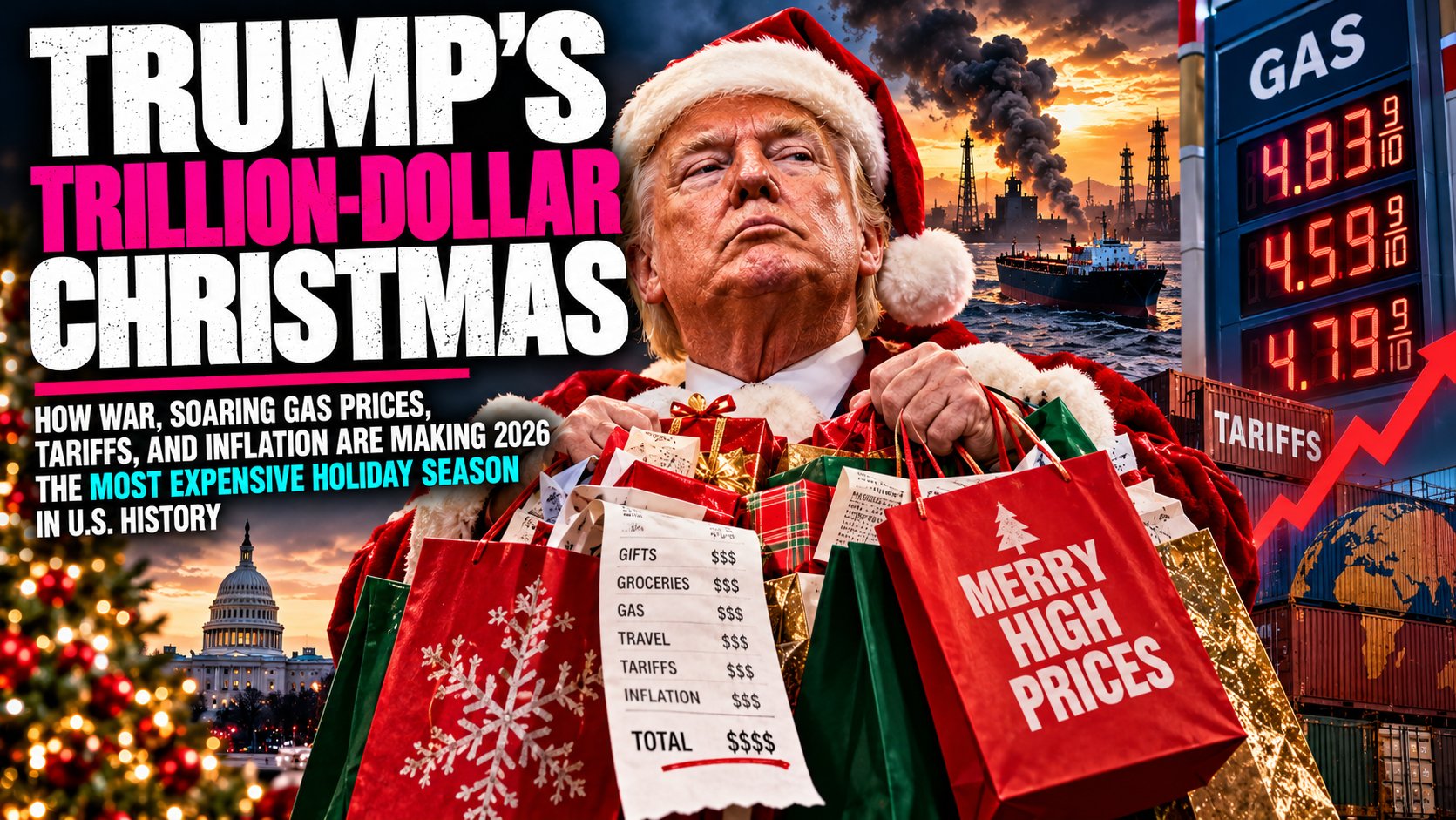
Seventy Seven Percent of Americans Are Changing Their Christmas Shopping Plans
The economic pressures are no longer confined to government statistics or Wall Street forecasts. Consumer surveys show that Americans are actively changing their holiday plans, with a substantial majority reporting concerns about affordability. According to The Penny Hoarder’s 2026 State of Holiday Spending Report, 77% of surveyed Americans said they planned to alter their gift-buying strategies because of rising prices and inflation. The survey of 1,000 U.S. adults also found that 51% reported severe financial anxiety related to the cost of living, while 35% said they felt less financially stable than a year earlier.
The survey found that 46% planned to limit the number of gifts they purchased, while 40% intended to choose less expensive items. Among respondents who expected to spend more this year, 42% identified inflation as the leading reason, suggesting that higher budgets did not necessarily translate into more generous gift giving. These findings illustrate how rising living expenses are changing consumer behavior even as the retail industry prepares for record sales. Rather than abandoning Christmas altogether, many Americans are attempting to preserve familiar traditions by purchasing fewer presents, seeking discounts, choosing less expensive products, and adjusting their expectations about what they can afford.
Additional research suggests that consumers are becoming increasingly selective about how they celebrate. Circana’s October holiday study found that 74% of consumers expected to adopt money-saving behaviors, including seeking promotional discounts, purchasing store brands, and reducing discretionary spending. Its survey of 3,534 consumers projected average holiday spending of $779, compared with $796 the previous year, while more than one-third reported canceling or postponing holiday travel because of higher costs. A separate NerdWallet survey found that Americans planning to purchase holiday gifts expected to spend an average of $879, down 21% from $1,107 in 2025, with 38% of holiday spenders planning to use buy-now-pay-later financing for seasonal purchases.
Together, these findings reveal a troubling contradiction: The country is preparing to break a trillion-dollar holiday retail sales record while substantial numbers of individual shoppers are reducing their gift budgets. The national economy may generate more retail revenue, but that does not mean the typical Christmas tree will have more presents underneath it. For families already struggling to keep pace with essential expenses, the record-setting holiday season may be defined less by increased consumption than by difficult decisions about what they can afford to eliminate.
The K-Shaped Christmas: Wealthier Americans Keep Spending While Others Cut Back
One reason holiday retail spending can continue increasing despite widespread financial pressure is the uneven distribution of purchasing power across American households. Economists sometimes describe this phenomenon as a K-shaped economy, in which higher income households continue benefiting from investment gains, accumulated wealth, and stronger financial reserves while lower income households experience greater difficulty keeping pace with rising living expenses. That divide becomes especially relevant during a period of inflation driven partly by energy prices, because essential expenses generally consume a larger percentage of income for financially vulnerable families.
For a household with substantial savings and investment income, an increase in gasoline or grocery prices may be frustrating but manageable. For a family living paycheck to paycheck, the same increase can force immediate decisions about which expenses to postpone or eliminate. The Associated Press reported that the 2026 holiday spending outlook is being supported in part by affluent consumers benefiting from stock market gains, while lower income shoppers increasingly seek cheaper products and financing options to maintain holiday purchases. This difference helps explain how national retail sales can reach record levels even as consumer surveys reveal widespread concerns about affordability.
Other retail research reinforces the divide. A survey published by commercial real estate firm JLL found that overall holiday budgets were increasing even as shoppers reduced the number of people on their gift lists, with much of the additional spending directed toward food, decorations, dining, and entertainment rather than a substantial increase in gift purchases. The result is a holiday economy in which stronger overall spending can obscure financial strain among individual households, particularly those that have limited savings, high debt burdens, or incomes that have failed to keep pace with rising prices.
This does not mean every American family is worse off than last Christmas. Employment remains relatively strong, many consumers are continuing to spend, and some households have experienced income growth. However, the economic data increasingly suggests that the benefits of continued consumer spending are not being experienced equally. A record-setting Christmas for retailers can coexist with a financially difficult Christmas for millions of families, particularly when wealthier consumers account for a disproportionate share of discretionary spending.
Christmas on Credit: The Holiday Bills Could Last Into 2027
Another consequence of the affordability squeeze is the growing importance of consumer financing. Credit cards and buy now pay later services allow households to distribute holiday purchases over several weeks or months, providing short term flexibility that can make expensive purchases easier to manage. However, these arrangements can also make merchandise appear more affordable by separating the immediate buying decision from the eventual obligation to pay, creating potential financial problems for consumers who are already struggling to cover essential expenses.
A family may be able to finance Christmas gifts in November and December, but those bills do not disappear when the decorations come down in January. Credit card interest, late-payment penalties, and overlapping installment obligations can turn a relatively brief holiday shopping period into a longer-term financial problem. The NerdWallet survey’s finding that 38% of holiday spenders intend to use buy now pay later financing illustrates how common these arrangements have become, while its finding that 38% of prospective users anticipate difficulty making payments in full and on time highlights the risks facing some borrowers.
The broader issue is not simply whether Americans can afford to purchase Christmas gifts, but whether they can do so without compromising their financial stability during the months that follow. For households already allocating substantial portions of their income to housing, transportation, groceries, insurance, and utilities, holiday borrowing can create additional pressure at the beginning of the new year. When consumers use debt to preserve seasonal spending despite rising living expenses, the financial consequences of Christmas can extend well beyond December.
Inflation Is Outpacing Wage Growth, Putting More Pressure on Working Families
The Federal Reserve’s long term inflation objective is 2%, but September’s Consumer Price Index registered an annual increase of 3.7%, substantially above that target. More concerning for households, the recent acceleration in consumer prices has placed renewed pressure on inflation-adjusted earnings, leaving some workers with less purchasing power despite increases in their nominal wages. Although employment conditions and wage growth vary across industries and income groups, the broader challenge remains the same: Consumers must pay for essential goods and services before they can allocate money toward discretionary purchases such as Christmas gifts.
Inflation also compounds over time, a reality that helps explain why many Americans continue feeling financially strained even when economists report that inflation has moderated. A reduction in the inflation rate does not mean prices return to their earlier levels; it generally means they are rising more slowly. Consequently, households that have absorbed several years of higher prices may continue experiencing financial pressure even when monthly inflation readings improve, particularly if their incomes have not increased enough to compensate for the cumulative rise in living expenses.
This helps explain why economic forecasts and consumer sentiment can appear contradictory. A retailer may report higher revenue, the economy may continue expanding, and unemployment may remain relatively low, while households simultaneously feel that their money does not stretch as far as it once did. For families planning Christmas, the relevant calculation is not the size of the national economy or the total amount Americans are expected to spend during the holiday season. It is the amount of disposable income remaining after rent or mortgage payments, groceries, transportation, utilities, insurance, and other necessities have been paid.
When those costs rise faster than earnings, holiday spending becomes increasingly difficult to maintain without cutting back elsewhere. Families may reduce the number of presents they purchase, eliminate travel plans, postpone major purchases, or rely more heavily on promotional discounts and financing. These adjustments can occur even while national retail spending continues to increase, creating a misleading impression of widespread prosperity when the financial circumstances of individual households are considerably more complicated.
Can Washington Bring Prices Down Before Christmas?
With the holiday shopping season approaching, the Trump administration faces an economic challenge involving several forces that cannot be resolved through a single policy decision. Energy prices remain sensitive to the conflict involving Iran, developments in the Strait of Hormuz, global production levels, refinery capacity, and international shipping conditions. Tariff related price increases are also working through supply chains, while broader inflation remains above the Federal Reserve’s target, leaving policymakers with limited time to influence the costs consumers will encounter during the busiest shopping period of the year.
Some developments could provide relief. An easing of Middle Eastern hostilities, improved oil shipping conditions, increased petroleum supplies, or stronger retail discounting could help moderate costs. Conversely, renewed military escalation or additional supply disruptions could intensify the pressure. The administration has attempted to influence oil markets through diplomatic, military, and sanctions-related measures, but persistent geopolitical uncertainty has limited the effectiveness of public assurances that energy prices would stabilize. Retailers may also absorb some cost increases or offer aggressive holiday promotions, although those decisions will depend on profit margins, inventory levels, and competition.
The Federal Reserve faces its own difficult decisions because higher interest rates can help restrain inflation but also increase borrowing costs for consumers and businesses. Lower rates may provide financial relief, but policymakers must consider whether inflation is sufficiently controlled before making changes that could stimulate additional demand. For families making holiday purchases, these decisions will influence not only what they spend in December but potentially how much they owe in the months that follow. The combination of expensive energy, tariff related costs, persistent inflation, and consumer debt means there is no single economic adjustment capable of immediately reversing the financial pressure households have accumulated throughout the year.
Trump’s Trillion Dollar Christmas: Record Spending, but at What Cost?
The central contradiction of Christmas 2026 is that America’s retailers are preparing for a historic holiday season while millions of households are preparing to spend more carefully. The National Retail Federation expects $1.013 trillion in holiday retail sales, the Bureau of Labor Statistics reports gasoline prices have increased 34.2% over the past year, and the Federal Reserve Bank of New York has documented how tariffs raise prices paid by American businesses and consumers. Meanwhile, consumer surveys reveal widespread adjustments to gift-buying plans, shrinking gift budgets, and greater reliance on financing, suggesting that the record-setting retail forecast may conceal significant financial pressure among ordinary households.
These developments are not all attributable to one president or one policy. Inflation has multiple causes, international oil markets respond to global conditions, and consumer spending patterns reflect differences in income, employment, and household wealth. Nevertheless, the Trump administration’s trade decisions and involvement in the Iran conflict have contributed to two identifiable sources of economic pressure: tariffs that increase the cost of consumer goods and military-related energy disruptions that have helped push petroleum prices higher. Those pressures are arriving alongside the cumulative effects of years of inflation, creating a particularly challenging environment for households attempting to maintain their traditional holiday spending.
If current projections hold, Christmas 2026 will be the most expensive holiday shopping season in American history in nominal aggregate spending. Whether it is the most expensive relative to household income, inflation adjusted purchasing power, or the cost of a typical family’s holiday celebration is a different question, and one the trillion dollar headline alone cannot answer. The distinction matters because higher national spending does not automatically translate into greater household prosperity, particularly when consumers are paying more for essentials and reducing discretionary purchases to compensate.
For American families confronting higher fuel bills, expensive groceries, increased borrowing costs, and gift lists that no longer fit their budgets, the historic retail milestone may offer little comfort. The retailers may be celebrating a trillion dollar Christmas, but many consumers will be trying to figure out how to pay for one

Sources & Further Reading
- National Retail Federation — 2026 Holiday Sales Forecast
- U.S. Bureau of Labor Statistics — Consumer Price Index
- AAA — National Gasoline Price Data
- Federal Reserve Bank of New York — Tariff Pass-Through Research
- New York Fed — How Fast Tariffs Pass Through Into Consumer Prices
- Reuters — Trump’s Oil Strategy and the Iran Conflict
- Associated Press — Inflation and the $1 Trillion Holiday Forecast
- The Penny Hoarder — Holiday Spending Statistics
- NerdWallet — Holiday Spending Report
- Circana — 2026 Holiday Consumer Study















































Want to join the conversation?
Create an account or sign in to share your thoughts, vote,
and reply to other readers.
Showing 0 of 0 comments
Don't have an account?
Already have an account?