
Trump’s White House Press Ban Puts Spotlight on a Shrinking Inner Circle, Natalie Harp’s Influence and Growing Political Pressure
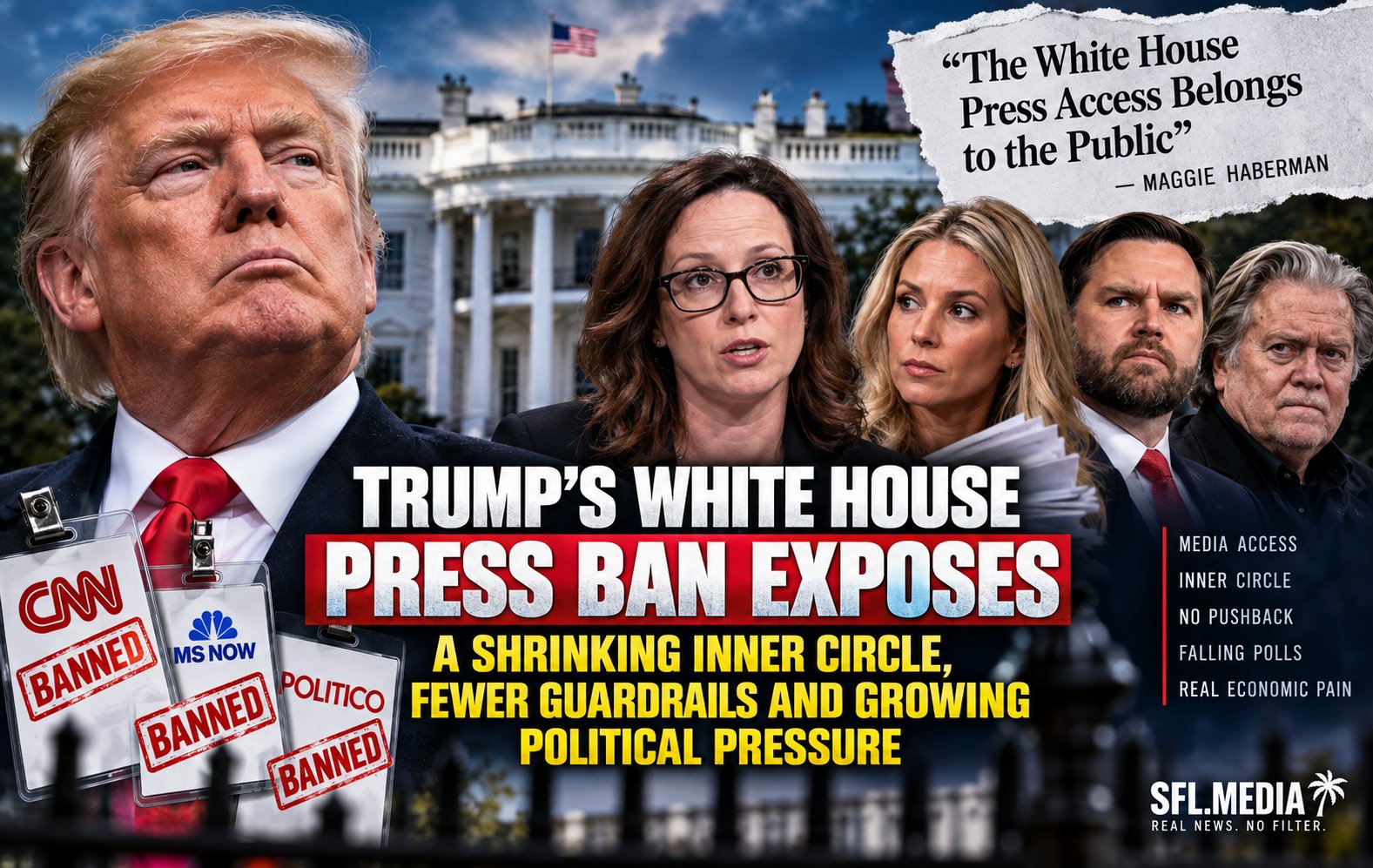
President Donald Trump’s decision to bar CNN, MS NOW and Politico from the White House has opened a broader debate about more than press access. In a panel discussion featuring New York Times reporter Maggie Haberman, the controversy became a window into how Trump’s second term White House operates, the unusually small group of people with regular access to the president, the role of longtime aide Natalie Harp and what Haberman described as a governing environment with substantially less internal resistance than during Trump’s first administration.
The press dispute is no longer theoretical. Journalists from CNN, MS NOW and Politico were denied entry to the White House after Trump announced that he was banning the organizations because he considered their coverage “fake news.” Their credentials were disabled or confiscated, and the three organizations subsequently sued the administration, arguing that selectively excluding news organizations because of their coverage violates the First Amendment. The administration has defended its authority over White House access and maintains that the organizations remain free to report on the president from outside the complex.
The panel’s larger argument was that restricting reporters does not resolve the political conditions producing unfavorable coverage. Participants repeatedly returned to economic concerns and public dissatisfaction, arguing that a communications strategy cannot substitute for changes in the underlying conditions voters experience. That distinction, between a messaging problem and what one panelist called a “fact set problem” became the central theme connecting Trump’s confrontation with the press to Haberman’s reporting about the president’s increasingly insulated inner circle.
Trump’s Ban on CNN, MS NOW and Politico Escalates His Fight With the Press
Trump announced the ban after repeatedly accusing CNN, MS NOW and Politico of publishing false or unfair coverage of his administration. Reporters from the three organizations were subsequently turned away from White House grounds, with journalists saying their credentials had been deactivated or confiscated. Trump also suggested additional organizations could eventually face similar restrictions.
The three news organizations have challenged the action in federal court, arguing that the government cannot condition White House access on whether the president approves of an outlet’s reporting. The administration has countered that access to the White House is a privilege rather than an absolute right. The dispute therefore reaches beyond the familiar tension between presidents and reporters and into a legal question over whether an administration can selectively exclude established news organizations because of their editorial coverage.
The controversy has also disrupted the traditional White House television pool. After CNN was removed from its scheduled role in the pool, other major television networks suspended participation rather than replace it under the new restrictions. Trump was still being covered outside the White House, including during his appearance at the United Nations, where the affected organizations were able to obtain credentials independently of the administration.
For the MS NOW panel, however, the underlying question was why the administration was devoting political energy to attacking the organizations reporting negative developments rather than confronting the developments themselves. Panelists pointed to continuing voter concerns about household expenses and the economy and argued that removing journalists from the White House does nothing to change those conditions.
Maggie Haberman Describes an Unusually Small Trump Inner Circle
Haberman shifted the conversation from the press ban itself to the people surrounding Trump and described an inner circle that has become remarkably small. She contrasted the current environment with Trump’s first term, when competing factions, Cabinet officials, political advisers, lawyers, family members and senior White House aides routinely fought for influence around the president.
That ecosystem has narrowed considerably. Haberman described periods when Trump was at his Bedminster property in New Jersey in which the people consistently around him included only a handful of trusted figures, among them Natalie Harp, longtime aide Walt Nauta and Federal Housing Finance Agency Director Bill Pulte. Her description was not that Trump has no advisers or Cabinet officials, but that the number of people with continuous personal access to him has contracted.
Haberman also described significant exhaustion among people who have spent years working around Trump. Unlike some officials who entered the first administration believing they could moderate the president, redirect his instincts or prevent decisions they considered damaging, many people remaining in his orbit today understand the conditions under which Trump prefers to operate. According to Haberman’s analysis, survival inside that environment frequently depends less on changing Trump’s mind than on understanding what he wants and accommodating it.
Natalie Harp’s Importance Goes Beyond the ‘Human Printer’ Nickname
Few figures illustrate that environment better than Natalie Harp, the White House aide frequently described as Trump’s “human printer” because of her practice of carrying a portable printer and supplying him with hard copies of articles, social media posts and other information. Harp has been close to Trump for years and has also been involved with his social media operation, giving her an unusual position at the intersection of the president’s information consumption, personal communications and public messaging.
Her significance, according to the panel, is not simply that she is unusually loyal or physically close to the president. Harp represents the kind of low friction relationship Trump appears to value: an aide who provides information, executes requests and rarely functions as an institutional barrier between the president and what he wants to do.
Recent reporting has intensified scrutiny of that role. Harp reportedly showed Trump printed examples of media coverage shortly before he announced the White House bans, including material involving Politico and television coverage. That does not establish that Harp independently caused the decision, Trump has feuded with news organizations for decades and publicly announced the ban himself, but it illustrates why her control over the information regularly placed in front of the president has attracted attention.
The flow of information matters in any presidency. Presidents cannot personally read every intelligence assessment, newspaper, television transcript, social-media post or policy memorandum produced each day, meaning aides inevitably influence what reaches the Oval Office. Harp’s unusual proximity makes her particularly important because she helps facilitate what Trump sees while also assisting with material that moves in the opposite direction through his social media accounts.
Haberman Says Trump Has Fewer Internal ‘Guardrails’ Than During His First Term
The panel repeatedly returned to the contrast between Trump’s first and second administrations. During his first term, officials including senior advisers, Cabinet secretaries, military leaders, lawyers and chiefs of staff sometimes challenged proposals, slowed decisions or attempted to redirect Trump. Some of those confrontations became public through memoirs, congressional testimony and extensive reporting after officials left government.
Haberman’s description of the current administration was different. Trump returned to office with years of experience dealing with the federal bureaucracy and with a team substantially more familiar with his governing preferences. Many officials who strongly resisted him during his first term are gone, while loyalty and willingness to execute the president’s agenda have played a larger role in staffing the second administration.
That does not mean Trump receives no disagreement. Cabinet members, advisers and Vice President J.D. Vance have disagreed with him on significant issues. But Haberman argued that direct opposition has become less common and can carry a personal cost with a president who has historically reacted poorly to advisers delivering information or recommendations he does not want to hear.
J.D. Vance’s Iran Disagreement Shows What Internal Dissent Can Look Like
Haberman pointed to Vance as an example of someone willing to challenge Trump directly on a matter involving exceptionally high stakes. Drawing on reporting developed with Jonathan Swan for their book Regime Change: Inside the Imperial Presidency of Donald Trump, Haberman said Vance was among the relatively few people willing to argue directly against Trump during internal discussions about military action involving Iran.
According to Haberman’s account, Vance voiced his objections in larger meetings rather than limiting them to private conversations. Trump was visibly irritated by the disagreement, she said, providing an example of the tension advisers can encounter when challenging the president on consequential decisions.
The episode is important precisely because it complicates the idea that nobody disagrees with Trump. Dissent still exists inside the administration, but Haberman’s reporting suggests it is concentrated among a smaller number of officials prepared to accept the consequences of directly opposing the president’s preferred course. In that environment, the personalities surrounding Trump and their willingness to deliver unwelcome information can become especially consequential.
Steve Bannon Remains Influential but Is Not Running Trump’s Daily Operation
The panel also addressed former White House strategist Steve Bannon, who remains an influential figure in the broader MAGA movement and an aggressive advocate for populist and nationalist policies. Haberman credited Bannon with having strong political instincts but rejected the idea that he is continuously directing Trump from behind the scenes.
Bannon is not in Trump’s ear every day, Haberman said, and that distinction matters when trying to understand how the president makes decisions. Trump listens to different people at different times, but Haberman portrayed him as ultimately driven heavily by his own impulses rather than controlled by a single adviser.
That pattern makes the shrinking size of the president’s immediate circle more significant. Influence does not necessarily require persuading Trump to adopt someone else’s agenda. In some cases, the more consequential role may be determining which information reaches him, how it is presented and whether anyone in the room is prepared to challenge the conclusion he draws from it.
The Administration Faces a Political Problem That Media Restrictions Cannot Resolve
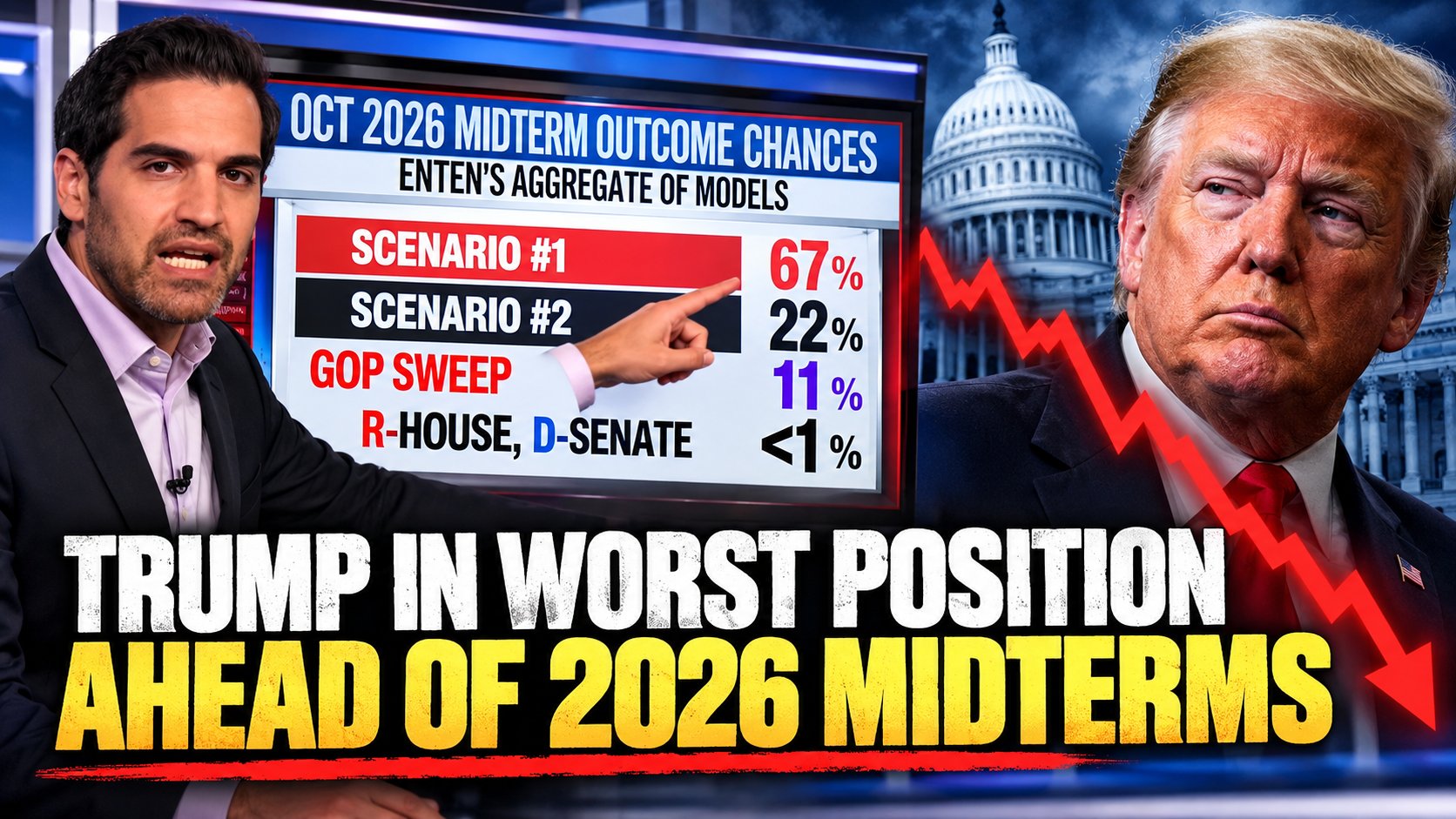
The panel connected that internal dynamic to deteriorating public assessments of Trump and his handling of major issues. Participants cited recent polling showing substantial dissatisfaction with the administration, particularly around economic conditions and other policy areas. Some individual issue polls have produced numbers in the high 20s or low 30s, although those figures should not be confused with Trump’s overall job-approval rating; results vary considerably depending on the pollster, question, issue and population surveyed.
That distinction is important because political polling can easily be distorted when a single issue number is presented as a president’s overall approval rating. The broader trend discussed by the panel was that Trump is facing significant public dissatisfaction on several issues at a time when voters continue to report concerns about prices and household finances.
The panelists argued that those conditions create what they described as a “fact set problem” rather than simply a communications problem. Their argument was that no amount of message discipline can completely overcome voters’ direct experiences. If consumers believe groceries, fuel, housing, insurance or other necessities are too expensive, attacking journalists who report on that dissatisfaction does not change what those consumers encounter when they pay their bills.
That is an interpretation advanced by the panel rather than an established fact about why individual voters approve or disapprove of Trump. The administration has offered its own explanation, arguing that much of the negative coverage surrounding Trump is inaccurate or unfair and that hostile media organizations can distort public understanding of the administration’s record.
The Press Ban and Trump’s Inner Circle Are Becoming Part of the Same Story
What made the MS NOW discussion notable was the way two apparently separate stories, Trump’s confrontation with the press and Haberman’s reporting about his inner circle, converged around the same question: what information reaches the president, and what happens when that information conflicts with what he wants to hear?
Trump’s supporters and administration officials argue that the president has every reason to aggressively challenge news organizations they believe report inaccurately on him. CNN, MS NOW and Politico counter that the government crossed a constitutional line when criticism escalated into the removal of their White House credentials. That disagreement is now moving through the federal courts, where the legal limits of presidential authority over press access will be tested.
Haberman’s reporting raises a separate but related institutional question inside the administration. A president surrounded by fewer people willing to challenge him may operate more quickly and with fewer internal obstacles, but it also places greater importance on the judgment of the relatively small group that remains close enough to provide information and advice.
Natalie Harp therefore matters for reasons extending well beyond the colorful “human printer” nickname. Her proximity offers a glimpse into a presidency increasingly structured around direct access, personal loyalty and an information system tailored to Trump’s preferred working style. The White House press ban demonstrates the external side of that approach: when the president believes information about him is false or unfair, he is increasingly willing to challenge not only the reporting itself but the institutions delivering it.
Whether the administration’s approach to the press survives judicial review remains unresolved. What is already clear is that the fight over who gets into the White House, who gets into Trump’s immediate orbit and what information ultimately reaches the president has become a significant part of the story of his second administration.

Sources & Further Reading
Reuters — Banned White House Outlets Cover Trump at U.N. as Court Hearing Looms (Reuters)
Reuters — White House Turns Away CNN, MS NOW and Politico Reporters (Reuters)
CBS News — CNN, MS NOW and Politico Staffers Turned Away From White House (CBS News)
The Washington Post — CNN, MS NOW and Politico Sue Over White House Access (The Washington Post)
The Washington Post — Natalie Harp’s Role in Trump’s Inner Circle (The Washington Post)
The Atlantic — Maggie Haberman and Jonathan Swan Discuss Regime Change and Trump’s Second Term (theatlantic.com)










































Want to join the conversation?
Create an account or sign in to share your thoughts, vote,
and reply to other readers.
Showing 0 of 0 comments
Don't have an account?
Already have an account?